How long does It take to build muscle? A realistic guide
Wondering how long does it take to build muscle? Our guide gives evidence-based timelines for beginners and experts, plus practical tips to optimize your gains. Beginners often notice visible muscle gain in about 8 to 12 weeks, but measurable changes can start much sooner. In research settings, muscle thickness has increased after 1 week of resistance training, strength often improves by 2 weeks, and the timeline for what you can see depends heavily on your training age, program, food, and recovery.
If you're looking in the mirror after your first few workouts and wondering why nothing seems different yet, you're not doing anything wrong. It's common to confuse feeling stronger, building muscle, and seeing muscle as if they all happen at the same time. They don't.
That's why a single answer to “How long does it take to build muscle?” is usually incomplete. A more useful answer separates early internal changes from visible physique changes, and beginner progress from the slower pace of someone who already has training experience.
The honest answer to how long it takes to build muscle
You finish your third week of lifting, catch your reflection, and wonder whether any of this is working. Your arms do not look dramatically different yet, but the dumbbells that felt heavy on day one now move with more control. That gap between what you feel and what you see is where a lot of confusion starts.
The honest answer is that muscle gain happens on more than one timeline.
Your body can start adapting internally before the mirror shows much. Strength and coordination often improve first because your nervous system is learning the movement, like getting better at using the tools before the renovation is finished. Visual changes usually take longer because a small increase in muscle is hard to spot day to day, especially if body fat, lighting, sleep, and muscle pump are changing what you see.
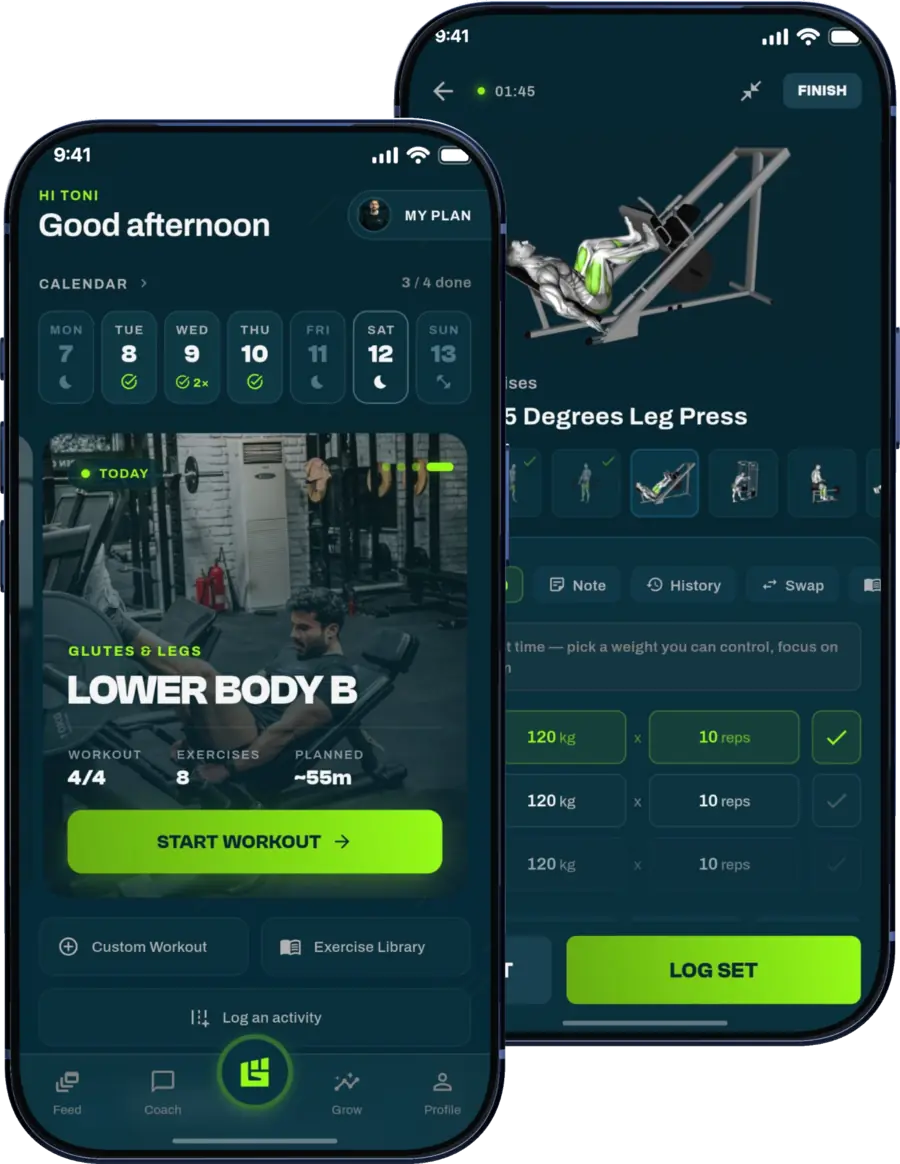
Built for progress
Take the guesswork out of training
Get a personalized workout plan built around your goal, equipment and schedule. Train smarter, track every rep and keep moving forward, one workout at a time.






A better way to answer the question is to split progress into three categories: measurable internal change, noticeable visual change, and the rate of progress you can expect based on your training experience. That gives you a more useful benchmark than a single promise like “6 to 8 weeks.”
For beginners, the first month often feels more productive than it looks. Workouts become smoother. You recover better. You handle more weight or more reps. Those are signs your body is adapting and laying the groundwork for muscle growth. Trained lifters usually see the same pattern, but at a slower pace because they are closer to their current ceiling.
If you want the simple version, use this rule: early progress is often something you can measure, visible progress is something you usually have to earn for longer.
That distinction matters. Many motivated lifters quit during the exact phase when progress has already started, because they expected the mirror to confirm it first. If you want a clearer foundation for the rest of the article, it helps to understand what actually causes muscle growth and why the body does not reveal every adaptation on the same schedule.
The science of muscle growth explained simply
Muscle growth sounds complicated, but the big picture is simple. It's akin to remodeling a house.
Training is the reason the renovation starts. Food supplies the materials. Recovery is when the workers build.
Training gives your body a reason to adapt
When you lift weights, your body gets a clear message: this muscle needs to handle more demand next time. That training stress is the signal.
If the workout is challenging enough and repeated consistently, your body starts preparing for future sessions by adapting. One of those adaptations is building larger, stronger muscle tissue over time.
If you want a deeper breakdown of what actually causes muscle growth, it helps to think in terms of stimulus, fuel, and recovery rather than chasing random exercises.
Food provides the raw materials
A contractor can't build without supplies. Your body can't build muscle without enough energy and enough protein.
That doesn't mean every meal has to be perfect. It means your overall intake has to support growth instead of constantly leaving your body under-fueled. People often train hard but eat like they're trying to stay exactly the same size, then wonder why muscle gain is slow.
Recovery is when growth happens
The gym is where you apply the challenge. Recovery is where adaptation happens.
Sleep, rest days, and managing total stress all matter because your body needs time and resources to repair and reinforce what training disrupted. If you train hard but never recover well, it's like delivering bricks to a construction site and never giving the crew time to build.
Muscle isn't built during the set itself. The set creates the demand. Recovery answers it.
This is why muscle gain never comes from one magic workout. It comes from repeating the same cycle well enough, long enough.
Realistic muscle growth timelines by experience level
You start lifting three days a week, clean up your meals, and by week two you're already stronger. Then you look in the mirror and wonder why your body does not look very different yet.
That gap is normal. Muscle gain happens on more than one timeline. Your body often improves performance first, starts measurable internal remodeling soon after, and shows visible size changes later.

What happens first
Early progress is usually easier to feel than to see. In the beginning, your nervous system gets better at recruiting the muscle you already have, coordinating the movement, and producing force with less wasted effort.
A car engine works better after a tune-up even before you install a bigger engine. Early strength gains often work the same way.
Researchers have observed that measurable changes inside muscle can begin surprisingly early in controlled training settings, often before mirror changes are obvious, as shown in a 2017 study on early resistance training adaptations.
Here is the practical version:
| Type of progress | Typical timing |
|---|---|
| Early measurable internal muscle changes | Within the first few weeks in controlled settings |
| Strength and skill improvements | Often early as movement efficiency improves |
| Noticeable muscle gains in everyday training | Usually after several consistent weeks |
| Clear visual growth | Often takes months, especially if you are already trained |
That timeline clears up a common mistake. Feeling stronger in two weeks does not always mean you have added a large amount of new muscle tissue yet. It often means your body is learning the lifts and using your existing muscle more effectively.
Beginner timelines
Beginners usually see the fastest visible progress because the training stimulus is still new. Your body has more room to adapt, and small improvements in training quality and nutrition tend to pay off quickly.
For a true beginner, the pattern often looks like this:
- First few weeks: exercises feel more coordinated, loads increase, and muscles may feel firmer or fuller after training
- After several consistent weeks: photos, how shirts fit, and muscle definition may start to change
- Over a few months: body shape changes become much easier to notice if protein, total food intake, and training consistency stay in place
This is why one flat answer like "6 to 8 weeks" can be misleading. A beginner may notice performance changes well before that, subtle visual changes around that range, and much clearer physique changes later.
Intermediate and advanced timelines
Intermediate and advanced lifters play a slower game. Once you have already built a solid base, each added pound of muscle takes more work and more patience.
Hydrow cites the American Council on Exercise as saying visibly noticeable gains may take three to six months for intermediate or advanced lifters, while beginners may see changes in four to 12 weeks in its article on how training status changes the muscle-building timeline.
That difference makes sense. A new lifter is adding the first floors to the building. A trained lifter is trying to add another story to a structure that is already close to its current limit.
There is one important exception. If you are returning after time off, strength and muscle fullness often come back faster than they did the first time. Visible new hypertrophy still tends to move more slowly than gym performance, so it helps to judge progress over months, not just workouts.
The more training age you have, the more your timeline shifts from fast obvious change to slow measurable improvement.
That is not bad news. It is the normal pattern of a body that has already adapted well.
The 6 key factors that influence your results
Two lifters can train in the same gym, follow similar workouts, and still end up on different timelines. Muscle gain works less like flipping a switch and more like adjusting six dials. If one dial is off, progress can slow even when effort is high.

Training quality and program design
Your muscles respond to tension, effort, and repeatable progression. They do not grow because a workout felt intense.
Good programming works like a construction plan. Each session adds material in a way your body can adapt to. Random hard workouts are more like dropping bricks on a job site and hoping a house appears. You need enough weekly work for each muscle, exercises you can perform well, and a plan that gradually asks more of you over time.
If you are unsure what "enough" looks like, this guide to optimal weekly training sets for hypertrophy can help you match training volume to your experience level.
Nutrition and total intake
Training creates the signal. Food supplies the raw material.
If calories are too low for too long, your body has fewer resources to repair tissue and build new muscle. Protein matters for the same reason. It provides the amino acids your body uses to rebuild after training. This is one reason someone can get stronger in the gym before they look noticeably more muscular. The training stimulus is there, but the building supply is inconsistent.
For people who are also exploring supplements or recovery tools, it helps to be careful about building a safe muscle growth stack so the basics stay in place first.
Recovery, sleep, and stress
Muscle is built between workouts, not during them.
Sleep, rest days, and manageable stress levels affect how well you recover, how hard you can train again, and how consistently you can repeat quality sessions. A plan that looks aggressive on paper often fails because recovery cannot keep up. If your performance is falling, soreness never settles, and motivation drops, the issue may be recovery debt rather than a lack of effort.
Genetics
Genetics influence your frame, muscle insertions, appetite, recovery tendencies, and how quickly changes become visible. They help set the range you are working within.
They do not decide whether you can make progress.
A better comparison is against your own recent baseline. If your lifts are improving, measurements are creeping up, and photos look fuller over time, your plan is working even if you do not match someone else's pace.
Age and sex
Age and sex affect hormone levels, recovery speed, and how much muscle you can expect to add over time. They shape the rate of progress, but they do not erase the basic rules of hypertrophy.
Older adults can still gain meaningful muscle with resistance training, especially when training is progressive and protein intake is adequate. Women can build substantial muscle too. The visual rate of change may differ from men, but the process is the same. Give the muscle a reason to adapt, support it with food, and repeat that process for long enough.
Training age and consistency
Training age means productive years of lifting, not years of owning a gym pass. This factor often explains why measurable changes, visible changes, and long-term rates of gain differ so much from person to person.
A beginner usually has more room to adapt. A trained lifter has already collected many of the easier gains. Someone returning after time off may also regain size and performance faster than they built it the first time. Across all three cases, consistency is what turns a good week into a visible result months later.
Here is the practical takeaway:
- Beginners: Progress can show up first in performance, then in measurements and photos.
- Experienced lifters: Slower visual change is normal, so small monthly improvements count.
- Everyone: A solid plan repeated for months beats a perfect week followed by missed training.
How to optimize your training and nutrition for faster gains
Once the basics are in place, the next question is how to speed things up without doing something reckless. The answer isn't to train until you're wrecked. It's to make the plan more effective.
Use progressive overload, not random effort
Progressive overload means giving your muscles a reason to keep adapting. That can come from adding weight, doing more reps, improving technique, or increasing useful training volume over time.
A well-designed plan also manages how often you train each muscle. A meta-analysis of 13 studies summarized by Stronger by Science found that higher-frequency groups gained muscle about 38% faster on average than lower-frequency groups, with average weekly growth rates of 0.58% versus 0.42% in its review of how training frequency affects muscle growth.
That doesn't mean you need marathon sessions. It means smart frequency can improve efficiency.
If you're unsure how much work is enough, this guide to optimal weekly training sets for hypertrophy can help you match workload to your experience level.
Eat in a way that supports growth
Nutrition for muscle gain doesn't need to look extreme. It needs to be repeatable.
A simple framework works well:
- Prioritize protein: Include a solid protein source across your meals so your body has regular access to the building material it needs.
- Support training with enough calories: If you're always under-fueled, performance and recovery usually drift downward.
- Keep food quality practical: Meals you can prepare and repeat beat perfect meals you never manage to make.
For people exploring supplements or more advanced support strategies, it's worth reading about building a safe muscle growth stack so you can separate realistic expectations from hype.
Follow a plan you can actually sustain
The best muscle-building program is the one you can complete consistently. For busy people, that usually means shorter sessions, clear exercise selection, and a system for tracking progression instead of improvising every workout.
Some people use a notebook. Others prefer an app that adjusts based on performance. GrabGains is one example of a tool that builds adaptive workout routines, tracks lifts, and helps apply progressive overload in a more systematic way.
Better programming doesn't just make training harder. It makes progress easier to repeat.
How to track your muscle growth progress correctly
A lot of lifters think they're not making progress because they're using the wrong scoreboard. If your only metric is body weight, you're going to misread a lot of normal changes.
Why the scale confuses people
Scale weight can move because of food volume, water retention, glycogen changes, sodium intake, and body fat. Some of those shifts have nothing to do with actual muscle tissue.
Men's Health notes that a beginner might gain 1 to 4 pounds in a month, but only part of weight gain is lean tissue. The same verified guidance also suggests checking body composition after 8 to 12 weeks instead of obsessing over daily fluctuations, as discussed in this article on why scale weight can hide real muscle progress.
Better ways to measure muscle gain
Use more than one method. That gives you a clearer picture and protects you from overreacting to one noisy metric.
A strong tracking setup includes:
- Progress photos: Take them under the same lighting, at the same time of day, in the same poses.
- Tape measurements: Arms, chest, waist, thighs, and hips can show change before the mirror feels convincing.
- Performance data: More reps, more load, and better form are often the earliest proof that training is working.
For a closer look at logging metrics for strength enthusiasts, it's helpful to think like a coach. You're not hunting for one dramatic sign. You're collecting a pattern.
Strength progress matters more than most people realize
If your lifts are improving and your body measurements or photos trend in the right direction, you probably are moving forward even if day-to-day appearance feels unchanged.
Clinicians use much more structured methods when they need to assess force output, and this overview of how clinicians evaluate muscle strength is a useful reminder that strength can be measured in ways far more precise than “I think I look bigger.”
The mirror is a delayed reporter. Your training log usually tells the story first.
Conclusion: consistency is your fastest route to results
Muscle gain doesn't happen on one fixed timeline. It happens in layers.
Some changes start quickly. Strength can improve early. Measurable internal changes can show up sooner than generally expected. Visible physique changes usually take longer, and the timeline slows further once you're no longer a beginner.
That's why the most honest answer to “How long does it take to build muscle?” is not one number. It's a range shaped by your training age, workout quality, food intake, recovery, and how consistently you repeat the basics.
If you're new, patience means giving the process enough weeks to show up in the mirror. If you're experienced, patience means accepting that progress often looks smaller but still counts. In both cases, the winning strategy is the same: train with purpose, eat to support the goal, recover hard, and track the right things.
The people who build the most muscle over time usually aren't the ones chasing instant transformation. They're the ones who stay steady long enough for the results to become unavoidable.
If you want a simpler way to organize your workouts, track progression, and stay consistent, GrabGains helps you build structured training around your goal instead of guessing from session to session.
Get inspired and motivated