Why most people quit the gym within 90 days: our guide
Discover why most people quit the gym within 90 days. Learn the reasons & get actionable strategies to build a lasting fitness habit. You signed up motivated. You bought new shoes, saved a few workouts, maybe even promised yourself this time would be different. For the first couple of weeks, getting to the gym feels easy because the decision is still emotional. You're excited, uncomfortable in a productive way, and convinced results are close.
Then real life shows up. Work runs late. You miss a session. You feel awkward around experienced lifters. The scale doesn't move fast enough. What started as momentum turns into negotiation, and eventually into silence.
That pattern is common enough to have a name in practice: the 90-day cliff. The good news is that it usually has less to do with laziness than people think. Most drop-off comes from a mix of psychology, poor programming, and a plan that doesn't fit the person following it. If you understand those three problems, you can stop treating inconsistency like a character flaw and start fixing the system that caused it.


The 90-day cliff and why your motivation fades
The early phase of training is where enthusiasm and reality collide. You're trying to learn movements, build a schedule, manage soreness, and trust a process that often feels slow. That's a lot to ask from someone who hasn't built a stable routine yet.
Research backs up how fragile this window is. A widely cited academic estimate found that more than half of people who join a fitness center discontinue their activity within the first three months, and the same study found that people with poor psychological wellness were 2.24 times more likely to terminate their memberships at one year (academic study on fitness center dropout). That matters because it shifts the conversation. The issue isn't only training knowledge or access to equipment. The issue is behavior under stress.
Motivation is a starter, not a system
Motivation helps you begin. It doesn't carry you through low-energy weekdays, travel, bad sleep, family demands, or the boredom that can show up before visible results do.
Built for progress
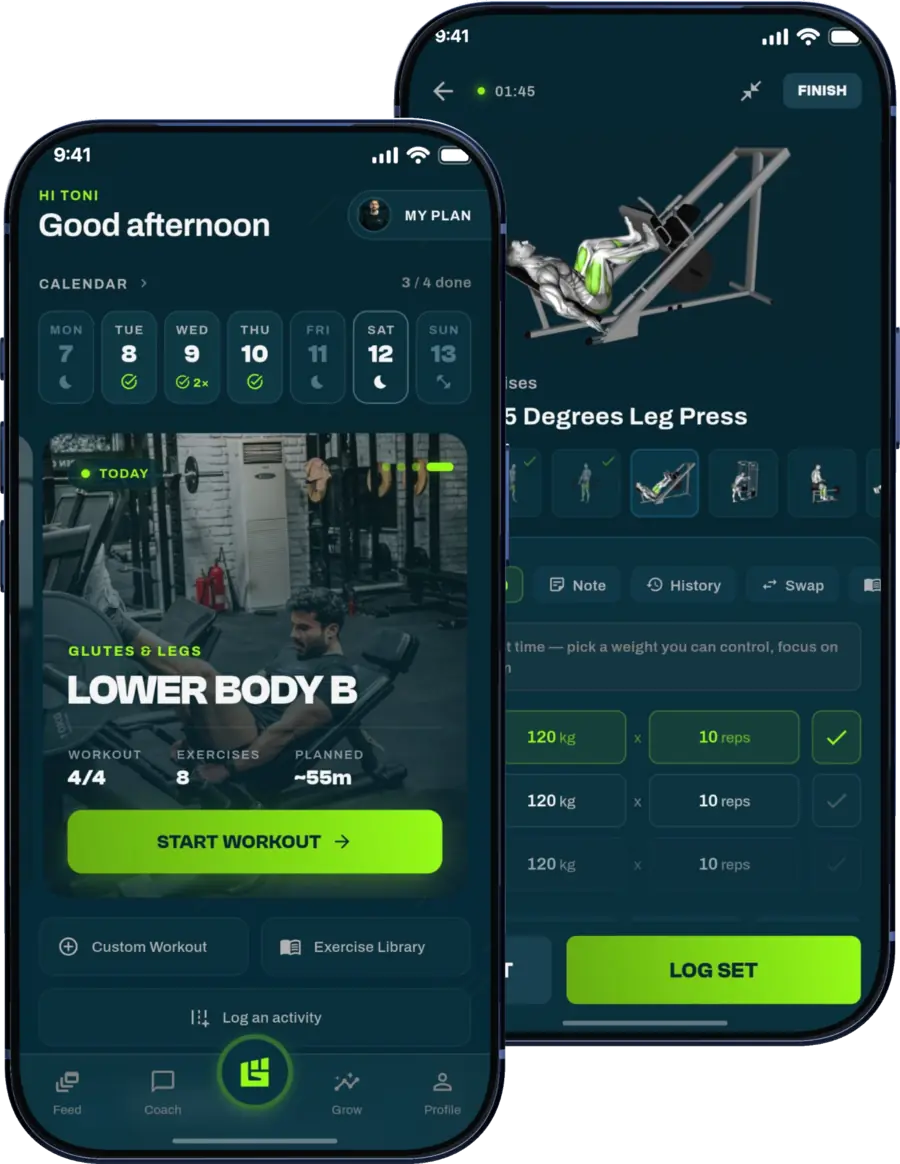
Take the guesswork out of training
Get a personalized workout plan built around your goal, equipment and schedule. Train smarter, track every rep and keep moving forward, one workout at a time.






Most new gym-goers assume motivation should stay high if the goal matters enough. In practice, motivation rises and falls. What keeps people going is structure that still works when motivation drops.
Practical rule: If your plan only works on your most disciplined week, it isn't a good plan.
The real problem sits below the workout
People often frame quitting as “I lost discipline” or “I got too busy.” Sometimes that's partly true, but it's incomplete. Early dropout usually comes from a stack of smaller failures:
- Unclear expectations about how fast progress should happen
- Too much friction around scheduling, commuting, or deciding what to do
- Low confidence in form, exercise order, or machine setup
- No response plan for missed workouts, low motivation, or rough weeks
That's why many individuals quit the gym within 90 days. The first phase demands behavior change before it delivers enough reward to feel self-sustaining. If you don't solve the psychological load and the program design at the same time, the habit never gets strong enough to survive normal life.
The psychological traps that derail your progress
A lot of people stop training long before they cancel. The behavior changes first. They start skipping one planned day, then shorten sessions, then avoid exercises they don't feel good at, then stop opening the app or showing up at all.
One useful way to spot this pattern is the invisible decline. Industry commentary notes that the danger window often starts when attendance drops from three sessions a week to one, which points less to pricing or results and more to a loss of routine, accountability, and feeling noticed (discussion of the invisible decline in gym attendance).

All-or-nothing thinking ruins more routines than bad programming
This is the trap I see most often. Someone misses two workouts and decides the week is blown. They eat one off-plan meal and turn it into a lost weekend. They can't do the full hour, so they do nothing.
That mindset turns normal inconsistency into a full reset. Training doesn't need perfection. It needs repeat exposure. A short session, a reduced workout, or a modified day keeps the identity intact. Skipping because the day isn't ideal breaks it.
A better standard is simple: keep the habit alive, even when the session isn't impressive.
Comparison and intimidation drain confidence
Beginners often think everyone else knows exactly what they're doing. They compare their numbers, body composition, and movement quality to people who may have been training for years. That comparison makes the gym feel like a place where they're being evaluated instead of a place where they're learning.
Here's what helps. Reduce decision load. Walk in with a written plan. Know your first exercise, your backup option, and your exit point. Confidence grows when the session is specific.
For people whose mental side of training feels heavier than the physical side, support outside the gym can help. Resources like Interactive Counselling for sport psychology can be useful when anxiety, self-criticism, or pressure are making consistency harder than it needs to be.
The workout is rarely the only problem. The story you tell yourself about the workout matters just as much.
Burnout often starts before you notice it
Some people don't quit because they're lazy. They quit because they're running hot. They train too hard too soon, stack intense sessions onto stressful weeks, and treat fatigue like weakness until the whole routine starts feeling expensive.
Watch for a few common signs:
- Sessions feel heavier mentally than physically, even before you start
- You keep postponing workouts instead of deciding on a lower-effort version
- Small setbacks feel personal, not logistical
- You stop logging progress because you don't want to confirm a dip
If that sounds familiar, this guide to preventing workout burnout is worth reading. The fix is usually not more hype. It's better pacing, less friction, and more realistic recovery.
Why generic gym programs are set up to fail
Many gym-goers don't need more motivation quotes. They need a better program.
The fitness industry keeps handing out templates that look organized on paper but break down in real life. A beginner downloads a body-part split written for someone with more experience. A busy professional gets a plan that assumes long sessions and perfect weekly availability. An athlete follows a strength block that doesn't account for fatigue from conditioning work.
Industry analysis sums up the core issue well: most gyms provide access to equipment but not a system for results, and three recurring failure points show up again and again: no clear plan, lack of accountability, and progress not being tracked (industry analysis on why gym members quit).

Access isn't the same as direction
Walking into a gym with machines, racks, cables, and cardio equipment doesn't solve the hard part. The hard part is knowing what to do today, why you're doing it, how hard to push it, and what to change when life interferes.
Generic plans usually fail in four ways:
| Problem | What it looks like in practice | What happens next |
|---|---|---|
| No clear progression | You repeat workouts without knowing what should improve | Sessions feel random |
| Poor fit for schedule | The plan assumes more time than you have | Missed days pile up |
| No adjustment rules | Travel, soreness, or stress throw off the whole week | You feel behind |
| No tracking loop | You don't log reps, loads, or adherence | Progress becomes invisible |
When people say they're bored, they often mean the plan stopped making sense.
Accountability changes behavior before motivation does
Accountability isn't about guilt. It's about reducing drift. When nobody notices missed sessions and nothing in the program reacts to them, it's easy to disappear gradually.
A good program answers questions in advance:
- What's the minimum effective session if time gets tight?
- What's the substitute if equipment is taken?
- What counts as progress besides body weight?
- What should change after a missed week?
That's why static PDFs and copied influencer routines tend to underperform. They don't adapt to the person. They ask the person to adapt to the plan.
If you're trying to move beyond guesswork, GrabGains' personalized fitness planning shows what a more structured approach looks like. The principle is simple. A useful program should fit your life well enough that you can keep following it when the week gets messy.
A plan doesn't fail only when it's ineffective. It also fails when it asks for a version of your life you don't actually live.
How to build a fitness habit that actually sticks
The fastest way to lose consistency is to expect habit formation to feel automatic too early. A lot of people still carry the old idea that a routine should lock in within a few weeks. That expectation creates unnecessary panic when training still feels effortful.
Credible coverage points out that the 21-day habit rule is a myth. The average time is about 66 days, and the range is extremely wide, from 18 to 254 days (habit formation discussion in a fitness context). That range matters because it explains why a rigid, one-timeline-for-everyone approach fails. Some people settle in quickly. Others need much longer before training feels natural.

Start smaller than your ambition
Most beginners don't start too small. They start too emotionally. They choose a version of training that matches their ideal identity instead of their current capacity.
Try this approach instead:
- Pick a weekly floor you can hit even on a stressful week. That might be two full sessions or a shorter baseline routine.
- Schedule the first slot, not just the goal. “Train more” is vague. “Tuesday after work” is actionable.
- Reduce setup friction. Pack your bag, save the workout, and decide the first exercise before the day starts.
This doesn't look dramatic, but it works because it removes negotiation.
Use the good-enough workout
A sustainable routine needs a fallback option. If your only acceptable session is the full ideal session, you'll skip too often.
A good-enough workout might mean:
- Cutting volume but keeping your main lifts
- Doing a condensed circuit when time is tight
- Switching to mobility and light cardio when recovery is poor
- Training at home instead of losing the day entirely
That fallback protects consistency. It teaches your brain that training is something you keep doing, not something you only do when conditions are perfect.
Track what keeps you engaged
People stay with routines longer when progress is visible. The key is choosing markers that respond faster than body composition.
Useful examples include workout completion, load lifted, reps achieved, exercise quality, energy before training, or how often you kept your planned schedule. These create a feedback loop. When you can see momentum, you're less likely to assume nothing is changing.
Nutrition support can help here too, especially if low energy keeps derailing sessions. For practical snack ideas around training, Gym Snack's guide to performance offers simple options that fit into busy days.
Build routines around real life, not fantasy life
The most durable training habits are anchored to things that already happen. Morning coffee. The commute home. A lunch break. The end of the workday. A child's practice schedule. Existing routines are stable. New routines survive better when attached to them.
If motivation keeps swinging hard week to week, this article on overcoming workout motivation issues gives practical ways to make consistency less emotional and more automatic.
Coaching cue: Your habit is solid when missing the workout feels unusual, not when every workout feels exciting.
Smart retention strategies for your fitness profile
People quit for different reasons, so the fix shouldn't be identical for everyone. The busy professional doesn't need the same retention strategy as a beginner who feels intimidated by the gym floor. A strength athlete doesn't need the same setup as someone just trying to establish a repeatable routine.
For the busy professional
Your biggest threat usually isn't lack of intent. It's schedule volatility.
You need workouts that survive interruptions. That means shorter sessions, faster transitions, and clear priorities. Instead of trying to fit an elaborate split into an unpredictable week, organize training around what must happen first. Keep the main movement, one or two accessories, and a simple conditioning finish if time allows.
A practical setup looks like this:
- Use anchored training windows tied to stable parts of your week
- Build A and B versions of each session, one full and one condensed
- Favor simple exercise menus over complex station-hopping
- Review adherence weekly so one chaotic week doesn't become a lost month
For people trying to develop consistent health routines, this style of planning tends to work better than aiming for perfect compliance.
For the beginner
Beginners often leave because every workout feels like a test. They're unsure about form, machine settings, exercise order, and whether they're doing enough. When confidence is low, even entering the gym can feel costly.
The answer is guided simplicity. Choose fewer movements. Repeat them often enough to learn them. Progress only when the technique is stable and the session feels understandable from start to finish.
A beginner-friendly retention model usually includes:
| Focus area | Better choice | Why it helps |
|---|---|---|
| Exercise selection | Familiar, repeatable movements | Reduces cognitive overload |
| Progression | Small increases and clear rules | Builds trust in the process |
| Session design | Moderate length with a clear endpoint | Prevents mental fatigue |
| Feedback | Form cues and visible logs | Creates competence |
The goal isn't variety. It's fluency.
For the strength or Hyrox athlete
More advanced trainees quit less from confusion and more from mismatch. They get stale because the program stops adjusting to performance, fatigue, or event demands. A strength athlete may need progressive overload with recovery managed tightly. A Hyrox-style athlete has to balance running, muscular endurance, and race-specific work without flattening every week into the same grind.
What retains this group is intelligent variation, not random variation.
That means keeping a few things steady so you can measure progress, while rotating enough variables to manage fatigue and maintain momentum. Load, pace, density, movement quality, and recovery all need to inform what happens next.
The right program challenges you. The wrong one just keeps asking for effort without explaining what the effort is building toward.
For this group, retention improves when the training system reacts to performance instead of forcing compliance with a static block that no longer fits.
Turning the 90-day cliff into a lifelong journey
Many gym-goers don't quit because they're weak-minded. They quit because the first phase of training asks for consistency before the routine feels natural, and most plans do a poor job supporting that phase.
The solution is less dramatic than people expect. Build a plan that fits your schedule. Lower friction. Track progress you can see. Expect motivation to fluctuate. Use a fallback workout instead of an all-or-nothing standard. Match the system to the person, whether that person is a beginner, a busy professional, or a performance-focused athlete.
That's how you move past the common hurdle of quitting the gym within 90 days. You stop relying on excitement and start relying on design.
If you want a training system that adapts instead of forcing you into a generic template, that's the standard to look for. The people who stay with fitness long term usually aren't more fired up than everyone else. They just have a structure that still works when life gets busy, motivation dips, and progress takes longer than expected.
If you want help turning short-term motivation into a durable training system, GrabGains is built for exactly that. It creates adaptive workout plans around your goals, tracks progress over time, and gives you a more practical alternative to generic programs that fall apart in practice. You can pre-register now to get early access on iOS and Android.
Get inspired and motivated