The mental side of body transformation: a practical guide
Unlock sustainable results by mastering the mental side of body transformation. Learn evidence-backed strategies for motivation, habits, and resilience. Most body transformation advice gets one thing backward. It treats the mind as a bonus, when it's often the part steering the whole process.
That matters because a lot of popular fitness content doesn't build motivation. It drains it. A 2024 survey cited by Happiful found that 48% of respondents felt insecure after seeing exercise transformation pictures, while 80% said this content made them feel unmotivated to exercise. If you've ever felt fired up by a dramatic before-and-after for about five minutes, then flat by the time your workout started, you're not weak. You're reacting like a human.
The mental side of body transformation isn't about repeating positive quotes in the mirror. It's about understanding how comparison, stress, habits, self-talk, and identity affect what you do in the gym, in the kitchen, and inside your fitness app. Those things shape whether you show up, how hard training feels, and whether you stay consistent long enough to see real change.
A smart body transformation plan should train two systems at once. Your body needs progressive workouts, recovery, and nutrition. Your mind needs structure, fewer decision points, and a way to interpret setbacks without turning them into self-criticism.


More than muscle the real challenge of transformation
The biggest obstacle in a body transformation usually isn't knowledge. The basics are commonly known: Lift, move more, eat with some intention, sleep better, repeat.
The harder part is handling what the process does to your attention and emotions.
A lot of people enter a fitness phase thinking they need more discipline. What they often need is protection from the mental traps built into transformation culture. The endless scroll of side-by-side photos teaches you to judge progress by appearance snapshots. That seems motivating on the surface, but it can turn training into a daily body audit.
Built for progress
Take the guesswork out of training
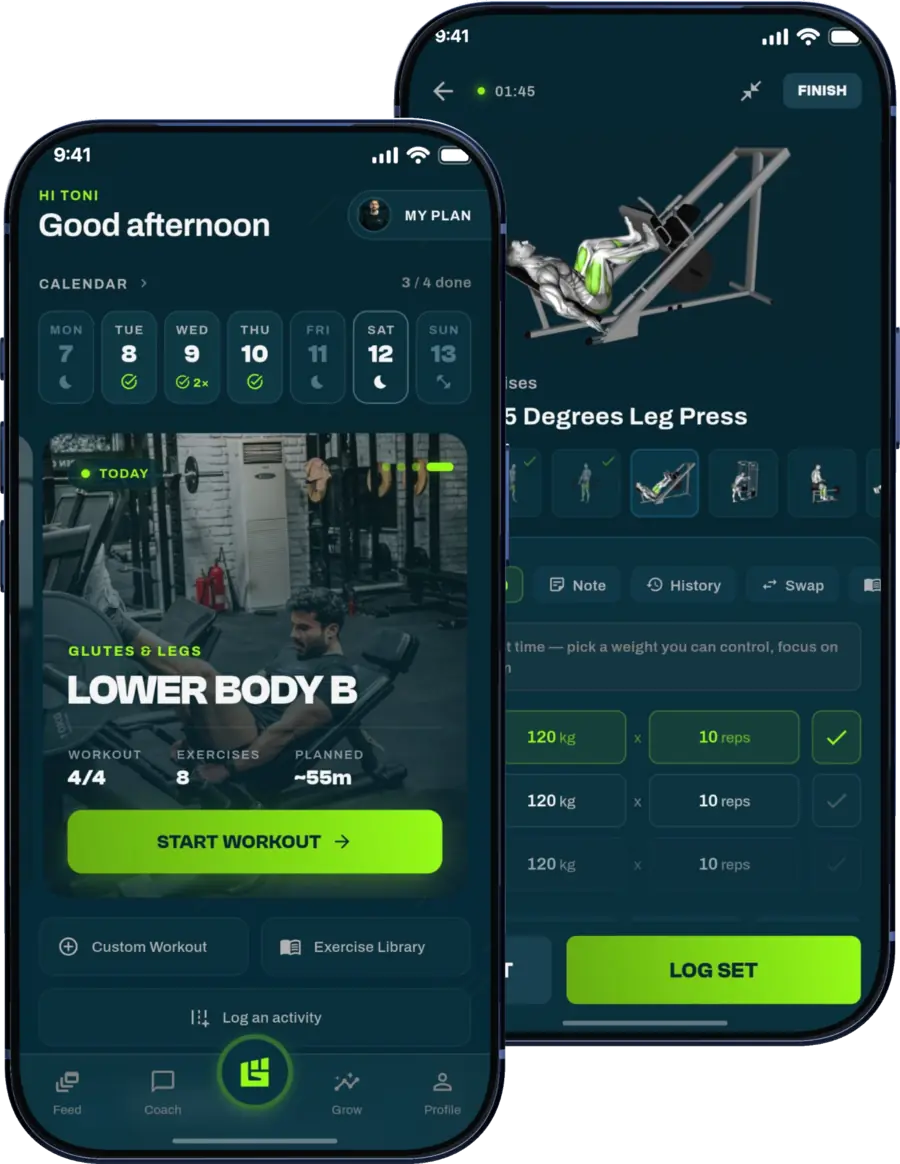
Get a personalized workout plan built around your goal, equipment and schedule. Train smarter, track every rep and keep moving forward, one workout at a time.






Why comparison kills consistency
When you compare your beginning to someone else's highlight reel, your brain stops reading training as progress and starts reading it as proof that you're behind. That shift changes behavior fast. A missed workout feels bigger. Water retention feels like failure. A normal slow week feels like regression.
Practical rule: If a piece of fitness content makes you want to criticize yourself more than train well, it's not motivation. It's noise.
There's also a hidden problem in transformation stories that focus only on visible outcomes. They often skip the emotional mess in the middle. They don't show the doubt, the impatience, the overcorrections, or the days when the scale says one thing and your body says another. Research discussed in body-image writing from Dr. Sharon Gam notes that transformation-focused content often leaves out restriction, stress, and unsustainable behaviors while broader body-image literature points to social comparison and self-surveillance as major concerns.
What people usually misunderstand
Readers often get confused here and think the answer is to stop caring about results. That's not it.
Results matter. Goals matter. But if your whole system depends on being constantly impressed by visible change, you'll struggle during the long stretches where progress is subtle. The mental side of body transformation means learning to value actions you can repeat, not just outcomes you can photograph.
That's a coaching shift. Instead of asking, “How fast can I transform?” ask, “What mental environment helps me train well this week?”
Why your brain dictates your physical progress
Your body doesn't train in isolation. Your brain sets the tone before the first rep starts.

If you walk into a session stressed, rushed, and mentally overloaded, the workout doesn't just feel harder emotionally. It often becomes less efficient physically. Exercise psychology research summarized by MIT Press reports that anxiety-related muscle tension reduces movement efficiency, and mental fatigue raises perceived exertion, which is consistently linked to worse endurance performance.
That sounds technical, but the effect is simple. When your brain is tense, your body tends to waste energy.
Perceived exertion is not imaginary
Think about carrying groceries up stairs after a calm Saturday morning versus after a brutal workday full of meetings, messages, and bad sleep. The stairs didn't change. Your legs didn't suddenly disappear. But the task feels heavier because your brain is reading effort differently.
That's what many trainees miss. Perceived exertion isn't fake effort. It's the brain's running estimate of how demanding the task feels right now. If that estimate rises early, pacing changes, form gets sloppy, and people cut sessions short.
This is one reason people blame themselves for being “lazy” when they are mentally cooked.
For a deeper look at that overlap between mental load and physical output, this breakdown of how nervous system fatigue affects your workouts is useful.
Stress changes movement quality
Anxiety often shows up in the body as extra tension. Shoulders creep up. Grip gets too tight. Breathing gets shallow. Tempo gets rushed.
In lifting, that can turn a smooth set into a fight against your own stiffness. In cardio, it can make a steady pace feel jagged and uncomfortable much earlier than expected. You're still working, but some of your energy leaks into guarding, bracing, and overreacting.
A good session starts before the first rep. It starts with the mental state you bring into the room.
What this means in practice
You don't need a complicated pre-workout ritual. You need a repeatable one. Before training, reduce friction and reduce noise.
A practical pre-session mental reset might include:
- A clear first step: Open your workout plan before you enter the gym so you're not deciding what to do under pressure.
- Simple breathing: A minute of slower breathing can help lower that rushed, clenched feeling.
- One performance cue: Use one thought like “smooth and controlled” instead of five different technical corrections.
- Fewer decisions: Keep the session structure obvious. Decision fatigue burns energy before the work begins.
That's why the mental side of body transformation isn't separate from programming. Your plan should lower cognitive load, not add to it.
How to build motivation and habits that last
Motivation is useful, but it's unreliable. It comes in spikes. Habits carry the boring middle.
Individuals often start with an external reason. They want to look better for a trip, fit into old clothes, or feel less uncomfortable in photos. That's a normal spark. The problem starts when they expect that spark to keep burning every day. It won't.
Lasting change usually happens when motivation shifts from appearance pressure to personal meaning. You stop training only to change your body and start training because you like what the process does for your energy, confidence, focus, or sense of control.

Use the cue routine reward loop
A lot of readers get stuck because they think habits start with determination. They usually start with design.
The habit loop is simple:
- Cue
This is the trigger that tells your brain it's time to act. It could be a calendar reminder, laying out shoes, or training right after your last work call. - Routine
This is the actual behavior. Not “be healthier.” Something concrete like opening your workout, warming up, and completing the first exercise. - Reward
This is what teaches your brain that the action was worth repeating. A checked-off session, seeing your streak, logging weights, or feeling mentally clearer after training.
If your routine is solid but the cue is weak, you'll forget or delay. If the cue is strong but the reward is vague, the habit won't stick.
Turn app features into behavior anchors
Technology can help if you use it intentionally. A fitness app shouldn't just store workouts. It should support behavior.
Here's how that bridge looks in practice:
| Mental Challenge | Psychological Strategy | Supporting GrabGains Feature |
|---|---|---|
| Skipping workouts because the day gets busy | Set a fixed cue tied to your schedule | Planned workout access on mobile |
| Feeling overwhelmed by choice | Reduce decisions before training starts | Goal-based workout planning |
| Losing momentum when progress feels invisible | Make effort visible | Progress tracking and visual analytics |
| Quitting after a disrupted week | Return to the next action quickly | Real-time logging and clear session history |
One practical example is using a notification as the cue, the workout itself as the routine, and logging completed sets as the reward. If you tend to wait until you “feel ready,” build a system that starts before motivation has a chance to argue.
If consistency has been the hard part, this guide on how to overcome gym motivation failure can help you tighten the system around your real life.
Build for low-motivation days
A good habit plan isn't built for your most inspired day. It's built for your most distracted one.
Try this:
- Shrink the entry point: Tell yourself you only need to start the warm-up.
- Attach training to an existing routine: After coffee, after work, after school drop-off.
- Track actions, not feelings: Log whether you trained, not whether you felt motivated.
- Protect the pattern: Missing once is life. Missing repeatedly usually means the system is too fragile.
The mental side of body transformation gets easier when showing up becomes automatic enough that your emotions don't get the final vote.
What to do when you hit a plateau or lose momentum
Plateaus mess with people because they feel personal. You're doing the work, but the mirror, the barbell, or your energy isn't responding the way you expected. That's when many people stop interpreting data and start attacking themselves.
The more dangerous version of this comes from a mindset that sounds healthy on paper. Push harder. Stay hungry. Never settle. But motivation can twist into obsession. Research summarized by Santa Clara University reports that people with lower BMI and a growth mindset were more likely to experience negative body image than other groups because progress orientation can turn into constant comparison, shame, and over-exercise.
Read the plateau correctly
A plateau doesn't always mean your plan stopped working. It can mean several different things:
- Recovery is lagging: Training stress may be fine, but sleep, food, or mental strain may be pulling in the other direction.
- Your expectations are unrealistic: People often expect visible or performance change on a timeline that biology doesn't follow.
- Your plan needs adjustment: Exercise selection, volume, intensity, or schedule may need to change.
- You're measuring too narrowly: If you only track one metric, you can miss progress happening elsewhere.
That's why I tell clients to treat plateaus like dashboard lights, not verdicts.
When progress slows, your first job isn't to judge yourself. It's to diagnose the situation.
Replace self-blame with adaptation
Adaptive planning matters. Instead of asking, “What's wrong with me?” ask, “What input needs to change?”
Sometimes that means reducing volume for a week. Sometimes it means swapping an exercise that keeps irritating a joint. Sometimes it means acknowledging that your work stress is high and your current plan is asking for more than your life can support.
This is also why digital tools can help. An app that adjusts your training based on performance can reduce the urge to improvise emotionally. Rather than punishing yourself with random extra work, you follow a plan that reflects how you're responding.
That mindset overlap isn't limited to fitness. If your stalled training is happening alongside work exhaustion, this 2026 guide for founder burnout recovery offers a helpful way to think about recovery, stress load, and rebuilding capacity without turning every dip into a moral failure.
A simple plateau checklist
When momentum drops, review these questions before changing everything:
- Am I under-recovered or just impatient?
- Did my routine break because of life logistics or loss of interest?
- Is my plan still matched to my current schedule and energy?
- What signs of progress am I ignoring because they aren't visual?
That approach keeps the mental side of body transformation grounded. You respond with useful adjustments, not panic.
The identity shift that makes transformation permanent
At first, fitness feels like something you're trying to do. Later, if the process sticks, it starts to feel like someone you are.
That shift is subtle. A person begins by forcing workouts onto the calendar. Months later, they don't debate every session the same way because training has become part of their self-image. They don't see themselves as a person “getting back on track” every week. They see themselves as an active person who trains, even when life gets messy.

From doing workouts to becoming consistent
Here's what that often looks like in real life.
In the early phase, someone says, “I need to work out today.” That sentence sounds temporary, like a task on a list. Later, the language changes to, “I train on Mondays,” or “I don't feel right when I miss movement for too long.” The behavior repeated often enough starts to rewrite identity.
That matters because identity is more stable than motivation. Motivation asks, “Do I feel like it?” Identity asks, “What does a person like me usually do?”
Why exercise reinforces the shift
This identity change isn't just mental storytelling. Physical activity feeds it. A review in PMC notes that regular physical activity improves mood, sleep, self-esteem, and body image, and also supports healthier hypothalamus-pituitary-adrenal axis function. In plain language, exercise can make you feel and function better in ways that support keeping the habit alive.
That creates a useful loop:
- You train consistently
- You feel more capable and regulated
- You trust yourself more
- The identity gets stronger
- Showing up gets easier
Your workout history is more than data. It's evidence.
This is one reason progress tracking matters psychologically. A record of completed sessions, repeated lifts, and steady effort gives you proof that the new identity is real. Not perfect. Real.
When the shift feels uncomfortable
Some people resist this stage because identity change can feel disorienting. If you've spent years thinking of yourself as inconsistent, out of shape, or always starting over, becoming someone more disciplined can create internal friction. That's normal.
If that feeling runs deeper than fitness and starts to touch your wider sense of self, this article on how to deal with identity crisis offers a useful mental-health lens on rebuilding identity with patience rather than panic.
Permanent transformation doesn't mean your body stays frozen in one ideal form forever. It means your behaviors and self-concept become sturdy enough that you can keep returning to healthy action.
Putting your mental toolkit into practice today
The mental side of body transformation works best when you stop treating each problem as separate.
Low motivation, inconsistency, plateaus, and self-doubt often come from the same place. You're trying to change your body with a system that doesn't support your brain. The answer isn't more pressure. It's a better toolkit.
Your practical toolkit
Keep it simple and usable:
- Manage input: Reduce comparison-heavy content that leaves you discouraged.
- Lower training friction: Decide your session before the workout starts.
- Use habits instead of hype: Build cues, repeat routines, and make completion feel visible.
- Reframe stalls: Read slow progress as feedback, not failure.
- Strengthen identity: Collect proof that you're becoming a person who follows through.
If you want your plan and your tools to work together, structured platforms can help. For example, AI-powered training programs can reduce decision fatigue by giving you a clear next step instead of asking you to build every session from scratch.
Start with one action today
Don't try to overhaul your whole life tonight. Pick one move that improves your mental environment around training.
You could delete a comparison-heavy account. Set a recurring workout cue. Shorten your next session so it feels easier to start. Or review your recent training log and identify one sign of progress you've been ignoring.
If attention, memory, and mental fatigue have been making consistency harder, this guide on how to improve cognitive function is a useful companion read. Better focus doesn't replace training, but it can make follow-through easier.
Body transformation gets called a physical challenge because the changes are visible on the outside. But the process is built from invisible decisions. How you interpret effort. How you respond to setbacks. What you do when no result is obvious yet.
Train those skills, and the physical side gets a lot more durable.
If you want a simpler way to turn these ideas into action, GrabGains offers personalized workout planning, adaptive routines, exercise guidance, and progress tracking in one place. It's built for people who want less guesswork, clearer next steps, and a training system they can stick with.
Get inspired and motivated