AI Workout plan vs free program choosing your best fit
Deciding on an AI workout plan vs free program? This guide compares personalization, results, and cost to help you choose the right path for your fitness goals. When you get down to it, the real difference between an AI workout plan and a free program is simple: one is built just for you, and the other is built for everyone. An AI plan is a living, breathing guide that changes as you get stronger, while a free program is more like a static PDF you download once.
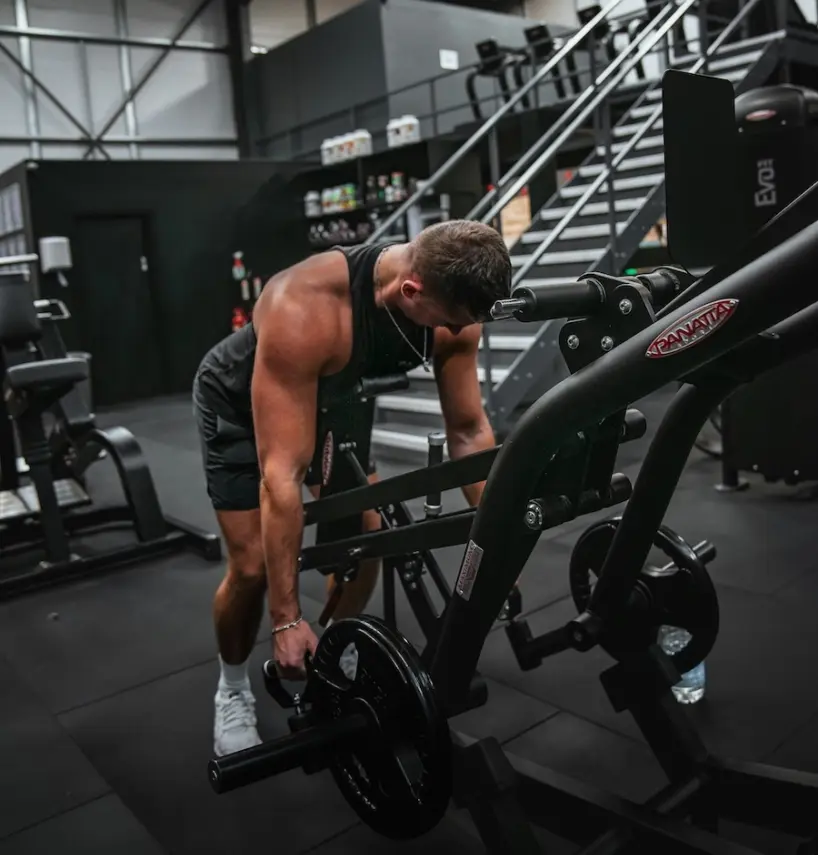
Choosing your path to peak fitness
The fitness world gives you plenty of options, but most people land on one of two: an advanced AI workout plan or a standard free program. The promise of smart, customized training from an AI is hard to resist, but so is the zero-cost appeal of a free plan. This guide will help you cut through the noise.
We’re going to look past the marketing and break down what actually matters for your progress. Making the right choice isn't just about getting started—it's about staying in the game, avoiding injury, and actually hitting the goals you set for yourself.
AI vs. free plans at a glance
To see the fundamental split, let's put them side-by-side. This table shows you exactly where a generic free plan and a smart AI platform differ.
Built for progress
Take the guesswork out of training
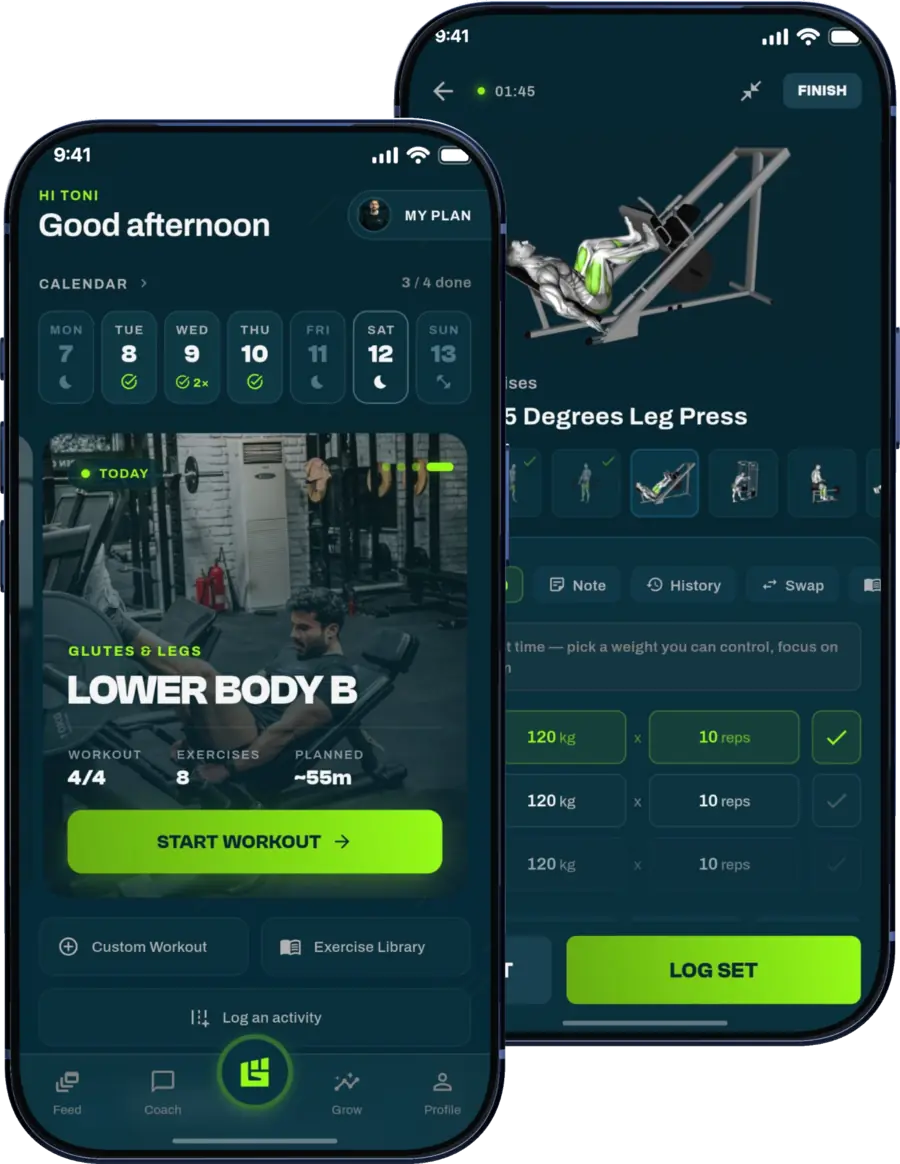
Get a personalized workout plan built around your goal, equipment and schedule. Train smarter, track every rep and keep moving forward, one workout at a time.






| Feature | Free Program | AI Workout Plan |
|---|---|---|
| Personalization | Generic, one-size-fits-all template. | Dynamic, based on your goals and performance data. |
| Adaptability | Static; does not change based on feedback. | Real-time adjustments based on workout difficulty and progress. |
| Progress Tracking | Manual logging (pen and paper, spreadsheet). | Automated analytics and visual performance charts. |
| Form & Safety | Limited to no guidance; high self-reliance. | Extensive exercise library with video demos and alternatives. |
| Cost | Free upfront. | Subscription-based. |
Think of it this way: a free plan gives you a map, but an AI plan acts as your personal GPS. It doesn't just show you the destination; it reroutes you in real-time when you hit a roadblock or find a new shortcut.
By the end of this comparison, you’ll have a clear framework for deciding which path truly aligns with your fitness goals. Whether you’re a beginner who needs solid guidance or a seasoned athlete trying to optimize every last detail, knowing these differences is the key to investing your effort wisely.
The power of true personalization and adaptability
When you compare an AI workout plan to a free program, the single biggest difference is how the plan molds to you. Free programs are almost always static. Think of a generic PDF you downloaded or a fixed routine from a blog post; they offer a starting point, but that's where the help ends.
These one-size-fits-all plans can’t account for your actual fitness level, what equipment you have, or how you feel on any given day. This rigidity is a massive reason why so many people get stuck.
It often leads directly to plateaus, boredom, or even injury, because the plan has no idea when to push you harder or when you need to pull back.
The static nature of free programs
A free program is like getting a pre-printed map for a road trip. It shows you one fixed route from A to B. It doesn’t know about traffic, road closures, or that you might want to take a scenic detour.
- No Feedback Loop: It can't tell if an exercise is too hard or too easy. It just lists the movement and reps.
- Equipment Blind: The plan doesn't know you don't have a leg press at your gym or only have a single pair of dumbbells at home.
- Ignores Life: Had a terrible night's sleep or a stressful day at work? That PDF on your phone doesn't care; it still demands the same intense workout.
This lack of responsiveness is why most people abandon these plans. The numbers show a clear trend: the fitness app market is projected to grow from USD 17.71 billion in 2025 to USD 56.9 billion by 2030, a shift driven almost entirely by AI personalization. Free programs suffer from a 50-60% churn rate because they don't adapt; only 20% of users stick with them past three months. AI flips this by delivering 30% higher adherence, with users logging 2.5x more workouts weekly.
The dynamic power of adaptability
An adaptive workout plan, on the other hand, is a dynamic, living system. It offers true personalization that evolves with you, session by session. It’s less like a static map and more like a personal GPS for your fitness journey, constantly rerouting to find the most efficient path to your goals.
An intelligent adaptive workout builder, like the one inside the GrabGains app, learns from your performance. Did you crush a personal best on squats? The app registers this and might increase the weight or volume in your next leg session.
An adaptive workout plan doesn't just tell you what to do; it learns from what you've done. This feedback loop is the engine of consistent, long-term progress, eliminating the guesswork that stalls so many fitness journeys.
Struggled to finish your last set of pull-ups? The app takes note and might adjust the exercise or rep scheme next time to ensure you’re challenged but not defeated. This level of detail makes all the difference.
Core differences AI vs free workout plans
This table offers a direct, side-by-side look at how adaptive plans and free programs stack up across the features that matter most for achieving your fitness goals.
| Feature | Free Program | Adaptive Workout Plan (e.g., GrabGains) |
|---|---|---|
| Personalization | Generic, one-size-fits-all. | Individualized to your goals, equipment & history. |
| Adaptability | Static. No adjustments for performance or fatigue. | Dynamic. Adjusts weekly based on your feedback & progress. |
| Progress Tracking | Manual or non-existent. | Automated. Tracks every set, rep, and weight. |
| Accountability | Relies entirely on self-motivation. | Built-in with reminders, progress reports & streaks. |
| Safety & Form | No guidance. High risk of poor technique. | Video demos & instructions for every exercise. |
| Time Efficiency | Inefficient. Wasted time on ineffective exercises. | Optimized to give you the best results in the least time. |
| Cost | Free upfront, but can cost you time and results. | Small monthly fee for a fully guided experience. |
As you can see, the value isn't just in the plan itself, but in its ability to react and guide you over the long haul.
Real-world scenarios: AI vs. free
Let's look at how this plays out in practice.
Scenario 1: You're Feeling Fatigued
- Free Program: Your downloaded plan says "5x5 Heavy Squats." You force yourself through it, your form suffers, and you risk injury.
- AI Workout Plan: You log into your app and rate your energy as low. The plan immediately adjusts, perhaps suggesting lighter squats, a different exercise, or a mobility-focused session to aid recovery.
Scenario 2: You Hit a Strength Plateau
- Free Program: You've been stuck at the same bench press weight for weeks. The plan offers no solutions, so you keep repeating the same failed workout.
- AI Workout Plan: The algorithm detects the plateau. It automatically introduces a new strategy, like a deload week, a change in your rep scheme to focus on hypertrophy, or adding accessory exercises to target weak points.
This adaptive approach isn't just for workouts. Just as a personalized plan offers tailored exercise routines, an optimal fitness journey also considers a comprehensive personalized nutrition plan, designed specifically for your body and goals. It's about creating a complete, responsive ecosystem for your health, and you can build it all at https://grabgains.com/.
Measuring what matters with performance analytics

Real progress is built on data, not guesswork. This is where the gap between an AI workout plan and a free program becomes a chasm. With a free plan, you’re usually on your own with a notebook, a clunky spreadsheet, or worst of all, just your memory.
This old-school approach makes it nearly impossible to spot trends, identify your weak points, or see how you’re really performing over time. Your workout data just sits there, unable to inform your next session or offer any actual insight. It’s like trying to navigate a new city by occasionally glancing at a paper map instead of using a live GPS.
From manual logs to actionable insights
Adaptive training platforms turn your workout data from a simple record into a powerful tool for progress. By automatically logging every rep, set, and pound lifted, apps like GrabGains generate visual charts and clear insights that paint a full picture of your fitness journey.
You're no longer just "lifting weights." You're collecting performance data that the system uses to guide you. Moving from manual logging to automated analytics is a huge step up for anyone serious about getting results.
An adaptive platform doesn't just record your history; it interprets it. By tracking key metrics, it gives you tangible proof of your hard work and shows you exactly how to train smarter to break through your next plateau.
This data-first approach is causing a massive shift in the fitness world. The global AI in fitness and wellness market is valued at USD 10.68 billion in 2025 and is projected to explode to USD 57.80 billion by 2035. This growth shows why users are ditching static free programs, which see dropout rates as high as 70% in the first month because they can’t adapt. In contrast, AI platforms boost retention by 40-50% by using real-time data to create workouts that are both engaging and effective. You can find out more about the explosive growth of AI in fitness and wellness from industry reports.
Key metrics that drive progress
So, what exactly is an AI tracking that a notebook can’t? The magic is in calculating and visualizing the metrics that reveal the true story of your training.
- Volume Load: This is arguably the most important number for muscle growth (hypertrophy). It’s calculated as (sets x reps x weight). An AI automatically tracks your total volume for every exercise and muscle group, making sure you’re applying progressive overload week after week.
- Intensity Trends: Are you actually getting stronger? AI tracks the average weight you lift for specific rep ranges, showing you if your intensity is increasing over time.
- One-Rep Max (1RM) Estimates: Instead of risky max-out attempts, AI uses the data from your regular sets to estimate your 1RM. This gives you a safe and reliable way to gauge your peak strength and set your training percentages correctly.
These aren't just numbers on a screen; they are the vital signs of your training. Watching your volume load chart trend upward is an incredible motivator. Seeing your estimated 1RM for the bench press jump by ten pounds gives you the confidence to slide another plate on the bar.
Making data-driven decisions
Ultimately, the detailed analytics in an AI workout plan empower you to make smarter choices in the gym.
Without AI: "I feel stuck on my overhead press. Maybe I should just do more reps?"
With AI: "My dashboard shows my overhead press volume has been flat for three weeks, and my triceps volume is pretty low. The app is suggesting I add dips to my routine to build up my triceps, which should help me smash that plateau."
This is the fundamental difference. One approach is based on a hunch, the other on hard evidence. By giving you a data-backed view of your progress, performance analytics provide the clarity you need to train with purpose, overcome plateaus, and stay motivated for the long haul.
Prioritizing safety and injury prevention
Proper form is the bedrock of safe and effective training, yet it's a massive blind spot in most free programs. A generic plan might tell you what to do, but it rarely shows you how to do it right, leaving you to piece things together from online videos. This guesswork not only limits your results but seriously increases your risk of injury.
An AI workout plan, on the other hand, is built with safety in mind from the ground up. It understands that most people don't walk into the gym knowing how to do a perfect Romanian deadlift. Instead of leaving you to chance, it provides a crucial layer of built-in guidance.
The dangers of guesswork in free programs
When a free program simply lists "Barbell Squats," it puts the entire burden of safety on your shoulders. It’s up to you to figure out the right stance, depth, and bar path. Without personalized feedback, it’s far too easy to develop bad habits that can lead to nagging pain or even a serious injury down the road.
A static PDF can't see that you have tight ankles, making deep squats risky. It can't offer a safer alternative, either. This one-size-fits-all approach is a gamble with your body. No matter which route you choose, incorporating effective warm-up routines is a non-negotiable step to prepare your body for exercise and help prevent injuries.
How adaptive platforms provide a virtual spotter
In the AI workout plan vs free program debate, safety is one of the clearest dividing lines. Adaptive training platforms like GrabGains are designed to act as your virtual spotter and technique coach, using built-in features to minimize risk.
- Extensive Exercise Libraries: A training app gives you a library of professionally demonstrated movements. GrabGains, for example, includes a wide range of exercises, each with clear videos from multiple angles so you can see exactly how it’s done.
- Step-by-Step Instructions: You don’t just get a video. You get clear, concise text instructions that break down each part of the lift, focusing on key cues like keeping your chest up during a squat or pulling your shoulder blades back during a row.
- Intelligent Exercise Swaps: If you don't have the right equipment or an exercise doesn’t feel right, the app suggests a safe and effective alternative. If the plan calls for a barbell press but you only have dumbbells, the system instantly swaps in a dumbbell press with its own form guide.
Here’s the bottom line: a free plan assumes you’re already an expert on exercise form. A guided plan assumes you’re there to learn and gives you the tools to do it safely. That built-in guidance makes it a fundamentally safer choice.
This focus on safety and guidance is a huge reason the fitness app market, valued at USD 12.91 billion in 2025, is projected to hit USD 39.35 billion by 2034. For beginners, guided plans can slash injury risk by 32% compared to following static routines without instruction. To learn more, you can read the full research about the growing fitness app market.
Ultimately, investing in an AI plan is an investment in your health and your ability to train for the long haul. By giving you the resources to master proper form, it ensures that every rep you perform is not only effective but safe, setting you up for sustainable, injury-free progress.
Which plan fits your life: real-world scenarios
Theory is one thing, but putting a plan into practice is another. To really see the difference between an AI workout plan and a free program, let's look at how they work for real people with real goals and schedules. The right tool always depends on the job.
The decision of which path to take often comes down to your goals and how much you're willing to invest in them.

This flowchart shows a clear split. Free programs are a great starting point for casual fitness, but AI plans offer a structured, protected path for anyone with specific performance goals.
The busy professional
Your career is demanding, and your schedule is a moving target. Getting to the gym is tough, and when you do, every minute has to count. You don't have time to waste on exercises that don't deliver.
- Free Program: A static PDF can't adapt to your life. If a meeting runs late and you suddenly have 30 minutes instead of an hour, a free plan falls apart. You either skip the workout or rush through half of it, feeling like you failed.
- AI Workout Plan: An AI platform is built for this. You can tell the app you have less time, and it will instantly generate an effective, condensed workout. It ensures every minute is spent on the exercises that give you the biggest return for your time.
Recommendation: For the busy professional, an AI workout plan is the clear winner. Its ability to adapt to a chaotic schedule and optimize for time efficiency makes it a far better choice for getting consistent results without adding more stress.
The hypertrophy enthusiast
Your main goal is building muscle, and you know this requires a smart approach to progressive overload. You track your lifts and need a plan that ensures you’re constantly challenging your muscles to grow.
- Free Program: You can track your volume load with a notebook, but it’s tedious. More importantly, a free plan offers zero guidance on how to apply progressive overload—when to add weight, change rep schemes, or introduce new exercises to break through plateaus. It's all guesswork.
- AI Workout Plan: This is where an AI really shines. It automatically tracks your volume, intensity, and estimated one-rep max. The algorithm uses this data to make sure your plan gets progressively harder, intelligently adjusting variables to keep you in the sweet spot for muscle growth.
Recommendation: The AI workout plan is designed for the hypertrophy enthusiast. The automated analytics and intelligent progression are essential for maximizing muscle gain and smashing through strength plateaus.
The hybrid athlete
You’re training for a race like HYROX, which demands a specific blend of strength and endurance. Your training needs to be highly specialized, balancing running intervals with functional strength to get you ready for race day.
- Free Program: Finding a free program for a niche sport like hybrid racing is tough. Even if you find one, it won't be customized to your current running pace or strength levels, creating a high risk of overtraining or injury.
- Adaptive Workout Plan: Advanced adaptive platforms like GrabGains can build specialized plans for exactly this. The system can program specific running distances and paces alongside the functional movements you’ll face, adjusting both elements based on your performance to make sure you peak at the right time.
Recommendation: A hybrid athlete needs a level of specificity that free programs just can't provide. An adaptive workout plan is essential for creating the balanced, periodized schedule needed to build both the strength and endurance to compete.
The complete beginner
You’re new to the gym and feel intimidated. Your priorities are learning correct form to stay safe and following a structured plan that tells you exactly what to do. You need guidance and a clear path to build confidence.
- Free Program: This is a dangerous choice for a beginner. With no form guidance, the risk of injury is incredibly high. The lack of structure also leads to confusion and frustration, causing many newcomers to quit before they ever see results.
- AI Workout Plan: An AI app acts like a personal trainer in your pocket. With video libraries for every exercise and a plan that progresses at a safe, manageable pace, it provides the structure and safety net a beginner needs to get started on the right foot.
Recommendation: Without a doubt, the AI workout plan is the best choice for a complete beginner. The built-in safety features and guided structure are critical for building a strong, safe foundation in the gym.
The true cost and value of your fitness investment
When you stack an AI workout plan against a free program, it’s tempting to let the price tags do the talking. "Free" always looks like a win at first glance, but that thinking misses the hidden costs tied to a generic, one-size-fits-all plan.
A free program might not cost you any money upfront, but it will almost certainly cost you something far more precious: your time. Every week you spend grinding through a workout that isn’t driving real progress is a week you can’t get back. The motivational drain from hitting plateaus, simply because your plan can’t adapt, is another cost that’s easy to overlook.
The hidden price of a free program
The true price of a free program usually surfaces in other ways. Think of them as hidden fees that can completely derail your fitness journey.
- Wasted Time: Inefficient workouts that don't apply progressive overload mean you’re putting in the hours for minimal returns.
- Injury Risk: Without proper form guidance or exercise selection, you're always one bad rep away from a setback. The potential cost of physical therapy bills will always outweigh a monthly app subscription.
- Lost Motivation: When the results stop coming, your drive vanishes. A plan that doesn’t evolve with you is a recipe for quitting.
A free program costs nothing upfront, but it can become expensive through wasted effort, potential injuries, and the frustration of spinning your wheels without going anywhere. An investment in a smart tool is an investment in your own efficiency and health.
Positioning adaptive plans as the smart middle ground
This is where the real value of an adaptive workout plan becomes clear. It’s not about choosing between a free PDF and a $3,000 annual commitment to a human personal trainer. Adaptive platforms like GrabGains sit in a powerful, accessible middle ground.
For a small monthly fee, you get the core benefits of a personal trainer—personalization, progression, and guidance—at a fraction of the price. The platform acts as your digital coach, making sure every workout is optimized to move you closer to your goals.
By speeding up your progress, protecting you with guided exercises, and making every minute of your training count, an adaptive workout plan delivers far greater long-term value. It turns your time and effort into measurable results, making it the smarter economic choice for anyone serious about their fitness. The upfront cost is an investment with a guaranteed return: your health, strength, and confidence.
Frequently asked questions
Choosing between a free program and an AI-driven plan brings up some common questions. Let's clear up the confusion so you can figure out what's right for you.
Can I get real results with a free workout program?
Absolutely, especially when you're just starting out. Any structured plan is better than no plan at all, and you’ll likely see some solid initial progress.
The problem is that free, generic programs are static. After a few months, most people hit a plateau because the workouts don't change as they get stronger. Your body adapts and stops responding to the same old stimulus, which is where progress stalls.
Is an adaptive workout app difficult to use?
Not at all. The best fitness apps, like GrabGains, are built to be incredibly straightforward. Getting started usually just means answering a few quick questions about your goals, experience, and the equipment you have.
The whole point is to make sophisticated training simple. The interfaces are designed to feel intuitive, so you can log your sets and track your progress without needing to be a tech guru.
How does an AI plan actually adapt to me?
It’s a simple feedback loop. The app uses your performance data—like the weights you lifted and the reps you managed—to understand where your strength is right now.
The real magic is in your feedback. After a workout, the app might ask you to rate how tough it was. That simple rating tells the algorithm whether to push you harder, hold the intensity, or even dial it back to help you recover. This ensures your next workout is perfectly calibrated to keep you progressing.
What if I only have limited equipment at home?
This is where AI plans really shine. A free program might be written for a fully-stocked gym, leaving you stuck. An AI platform, on the other hand, can create effective workouts using exactly what you've got.
During setup, you just tell the app you have a pair of dumbbells, some resistance bands, or even just your own bodyweight. The app then builds a complete and challenging routine using only those tools. You can get a great workout no matter where you are.
Ready to stop guessing and start progressing? Experience the power of truly personalized training with GrabGains. Download GrabGains on iOS or Android now to build a smarter workout plan that adapts to you.
Get inspired and motivated