Training
A fixed number of strength sessions per week, written down as a plan; two to three for beginners.
Seasonal challenge
The Winter Arc is a self-improvement trend from social media in which participants spend the last three months of the year, roughly October to December, on regular training and better habits. The aim is to have those habits in place before January. The trend has no official rules, so a structured 12-week strength plan and measurable targets for sleep, protein and steps give it a clear form.
Last updated:
Short answer
The Winter Arc is a self-improvement challenge of about 90 days that runs from 1 October to the end of December. Participants set their own goals, usually regular training, better nutrition, more sleep and fixed daily routines. A practical version combines two to three strength sessions per week with gradual progression, at least seven hours of sleep and enough protein.
The Winter Arc is a self-improvement challenge from social media that covers the last three months of the year. TODAY, the morning programme of the American broadcaster NBC, describes it as a 90-day challenge in which participants use October to December for personal development, health and fitness goals, so that new routines are established before the January resolution season [1].
TODAY attributes the term to a self-development creator on TikTok whose video from the end of September 2024 reached several million views. The idea behind it: the colder, darker months are usually a time of slowing down, and the Winter Arc turns them into a period of focused work on habits [1].
According to the news agency Associated Press, the challenge was created online by fitness and wellness influencers, so there is no standard definition and no single approach. For many participants, the aim is to have their goals and habits running by 1 January [2].
The Winter Arc has no official rules; every participant sets their own goals [2]. The goals that recur most often concern training, nutrition, sleep and daily routines. TODAY lists examples from the original video: getting up earlier, a fixed workout and nutrition plan, journaling and reading more. Other participants choose smaller goals, such as going to bed earlier or ten minutes outside in daylight every day [1].
Because the rules are self-chosen, the content varies widely; the five areas below recur most often. A measurable target per area makes it possible to check after 12 weeks whether a goal was met.
A fixed number of strength sessions per week, written down as a plan; two to three for beginners.
Regular meals with a protein source in each and a daily protein target in grams.
Fixed bed and wake times with at least seven hours of sleep. An earlier alarm needs an earlier bedtime.
A daily step target or a fixed walk, separate from the training sessions.
Reading, journaling or less time on the phone, often in a fixed morning or evening routine.
Pick one and the app builds your program around it, your equipment and the days you can train.
The Winter Arc starts on 1 October and runs until the end of the year, a period that TODAY describes as three months or 90 days [1]. From 1 October to 31 December is 92 days, slightly more than 13 weeks.
A 12-week training plan therefore fits into this period with about one week to spare, which can absorb a week lost to illness, travel or the holidays. A later start in October or November also works: the plan then runs into January with the same structure. The effects of training depend on how long and how consistently someone trains, not on the start date.
A 12-week Winter Arc plan works well as one strength training block in three phases: learning technique, building volume and training with heavier loads, followed by a test week. The structure follows the progression model of the American College of Sports Medicine (ACSM). For beginners, the ACSM recommends two to three sessions per week with loads that allow 8 to 12 repetitions, and three to four sessions per week after about six months of consistent training [3].
Progression means that the load increases once the body has adapted. The ACSM rule of thumb is to raise the weight by 2 to 10 percent as soon as the current weight can be lifted for one or two repetitions more than the target [3]. A network meta-analysis of 178 studies found that every tested combination of load, sets and frequency increased strength and muscle size compared with no training. Heavier loads (above 80 percent of the one-repetition maximum) produced the largest strength gains, and multiple sets ranked highest for muscle growth [4].
Each session in the table is a full-body workout with five or six exercises. The research on how many sessions per week suit muscle growth is summarised in training frequency for hypertrophy.
| Weeks | Focus | Sessions per week | Sets per exercise | Progression |
|---|---|---|---|---|
| 1–4 | Technique and routine | 2–3 | 2 | Weight for 10–12 clean repetitions; add repetitions week by week |
| 5–8 | Building volume | 3 | 3 | At 1–2 repetitions above target: raise the weight by 2–10% |
| 9–11 | Heavier loads | 3 (trained: 4) | 3–4 | Main lifts at 6–8 repetitions, other exercises at 8–12 |
| 12 | Test and review | 2 | 2 | Fewer sets; repeat the tests and measurements from week 1 |
A Winter Arc workout covers the main movement patterns in every session: a squat, a hip hinge, a push, a pull and a core exercise. Exercises for large muscle groups and multi-joint exercises come first, single-joint exercises after them, in line with the exercise order the ACSM recommends for maintaining training intensity [3].
With one pair of dumbbells, a session can consist of the dumbbell goblet squat, a Romanian deadlift, a dumbbell bench press, a one-arm row and a plank. Without equipment, squats, split squats, push-ups, rows under a sturdy table and planks cover the same patterns; progression then comes from more repetitions and harder variations.
In a gym, barbell exercises such as the barbell squat allow small, precise increases in load, which suits the progression rule in the plan.
| Movement pattern | At home | In the gym |
|---|---|---|
| Squat | 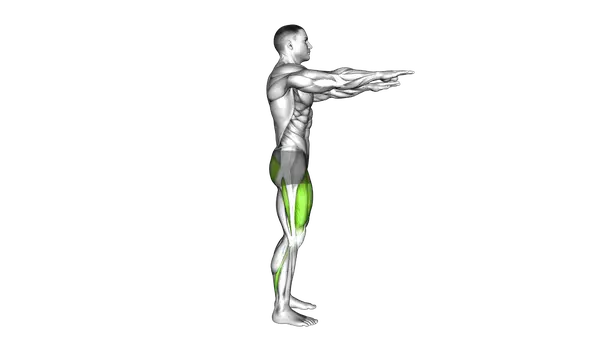 Bodyweight squat Bodyweight squat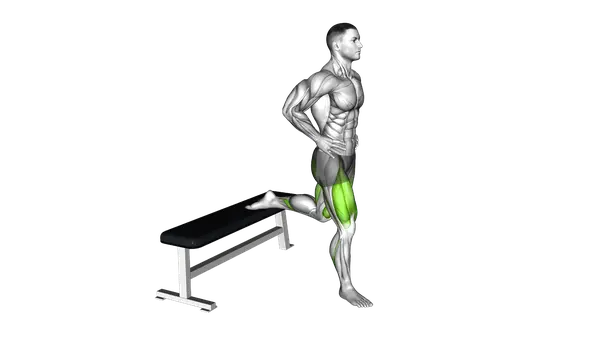 Bulgarian split squat Bulgarian split squat |
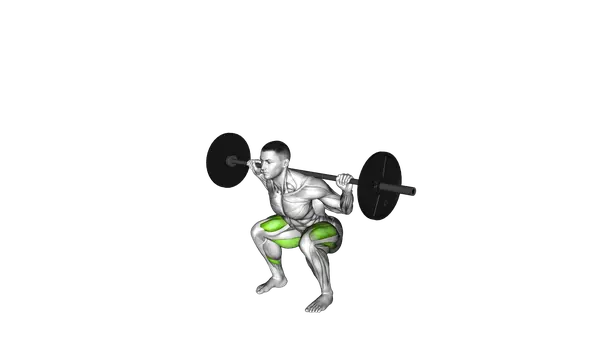 Barbell squat Barbell squat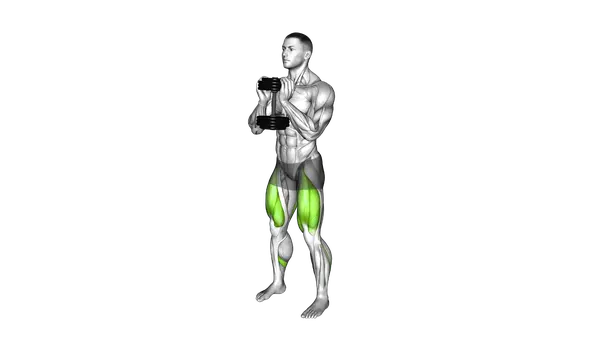 Goblet squat Goblet squat |
| Hip hinge | 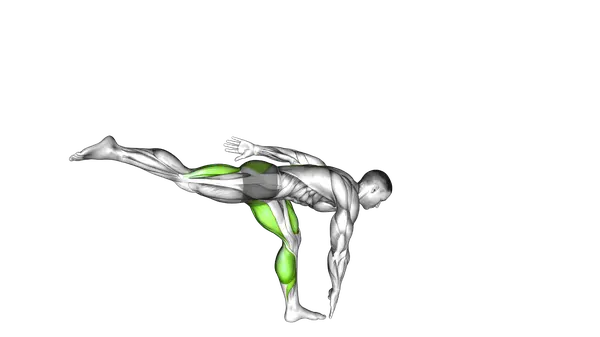 Single-leg Romanian deadliftGlute bridge Single-leg Romanian deadliftGlute bridge |
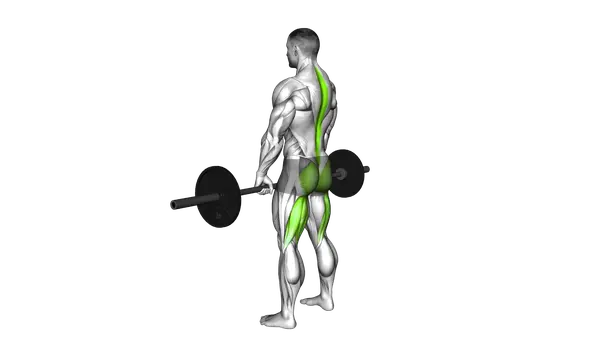 Romanian deadlift Romanian deadlift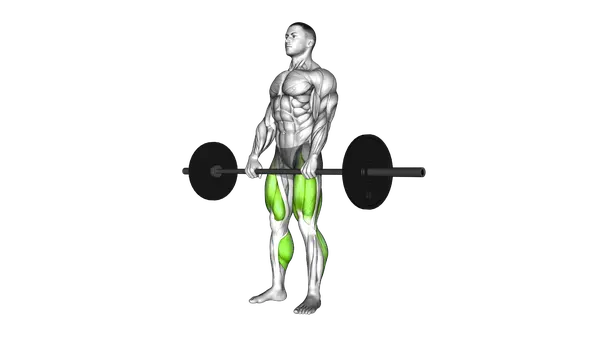 Deadlift Deadlift |
| Push | 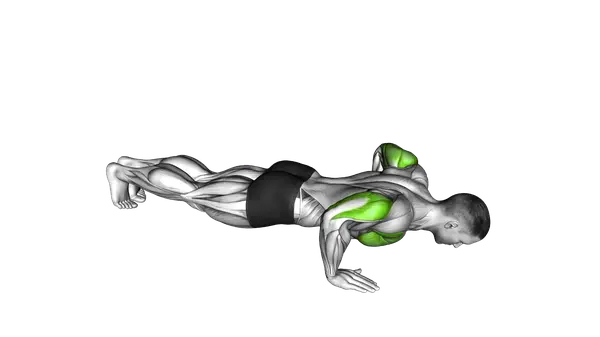 Push-up Push-up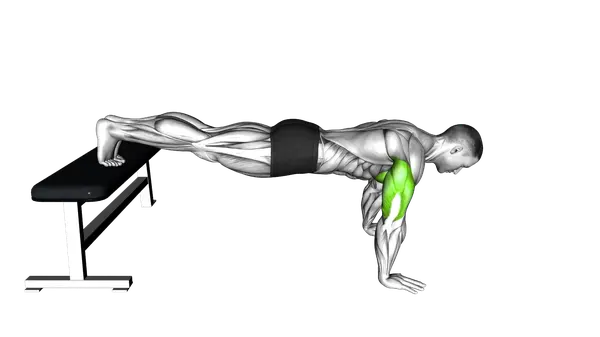 Decline push-up Decline push-up |
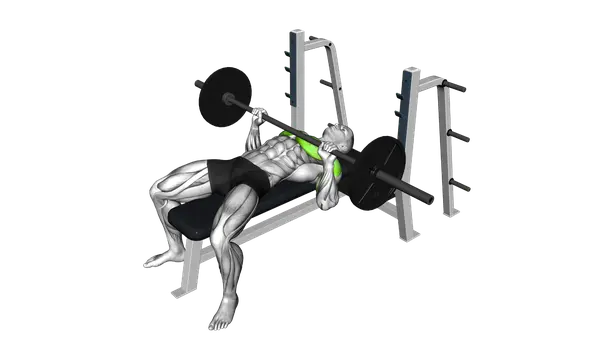 Bench press Bench press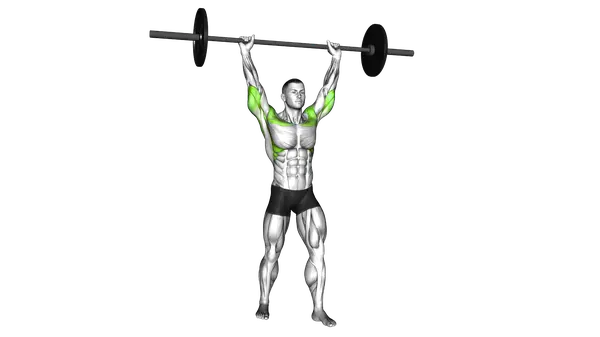 Overhead press Overhead press |
| Pull | Row under a table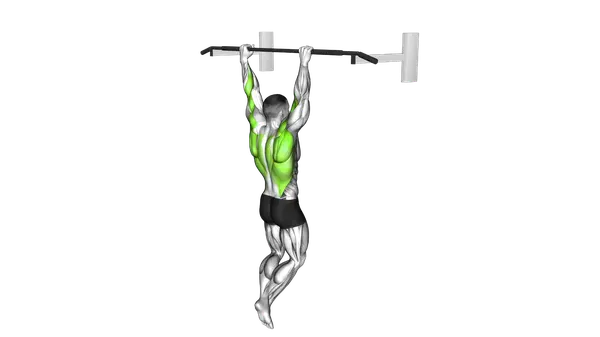 Pull-up on a door bar Pull-up on a door bar |
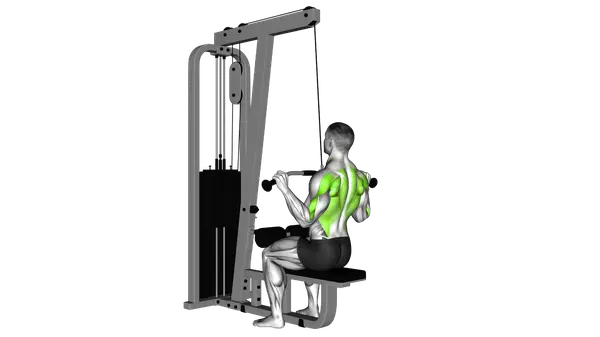 Lat pulldown Lat pulldown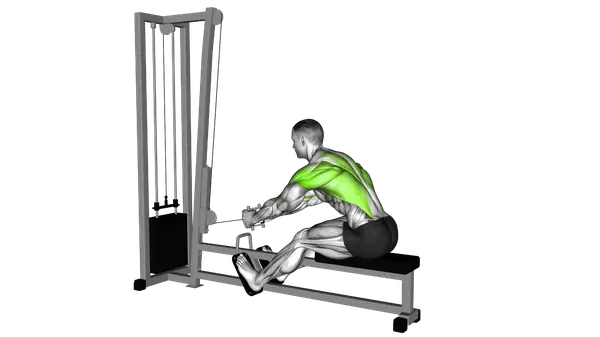 Cable row Cable row |
| Core | 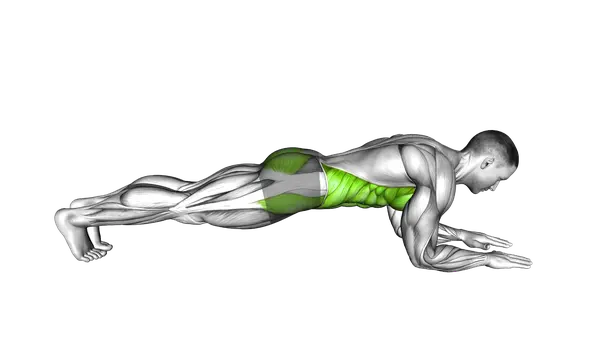 Front plank Front plank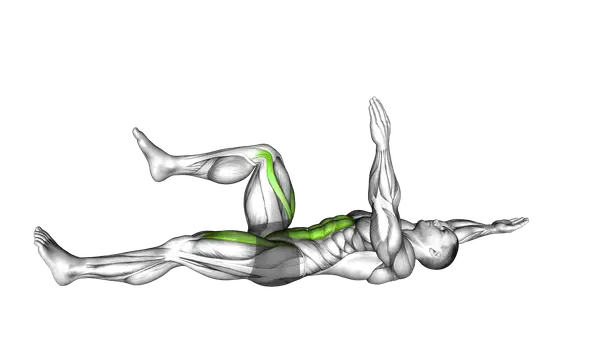 Dead bug Dead bug |
Plank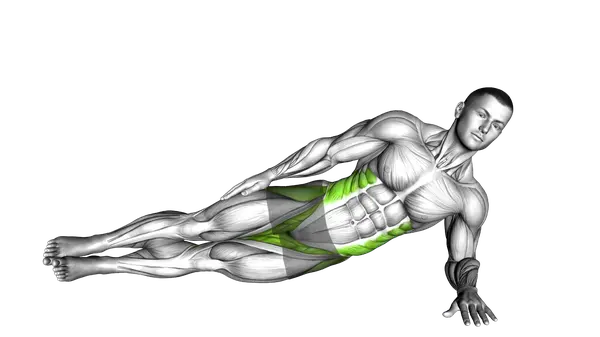 Side plank Side plank |
Three common Winter Arc habits have clear evidence-based targets: sleep, protein and daily steps. The table summarises the targets and their basis.
For sleep, the American Academy of Sleep Medicine and the Sleep Research Society advise adults aged 18 to 60 to sleep seven or more hours per night on a regular basis. Regularly sleeping less than seven hours is associated with weight gain, high blood pressure, depression and impaired performance [5]. A goal of getting up earlier only fits this advice if bedtime moves earlier as well.
For protein, a meta-analysis of 49 studies with 1,863 participants found that protein supplementation during strength training increased gains in strength and fat-free mass, and that total intakes above about 1.6 grams per kilogram of body weight per day produced no further gains in fat-free mass [6]. For a person weighing 70 kg (154 lb), that is about 110 grams per day, spread over several meals. Timing and example meals are covered in what to eat before and after strength training.
For daily steps, a meta-analysis of 15 cohorts with 47,471 adults found that mortality risk fell progressively with more steps per day, up to about 6,000 to 8,000 steps for adults aged 60 and over and 8,000 to 10,000 steps for younger adults [7]. These are associations from observational data; they do not prove that the steps alone cause the lower risk.
| Habit | Target | Basis |
|---|---|---|
| Sleep | 7 hours or more per night | AASM/SRS consensus, adults 18–60 |
| Protein | About 1.6 g per kg body weight per day | Meta-analysis, 49 studies |
| Daily steps | 8,000–10,000 (under 60), 6,000–8,000 (60 and over) | Meta-analysis, 15 cohorts; benefit levels off around here |
| Strength training | 2–3 sessions per week for beginners | ACSM position stand |
For many people, 90 days is enough to make a new habit largely automatic, but the spread between individuals is large. A systematic review of 20 studies with 2,601 participants found median times to habit formation of 59 to 66 days and mean times of 106 to 154 days, with individual values from 4 to 335 days. Morning routines and self-chosen habits were generally stronger than others [8].
For exercise specifically, a study that followed 111 new gym members for 12 weeks found that exercising at least four times per week for six weeks was the minimum requirement for an exercise habit. Consistency, simple exercises, the training environment and enjoyment of training predicted how strongly the habit developed [9].
A habit started in October is therefore often, but not always, automatic by January. A few simple, repeatable routines match these findings better than a long list of new rules that all start on the same day.
Progress during a Winter Arc is measured with three sets of data recorded in week 1 and again in week 12: strength numbers, body measurements and a training log. Comparing the same measurements under the same conditions shows whether the plan works.
For strength, the simplest measure is the weight and number of repetitions on the main lifts. A one-repetition maximum (1RM) does not have to be tested directly: a one-rep max calculator estimates it from a set of several repetitions, so no maximal attempt is needed.
For body composition, waist circumference, body weight and photos in the same light give a broader picture than body weight alone. Because body weight varies from day to day, a weekly average of several morning weigh-ins says more than a single reading. A training log records exercises, sets, repetitions and weights per session and shows when the progression rule applies.
After 12 weeks of consistent strength training, beginners can expect measurable gains in strength and a modest increase in muscle mass. A meta-analysis of 111 studies with healthy men found that resistance training programmes longer than two weeks increased muscle mass by about 1.5 kg on average. A very high number of sets per workout was associated with slightly smaller gains [10].
Strength gains are larger than gains in muscle size when both are expressed as standardised effect sizes (a measure that makes different outcomes comparable). In the network meta-analysis of 178 studies, the best-ranked strength prescription reached 1.60, against 0.66 for the best-ranked prescription for muscle growth [4].
Fat loss is not a fixed outcome of a Winter Arc; it depends on energy intake and expenditure over the whole period. Enough protein adds a small amount on top of the training effect: in the protein meta-analysis, supplementation added on average 0.30 kg of fat-free mass and 2.49 kg to the 1RM over longer training periods [6].
The most common mistake is an all-or-nothing approach: a long list of strict rules that all start on 1 October, where one missed day counts as failure. Self-chosen habits are generally stronger [8], and a plan with two or three fixed training days and one or two daily habits is easier to maintain for 13 weeks.
A second mistake is starting with too much training volume. In the meta-analysis on muscle growth, an excessive number of sets per workout was associated with smaller gains in muscle mass [10]. Starting with two sets per exercise and adding sets after the first month keeps the workload manageable while technique develops.
A third mistake is training hard every day without rest days. The ACSM recommends two to three strength sessions per week for beginners [3], which leaves rest days between sessions. Challenges with fixed daily rules and no exceptions, such as 75 Hard, differ from the Winter Arc here: without fixed rules, rest days can be planned in.
People with a medical condition, during pregnancy or after an injury should discuss a new training plan with a doctor or physiotherapist before starting. After week 12, the plan can continue as a regular schedule, and workout routines by level give a next step for January.
Good to know
Winter Arc refers to a period of focused self-improvement in the last three months of the year. The word arc comes from storytelling, where a character arc describes how someone develops. Participants use October to December to train, eat and sleep better and to set up routines before January.
The Winter Arc usually starts on 1 October and runs until 31 December, about 90 days. Because there are no official rules, a later start is possible. A 12-week plan that begins in November simply runs into January, with the same structure and progression.
Yes. For beginners, a Winter Arc works best with two to three full-body strength sessions per week, loads that allow 8 to 12 clean repetitions and one or two additional habits, such as a step target. Starting with two sets per exercise leaves room to add volume later in the plan.
No. A Winter Arc can be done at home with bodyweight exercises such as push-ups, squats, lunges and planks, or with a pair of adjustable dumbbells. Progression then comes from more repetitions and harder variations instead of heavier weights. A gym makes small, precise increases in load easier.
Beginners do well with two to three strength sessions per week, the range the ACSM recommends for untrained people. People with at least six months of consistent training can use three to four sessions. Daily walks or other light activity come on top and do not count as training sessions.
75 Hard is a named programme with fixed daily rules that apply for 75 consecutive days. The Winter Arc is an open social-media trend without official rules that runs from October to December. Participants choose their own goals, so rest days and gradual progression fit into it.
There is no Winter Arc diet. A practical approach is regular meals with a protein source in each, adding up to about 1.6 grams of protein per kilogram of body weight per day, plus vegetables, fruit and whole grains. Whether energy intake should be above or below maintenance depends on the goal.
Adults aged 18 to 60 should sleep seven or more hours per night on a regular basis, according to the American Academy of Sleep Medicine and the Sleep Research Society. Getting up earlier, a common Winter Arc goal, therefore requires an earlier bedtime. Young adults and people recovering from sleep debt may need more.
After 31 December, the habits and the training plan can continue as a normal routine. The test results from week 12 serve as the starting point for a new training block, for example with an extra session per week or a different repetition range. Goals that were not met can continue with a smaller, more specific target.
Sources

































