Eat well
No fixed diet. Alcohol only on social occasions.
Challenge
75 Soft is a gentler variant of 75 Hard that spread through social media. It keeps the 75-day structure but asks for one 45-minute workout a day with a weekly active-recovery day, a loose diet rule, 3 litres of water and ten pages of any book. There is no official rulebook, so descriptions differ in the details.
Last updated:
Short answer
75 Soft is commonly described as 75 days of a 45-minute workout every day with one active-recovery day per week, eating well with alcohol only on social occasions, 3 litres of water and 10 pages of any book. Unlike 75 Hard, it has no daily progress photo and no restart after a missed day.
75 Soft is a less strict, beginner-friendly version of 75 Hard, with daily guidelines for diet, exercise and self-improvement over 75 days. It is widely credited to an Irish fitness creator who described it in a 2021 TikTok video as 75 Hard for people without time for two 45-minute workouts a day; that account is no longer active [1].
75 Soft has no official programme page, and the rules vary slightly between descriptions; this page uses the version most commonly described in the media. 75 Soft is not part of the 75 Hard programme, whose creator does not allow any modification of the original rules [2].
No study has examined 75 Soft. The evidence below therefore concerns the individual rules: the amount of exercise, active recovery, alcohol, water intake and habit formation.
The 75 Soft rules commonly consist of four daily tasks for 75 days: eat well and drink alcohol only on social occasions, train for 45 minutes every day with one active-recovery day per week, drink 3 litres of water, and read 10 pages of any book. A daily progress photo and a restart after a missed day are not part of the rules [1].
The type of exercise is open: walking, yoga and strength training all count, and an active-recovery day can be a leisurely walk or a swim. The same coverage describes the 45 minutes as divisible, for example into three 15-minute walks [1].
No fixed diet. Alcohol only on social occasions.
Every day, any type of exercise. One day per week is active recovery.
About 12 cups, spread over the day.
Any book, fiction or non-fiction.
A missed day does not reset the count to day 1.
Pick one and the app builds your program around it, your equipment and the days you can train.
The main differences are training volume and what happens after a missed day. 75 Hard requires two workouts a day with one outdoors, a diet without cheat meals or alcohol, and a restart at day 1 after any missed task [2]. 75 Soft halves the daily training time, adds a weekly recovery day, loosens the rules on food, alcohol, water and reading, and drops both the photo and the restart [1].
Per week, 75 Hard comes to at least 630 minutes of exercise; 75 Soft to 270 minutes on six training days plus a lighter seventh day. The rules of the original and the evidence behind each one are covered in 75 Hard: the rules and the evidence.
| Rule | 75 Hard | 75 Soft |
|---|---|---|
| Duration | 75 days | 75 days |
| Workouts | Two × 45 minutes a day | One × 45 minutes a day |
| Outdoor training | One workout outdoors every day | Not required |
| Rest | No rest days | One active-recovery day per week |
| Diet | A chosen diet, no cheat meals | Eat well, no fixed diet |
| Alcohol | None | Only on social occasions |
| Water | One US gallon, about 3.8 L | 3 litres |
| Reading | 10 pages of non-fiction | 10 pages of any book |
| Progress photo | Every day | Not required |
| Missed day | Restart at day 1 | Continue the next day |
| Exercise per week | At least 630 minutes | About 270 minutes plus active recovery |
For general health, yes. Six days of 45 minutes come to 270 minutes per week, within the WHO range of 150–300 minutes of moderate-intensity activity and well above the 75–150 minutes advised for vigorous activity. The WHO also advises muscle-strengthening activities on two or more days per week and states that some physical activity is better than none [3].
Because the rule does not specify the type of exercise, 75 Soft only meets the full guideline when at least two of the weekly sessions include strength training, for example bodyweight exercises such as the bodyweight squat. Six walks a week cover the aerobic part of the guideline but not the muscle-strengthening part [3].
For people starting from little activity, 45 minutes every day is a large step. The ACSM position stand recommends 2–3 strength sessions per week for beginners and raising the load in small steps of 2–10% once the current load can be done for one or two more repetitions than planned [4]. The same step-by-step principle can be applied to session length in the first weeks.
An active-recovery day replaces a training session with light movement, such as a leisurely walk or a swim [1]. Easy cycling, mobility work and yoga serve the same purpose: movement without adding new training stress.
Research supports light activity for recovery, although mostly over hours after a session rather than across whole days. In a meta-analysis of 99 studies, active recovery was one of several techniques, alongside massage, compression garments and cold-water immersion, that reduced delayed-onset muscle soreness (DOMS); massage was the most effective for soreness and perceived fatigue [5].
One recovery day per week does not mean six days of hard training. With the 2–3 strength sessions per week that the ACSM recommends for beginners, the other training days can be walking, cycling or other moderate cardio [4].
Eating well has no fixed definition in 75 Soft, which makes the rule flexible but hard to check [1]. Turning it into two or three concrete targets makes it measurable, for example a protein source at every meal, vegetables or fruit with most meals and a set number of home-cooked dinners per week.
For training results, total energy and protein over the day carry the most weight. Practical amounts per meal and example meals are described in what to eat before and after training.
Daily targets for calories, protein, carbohydrates and fat can be set with a macro calculator, which turns the rule into numbers that can be tracked.
Alcohol after training mainly affects the processes behind muscle building, and less so short-term performance. A systematic review of 12 studies on alcohol after resistance exercise found that force, power, muscular endurance and soreness during recovery were not changed, whereas cortisol rose and testosterone and muscle protein synthesis fell [6].
The clearest data come from a crossover study in eight active men who drank 1.5 g of alcohol per kg of body weight, about 12 standard drinks, after strength and cycling exercise. Muscle protein synthesis was 24% lower than with protein alone when alcohol was taken with protein, and 37% lower when taken with carbohydrate [7]. One or two drinks at a social occasion were not tested.
The 75 Soft rule leaves the amount open. Limiting the number of drinks and avoiding heavy drinking after hard sessions follows most directly from these results.
3 litres of drinking water a day is more than most adults need at moderate temperatures, but harmless when spread over the day. The European Food Safety Authority (EFSA) sets an adequate intake of 2.0 litres of total water per day for women and 2.5 litres for men, including water from food, at moderate temperatures and activity levels [8].
Training in the heat and heavy sweating raise the need. EFSA notes that losses under extreme heat and exercise can reach about 8 litres per day and must be replaced together with electrolytes [8]. On such days 3 litres can be too little; on a cool day it exceeds the need, and the surplus is excreted.
Healthy kidneys excrete at most about 0.7–1.0 litres per hour, so a fixed target is best spread across the day rather than drunk in a short time [8]. Over 16 waking hours, 3 litres comes to less than 0.2 litres per hour.
No study has examined 75 Soft, but its structure fits habit research better than that of 75 Hard. A systematic review of 20 studies with 2,601 participants found median times of 59–66 days to form a health habit, with individual values ranging from 4 to 335 days [9]. Seventy-five days is enough for some people and some habits, not for all.
The same review found stronger habits for self-chosen behaviours and for behaviours performed in the morning, and describes habit formation as automaticity that grows gradually with repetition [9]. 75 Soft leaves exercise, diet and reading material free to choose, and a missed day does not reset the count. The reading rule has no physical effect; it works as a small daily task that is easy to repeat.
75 Soft suits people who want a fixed daily structure without the training load and strict rules of 75 Hard: beginners, people returning after a break and people with limited time. Because any form of exercise counts, it can be done with walking alone or combined with an existing gym programme [1].
It is less suitable as a performance plan. The rules contain no progression and no specific goal, so strength, muscle mass or endurance only improve when the 45 minutes are filled with structured training in which the load increases over time [4].
People with a medical condition, people recovering from an injury and women who are pregnant should consult a doctor or physiotherapist before starting a daily exercise programme. For people with a current or past eating disorder, a challenge with rules about food is a reason for caution.
75 Soft becomes a strength training plan when two or three of the six weekly sessions are strength workouts with progressive loads, as the ACSM recommends for beginners, and the remaining days are cardio or walking [4]. How the sessions are spread matters less than total weekly volume: a meta-analysis of 25 studies found no significant difference in muscle growth between training frequencies when volume was equal [10].
The basics of exercise choice, sets and progression are covered in the strength training guide. At home, bodyweight exercises such as squats, lunges, push-ups and planks cover the main movement patterns.
After day 75, a structured programme from the workout routines replaces the daily checklist with planned progression and rest days.
For a seasonal goal with a fixed end date, the Winter Arc offers a 12-week plan.
| Day | Session (45 min) | Content |
|---|---|---|
| Monday | Strength A | 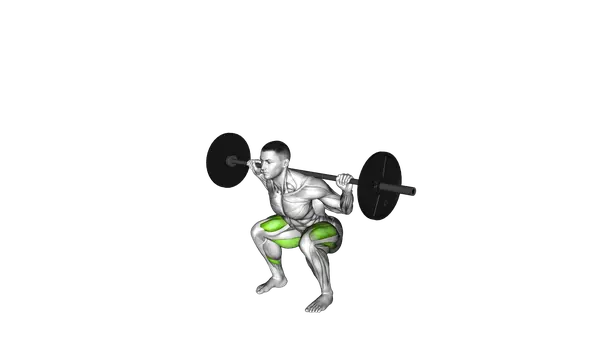 Squat Squat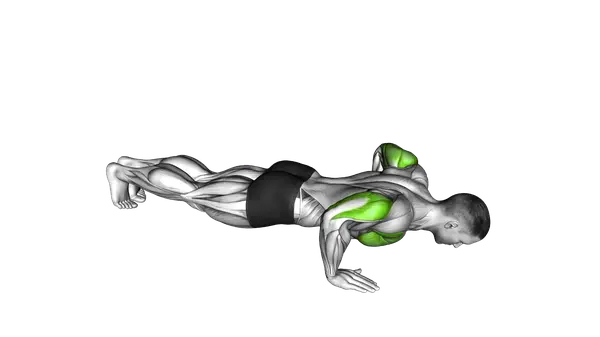 Push-up or Push-up or 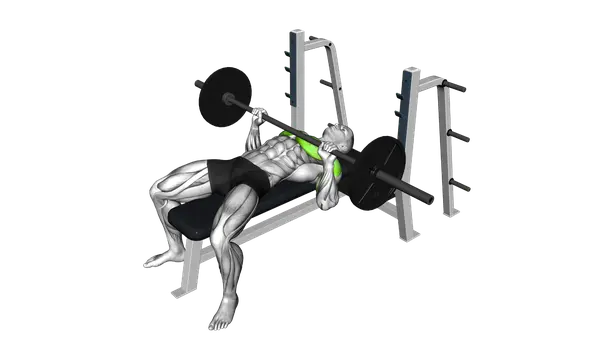 Bench press Bench press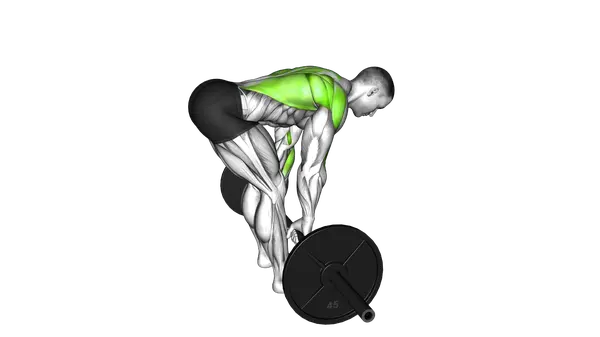 Row Row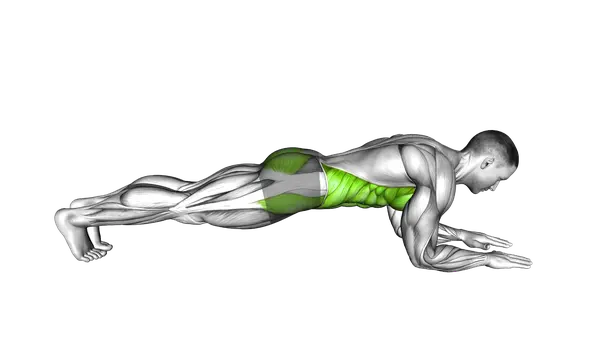 Plank Plank |
| Tuesday | Cardio | Brisk walk, cycling or easy run |
| Wednesday | Strength B | 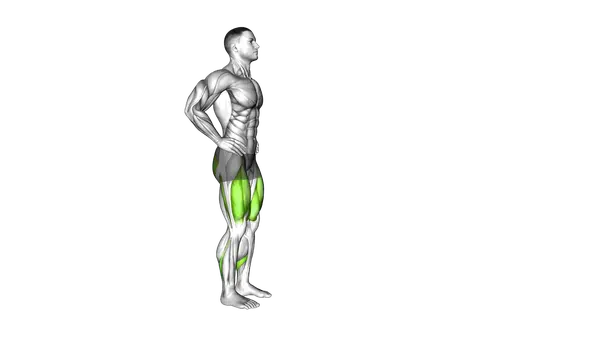 Lunge or hip hinge Lunge or hip hinge Overhead press Overhead press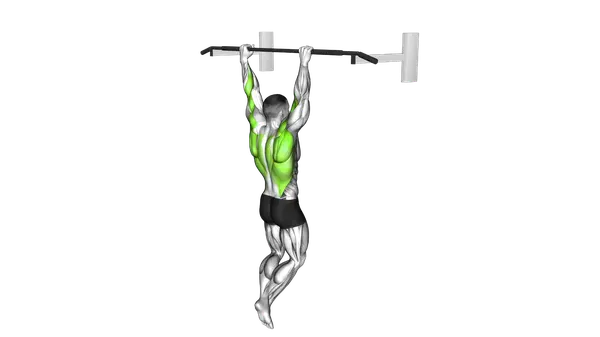 Pull-up or Pull-up or 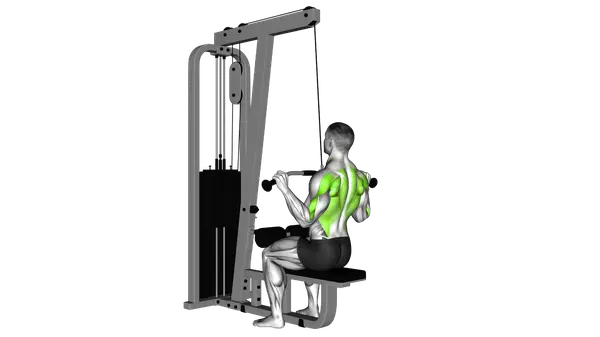 Pulldown Pulldown |
| Thursday | Cardio | Walk, swim or cycling at a moderate pace |
| Friday | Strength A | As Monday, with slightly more load or repetitions |
| Saturday | Free choice | Sport, hiking or a longer walk |
| Sunday | Active recovery | Easy walk, mobility work or yoga |
Good to know
The commonly described rules include one active-recovery day per week rather than a full rest day: light movement such as a leisurely walk, a swim or yoga. Because 75 Soft has no official rulebook, people adapt this rule, and a full rest day after a demanding week fits the purpose of a sustainable challenge.
Yes. The rules do not prescribe the type of exercise, and walking, yoga and strength training all count. Six walks a week cover the aerobic part of the WHO guideline. For the full guideline, at least two sessions per week also need to include muscle-strengthening exercise.
Yes. Media descriptions of 75 Soft allow the 45 minutes to be split, for example into three 15-minute walks. The WHO guidelines state that some physical activity is better than none, and shorter sessions spread over the day count towards the weekly total.
Nothing in the commonly described rules: there is no restart after a missed day, which is one of the main differences from 75 Hard. Most people simply continue the next day. Habit research describes habit formation as automaticity that builds up gradually with repetition, rather than as an unbroken streak.
Yes, on social occasions, according to the commonly described rules. The amount is not specified. Heavy drinking after training lowers muscle protein synthesis, so keeping drinks limited, especially after hard sessions, fits the purpose of the challenge better than unlimited drinking at every occasion.
That depends on energy balance. 75 Soft adds about 270 minutes of exercise per week, which raises energy expenditure, but the eating rule sets no calorie target. Weight loss follows when intake stays below expenditure over time. No study has measured weight change during 75 Soft.
It is one of the more manageable challenges for beginners, because exercise type and intensity are free and a missed day has no consequence. Starting with shorter sessions and building up to 45 minutes reduces the risk of doing too much in the first weeks.
For most people, 75 Soft is easier to sustain: half the daily training time, a weekly recovery day, more flexible food and water rules and no restart. 75 Hard demands more discipline but offers no proven extra benefit. For a specific goal such as strength, a structured training plan matters more than either challenge.
Sources

































