Bulk vs cut: a practical guide to building muscle and losing fat
Struggling with bulk vs cut? This guide breaks down the science, nutrition, and training to help you build muscle and lose fat with a clear, effective strategy.


The core difference between a bulk and a cut is pretty straightforward: bulking is eating in a calorie surplus to build muscle, while cutting is eating in a calorie deficit to lose fat. Your best starting point depends entirely on where you are now. If you're already lean, you'll want to bulk first to build a solid muscular base. If you're carrying more body fat, cutting first will improve your body composition and set you up for a more effective bulk later on.
Bulk vs cut: which path is right for you?

Choosing to bulk or cut is the first real decision you make when you start intentionally shaping your body. These two phases are the building blocks of body recomposition, a strategy used by everyone from pro bodybuilders to regular people trying to look and feel their best.
Built for progress
Take the guesswork out of training
Get a personalized workout plan built around your goal, equipment and schedule. Train smarter, track every rep and keep moving forward, one workout at a time.






This isn't some obscure fitness secret, either. A national study of Canadian gym-goers found that nearly half of men (48.9%) and over one in five women (21.2%) reported using bulk and cut cycles in the last year. That shows just how common this approach has become. You can dig into the full research about these fitness trends and their prevalence.
Understanding the core principles
At its heart, the choice between bulking and cutting all comes down to energy balance. Your body runs on energy (calories), and how you manage that intake dictates whether you gain or lose weight. It’s that simple.
- Bulking (Anabolic State): This is your growth phase. By eating more calories than you burn, you create a caloric surplus. This extra energy fuels your workouts and gives your body the raw materials—protein, carbs, and fats—to repair damaged muscle fibers and build new ones.
- Cutting (Catabolic State): Here, the goal is shedding fat. You create a caloric deficit by eating fewer calories than you burn, forcing your body to tap into its stored energy—mostly body fat—to function. The trick is losing the fat while holding onto the muscle you worked so hard to build.
The key takeaway: You can't effectively do both at once. Building serious muscle requires a calorie surplus, while losing significant fat demands a calorie deficit. Trying to chase both goals at the same time is a recipe for going nowhere fast.
Bulking vs cutting: key differences at a glance
To make the choice even clearer, this table breaks down the core differences between a bulk and a cut. Think of it as your quick reference guide.
| Metric | Bulking Phase | Cutting Phase |
|---|---|---|
| Primary Goal | Maximize muscle gain | Maximize fat loss |
| Calorie Intake | Caloric Surplus (eat more than you burn) | Caloric Deficit (eat less than you burn) |
| Weight Change | Gradual weight gain | Gradual weight loss |
| Training Focus | High volume, progressive overload | Maintain intensity, preserve strength |
| Primary Outcome | Increased muscle mass and strength | Reduced body fat, increased definition |
While the table simplifies it, each phase has its own set of rules for nutrition, training, and mindset. Getting them right is what separates a successful physique transformation from months of wasted effort.
The science of an effective bulking phase

A proper bulk isn’t just an excuse to eat more food. It’s a calculated physiological process aimed at creating an anabolic environment—the perfect state for building new muscle tissue through a process called muscle protein synthesis (MPS).
To kickstart MPS, you need two things: a reason to grow and the resources to do it. Intense resistance training creates tiny micro-tears in your muscle fibers. The energy and nutrients from what you eat are then used to repair those tears, building them back bigger and stronger. That’s hypertrophy in a nutshell.
This is where the idea of a “lean bulk” becomes the centerpiece of the bulk vs cut debate. It’s the smart alternative to a "dirty bulk," focusing on gaining muscle while minimizing fat gain.
Fueling growth with a caloric surplus
The engine of any bulking phase is a controlled caloric surplus. Your body simply cannot build new tissue out of thin air; it needs extra energy to fuel the demanding process of muscle repair and growth.
The sweet spot is a modest surplus of 250-500 calories above your daily maintenance level. This gives your body just enough fuel to support muscle development without overwhelming it and causing excessive fat storage. Think of it like giving a construction crew exactly the materials they need, rather than leaving piles of unused supplies lying around.
This controlled approach ensures the weight you put on is mostly lean mass. It’s a marathon, not a sprint, aimed at high-quality, sustainable gains.
Optimizing your macronutrients for muscle gain
Calories provide the raw energy, but macronutrients—protein, carbs, and fats—are the specific building blocks. Getting this balance right is what separates a good bulk from a great one.
- Protein: The Master Builder: Protein delivers the amino acids required to repair and build new muscle. During a bulk, your needs go up, so aim for 1.6 to 2.2 grams of protein per kilogram of body weight to keep muscle protein synthesis firing on all cylinders.
- Carbohydrates: The Power Source: Carbs are your body's number one fuel. They replenish the muscle glycogen you burn during tough workouts, giving you the energy to consistently hit the heavy compound lifts that drive real growth.
- Fats: The Hormonal Support: Healthy fats are non-negotiable for regulating key hormones, including testosterone, which plays a massive role in building muscle. They are also calorie-dense, which makes hitting your surplus a lot easier.
A well-planned bulk is about the quality of your food, not just the quantity. Nutrient-dense whole foods give your body the vitamins and minerals it needs to function at its best while building new muscle.
Training principles for a successful bulk
Your training is the signal that tells your body where to send all those extra calories. Without the right stimulus, that energy has nowhere to go but into fat stores. The single most important principle here is progressive overload.
Progressive overload simply means you continually challenge your muscles by gradually increasing the weight, reps, or sets over time. This forces your body to adapt by growing bigger and stronger. A bulk is the perfect time for this, as the caloric surplus gives you the energy and recovery capacity to handle the increasing demands.
Your workouts should be built around heavy compound movements like squats, deadlifts, bench presses, and overhead presses. These exercises recruit multiple muscle groups at once, delivering the biggest bang for your buck and driving overall growth. Isolation exercises have their place, but compound lifts are the engine of any effective bulking program.
The art of an intelligent cutting phase
If a bulk is about building the sculpture, a cut is about carefully chiseling away the excess stone to reveal the masterpiece underneath. This is the fat loss phase. The goal is singular: shed body fat while fiercely protecting the muscle you worked so hard to build. It’s a game of precision, not just restriction.
The engine driving any cut is a sustainable caloric deficit. By eating roughly 300-500 calories below your daily maintenance level, you signal your body to start tapping into stored fat for energy. This controlled deficit is the sweet spot for steady fat loss without triggering the survival alarms that lead to muscle breakdown.
Defending muscle with smart nutrition
During a cut, your body is naturally in a catabolic (breakdown) state. To stop it from cannibalizing your hard-earned muscle for energy, your nutrition has to be strategic. This is where a high protein intake becomes your single most important line of defense.
Keeping protein high helps preserve lean mass, a process known as being anti-catabolic. It also keeps you feeling fuller for longer, which is a massive advantage when you're battling the hunger that comes with a calorie deficit. While protein is king, carbs and fats are still essential for fueling your workouts and supporting hormone function.
- Protein: Acts as the shield for your muscles, preventing them from being used as fuel.
- Carbohydrates: When timed strategically around your workouts, they provide the energy needed to maintain training intensity.
- Fats: These are crucial for regulating hormones, which can otherwise take a hit during a prolonged deficit.
A successful cut isn't about starving yourself; it's about giving your body exactly what it needs to burn fat efficiently while holding onto muscle. The difference between a smart cut and a crash diet is muscle preservation.
Why you must keep lifting heavy
One of the most damaging myths in the bulk vs. cut debate is that cutting demands high-rep, low-weight "toning" workouts. This is completely wrong and works against your goals. When you're in a caloric deficit, lifting heavy is non-negotiable.
Heavy resistance training sends a powerful signal to your body: "This muscle is essential—don't get rid of it!" By continuing to challenge your muscles with intense lifts, you give your body a compelling reason to preserve lean tissue and burn fat instead. Your strength might plateau or even dip slightly due to lower energy, but maintaining that intensity is the key to finishing your cut both lean and strong.
A cutting phase is designed to shed fat, but it comes with trade-offs. The process can sometimes lead to drops in strength, testosterone, and even bone density, while increasing the stress hormone cortisol. This is why focusing on your body fat percentage is more telling than the number on the scale. As experts often point out, cutting too quickly—losing more than about one pound per week—dramatically increases the risk of losing precious muscle, leading to fatigue and weakness. You can learn more about how to balance the pros and cons of cutting on Healthline.com.
This is exactly why an intelligent cut prioritizes gradual fat loss and strength maintenance over rapid weight loss. By pairing a modest deficit with heavy training and high protein, you create a system that encourages your body to sacrifice fat, not muscle.
Training and nutrition: a side-by-side comparison
Knowing the difference between bulking and cutting is one thing; putting it into practice is another. The real work happens in the kitchen and the gym, where your daily choices on calories and training drive your results.
While both phases involve lifting weights and eating with a plan, their goals—and your day-to-day actions—are polar opposites. Let's break down exactly how they stack up.
The nutritional divide
The biggest difference between a bulk and a cut comes down to one simple thing: calories. To build muscle, you need to eat more energy than you burn. To lose fat, you need to eat less. This single principle changes everything about your diet.
- Bulking Nutrition: The goal is a controlled calorie surplus of 250-500 calories above your maintenance level. Protein needs to stay high (1.6-2.2g per kg of body weight) to supply the building blocks for new muscle. Carbohydrates are your primary fuel source, powering you through high-volume workouts and helping you recover.
- Cutting Nutrition: Here, you’ll flip the switch to a calorie deficit of 300-500 calories below maintenance. Protein intake often stays high—or even increases slightly—to send a strong signal to your body to preserve muscle while you lose fat. Carbs and fats are then carefully reduced to hit your deficit.
This infographic breaks down the three non-negotiables for a successful cut: eat less, prioritize protein, and keep lifting heavy.

Get these three pillars right, and you create an environment where your body is forced to burn fat for energy while holding onto your hard-earned muscle.
The contrast in training philosophy
You’ll be lifting weights in both phases, but why you’re lifting changes completely. A bulk is fueled by extra calories, giving you the energy for grueling, growth-focused training. A cut is a battle for preservation, where your training’s main job is to protect muscle when energy is low.
Bulking is about creating a stimulus for growth. Cutting is about sending a signal to preserve what you have.
This fundamental difference shapes how you design your workouts.
- Bulking Training: The keyword is volume. With plenty of fuel in the tank, you can handle more sets, more reps, and more total work. This is what triggers hypertrophy. Your goal is aggressive progressive overload, consistently adding weight or reps to your lifts. Compound movements should be the core of your routine.
- Cutting Training: The goal shifts from building to intensity maintenance. You must continue lifting heavy. This tells your body that your muscle is essential and shouldn't be burned for fuel. Because recovery is slower and energy is lower, you’ll likely need to reduce your total volume or frequency, but the weight on the bar needs to stay as high as possible.
This cyclical approach works. A 24-week pilot study showed that even untrained men who completed a 12-week bulk followed by a 12-week cut saw incredible results. After bulking, their fat-free mass increased by 3%. After the cut, their body fat dropped by 6%, their deadlift strength shot up by 46%, and their squat strength soared by 65%. You can discover more about the study's compelling findings on the protocol's efficacy.
Expected results and timeline
Patience is a virtue in both phases, but your progress will look different. A good bulk is slow and steady, maximizing muscle gain while minimizing fat. A smart cut is a controlled descent, stripping away fat without sacrificing muscle.
Bulking Expectations
- Rate of Gain: Aim for a weight increase of 0.25-0.5% of your body weight per week. Any faster, and you’re likely adding more fat than muscle.
- Duration: A proper bulk takes time. Plan for at least 4-6 months to give your body enough time to build a meaningful amount of new muscle tissue.
Cutting Expectations
- Rate of Loss: A sustainable rate of fat loss is 0.5-1% of your body weight per week. Pushing for faster loss risks burning muscle.
- Duration: Cuts are typically shorter and more intense, often lasting 8-16 weeks depending on how much body fat you need to lose.
Executing your cycle with GrabGains
Knowing the difference between a bulk and a cut is one thing. Actually executing one consistently is where the real work begins—and where most people get stuck. This is where the right tools can stop you from second-guessing every meal and workout.
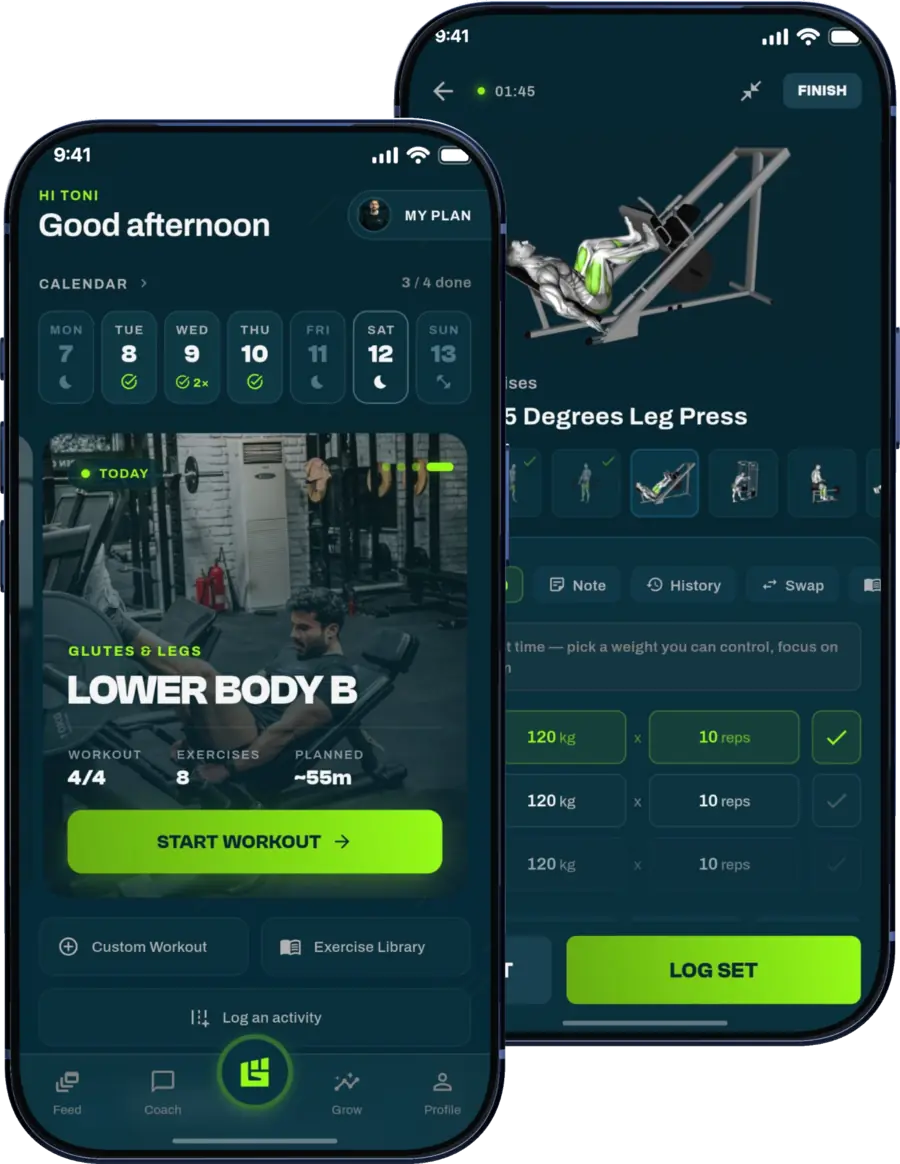
GrabGains was built to take the guesswork out of the equation. It turns your goal—building mass or getting lean—into a straightforward, daily plan. No more scribbling in notebooks or getting lost in spreadsheets. Just a clear path forward.
Smart adjustments for your bulking phase
During a bulk, the name of the game is progressive overload. But your energy and recovery will fluctuate. GrabGains watches your performance and adjusts your training in real-time, making sure you’re always pushing for growth without burning out.
- Adaptive Volume: If you're crushing workouts and recovering well, the app might add a few sets or reps to take full advantage of that calorie surplus.
- Intensity Guidance: The app keeps your big compound lifts front and center, programming workouts that are challenging enough to trigger muscle growth.
This means you’re always giving your body the right stimulus to build muscle. You just need to show up and follow the plan, knowing every workout is optimized.
Precision and preservation during your cut
Cutting is a balancing act. You have to keep lifting intensity high to hold onto muscle, even when a calorie deficit leaves you feeling drained. GrabGains helps you protect your hard-earned gains by personalizing your routine.
If the app sees a dip in performance—a totally normal part of cutting—it might adjust your workout. For example, it could reduce your total volume while keeping the intensity high on your main lifts. This smart tweak signals to your body that it needs to keep its muscle and burn fat for fuel instead.
Your fitness journey is unique, and your plan should reflect that. GrabGains acts as a digital personal trainer, making micro-adjustments to your plan based on your actual performance, ensuring your bulk or cut cycle stays on track.
This is the direction fitness is heading. To get the best results, it's helpful to understand how technology is changing the game, especially with the rise of dedicated AI coaching.
Tools that eliminate guesswork
Beyond the smart workouts, GrabGains includes a set of tools to give you the data you need for a successful bulk or cut.
- Macro Calculator: Get precise nutrition targets based on your goal, activity level, and body metrics.
- 1RM Calculator: Track your strength gains accurately over time, giving you a clear sign that you're getting stronger.
- Visual Analytics: See your body composition change with simple charts that show you the real results of your hard work.
With an adaptive workout builder that understands the nitty-gritty of bulking and cutting, you can put your energy where it matters: into lifting, eating, and recovering.
Common bulking and cutting mistakes to avoid
Knowing the difference between bulking vs. cutting is a great start. But avoiding the common pitfalls that sabotage progress is what separates a successful phase from a frustrating waste of time.
So many lifters get the big picture right but stumble on the execution. Most mistakes fall into two camps: how you eat and how you lift. For bulking, the classic mistake is the "dirty bulk." For cutting, it's getting way too aggressive, way too fast.
The biggest bulking blunders
A bulking phase can feel like a green light to eat and lift big, but a "more is more" mindset almost always backfires. These are the two mistakes that lead to more fat gain and injuries than anything else.
- The "Dirty Bulk" Trap: This is the timeless excuse to eat everything in sight—pizza, ice cream, you name it. Sure, you'll gain weight, but a huge chunk of it will be fat, not muscle. This makes your future cut longer and harder, and it can even hurt your insulin sensitivity, making it tougher to build muscle later on.
- Ego Lifting: When you're fueled by extra calories and a desire to see the numbers fly up, the temptation to lift heavier than you can handle with good form is real. This is ego lifting. It skyrockets your injury risk and ironically leads to less muscle growth because you're using momentum, not your muscles.
The Solution: A lean bulk is the answer. Aim for a smart surplus of just 250-500 calories from mostly whole, nutrient-dense foods. In the gym, prioritize perfect form and progressive overload—only adding weight you can actually control.
Cutting mistakes that stall fat loss
Cutting demands discipline, but pushing it to the extreme is a guaranteed recipe for failure. The biggest mistakes here almost always come from impatience.
The most common error is slashing calories too low, too fast. Creating a massive deficit—like 1,000+ calories below your maintenance—panics your body and sends it straight into survival mode. This triggers a chain reaction of problems that work directly against your goal.
These problems include:
- Significant Muscle Loss: Your body starts cannibalizing hard-earned muscle for energy. This is the last thing you want.
- Metabolic Slowdown: Your metabolism adapts to the extreme deficit by slamming on the brakes, making it incredibly difficult to lose more fat.
- Psychological Burnout: Constant hunger, zero energy, and irritability make the diet feel impossible, which almost always ends in a binge.
A much smarter strategy is a moderate deficit of 300-500 calories below maintenance. This allows for steady, sustainable fat loss of about 0.5-1% of your body weight per week—a rate that’s far better for preserving muscle and keeping your metabolism healthy. Pair this with a high-protein diet and continue to lift heavy, and you’ll encourage your body to burn fat while holding onto your muscle.
Frequently asked questions about bulking and cutting
Even the best-laid plans run into questions. Once you're deep in the trenches of a bulk or a cut, the same few uncertainties always seem to pop up.
Knowing the answers ahead of time helps you troubleshoot on the fly and stick with the program long enough to see it through.
How do I know when to stop bulking and start cutting?
Knowing when to wrap up a bulk and start cutting is part art, part science. While there's no single magic number, a good rule of thumb is to look at your body fat percentage. For most men, that tipping point is around 18-20% body fat. For women, it’s typically around 28-30%.
Pushing much past those ranges often means you’re gaining more fat than muscle, and your body isn't using the extra calories as efficiently. But numbers aren't everything. If you feel sluggish in the gym, your performance is stalling, or you just don't like what you see in the mirror, that's a perfectly good reason to switch gears and begin your cut.
Can I still do cardio during a bulk?
Yes, and you probably should. It’s a common myth that cardio will sabotage your gains, but when done right, it can actually help. Sticking to 2-3 sessions of low-to-moderate intensity cardio each week is a smart move.
Here’s why:
- It keeps your heart healthy, which is crucial for recovery between hard lifting sessions.
- It helps you manage fat gain by burning a few extra calories without creating too much fatigue.
- It can improve your work capacity, meaning you can handle more volume in the gym and recover faster.
The only catch? You need to make sure you’re eating enough to cover the calories burned from cardio. Your goal is still a net calorie surplus to fuel muscle growth.
What is a mini cut and should I use one?
A mini-cut is a short, sharp fat loss phase—usually lasting just 2-4 weeks—that you can run in the middle of a longer bulk. It’s not a substitute for a full cut, but a strategic tool.
Its main purpose is to strip off a small amount of fat quickly. This can help improve your body’s insulin sensitivity, making it better at using nutrients to build muscle when you return to bulking.
This approach involves a pretty aggressive calorie deficit and is best left to more experienced lifters who understand their body's response. You might use one if you've been bulking for a while and notice your gains have slowed down while fat gain is speeding up. For beginners, it's almost always better to stick to longer, more traditional bulk and cut cycles.
Ready to stop guessing and start seeing results? The GrabGains platform takes the complexity out of your bulk vs cut cycles by creating a truly personalized plan that adapts to your performance. Download GrabGains on iOS or Android today to train smarter.
Get inspired and motivated