Mechanical Tension Explained
Unlock the science of muscle growth with our complete guide to mechanical tension hypertrophy. Learn how to train smarter and build muscle more effectively. If you’ve spent any time in the gym, you’ve heard a hundred different theories on what it takes to build muscle. But the simple truth is this: mechanical tension is the primary driver of muscle hypertrophy—the scientific term for muscle growth. Lifting challenging weights is the most important signal you can send your body to build bigger, stronger muscles.
It's really that simple.


The real driver of your muscle growth

So, what actually makes muscles grow? While the fitness world is overflowing with methods and buzzwords, the core principle is surprisingly straightforward. Forget chasing "the burn" or just moving for the sake of it; the most critical factor is generating significant force within your muscle fibers.
Think of a single muscle fiber like a rope. If you want to make that rope stronger and thicker, you need to pull on it with serious force. That pulling action, or tension, is a signal that the rope needs reinforcement to handle future stress. This is exactly what happens inside your body when you train for mechanical tension hypertrophy.
While other factors like metabolic stress (the "pump") and muscle damage (soreness) get a lot of attention, they are supporting actors. Mechanical tension is the star of the show.
Built for progress
Take the guesswork out of training
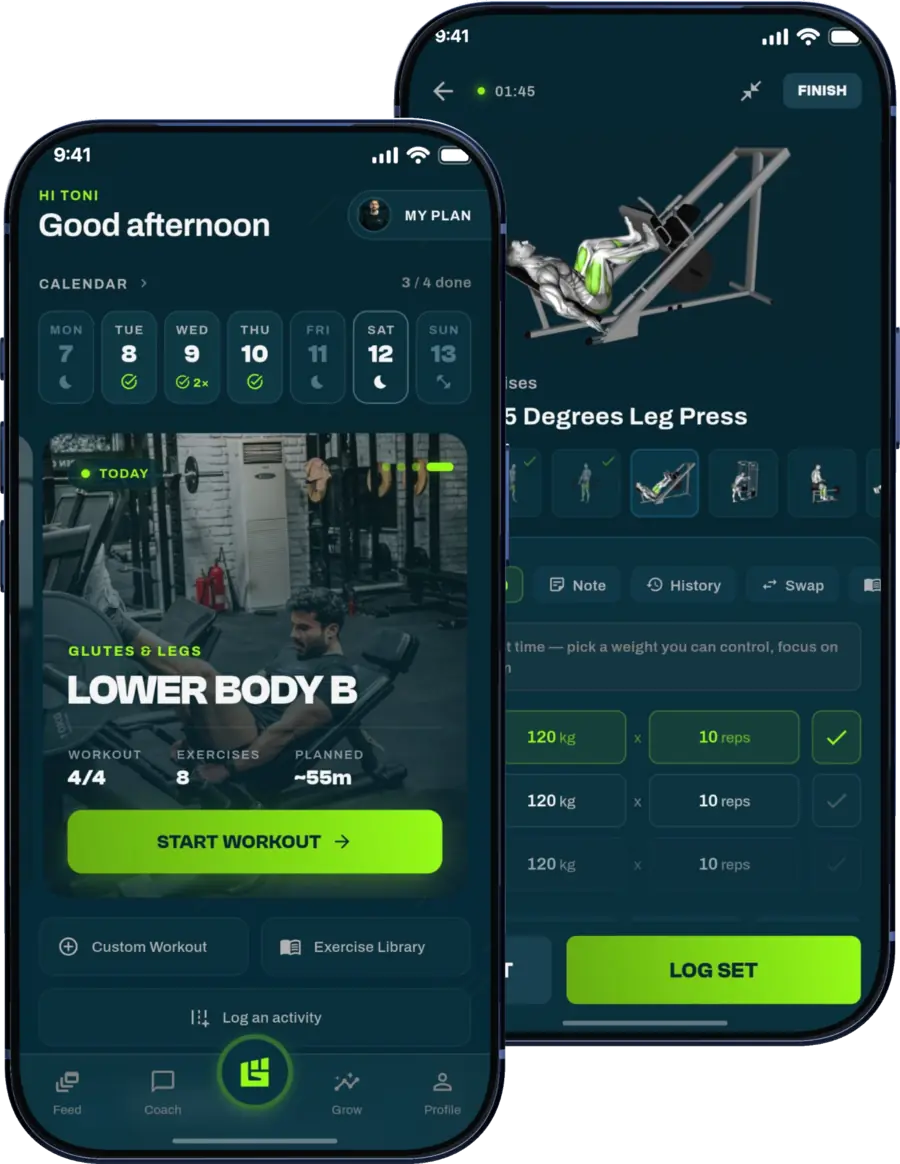
Get a personalized workout plan built around your goal, equipment and schedule. Train smarter, track every rep and keep moving forward, one workout at a time.






To put it in perspective, let’s look at how all three mechanisms of hypertrophy work together.
The three mechanisms of hypertrophy
| Mechanism | What It Is | Role in Growth | How to Stimulate It |
|---|---|---|---|
| Mechanical Tension | The force placed on muscle fibers when they are stretched and contracted under load. | The primary driver. It directly triggers muscle protein synthesis. | Lifting challenging weights through a full range of motion. |
| Metabolic Stress | The buildup of metabolic byproducts (like lactate) in the muscle, often felt as a "pump" or "burn." | A secondary contributor. It can enhance the growth signal but is less potent on its own. | Higher-rep sets, shorter rest periods, and constant-tension exercises. |
| Muscle Damage | Micro-tears in muscle fibers caused by novel or intense exercise, leading to an inflammatory response. | A byproduct of hard training, not the main goal. It signals repair but excessive damage can hinder growth. | Introducing new exercises, heavy negatives, or pushing to failure. |
As you can see, while the pump feels good and soreness tells you you’ve worked hard, mechanical tension is what truly instructs your muscles to get bigger and stronger. It's the most direct and reliable path to growth.
The science of tension
Your muscles are made of thousands of tiny fibers that contract to produce force. When you lift a weight that’s heavy enough to challenge them, you create mechanical tension. This tension is detected by specialized sensors in your muscle cells, flipping the "on switch" for a cascade of biological processes that lead to growth.
Mechanical tension isn't just a theory; it’s the cornerstone of muscle growth. The force generated during a challenging lift is the most potent signal for your body to start muscle protein synthesis—the process of repairing and rebuilding muscle fibers to be bigger and more resilient.
From science to application
The best way to build muscle is to effectively challenge them. That's why modern approaches to smarter strength powered by resistance training are all built around this very principle.
At GrabGains, we bake this science directly into our personalized workout plans. By focusing on progressive overload and proper exercise selection, we make sure every session is structured to maximize the tension your muscles experience. You get science-backed results without the guesswork.
The research is clear on this. A landmark systematic review from 2019, which analyzed over 178 studies, confirmed that progressive overload through mechanical tension is the key to muscle growth. For example, one key study in the review showed that high-load training (above 85% of one-rep max) resulted in nearly double the muscle thickness compared to low-load protocols, even when total volume was lower.
How your muscles receive the signal to grow
You just finished a grueling set of squats, and your legs are burning. The hard part is over, right? Not exactly. While the lifting is done, the real magic is just getting started inside your muscle cells.
How does the raw, physical force from that heavy barbell translate into a biological command to grow bigger and stronger?
This amazing process is called mechanotransduction. It’s the cellular chain of command that turns the mechanical tension from your workout into the chemical signals that trigger muscle growth. Think of it like a message delivery system inside your body. The heavy weight is the initial message, but it needs to be passed through several messengers before it reaches the cell’s “headquarters,” where the order to build more muscle is finally given.
From force to cellular signal
The journey begins at the outer layer of your muscle cell, known as the sarcolemma. As your muscle stretches and contracts under load, this membrane gets physically strained. This strain is detected by specialized proteins embedded in the cell wall called mechanoreceptors.
These receptors act like tiny alarm bells. When they sense a significant amount of force, they kick off a series of chemical reactions inside the cell. It's the biological equivalent of a tripwire being activated—alerting the cell that it just faced a major stressor it needs to adapt to.
This alert starts a complex signaling cascade. A key pathway that gets switched on is the mTOR pathway, widely known as a master regulator of cell growth. Firing up mTOR is like flipping the main power switch for building new muscle.
The message reaches the nucleus
Once the signal starts, it travels from the outer edges of the muscle cell inward toward the nucleus. The nucleus is the cell’s command center; it holds your DNA, which contains the genetic blueprint for building every single protein in your body, including muscle proteins.
The chemical messengers sparked by mechanotransduction eventually reach the nucleus and “tell” it to start transcribing specific genes related to muscle growth. This process, called gene expression, is where the instructions for building new muscle proteins are copied from your DNA. These new instructions are then sent out to cellular "factories" called ribosomes, which get to work assembling the new proteins.
In short, mechanical tension tells your genes to wake up and get to work. The force from your workout directly influences your genetic machinery, instructing it to create bigger, stronger muscle fibers so you can handle similar stress better next time.
This direct line of communication—from the barbell all the way to your DNA—is what makes mechanical tension hypertrophy so incredibly effective.
Putting it all together
Let's walk through the entire 'cellular chain of command' from start to finish:
- The External Force: You lift a challenging weight, creating high mechanical tension on your muscle fibers.
- The Gatekeepers: Mechanoreceptors on the cell’s surface detect this physical strain.
- The Internal Messengers: A cascade of chemical signals (like the mTOR pathway) is activated inside the cell.
- The Command Center: These signals travel to the nucleus, the cell’s headquarters.
- The Blueprint Activated: The nucleus initiates gene expression, creating the blueprints for new muscle proteins.
- The Construction Crew: These blueprints are used to synthesize new proteins, which repair and enlarge the muscle fibers.
This entire process is incredibly demanding and requires a lot of resources. While mechanical tension provides the stimulus, the actual growth happens during recovery. It's during this downtime that your body repairs the micro-damage from training and builds new tissue. To get the most out of this crucial phase, a practical guide to muscle recovery after workout can give you the essential strategies for sleep, nutrition, and active recovery, ensuring your hard work in the gym actually translates to real gains.
Structuring your workouts for maximum tension
Knowing the science is one thing, but turning that knowledge into a workout that actually builds muscle is where the magic happens. To kickstart hypertrophy through mechanical tension, you have to get specific with how you train. Think of this section as your practical, evidence-based toolkit for forcing your muscles to adapt and grow.
The process we're trying to trigger is called mechanotransduction—it's how your body turns the physical force of lifting a weight into a biological signal for growth.

As you can see, the external force from the weight is converted into an internal signal that tells your genes to start building more muscle.
The non-negotiable role of heavy loads
If there's one thing you can't compromise on, it's lifting heavy enough. Your muscles contain different fiber types, but the ones with the most growth potential—the high-threshold motor units (HTMUs)—only get called into action when the demand is high. Light weights just won’t cut it.
Think of it like calling in reinforcements. Your body won't bother recruiting its strongest, most powerful muscle fibers unless it senses a challenge it can't handle with its "front-line" fibers. A heavy barbell squat is that challenge. This is exactly why you have to prioritize lifting challenging weights; you need to stimulate the fibers that have the most room to grow.
What rep ranges actually build muscle
For years, the "hypertrophy range" was gospel: 8-12 reps. We now know that's too narrow. Modern research shows muscle growth happens across a wide spectrum, from as low as 6 reps to as high as 30 reps, but only if one crucial condition is met: training close to muscular failure.
This means you can build muscle with different loads, but the key is always pushing your muscles hard enough within each set.
- Heavy (6-10 Reps): The sweet spot for building strength and maximizing tension on fast-twitch fibers. It's perfect for your big compound lifts.
- Moderate (10-15 Reps): A classic blend of high tension and metabolic stress, offering a powerful growth stimulus for both compound and isolation work.
- Light (15-30 Reps): While each rep generates less peak tension, taking these high-rep sets to failure ensures full muscle fiber recruitment and creates a unique metabolic environment for growth.
A smart program will use a mix of these ranges to give your muscles a varied stimulus. Our personalized workout builder is a great way to make sure your plan is balanced and optimized for your goals.
Forget tempo myths and focus on intent
A common myth is that artificially slowing down your reps—to increase "time under tension" or TUT—is a shortcut to gains. The force-velocity relationship shows why this is often a bad idea. You create maximal mechanical tension when you try to move a heavy weight with maximal intent. The bar just happens to move slowly because the load is heavy.
The real driver is the heavy load, not the slow speed itself. Purposefully slowing down a light or moderate weight doesn't create the same tension because you're not recruiting those all-important high-threshold motor units.
Research backs this up. A 2022 review, for instance, found that repetition duration only mattered for hypertrophy when paired with heavy loads of at least 65% of one-rep max. There was no extra benefit to increasing TUT with lighter weights on its own. If you want to dive deeper, you can read this in-depth analysis of the TUT myth.
So instead of counting seconds, focus on two things:
- Controlling the eccentric (lowering) phase to maintain tension.
- Lifting with maximal intent during the concentric (lifting) phase.
Prioritize compound movements
Your exercise selection is critical. To generate the most mechanical tension, your workouts should be built around big, compound exercises that hit multiple muscle groups through a full range of motion.
These are the movements that let you lift the heaviest loads and place a systemic stress on your body that isolation exercises just can't match. Make exercises like squats, deadlifts, bench presses, overhead presses, and rows the cornerstones of your program. Isolation work has its place, but it should be the "dessert," not the "main course."
Advanced techniques to amplify mechanical tension

Once you've nailed the basics of lifting heavy with good form, you can start weaving in some advanced techniques to kickstart new growth. These methods are all about strategically cranking up the force on your muscle fibers, sending an even stronger signal for mechanical tension hypertrophy.
Think of these as turning up the volume on the muscle-building message. They aren't meant for every set, but they're killer tools for intermediate and advanced lifters looking to smash through a plateau.
Pausing your reps to eliminate momentum
One of the simplest—and most humbling—ways to increase tension is to add a dead stop at the hardest part of the lift. This is usually at the bottom, right where the muscle is fully stretched and under load.
When you pause, you kill the stretch-shortening cycle—that natural, elastic "bounce" you get out of the bottom of a rep. This forces your muscles to generate pure, raw force to get the weight moving again, which jacks up mechanical tension at that specific point. It makes a normal rep feel ten times harder.
Try this: On your next set of dumbbell bench presses, pause for a full two seconds with the weights just hovering over your chest. You'll feel instantly how much more your pecs and triceps have to fire to restart the press without any help from momentum.
Capitalizing on the eccentric phase
Here's a fun fact: your muscles are way stronger on the way down (the eccentric) than they are on the way up (the concentric). You can feel this yourself—think about how much more weight you could slowly lower than you can actually press. We can take advantage of this to create some serious tension.
The easiest way to start is by slowing down the negative portion of each rep. A controlled 3- to 5-second eccentric keeps the muscle under tension through the entire range of motion. This deliberate control stops you from just dropping the weight and makes sure your muscles are working from start to finish.
Eccentric Overload: This is a more advanced version where you use a weight heavier than your one-rep max. Have a spotter help you lift it, then control the entire lowering phase on your own. This generates supramaximal tension, but because it's so demanding, it should be used sparingly.
Activating stretch-mediated hypertrophy
When you stretch a muscle while it's loaded with heavy weight, you trigger a uniquely powerful growth stimulus called stretch-mediated hypertrophy. Some exercises are just built better for this, as they put the most tension on the muscle right when it's at its longest point.
This isn't just about being flexible; it's about actively loading that stretched position. This intense stretch sends a powerful signal for the muscle to add new sarcomeres (the tiny engines of your muscle fibers), which can contribute to a fuller, longer-looking muscle belly.
Exercises That Maximize Stretch:
- Dumbbell Flyes: Allows for a deep, satisfying stretch across the pecs at the bottom. Our guide to chest exercises has some great variations you can work into your routine.
- Romanian Deadlifts (RDLs): Puts incredible tension on the hamstrings when they're fully lengthened.
- Incline Dumbbell Curls: By letting your arms hang straight down, you get a massive stretch on the biceps before you even start the curl.
By intelligently sprinkling in pauses, controlling your negatives, and picking exercises that load the stretched position, you can take your training to a whole new level. These techniques make sure you're squeezing every last drop of growth out of the most important factor of all: pure, unadulterated mechanical tension.
The art of applying progressive overload
Creating a high degree of mechanical tension is the essential first step for building muscle. But your body is an incredibly efficient machine; it adapts quickly to whatever you throw at it. To keep growing long-term and bust through plateaus, you have to consistently and intelligently increase that tension over time. This is the principle of progressive overload.
Think of it as giving your body a new problem to solve each week. The first time you squat 135 pounds for 10 reps, your body flags it as a serious threat. It responds by building more muscle so it can handle that threat more easily next time. If you come back a week later and do the exact same weight for the exact same reps, your body already has the solution—there’s no new reason to adapt.
Progressive overload is the art and science of continually raising the bar, forcing your muscles into a state of perpetual adaptation. It's the secret to unlocking continuous mechanical tension hypertrophy over months and years, not just weeks.
More than just adding more weight
The most obvious way to apply progressive overload is to slap more weight on the bar, but that's far from the only method. In fact, relying solely on increasing the load can lead to form breakdown and a higher risk of injury. A smarter approach involves manipulating several variables to keep your muscles guessing.
Here are the primary ways to apply progressive overload:
- Increase Repetitions: If you hit 8 reps with a certain weight last week, aim for 9 or 10 reps with the same weight this week. This increases your total volume and time under tension.
- Increase Sets: Finishing three sets of an exercise is good. Doing four sets with the same weight and reps forces your muscles to do more total work.
- Improve Technique: Lifting the same weight with better form, a fuller range of motion, and a stronger mind-muscle connection can dramatically increase the tension on the target muscle, even if the numbers don't change.
By rotating through these methods, you can keep making progress even when you can’t add another plate to the bar.
Smart strategies for tracking and progression
"Just do more" isn't a strategy; it's a recipe for burnout. The key to successful progressive overload is making smart, systematic adjustments. This requires diligent tracking—you can't improve what you don't measure.
Progressive overload doesn't mean you have to hit a personal record every single session. It's about a long-term upward trend. Some days you'll feel strong, and other days you won't. The goal is to make small, consistent improvements over the course of your training block.
A great way to manage this is by using a repetition range. For example, instead of aiming for exactly 8 reps, work within a range of 8-10 reps on your bench press.
- Start: Select a weight you can lift for 8 solid reps.
- Progress: Over the next few workouts, your goal is to add reps until you can hit 10 with good form.
- Overload: Once you nail 10 reps, it's time to increase the weight slightly in your next session. This new, heavier weight will likely drop you back down to around 8 reps.
- Repeat: Now, you work your way back up to 10 reps with the new weight, repeating the cycle.
This structured approach makes sure you’re always pushing for progress in a manageable way. It turns the fuzzy idea of "working harder" into a clear, actionable plan. To make this process even easier, you might find it helpful to discover the app from GrabGains, which offers smart progress tracking and personalized recommendations to guide your training.
Your tension-focused workout template
Alright, let's turn all that science into sweat. Knowing the theory behind mechanical tension hypertrophy is one thing, but getting results means putting it into practice in the gym. This section gives you a practical, tension-focused workout split you can start using this week.
Think of this as a blueprint, not a rigid set of rules. The idea is to show you how to structure your training week around the principles we've covered—choosing the right lifts, programming the right reps, and managing your rest to force your muscles to grow.
Sample weekly tension-focused split
Here’s a look at how you could structure a training week to really hammer mechanical tension. The split is designed to hit each muscle with enough heavy, quality work to trigger growth, while also giving you enough time to recover and come back stronger. It’s built around big, heavy compound lifts, with targeted accessory work to finish the job.
| Day | Focus | Primary Compound Lift (Example) | Accessory Work (Focus) |
|---|---|---|---|
| Day 1 | Upper Body Push | Barbell Bench Press | Incline Dumbbell Press, Lateral Raises, Triceps Pushdowns |
| Day 2 | Lower Body | Barbell Back Squat | Romanian Deadlifts, Leg Press, Calf Raises |
| Day 3 | Rest | - | Active Recovery (e.g., light walk) |
| Day 4 | Upper Body Pull | Barbell Rows | Lat Pulldowns, Dumbbell Curls, Face Pulls |
| Day 5 | Full Body Power | Deadlifts | Overhead Press, Dumbbell Lunges, Chin-Ups |
| Day 6 | Rest | - | Active Recovery or complete rest |
| Day 7 | Rest | - | Prepare for the next week |
This table lays out a simple but brutally effective way to organize your training. You’re hitting every major muscle group with a mix of heavy loads and focused volume, which is exactly what you need for hypertrophy.
Breaking down the template
This structure ensures you're applying tension effectively all week. So, what does one of these days actually look like?
Let’s use Day 1 as an example.
Day 1: Upper Body Push (Example Workout)
- Barbell Bench Press: 3 sets of 6-8 reps. This is your main tension driver. Focus on a controlled negative and an explosive press.
- Incline Dumbbell Press: 3 sets of 8-12 reps. This hits the upper chest from a new angle, adding more tension-based volume.
- Seated Dumbbell Shoulder Press: 3 sets of 10-12 reps. A full range of motion here will maximize the stretch and tension on your delts.
- Lateral Raises: 4 sets of 12-15 reps. Time to isolate. This is a lighter, higher-rep move to burn out the side delts.
- Triceps Rope Pushdowns: 4 sets of 12-15 reps. Finish off with high-rep isolation work to make sure the triceps are fully stimulated.
Rest for 2-3 minutes between your heavy compound sets. For the lighter isolation stuff, keep it around 60-90 seconds. This ensures you’re recovered enough to maintain high-quality force on every set.
How to use this template for your goals
This is just a starting point. Your real mission is to consistently apply progressive overload. That means tracking your lifts and fighting to add one more rep or a little more weight each week.
Remember, the best workout plan is the one you actually stick with. Don't be afraid to swap exercises based on the equipment you have or what feels best for your body. The key is to pick lifts that let you go heavy with good form and feel a strong connection with the target muscle.
For example, if barbell squats just don't click with you, a heavy leg press is a fantastic substitute for generating tension. You can find more exercise ideas and variations in our huge library of leg exercises to customize your lower body days. The principles of maximizing mechanical tension are the same no matter which lift you choose.
Common questions about mechanical tension
Knowing the theory is one thing, but putting it into practice in the gym always brings up new questions. Let's clear up a few common points of confusion about mechanical tension so you can get the best possible results from your training.
One of the first questions people ask is whether they need to feel sore or get a "pump" to know they're growing. While muscle damage (soreness) and metabolic stress (the pump) are part of the muscle-building process, they aren't the main event. You don't need to be crippled with soreness after every workout to know you've created enough tension to grow.
Is lighter weight and more reps effective for tension?
What about using lighter weights for higher reps? Can you still generate enough tension? Absolutely, but there's a catch: the set has to be taken very close to muscular failure. A set of 20 reps creates powerful tension on those last few reps because your body is forced to recruit every available muscle fiber—including the high-threshold ones with the most growth potential.
However, if you stop that same high-rep set with five or more reps left in the tank, the stimulus just isn't there. The key is effort. As long as the set is genuinely hard and pushed near failure, both heavy and light loads will trigger hypertrophy.
How does tempo fit in?
Another common sticking point is rep speed, or tempo. Should you be lifting slowly to increase "time under tension"? Not in the way most people think.
The most important factor is the intent to move a challenging weight with maximal force. The weight itself will dictate the speed. Intentionally slowing down a lighter weight doesn't create the same muscle-building tension as fighting to lift a truly heavy load.
Instead of obsessing over a slow tempo, focus on a controlled eccentric (lowering) phase, followed by an explosive concentric (lifting) phase. This ensures you maintain tension through the entire range of motion without sacrificing the powerful stimulus that comes from lifting with intent. By focusing on load, effort, and control, you'll optimize every rep for growth.
Ready to stop guessing and start building muscle with a plan that adapts to you? GrabGains creates personalized workouts that maximize mechanical tension and drive real results. Download GrabGains on iOS or Android today and experience the smartest way to train.
Get inspired and motivated