How much protein per day is right for you in 2026?
Confused about how much protein per day you need? Learn how to calculate your ideal intake for muscle growth and fat loss with this evidence-based guide. Sorting out how much protein you actually need can feel like a full-time job. One source says one thing, another says the complete opposite.
Let’s clear this up right now. For anyone who’s active and training regularly, the science-backed recommendation has settled into a more effective range: 1.2 to 1.6 grams of protein per kilogram of body weight (that’s about 0.5 to 0.7 g/lb). Think of this as your baseline for building a stronger, leaner body.
Your daily protein target explained
For years, official advice on protein felt disconnected from the needs of anyone who actually lifted weights. Thankfully, those days are over. The latest guidelines finally acknowledge what trainers and athletes have known for a long time: when you exercise, your body's demand for protein goes way up. It needs those extra resources to repair damage and build new muscle tissue.
This chart breaks down the protein targets based on your main goal.

Built for progress
Take the guesswork out of training
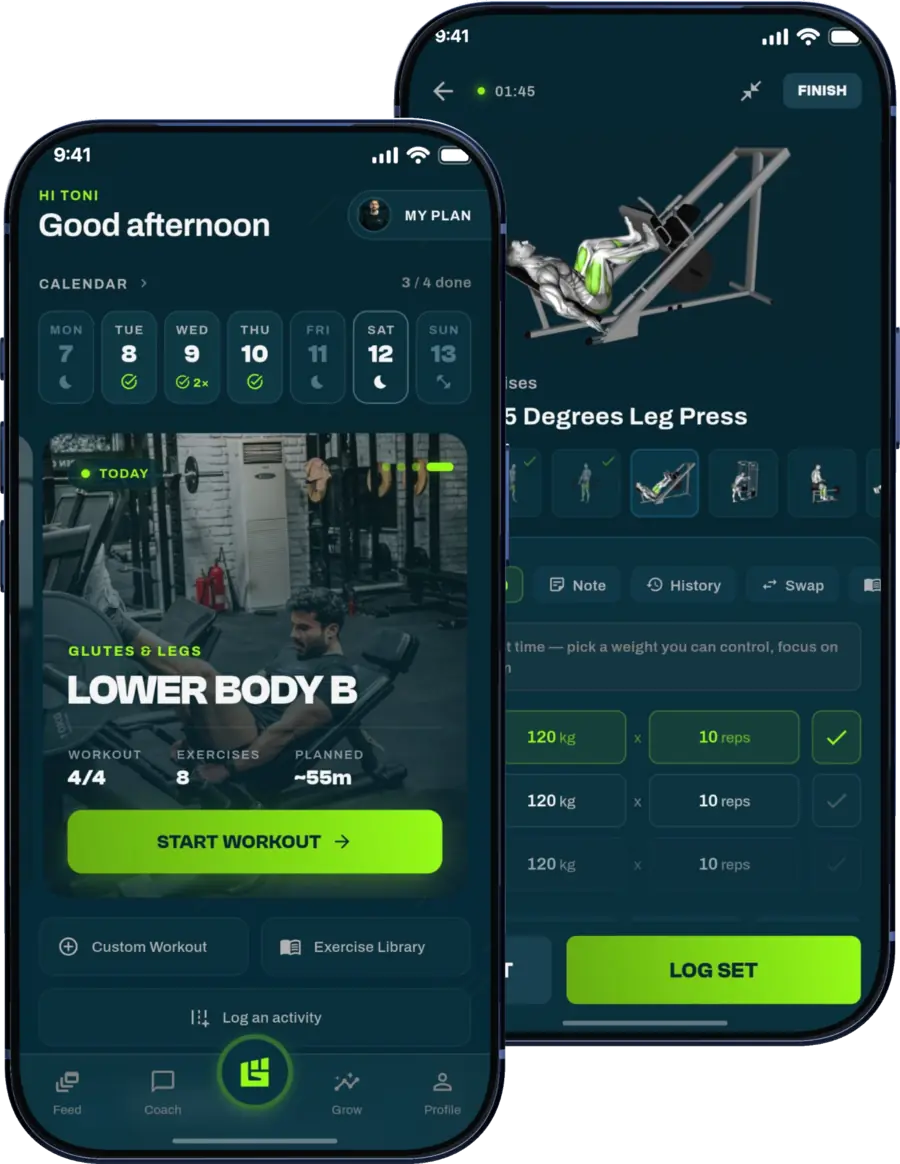
Get a personalized workout plan built around your goal, equipment and schedule. Train smarter, track every rep and keep moving forward, one workout at a time.






As you can see, your ideal protein intake isn't a single number. It’s a range that depends on whether you're focused on losing fat, gaining muscle, or simply maintaining where you are.
The new standard for protein intake
This move toward higher protein targets isn't just a fitness trend; it's a major shift in nutritional science. In January 2026, the U.S. Department of Health and Human Services and the U.S. Department of Agriculture officially updated the Dietary Guidelines for Americans, placing a much stronger emphasis on protein. This was a direct response to the growing body of evidence—and public interest—in protein's powerful health benefits.
This updated federal advice, which bumps the daily target up to 1.2–1.6 grams per kilogram of body weight, is specifically designed to support:
- Building and preserving muscle mass
- Keeping you feeling fuller for longer (satiety)
- Boosting your overall metabolic health
For a 154-pound (70 kg) person, that’s about 84–112 grams of protein a day. That's a huge step up from the old, outdated recommendations. You can find more details on the updated federal guidance from leading health experts.
This new guidance lets active people match their nutrition to the effort they put in at the gym. It reframes protein from just another nutrient into a vital tool for getting tangible results.
What this means for you
Getting a handle on this benchmark is your first step toward dialing in your diet for real progress. Think of protein as the fundamental building material your body needs to adapt and get stronger.
Every time you train, you create tiny micro-tears in your muscles. Protein delivers the amino acids—the building blocks—that your body uses to patch up that damage. But it doesn't just repair; it rebuilds the muscle bigger and stronger than before.
Whether you're trying to build a more muscular physique, drop body fat while holding onto your hard-earned muscle, or just maintain your current fitness, hitting this protein target is non-negotiable. It’s what gives your body the fuel it needs to recover and move closer to your goals. In the next few sections, we'll dig into exactly why this macronutrient is so important and how to calculate the right number for you.
Why protein is your body's MVP
Before we dive into calculating how much protein you need per day, let's talk about why it matters so much. Forget the myth that protein is only for bodybuilders. The truth is, protein is the most valuable player (MVP) for anyone looking to build a lean, functional body.
Think of it this way: your body is a structure that's constantly being repaired and upgraded. Protein provides the raw materials—the bricks and mortar—for almost everything, from muscle and bone to hair and skin. It’s the foundation.
The foundation for a lean physique
One of protein’s biggest, and most underrated, jobs is managing hunger. Ever notice how a breakfast of eggs and Greek yogurt keeps you full until lunch, while a bowl of cereal has you reaching for a snack by 10 AM? That’s protein working its magic.
Because it digests slower than carbs and fats, protein keeps your blood sugar stable and your hunger in check. This makes it a whole lot easier to stick to your calorie goals without feeling like you're constantly fighting cravings.
A high-protein diet is one of the most sustainable ways to manage weight because it helps you feel fuller for longer, naturally leading you to eat less overall.
Protein also has the highest thermic effect of food (TEF), meaning your body burns more calories just breaking it down. Up to 30% of the calories in protein are used up during digestion. It's a small boost, but it adds up, giving your metabolism a consistent nudge in the right direction.
Preserving muscle during weight loss
Here’s something crucial if you’re trying to lose fat: a calorie deficit doesn't just burn fat. Your body can also start breaking down your hard-earned muscle for energy, which slows your metabolism and works against your goal of looking lean and toned.
This is where protein acts as your best line of defense. Getting enough protein per day sends a powerful signal to your body: "Preserve the muscle, burn the fat." This ensures the weight you drop comes from fat stores, not lean tissue.
- Muscle Preservation: Protects your metabolism from slowing down as you lose weight.
- Improved Body Composition: Helps you build a leaner, more sculpted physique, not just a smaller version of your current self.
- Functional Strength: Keeps you strong and capable throughout your fat loss journey.
Ultimately, getting your protein right isn't just about building muscle. It's about creating a resilient, efficient body. It supports your immune system, builds healthy enzymes and hormones, and gives you the tools to achieve just about any health or fitness goal. That's why figuring out your ideal intake is step one.
Calculating your personalized protein intake
General guidelines are a great starting point, but now it’s time to dial in the exact number that works for you. This is where we move from theory to action, turning all this science into a concrete daily target. The math is simpler than you might think, and once you have your number, you can start making real, measurable progress.
Let's walk through how to calculate your personalized protein needs using both kilograms and pounds. All you need is your current body weight and your main fitness goal.
The simple math for your protein target
The formula for finding your daily protein target is straightforward. You’ll multiply your body weight by a specific factor based on your goal—whether that's building muscle, losing fat, or just maintaining where you are. We’ll use the widely accepted ranges for active people.
- For Muscle Gain: Aim for 1.6 to 2.2 grams of protein per kilogram of body weight (0.7 to 1.0 g/lb).
- For Fat Loss: Target 1.6 to 2.2 grams of protein per kilogram of body weight (0.7 to 1.0 g/lb) to hold onto your hard-earned muscle.
- For Maintenance: A range of 1.2 to 1.8 grams of protein per kilogram of body weight (0.5 to 0.8 g/lb) is plenty.
The key takeaway here is that both muscle growth and fat loss goals need a similar, higher protein intake. That’s because protein is critical for building new muscle tissue and protecting existing muscle when you're in a calorie deficit.
Putting it into practice with real examples
Let's see how this works with two common scenarios.
Example 1: Muscle Gain
- Person: A 180-pound individual focused on building muscle.
- Goal: Muscle Gain (Hypertrophy)
- Calculation: 180 lbs x 0.8 g/lb = 144 grams of protein per day.
To stay within the optimal range (0.7-1.0 g/lb), this person could aim for anywhere between 126 and 180 grams of protein daily. Starting at 144 grams is a solid, middle-of-the-road target.
Example 2: Fat Loss
- Person: A 150-pound individual focused on losing fat.
- Goal: Fat Loss
- Calculation: 150 lbs x 0.9 g/lb = 135 grams of protein per day.
Here, we went with a slightly higher multiplier (0.9 g/lb) to give extra protection against muscle loss during the diet. This higher intake also helps with hunger, making it much easier to stick to a calorie deficit.
This growing awareness of protein isn't just a gym trend. Global protein consumption is on the rise, with projections showing some regions increasing their intake by over 10% between 2021 and 2026. It reflects a worldwide shift where more than half of consumers are actively trying to eat more protein, aligning with what the science shows: higher protein supports better fitness outcomes. You can explore more data on global protein consumption trends on Statista.com.
Let technology do the work for you
Let's be honest, manually calculating and tracking your macros can feel like a chore. That’s why using a dedicated tool makes the whole process feel effortless. The GrabGains app has a built-in macro calculator that takes all the guesswork out of it.
Here's how the GrabGains Macro Calculator simplifies finding your protein target.
Instead of pulling out a calculator, you just enter your details—like weight, goal, and activity level—and the app gives you a precise protein target designed just for you. This ensures your nutrition perfectly aligns with your training, helping you see results faster. And for those who love to cook, using a macro calculator for recipes is an invaluable tool for tracking every gram with total accuracy.
Adjusting protein for your specific fitness goal
Your daily protein needs aren't set in stone. They should shift and adapt based on what you’re trying to achieve with your body. A general protein target is a fine starting point, but tuning that number to your specific fitness goal can make a massive difference in your results.
Think of it like this: a generic map can get you to the right city, but a GPS programmed with your exact destination gets you right to the front door.
Whether your mission is packing on muscle, shedding fat, or boosting endurance, your ideal protein per day will look different. Let's break down how to dial in your intake for each goal, making sure every gram you eat is working for you, not against you.
Protein for maximum muscle growth
If your primary goal is to build muscle—a process called hypertrophy—then protein is your single most important nutritional tool. When you lift weights, you create tiny micro-tears in your muscle fibers. Protein provides the amino acids to repair that damage and, crucially, rebuild the fibers even bigger and stronger.
To get the most out of this muscle-building process, a higher protein intake is non-negotiable.
- Optimal Range: The science consistently points to an ideal intake of 1.6 to 2.2 grams of protein per kilogram of body weight (or about 0.7 to 1.0 g/lb) for anyone serious about hypertrophy.
- Why It Works: This range ensures your body has a surplus of amino acids to fuel muscle protein synthesis, the engine of muscle growth. If you fall short, you’re simply leaving gains on the table.
It helps to think of it like building a brick wall. Your workouts are the bricklayers showing up for work, but protein is the supply of bricks. If the crew is ready but there aren't enough bricks, construction grinds to a halt. Hitting this higher protein target ensures your body always has the materials it needs to build new muscle.
Protein for effective fat loss
When you’re trying to lose fat, the main objective is a calorie deficit. But there’s a catch: when calories are low, your body can start breaking down precious muscle tissue for energy, not just fat. A high-protein diet is your best defense against this.
A higher protein intake while dieting is like an insurance policy for your muscles. It helps ensure the weight you lose comes from fat, preserving the lean, strong physique you've worked hard to build.
For effective, muscle-sparing fat loss, the protein recommendation looks surprisingly similar to the one for muscle gain.
- Optimal Range: Aim for 1.6 to 2.2 grams of protein per kilogram of body weight (0.7 to 1.0 g/lb).
- Key Benefits: This high intake does two critical things. First, it helps preserve lean muscle mass, which is vital for keeping your metabolism firing. Second, it dramatically increases satiety, helping you feel fuller for longer and making it far easier to stick to your diet without being hungry all the time.
Protein for endurance athletes
Protein is often seen as a bodybuilder's supplement, but it's just as vital for endurance athletes. The constant, repetitive stress of running, cycling, or swimming puts a huge demand on the body, and you need plenty of protein for muscle repair and recovery.
While endurance athletes don't need the same sky-high intake as someone trying to get huge, they definitely need more than the average person.
- Optimal Range: The sweet spot for endurance athletes usually falls between 1.2 to 1.7 grams of protein per kilogram of body weight (around 0.5 to 0.8 g/lb).
- Primary Role: This amount helps repair damaged muscle tissue, assists in replenishing glycogen stores (when eaten with carbs), and supports overall recovery so you can come back stronger for your next session. If recovery is your main focus, adding a quality protein powder for recovery can be a game-changer.
Ultimately, your training and nutrition have to work together. Using a tool like a Personalized strength training app can sync these two pieces perfectly. The GrabGains platform, for example, creates adaptive workout plans tailored to your goal and provides nutrition targets that automatically adjust to support your training—so your efforts are always backed by the right fuel.
Protein quality and timing: the missing pieces of the puzzle

Hitting your daily protein number is a great start. But if you want to get the most out of every gram, you need to look at two other factors: the quality of your protein and the timing of your meals.
Getting these right ensures your body has a steady supply of high-quality building blocks exactly when it needs them for repair and growth. It's the difference between just eating protein and using it strategically.
For decades, gym-goers were obsessed with the "anabolic window"—a mythical 30-minute timeframe after a workout where you supposedly had to chug a protein shake or your workout was a waste. Thankfully, modern science has cleared things up. We now know muscle protein synthesis stays elevated for 24 to 48 hours after a tough training session.
This means you can relax. There’s no need to sprint to the locker room for a shake. The real key to maximizing muscle growth lies in a much simpler, more sustainable approach: spreading your protein intake evenly throughout the day.
Spacing your protein for better results
Think of feeding your muscles like watering a plant. You wouldn't drown it with water once in the morning and then let it dry out for the rest of the day. You'd give it water consistently to keep it healthy and growing. Your muscles need the same kind of steady nourishment.
By spacing your protein into 3-5 meals or snacks, each with about 25-40 grams of protein, you create a constant stream of amino acids. This keeps your body in a muscle-building state around the clock, fueling continuous repair and growth.
The most effective strategy isn't chasing a mythical "anabolic window." It's hitting your total daily protein goal and distributing it evenly across your day to keep your muscles primed for recovery.
This consistent feeding strategy helps prevent your body from breaking down muscle tissue (catabolism) and makes sure your hard work in the gym actually translates into results.
What is a "good" protein source?
Not all protein is created equal. The quality of a protein comes down to its amino acid profile. Proteins are built from 20 different amino acids, nine of which are called essential amino acids (EAAs). Our bodies can't make these on their own, so we have to get them from our food.
A complete protein is any food that contains all nine of these essential amino acids in the right amounts. Animal-based sources like meat, poultry, fish, eggs, and dairy are all complete proteins.
Some plants, like soy and quinoa, are also complete. However, most plant-based sources are "incomplete," meaning they're low in one or more EAAs. This is easily solved by eating a variety of different plant foods, a simple strategy known as protein combining. A classic example is rice and beans—together, they provide all nine EAAs and form a complete protein.
Let's break down some of the most common protein sources you'll encounter.
Comparing common protein sources
| Protein Source | Type | Key Benefit | Best For |
|---|---|---|---|
| Whey Protein | Complete | Fast-digesting, high in leucine | Post-workout recovery, convenience |
| Casein Protein | Complete | Slow-digesting, sustained release | Before bed, long periods without food |
| Chicken/Turkey | Complete | Lean, versatile, and affordable | Building lean mass, meal prep |
| Beef/Red Meat | Complete | High in creatine and iron | Building strength and overall mass |
| Eggs | Complete | Highly bioavailable, nutrient-dense | Any meal, muscle maintenance |
| Fish | Complete | Rich in omega-3 fatty acids | Overall health, lean muscle growth |
| Soy (Tofu, Edamame) | Complete | The most complete plant protein | Plant-based diets, muscle building |
| Lentils/Beans | Incomplete | High in fiber and micronutrients | Plant-based meals (combine with grains) |
While many people lean on animal sources—one recent analysis noted that 67% of consumers prefer them—a smart diet includes a mix of both animal and plant-based options to cover all your bases. You can explore more of these emerging nutrition trends from llcc.edu to see how modern diets are evolving.
The takeaway is simple: choose a variety of high-quality protein sources and spread them out across your day. This combination of quantity, quality, and timing is what truly drives progress.
Frequently asked questions about daily protein
Even with the right numbers, a few common questions always seem to pop up. Let's clear up some of the most frequent points of confusion so you can move forward with your nutrition plan, no second-guessing involved.
Can you eat too much protein per day?
This is easily the most common worry, usually tied to old myths about protein being bad for your kidneys. For healthy people, this concern has been thoroughly debunked.
Studies on active individuals show that a high protein intake is perfectly safe. Consuming up to 2.2 grams of protein per kilogram of body weight (1.0 g/lb) is well-tolerated and won't harm healthy kidneys.
The real key is balance. A high-protein diet still needs plenty of fiber from fruits and vegetables, essential fats, and good hydration. If you have a pre-existing kidney condition, however, you absolutely must talk to your doctor before upping your protein.
Do I need more protein on training days?
It seems logical to carb-load, so why not protein-load on training days? In reality, consistency beats cycling your intake every time.
The process of repairing and building muscle—muscle protein synthesis—doesn't just switch on for a few hours after a workout. It stays elevated for 24 to 48 hours after a tough session.
Think of recovery as a marathon, not a sprint. Your body is rebuilding long after you’ve left the gym. Providing it with a steady supply of protein every day—including rest days—ensures this process is never interrupted.
Hitting your daily protein target every single day is the best play. It gives your body a constant stream of amino acids to recover, adapt, and grow.
What are the best plant-based protein sources?
Hitting a high protein goal on a plant-based diet is easier than ever. With a bit of smart planning, you can get all the protein you need without any animal products.
Some of the most powerful plant-based sources include:
- Tofu, Tempeh, and Edamame: These soy-based powerhouses are complete proteins and incredibly versatile in the kitchen.
- Lentils and Chickpeas: Not only are they packed with protein, but they're also loaded with fiber to help you feel full and support digestion.
- Quinoa: This "pseudocereal" is a complete protein, making it an awesome base for any meal.
- Nuts and Seeds: Almonds, chia seeds, and hemp seeds are perfect for snacking or sprinkling on meals for an extra protein kick.
While some plant proteins are "incomplete" on their own, that’s an easy fix. Just eat a variety of sources throughout the day. A classic like rice and beans, for example, combines to create a complete amino acid profile. A good plant-based protein powder (like soy, pea, or a blend) is also a simple and effective way to top up your intake.
Ready to take the guesswork out of your nutrition and training? The GrabGains app builds a truly personalized plan that adapts to your performance, complete with macro targets that sync with your workouts. Stop calculating and start progressing. Download GrabGains on iOS or Android today and experience personalized fitness.
Get inspired and motivated