Exercises that build consistent tension and targeted chest activation
Chest exercises with cable
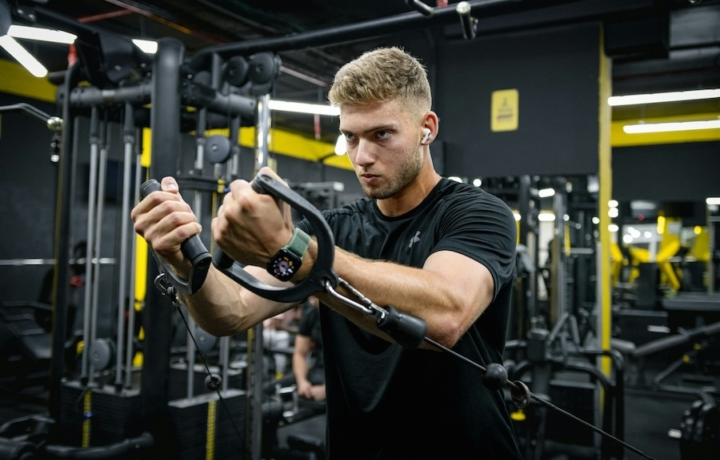
Cable chest exercises offer unmatched tension throughout the entire movement, making them highly effective for shaping and strengthening the chest at every angle. Unlike free weights, cables maintain resistance during both the stretch and contraction phases, which improves muscle engagement and control. These movements allow precise targeting of upper, mid, and lower chest fibers, making cables a valuable tool for hypertrophy and balanced development.
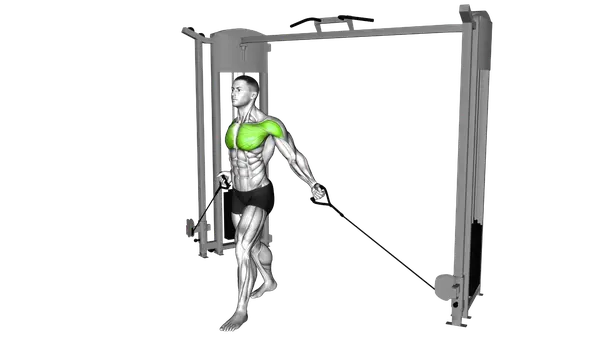
Cable Low to High Cable Fly
The Cable Low to High Cable Fly is a chest isolation exercise that targets the upper chest by guiding the arms upward through a controlled cable motion.
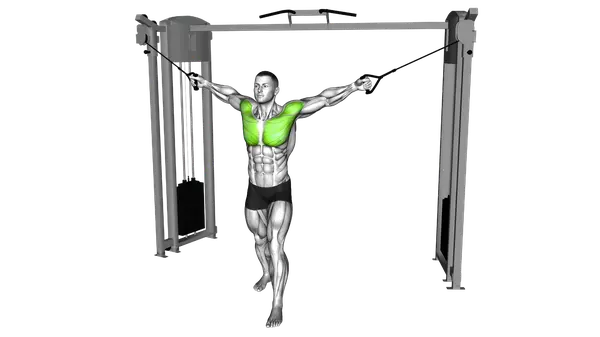
Cable Standing Up Straight Crossovers
The Cable Standing Up Straight Crossovers is a chest isolation exercise that builds chest strength and control using standing cable resistance.
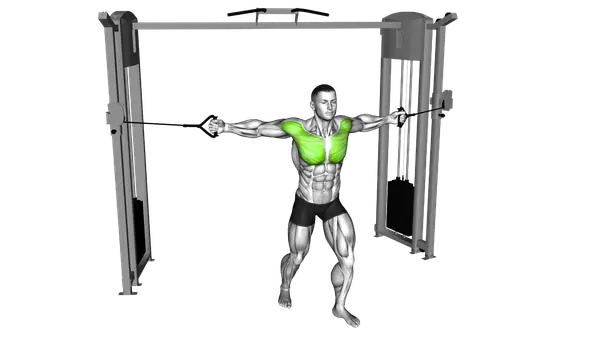
Middle Cable Chest Fly
The Middle Cable Chest Fly is a cable-based isolation exercise used to train the chest through constant tension and controlled movement.
Why cables enhance tension, control and muscular development
Benefits of training chest with cables
Cables provide continuous resistance, allowing you to load the chest evenly through the full range of motion. They also allow adjustments in height, angle, and arm path, making it easier to emphasize specific areas of the chest. Because cables reduce joint stress and improve stability demands, they are often used to refine technique and improve muscle isolation.
Key advantages:
- Consistent tension through the entire movement
- Easy angle adjustments for upper, mid, and lower chest targeting
- Strong mind–muscle connection and improved isolation
- Smooth, joint-friendly resistance curve
- Useful for both hypertrophy and accessory strength training
How cable movements fit into your weekly routine
When to use cable chest exercises
Cable chest exercises work well mid- or late-session after barbell or dumbbell presses, where they provide precise isolation and high-quality repetitions. They fit naturally into push days, upper-body hypertrophy sessions, and machine-based workouts. Most lifters perform cable work one to three times per week, adjusting volume based on overall pushing workload. Because cables allow fine control over movement patterns, they complement pressing variations by improving consistency and technique.
Movements worth prioritizing for chest tension and muscular development
Key cable chest exercises
Below are the five most valuable cable chest exercises on this page. These variations combine angle control, stability demands, and targeted tension for complete chest stimulus.
- Middle cable chest fly: A classic cable movement that targets the mid-chest fibers with smooth, consistent tension and excellent isolation.
- Cable low to high fly: Emphasizes the upper chest by moving the arms upward through an arcing path, improving upper-chest fullness and definition.
- Cable standing up straight crossovers: A tension-rich crossover variation that combines chest contraction with stability and shoulder positioning control.
- High to low cable fly: Targets the lower chest by sweeping the cables downward, improving lower-pectoral density and shape.
- Single-arm cable chest fly: Offers unilateral loading that helps correct imbalances while allowing deeper stretch and more precise contraction.
Exercise overview
| Exercise | Primary focus | Training |
|---|---|---|
| Middle cable chest fly | Mid chest | Isolation and hypertrophy |
| Cable low to high fly | Upper chest | Targeted hypertrophy |
| Cable standing up straight crossovers | Chest + shoulders | Stability and strength control |
| High to low cable fly | Lower chest | Isolation and shaping |
| Single-arm cable chest fly | Unilateral chest | Symmetry and isolation |
Placing these movements inside your program
How to integrate cable chest exercises
Cable exercises are effective as secondary or finishing movements once your primary presses have delivered the main strength stimulus. They work well in moderate to high rep ranges, where control, tempo, and full stretch are the priority. Combining mid-, high-, and low-angle variations ensures complete chest coverage across the muscle’s fiber directions. Create your personal training program in the app tailored to your goals, fitness level, and schedule.
Frequently asked questions about chest exercises with cable
Cables offer unique benefits—especially constant tension—but they do not fully replace pressing variations. The best chest development comes from combining barbell or dumbbell presses with flies and crossovers from different angles.
Use a controlled tempo, emphasize the stretch and squeeze positions, and adjust cable height to target different fibers. Small adjustments to stance and arm path can significantly improve tension and activation. Consistent progression in reps or load ensures ongoing results.
Cable chest movements primarily target the pectoralis major, but they also involve the shoulders and triceps to varying degrees. Adjusting cable height allows you to emphasize upper, mid, or lower chest fibers. Single-arm variations enhance activation by increasing range of motion and contraction focus.
Start with a weight that allows you to maintain control through the full movement without using momentum. Cables often feel heavier than free weights at equivalent resistance levels because they maintain constant tension. Increase gradually as your technique stabilizes.
One to three sessions per week works well depending on your overall push volume and recovery. Cables are joint-friendly, making them suitable for higher repetition work or frequent accessory training.
Find related pages
Explore related exercises, workouts, and routines to expand your training and reach your goals more efficiently.
Chest exercises with equipment
Workouts & routines
Most popular exercises
Training categories that pair well with cable chest exercises