Exercises to build lift, definition and upper chest power
Upper chest exercises
Upper chest exercises help build a strong, well-developed upper body. These movements target the upper portion of the chest, improving pressing power, posture, and overall muscle balance. Whether you train at home or in the gym, incline-based chest exercises improve strength and shape.
Focus on
Pick your equipment
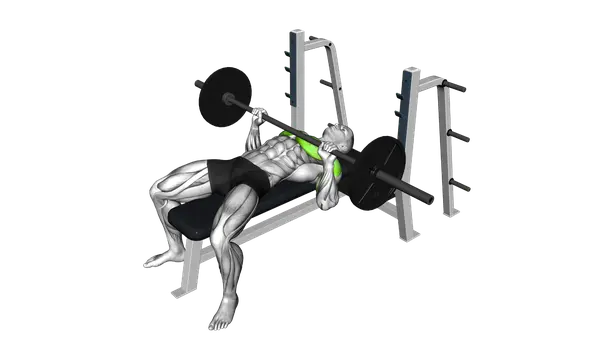
Barbell Bench Press
The barbell bench press stands as a cornerstone in strength training, revered by intermediate lifters across powerlifting and bodybuilding communities alike. This compound movement primarily targets the pectoral muscles while significantly engaging the triceps and anterior deltoids, making it an efficient chest developer with impressive strength-building benefits. What makes the bench press particularly valuable is its remarkable ability to overload the upper body pushing muscles with substantial weight, creating the mechanical tension necessary for muscle growth and strength development. For intermediate lifters, this exercise serves as both a reliable strength benchmark and a versatile tool for building a more impressive upper body. The beauty of the bench press lies in its adaptability within various training protocols. Powerlifters typically employ heavier loads with lower repetitions to maximize strength gains, while bodybuilders might incorporate moderate weights with higher volume to stimulate hypertrophy. This versatility allows intermediate athletes to adjust the exercise based on their specific goals without needing to change the movement pattern itself. Beyond the visible physical benefits, the bench press delivers substantial neuromuscular adaptations. The coordination required between the chest, shoulders, and triceps enhances overall pressing strength that transfers to numerous daily activities and other gym movements. Additionally, the stability demands placed on the core and shoulder girdle contribute to improved upper body control and function. For those seeking strength development, few exercises can match the barbell bench press in terms of progressive overload potential. The movement allows for precise weight increments that make tracking progress straightforward and rewarding. This measurability provides intermediate lifters with clear feedback on their development journey, creating both motivation and direction in their training programs. While certainly not the only chest exercise worth performing, the barbell bench press remains an efficient, effective, and evidence-based selection for intermediate lifters looking to develop both strength and muscle mass in their upper body pushing muscles.
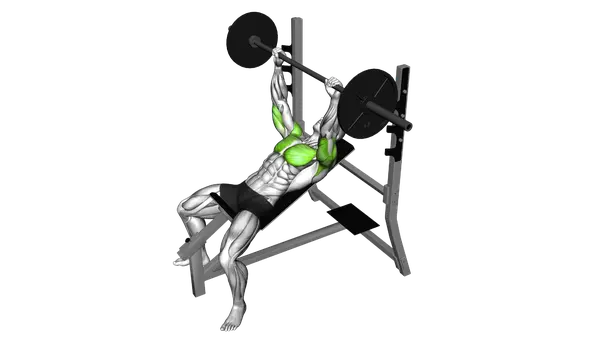
Barbell Incline Bench Press
The Barbell Incline Bench Press stands as a cornerstone compound movement for developing impressive upper body strength and musculature. This intermediate-level exercise primarily targets the upper pectorals while significantly engaging the anterior deltoids (front shoulders) and triceps as supporting muscle groups. The angled position—typically set between 30 to 45 degrees—shifts emphasis to the upper chest region, creating a balanced development that flat bench pressing alone cannot achieve. Athletes across bodybuilding and powerlifting disciplines incorporate this movement for distinct but complementary purposes. Bodybuilders value the incline press for its ability to sculpt a well-defined chest with full upper pectoral development, preventing the drooping appearance that can result from overdeveloping the lower chest. Powerlifters, while focusing more on flat bench for competition, utilize the incline variation to strengthen supporting muscles that contribute to their overall pressing power and performance. The beauty of the incline barbell press lies in its versatility for strength development. Progressive overload is particularly effective with this movement, allowing lifters to continuously challenge their upper body by incrementally increasing resistance. This steady progression stimulates not just muscle growth but also reinforces the neural pathways responsible for strength expression. Many strength enthusiasts find that improvements in incline press performance correlate with enhanced overall pressing capability. From a physiological perspective, the exercise creates optimal tension through the clavicular fibers of the pectoral muscles while maintaining substantial recruitment of the sternal fibers. This comprehensive activation pattern, combined with significant triceps engagement, makes it an efficient use of training time for those seeking both aesthetic and functional improvements to their upper body. When programmed correctly—typically for 3-4 sets of 6-12 repetitions depending on specific goals—the incline barbell bench press delivers substantial returns on investment, making it a worthy addition to any serious strength or physique-focused regimen.
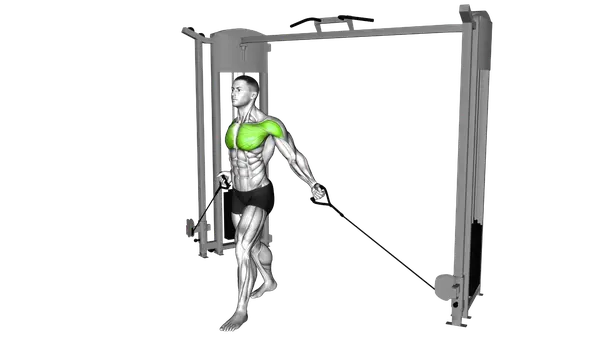
Cable Low to High Cable Fly
The Cable Low to High Fly is an effective chest exercise that helps build strength and shape in your upper body. It mainly targets the chest muscles, with extra activation in the front of the shoulders. Because multiple muscles work together during the movement, it’s a smart choice for developing overall upper-body strength and control. Unlike traditional flat bench chest flies, the low-to-high angle creates unique muscle activation patterns across the pecs, particularly emphasizing the upper and inner portions. This trajectory mimics the natural movement pattern of bringing your arms together against resistance, which makes it biomechanically sound for most physiques and shoulder structures. For bodybuilding enthusiasts, this exercise offers exceptional value in creating that sought-after chest separation and definition. The constant tension provided by the cables throughout the entire range of motion stimulates both fast and slow-twitch muscle fibers, promoting balanced development and improved mind-muscle connection in the chest region. While primarily considered a hypertrophy exercise, the Cable Low to High Fly contributes significantly to functional strength development. The stabilization required throughout the movement engages core musculature and improves shoulder joint integrity, translating to enhanced performance in pressing movements like bench press and push-ups. Program this exercise strategically in your training split: it works excellently as a finisher after heavy compound movements when the chest fibers are already fatigued. Alternatively, use it as a pre-exhaust technique before pressing exercises to maximize pectoral recruitment. Many advanced lifters also incorporate it into superset protocols to amplify training density and metabolic stress. The beauty of cable exercises lies in their adjustability. As your strength increases, simple weight progression allows continued challenge without the awkward jumps sometimes experienced with dumbbell alternatives. This makes the Cable Low to High Fly an excellent choice for consistent progression in your chest development journey, regardless of whether you're training primarily for aesthetics or functional strength.
Dumbbell Incline Chest Press
The Dumbbell Incline Chest Press stands as a cornerstone movement for anyone looking to develop impressive upper chest definition and strength. This intermediate-level exercise primarily targets the upper portion of the pectoralis major (pecs), while significantly engaging the anterior deltoids (front delts) and triceps as secondary muscle groups. Favored by bodybuilders for decades, the incline variation creates that coveted full chest development that flat pressing alone simply cannot achieve. The beauty of using dumbbells rather than a barbell lies in the freedom of movement they provide, allowing for a more natural range of motion that matches your unique shoulder structure and can potentially reduce joint stress. For strength enthusiasts, the Dumbbell Incline Press offers substantial benefits beyond aesthetic appeal. The unilateral nature of the exercise exposes and addresses strength imbalances between your left and right sides, which can significantly improve your overall pressing performance across other movements. Additionally, the stabilization demands placed on your shoulder complex contribute to more functional strength that translates to everyday activities. From a bodybuilding perspective, the incline angle shifts emphasis to the upper chest fibers, creating that shelf-like appearance where the chest meets the shoulders: a hallmark of a well-developed physique. This targeted approach helps create the complete chest development necessary for competitive bodybuilding or simply achieving a balanced, aesthetic upper body. When incorporated into a comprehensive chest routine, this movement serves as an ideal complement to flat and decline variations, ensuring complete pectoral development. The exercise responds particularly well to both higher-rep approaches for hypertrophy (8-12 reps) and lower-rep schemes for raw strength (4-6 reps), making it incredibly versatile within various training protocols. Whether your goals lean toward competitive bodybuilding or pure strength development, the Dumbbell Incline Chest Press delivers impressive results when performed consistently with proper form and appropriate loading parameters.
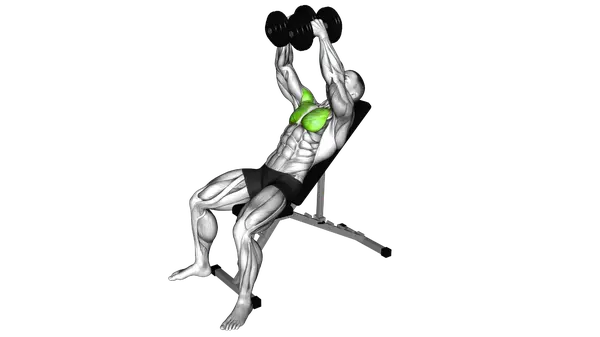
Incline Dumbbell Fly
The Incline Dumbbell Fly stands as a cornerstone chest exercise in the arsenal of intermediate-level fitness enthusiasts looking to sculpt defined pecs and strengthen their front deltoids. This movement has earned its reputation in bodybuilding circles for its ability to effectively isolate the chest muscles while creating that aesthetic stretch and contraction that builds noticeable muscle separation. Unlike compound chest movements that engage multiple muscle groups simultaneously, the Incline Dumbbell Fly targets the upper portion of the pectoralis major with remarkable precision, giving you that shelf-like upper chest development that's often difficult to achieve with flat pressing movements alone. The angled position on the incline bench shifts emphasis toward the clavicular head of the pecs while recruiting the anterior deltoids as secondary movers, creating balanced development across the upper body's pushing muscles. For those focused on strength goals, don't underestimate this exercise despite its reputation as primarily a bodybuilding movement. When performed with appropriate resistance and proper form, Incline Dumbbell Flys strengthen crucial stabilizing muscles around the shoulder joint, potentially improving your performance on heavier pressing movements while reducing injury risk. The controlled nature of this exercise allows for developing strength through a full range of motion, particularly at the stretched position where many lifters are weakest. Many bodybuilders incorporate this exercise later in their chest workout after heavier compound movements have fatigued the larger muscle groups. This strategic placement allows for deeper muscle fiber recruitment when the pecs are already partially exhausted. For maximum effectiveness, consider moderate rep ranges of 8-12 repetitions with a weight that challenges you while maintaining proper form throughout the movement. Whether your goals lean more toward competitive bodybuilding aesthetics or functional strength development, the Incline Dumbbell Fly deserves a place in your routine if you're serious about developing a powerful, well-defined upper chest that commands attention.
What makes upper chest training essential for balanced development
Training goals for upper chest development
The upper chest is often underdeveloped from flat bench routines. Incline exercises improve symmetry and posture through targeted tension. Mechanical tension and progressive overload trigger growth by stressing muscle fibers. Changing the incline and resistance type helps shift focus to the upper chest. Developing this region balances your chest development, increases pressing angles for compound lifts, and helps prevent overuse injuries from repetitive flat plane motion.
Proven movements to activate and grow
Best upper chest exercises for strength and muscle growth
Top exercises include incline dumbbell- and barbell press, landmine presses, and low-to-high cable flys. Decline push-ups offer a bodyweight option. Compound lifts build strength; isolation movements improve control and tension. Rotate equipment and focus on form to avoid plateaus. These exercises work well in both strength and hypertrophy phases, making them versatile for any goal and level. Prioritize proper execution and feel in every rep to avoid shoulder compensation.
Train effectively with any setup, from dumbbells to bodyweight
Equipment options for training the upper chest
Incline benches with dumbbells or barbells allow focused training. Dumbbells provide range; barbells enable overload. Cables are excellent for constant tension. Bands or elevated surfaces replicate incline patterns at home with minimal setup. Machines with adjustable angles offer convenience and consistent resistance paths. No matter your setup, keep form and movement intent the priority. Equipment selection should match your experience level and help you train safely and progressively.
When and how often to train for maximum upper chest gains
Integrate upper chest training into your routine
Include upper chest work early in push days to prioritize effort. Train it 1–2 times weekly for growth. For best results, begin sessions with incline presses. Add flys or isolation moves after. Adjust frequency based on recovery and goals. Upper chest can be trained in different rep ranges to target both strength and hypertrophy. Pairing it with shoulders or triceps in your split can help you recover better and avoid overlap. Create your training plan in the app to include the best upper chest exercises based on your goals.
Frequently asked questions about upper chest exercises
Training your upper chest 1–2 times per week is effective for most people, especially if it's a weaker or underdeveloped area. You can include 1–2 exercises specifically targeting the upper chest in each chest or push session, such as incline presses or low-to-high flys. If you're following a split routine, spreading upper chest work across two sessions helps increase total weekly volume without overloading any single day. Just make sure to allow at least 48 hours of rest between direct training to support recovery and growth. Consistent focus over time leads to visible improvements.
Both approaches have value, and combining them yields the best results. Compound lifts like incline barbell or dumbbell presses allow you to move heavier weight and stimulate overall upper chest growth. Isolation exercises such as low-to-high cable flys or incline plate raises help fine-tune activation and improve muscle definition. Compound movements should form the base of your routine, while isolation work can enhance the mind-muscle connection and round out your development. Using both ensures you’re building size, strength, and control in the upper chest.
Yes, you can train your upper chest without a bench by adjusting body positioning and using creative angles. Incline push-ups — where your feet are elevated on a chair or step — shift more emphasis to the upper chest. Resistance bands anchored low can mimic the motion of low-to-high cable flys. You can also perform floor presses with your upper back slightly elevated using pillows or a yoga block to change the pressing angle. While a bench provides more range and stability, consistent effort with smart modifications can still effectively target the upper chest.
The best upper chest exercises are those that target the upper portion of the pectoral muscles through an upward pressing angle. Incline barbell presses and incline dumbbell presses are foundational lifts that allow you to build strength and mass. Additional movements like low-to-high cable flys and incline push-ups help isolate the upper chest and improve muscle activation. To get the most out of your training, use a mix of compound lifts for load and isolation work for focused tension. Consistency and proper form are key to developing a well-defined upper chest.
Integrate upper chest exercises into full-body and split routines