Exercise
Incline Dumbbell Alternative Curl
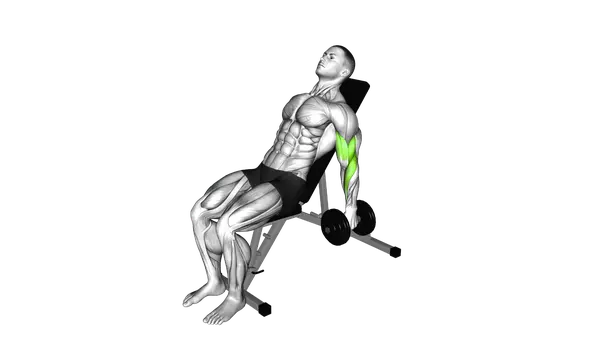
The Incline Dumbbell Alternate Curl trains the arms one side at a time to improve control, balance and strength through a longer curl path.

Incline Dumbbell Alternative Curl
Report an issue
Thank you for your feedback!
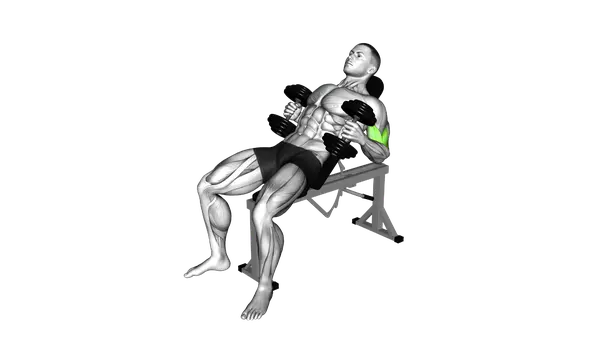
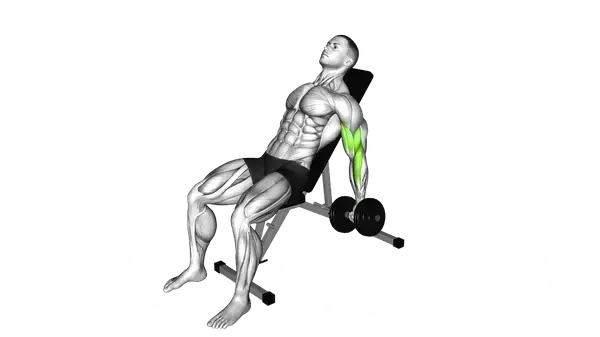
The Incline Dumbbell Alternate Curl is an arm exercise performed on an incline bench where you curl one dumbbell at a time. The angled position places the arms slightly behind the body, increasing the working range and making the movement more challenging without needing heavy weight.
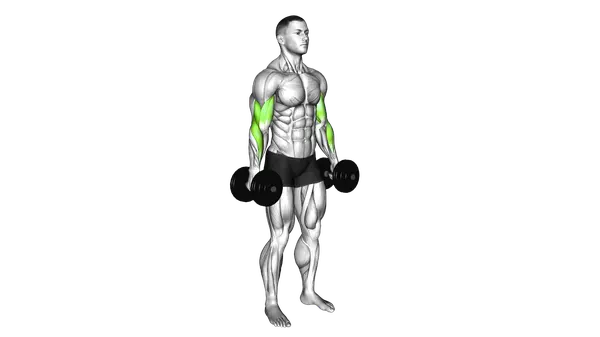
You should feel the effort mainly in the front of the upper arms, with steady tension as the weight moves up and down. Keep your upper arms still, move through a smooth and controlled tempo, and allow each arm to fully lower before switching sides. Avoid swinging or rushing the movement.
This exercise fits well in arm-focused or upper body workouts, often after heavier pulling movements. You can make it easier by using lighter dumbbells or shortening the range, or harder by slowing the lowering phase while keeping strict control on each rep.
How to Perform the Incline Dumbbell Alternative Curl
- Set up an incline bench at a 45-degree angle and sit with your back firmly supported, holding a dumbbell in each hand with a supinated grip (palms facing up).
- Position your feet flat on the ground for stability and maintain a neutral spine position throughout the exercise.
- Begin with your arms fully extended toward the floor, elbows close to your torso but not locked out.
- Inhale and curl the right dumbbell toward your shoulder while simultaneously rotating your left palm to a pronated position (palm facing down).
- As you exhale, continue curling the right dumbbell up while keeping your elbow stationary, and at the same time, begin curling the left dumbbell with your palm facing down.
- Lower the right dumbbell back down with control while your left arm completes its curl, maintaining opposite movements throughout the exercise.
- Once the left arm reaches full flexion, begin lowering it while simultaneously curling the right dumbbell up again with a supinated grip.
- Continue alternating these opposite curling patterns for the prescribed number of repetitions, maintaining controlled movements and avoiding momentum.
Important information
- Keep your upper arms and elbows pressed against your sides throughout the movement to isolate the biceps properly.
- Focus on a full range of motion, allowing your arms to fully extend at the bottom position without locking your elbows.
- Maintain wrist alignment with your forearms to prevent unnecessary strain; avoid excessive wrist flexion or extension.
- If you experience any elbow or wrist discomfort, try using lighter weights or adjusting the bench to a less steep angle.
FAQ - Incline Dumbbell Alternative Curl
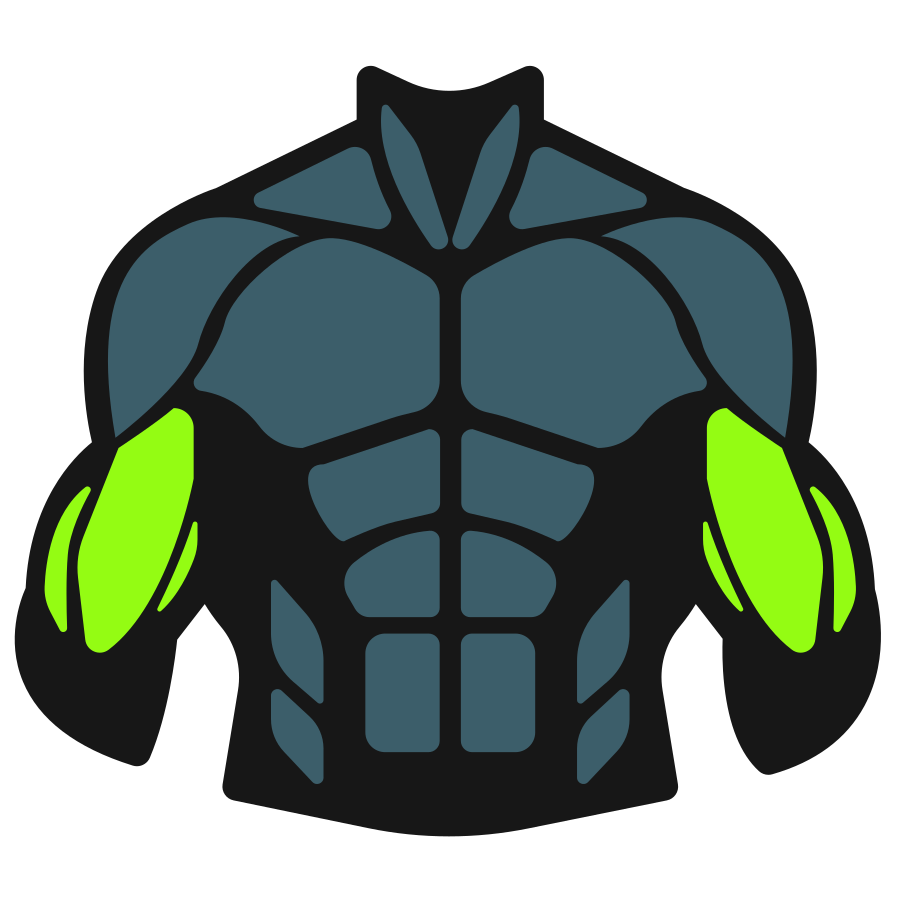
The incline dumbbell alternate curl primarily targets the biceps brachii while also engaging the front deltoids. The incline position creates a unique stretch that particularly emphasizes the long head of the biceps, leading to more complete development of the muscle.
Set your incline bench at approximately 45-60 degrees - steep enough to create the lengthened position for your biceps but not so vertical that you lose the exercise's unique benefits. Make sure your back is fully supported against the pad with feet firmly planted on the floor.
The biggest mistakes include using momentum by swinging the dumbbells, not fully extending your arms at the bottom position, and lifting your back off the bench. Keep your upper arms stationary against the bench throughout the movement and focus on controlled, full-range repetitions.
For most intermediate lifters, performing this exercise 1-2 times weekly within your arm or upper body training days is ideal. Place it in the middle of your workout after compound movements but before high-rep isolation exercises for maximum effectiveness.
Most lifters should use approximately 70-80% of what they'd normally select for standard dumbbell curls. The incline position creates a mechanical disadvantage that makes the exercise more challenging, so prioritize proper form over heavier weights until you've mastered the movement.
Incline Dumbbell Alternative Curl
Exercise Details
Primary Muscles
Secondary Muscles
Muscle Groups
Mechanic
Risk Areas
Built for progress
Take the guesswork out of training
Create personalized AI-powered workout plans that evolve with you. Train smarter, track every rep and keep moving forward, one workout at a time.