Knee Touch Crunch
Reviewed by Tim Renting, Physiotherapist
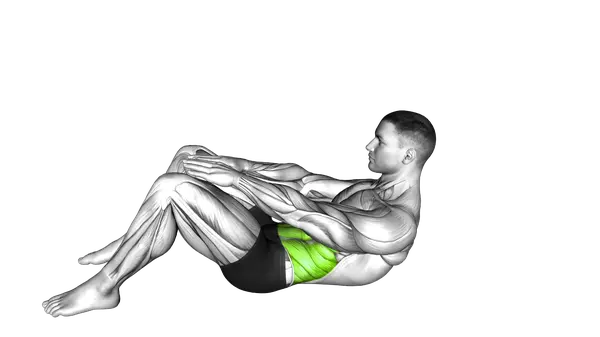
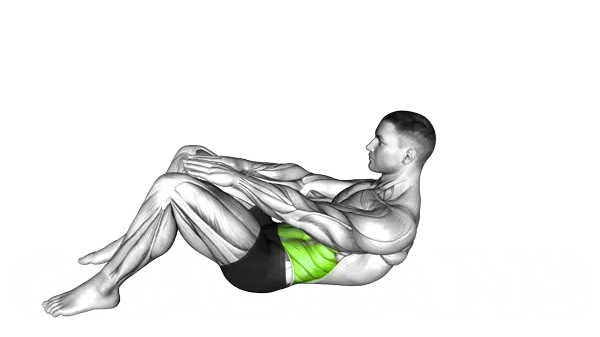
The Knee Touch Crunch is a controlled core exercise that targets the abdominal muscles through a focused reaching movement toward the knees.

Knee Touch Crunch
Muscles Worked: Knee Touch Crunch
The Knee Touch Crunch mainly works your abs, especially the front wall of your midsection that curls your ribs toward your hips. Because your knees stay bent throughout the movement, your abs also have to brace to stop your lower back from arching while you reach toward your knees. This makes it more demanding than a basic floor crunch for keeping tension where you want it. If you do it right, you should feel a strong burn through the middle of your stomach instead of pulling in your neck, and higher-effort training is closely tied to better muscle-building signals over time.
Built for progress
Take the guesswork out of training
Get a personalized workout plan built around your goal, equipment and schedule. Train smarter, track every rep and keep moving forward, one workout at a time.






Technique and form
How to perform the Knee Touch Crunch
- Lie flat on your back with your knees bent and your feet flat on the floor, hip-width apart.
- Extend your arms forward in front of your chest, ready to reach toward your knees.
- Engage your core by drawing your navel toward your spine while maintaining a natural curve in your lower back.
- Exhale as you curl your upper body off the floor, lifting your shoulder blades a few inches.
- As you crunch upward, reach your hands forward toward your knees, bringing them as close to touching as you can.
- Hold the top position briefly, keeping your core tight and your lower back pressed into the floor.
- Inhale as you slowly lower your upper body back to the starting position.
- Repeat the movement in a slow, controlled manner, keeping tension in your abs throughout.
Important information
- Keep your neck relaxed. Let your abs do the lifting instead of pulling with your arms or neck.
- Maintain contact between your lower back and the floor throughout the exercise to protect your spine.
- Move slowly and with control rather than using momentum to crunch upward.
- If you feel strain in your neck, keep your chin slightly tucked and focus on lifting from your chest.
Is the Knee Touch Crunch good for muscle growth?
Yes — the Knee Touch Crunch can help build your abs, especially for beginners, because it lets you train the midsection through repeated hard contractions without needing equipment. Research on high-effort training shows that when a muscle is challenged enough, the training signal linked to muscle growth improves, which supports using bodyweight ab work taken close to fatigue.
- Constant ab tension — With your knees held up, your abs do not get much of a break at the bottom. That makes each rep more than just a quick curl up and down, and the longer time under tension can make lighter bodyweight work more effective.
- Easy to push near fatigue — This move is simple to learn, so most people can focus on hard reps instead of balance or setup. That matters because endurance-style sets done with real effort can still create a useful training effect when the set gets challenging.
- Better than rushing basic crunches — Reaching toward your knees gives you a clear target, which helps you shorten the distance and fully squeeze your abs each rep. If regular crunches feel too easy, this is a smart step up from Crunch Floor.
- Fits well in ab circuits — The fatigue cost is low, so you can pair it with moves like Reverse Crunch without wrecking the rest of your workout. That makes it useful for adding extra ab volume across the week.
Programming for muscle growth
Do 2-4 sets of 12-25 reps, resting 30-60 seconds between sets. Train it 2-4 times per week, and stop each set when your abs are burning and you can only do 1-3 more clean reps. Once you can hit the top of the rep range easily, slow the lowering phase or add a pause at the top to keep progressive overload moving.
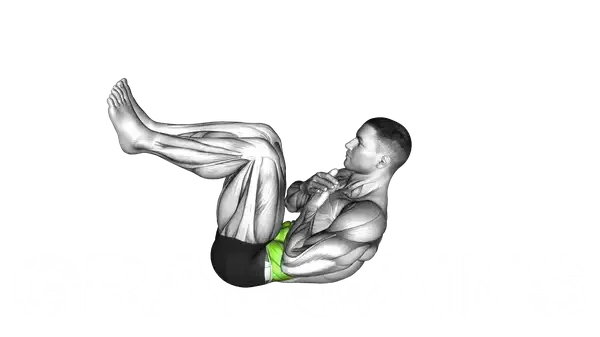
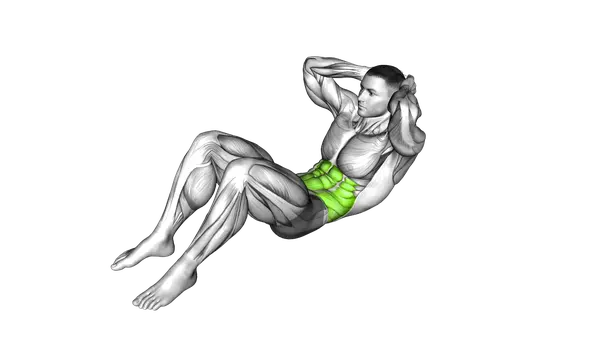
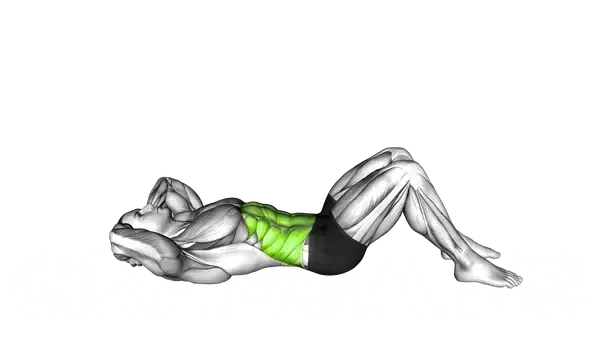
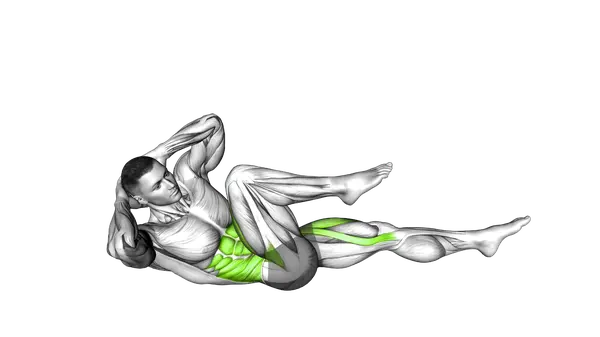
Knee Touch Crunch Variations
Alternative Exercises
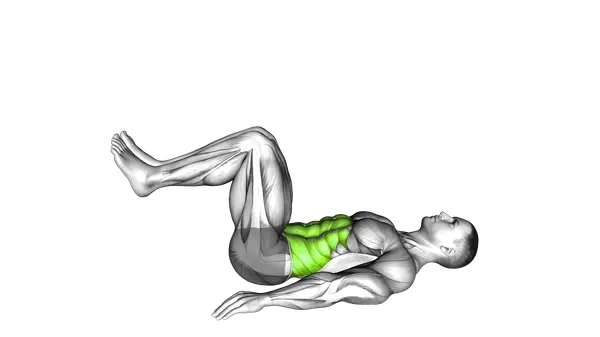
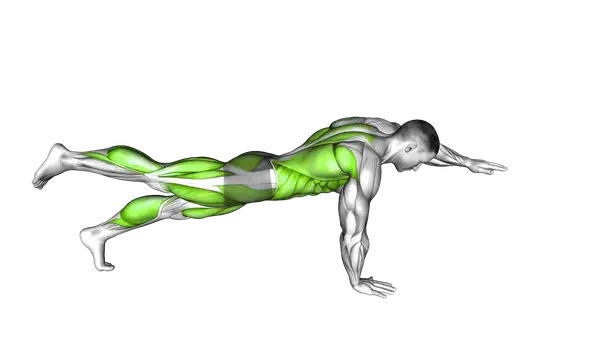
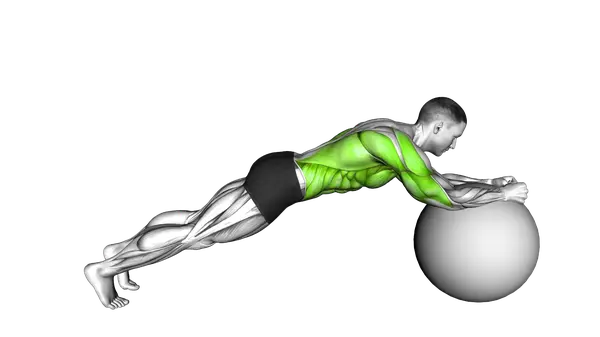
FAQ - Knee Touch Crunch
The Knee Touch Crunch primarily targets the rectus abdominis (six-pack muscles), while also engaging the obliques and transverse abdominis. This comprehensive activation makes it an efficient exercise for developing the entire abdominal region.
Yes, the Knee Touch Crunch is generally safer for those with lower back concerns compared to traditional crunches because the bent knee position helps maintain natural spine curvature. However, maintain contact between your lower back and the floor throughout the movement, and stop if you experience any pain.
Increase difficulty by extending the duration of each repetition, adding a brief pause at the top of the movement, or incorporating resistance with a medicine ball or weight plate held against your chest. You can also perform the exercise on an unstable surface like a BOSU ball to engage more stabilizing muscles.
The most common mistakes are pulling on your head with your hands, rounding your back to bring your elbow down, and rushing through the reps. Another mistake is swinging your arms instead of rotating from your core. Keep your chest up, bring your knee up to your elbow, and move with control on both sides.
Include Knee Touch Crunches 2-3 times per week with at least 24-48 hours of recovery between sessions for optimal results. Start with 2-3 sets of 12-15 repetitions, gradually increasing volume as your core strength and endurance improve.
Reviewed by

Physiotherapist
Highlights Physiotherapist at GrabGains: Brings specialized clinical expertise to verify exercise content and ensure safe, effective movement guidance across the platform. Licensed Physiotherapist: Registered in the Dutch BIG Register (BIG: 59930315504) as a…
Knee Touch Crunch
Thank you for your feedback!
Thank you for your feedback!