Seated Towel Row
The Seated Towel Row is a simple bodyweight rowing exercise that uses a towel to create adjustable pulling resistance.

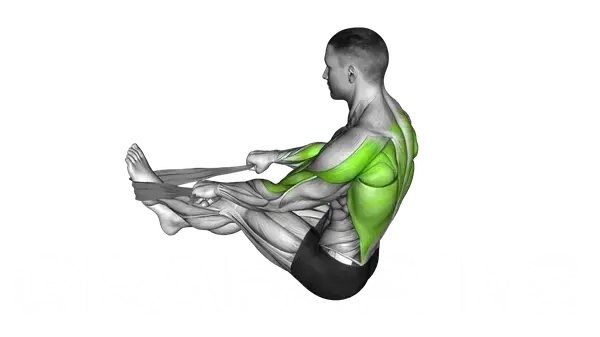
Seated Towel Row
Muscles Worked: Seated Towel Row
The Seated Towel Row mainly trains your back, with the lats driving shoulder extension as you pull your elbows behind your torso. Your biceps assist by flexing the elbow, while the rear delts help move and stabilize the upper arm as the shoulder blades stay set. Because the resistance comes from your own pull against the towel, tension depends on how hard you create and maintain it. Pulling with elbows low and keeping your chest tall usually shifts more work into the lats and mid-back, which fits the exercise-specific principle seen across resistance training research.
Built for progress
Take the guesswork out of training
Get a personalized workout plan built around your goal, equipment and schedule. Train smarter, track every rep and keep moving forward, one workout at a time.






Technique and form
How to perform the Seated Towel Row
- Sit on a mat with your legs extended in front of you and place a folded towel around your feet, gripping each end firmly with your hands.
- Maintain a tall posture with your spine straight, shoulders pulled back, and chest lifted.
- Engage your core muscles and slightly bend your knees to reduce strain on your lower back.
- Begin by inhaling and extending your arms fully toward your feet while maintaining tension on the towel.
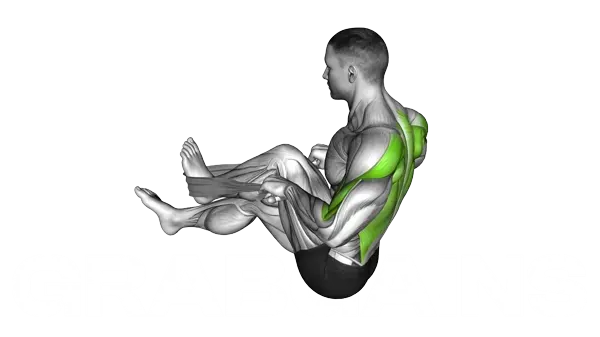
- Exhale as you pull the towel toward your torso by bending your elbows and drawing them back beside your ribcage.
- Squeeze your shoulder blades together at the end of the pulling motion while keeping your chest lifted and shoulders down away from your ears.
- Inhale as you slowly extend your arms back to the starting position with controlled movement, maintaining tension on the towel throughout.
- Repeat the movement while focusing on using your back muscles rather than your arms to generate the pulling force.
Important information
- Keep your wrists in a neutral position throughout the exercise to prevent strain.
- Make sure your elbows stay close to your body during the pulling phase to properly engage your lats.
- Avoid rounding your back or hunching forward; maintain a proud chest position throughout the movement.
- If you experience lower back discomfort, increase the bend in your knees or place a small cushion beneath your sitting bones for support.
Benefits of the Seated Towel Row
- Needs only a towel. No machine, band or weights: any floor where you can sit with your legs extended is enough.
- You set the resistance. Your feet hold the towel while your arms pull, so the effort depends on how hard you pull. Held still, it becomes an isometric exercise. Isometric training improved strength compared with no training in a meta-analysis of 32 studies (Ghayomzadeh et al., 2025); none of those studies used towel rows.
- Can be held in the stretched position. Holding the pull with the arms extended forward keeps the upper-back muscles at a longer length. In a systematic review of 26 studies, isometric training at longer muscle lengths produced more muscle growth than the same volume at shorter lengths (Oranchuk et al., 2019). This has not been tested with towel rows.
Is the Seated Towel Row good for muscle growth?
Yes. The Seated Towel Row can help build your lats and upper back if you create high voluntary tension and take sets close to failure. Exercise selection matters for where growth occurs, so a row that emphasizes shoulder extension and scapular retraction is useful when you want more back-focused work.
- Self-loaded resistance — This row has no fixed external load, so hypertrophy depends on how hard you pull the towel apart and back on every rep. That makes intent critical: a lazy set feels like mobility work, but a hard set with continuous tension can challenge the lats, biceps, and forearms surprisingly well.
- Strong peak contraction — The exercise is easiest to overload at the squeezed position, where your elbows are back and shoulder blades are retracted. Pausing 1-2 seconds there increases local fatigue in the lats and rear delts, which is useful when equipment is limited.
- Joint-friendly pulling volume — Compared with heavier rows like the bent-over-row-with-towel, the seated setup reduces lower-back demand and lets you accumulate more back work without systemic fatigue. That makes it a practical accessory on days when you want pulling volume without loading the spine.
- Best as a high-effort accessory — Research consistently shows training adaptations are specific to the exercise performed, so towel rows are best for improving bodyweight-style rowing strength and back endurance rather than replacing progressively loaded cable or free-weight rows outright. Pairing them with superman-towel-row can increase total back stimulus using the same equipment.
Programming for muscle growth
Do 3-5 sets of 10-20 reps with 45-75 seconds rest, 2-4 times per week. Use a controlled 2-second pull, pause briefly at peak contraction, and lower under tension. Because loading is limited, the key is taking most sets to within 1-2 reps of failure and extending sets with slower eccentrics or longer pauses before adding more total volume.
Seated Towel Row Variations
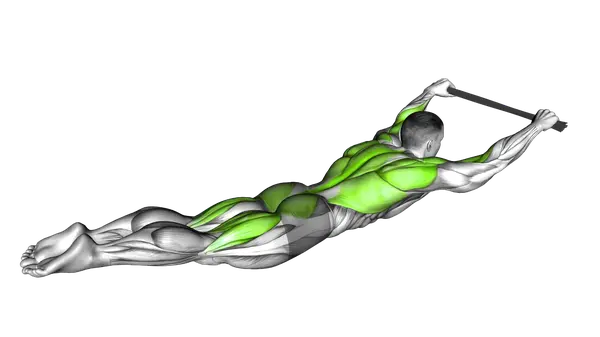
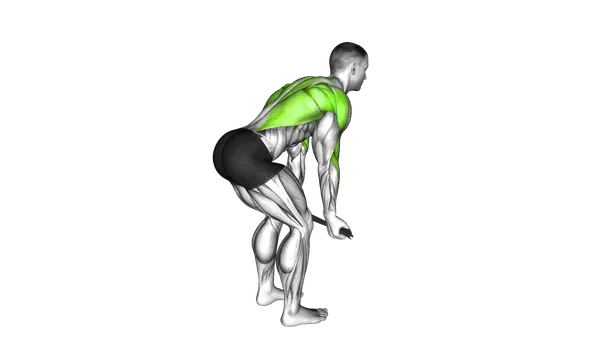
Alternative Exercises
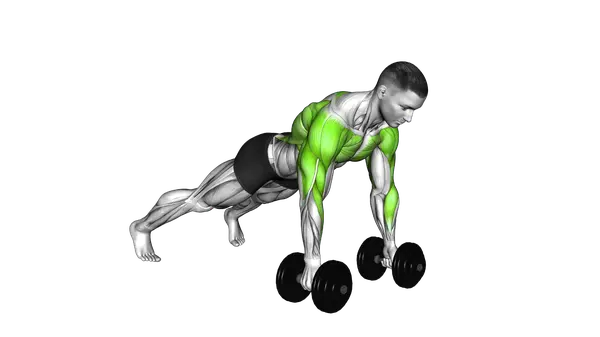
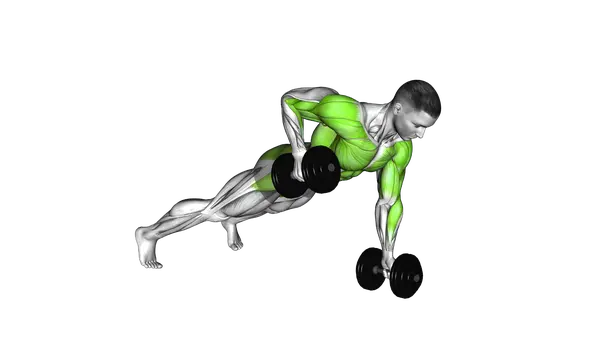
FAQ - Seated Towel Row
The Seated Towel Row primarily targets the latissimus dorsi and trapezius muscles while also engaging the rhomboids, rear deltoids, and biceps. The unstable nature of the towel additionally activates stabilizer muscles throughout your forearms and upper back, creating comprehensive posterior chain development.
Sit with legs extended and wrap a towel around your feet, gripping each end firmly. Maintain a straight back, then pull the towel toward your torso by squeezing your shoulder blades together and bending your elbows. Slowly return to the starting position while maintaining tension throughout the movement.
Yes, the Seated Towel Row is generally joint-friendly because the towel's flexibility allows for a more natural range of motion compared to rigid equipment. This adaptability can reduce stress on shoulders and elbows while still effectively targeting back muscles, making it appropriate for many rehabilitation protocols.
To increase difficulty, use a thicker towel, pull from a greater distance, or add a pause at the point of maximum contraction. For an easier variation, bend your knees slightly to reduce the resistance or use a smaller range of motion until strength develops.
Common mistakes include rounding the lower back, using momentum instead of controlled movement, and not fully engaging the back muscles by relying too much on arm strength. Focus on maintaining proper posture, squeezing your shoulder blades together at the peak of the movement, and keeping tension consistent throughout the exercise.
Both are different exercises from the seated towel row. Under a sturdy table, you lie on your back and pull your chest up toward the table: that is an inverted row, with your body weight as resistance. In a comparison of three rowing exercises, the inverted row produced the highest latissimus dorsi activation and the lowest spine load (Fenwick et al., 2009). With a towel looped around a door handle, you lean back and pull yourself toward the door. No studies have measured this variation, and it needs a door and handle that can hold your body weight.
Yes. Pull the towel as hard as you can and hold the position instead of moving. A meta-analysis of 32 studies found that isometric training improved strength more than no training, and improved isometric strength more than dynamic training (Ghayomzadeh et al., 2025). For muscle growth, a review recommends contractions at 70–75% of maximal effort, held for 3–30 seconds each, with more than 80–150 seconds of total contraction time per session (Lum & Barbosa, 2019).
No study has measured muscle growth from towel rows. The main limitation is progression: the resistance depends on how hard you pull, which makes it hard to measure and to increase in steps. Rows with measurable resistance, such as the ring row with your body weight or the resistance band seated row, make progress easier to track. Towel rows are useful when no equipment is available.
Scientific References
Fenwick CM, Brown SH, McGill SM · Journal of strength and conditioning research (2009)
Ghayomzadeh M, Li J, Eidy F et al. · Journal of science and medicine in sport (2025)
Oranchuk DJ, Storey AG, Nelson AR et al. · Scandinavian journal of medicine & science in sports (2019)
Brief Review: Effects of Isometric Strength Training on Strength and Dynamic Performance.
Lum D, Barbosa TM · International journal of sports medicine (2019)
Sources are peer-reviewed academic publications from PubMed.
Seated Towel Row
Thank you for your feedback!
Thank you for your feedback!