Unlock Gains: 3 Day Full Body workout
Build muscle & strength efficiently with this 3 day full body workout plan. Get routines, progressions, and nutrition tips for all fitness levels. Your calendar is full. Work runs late. Family, commute, and life eat the edges of the day. You still want to build muscle, get stronger, and look like you train, but a 5-day split keeps turning into a 2-day guilt cycle.
That is often where a 3 day full body workout earns its place. It is not a fallback plan. It is often the better plan for people who need results from training they can repeat week after week.
The difference is simple. You stop organizing training around gym culture and start organizing it around recovery, frequency, and consistency. That is what produces gains.
Why a 3-Day Full Body Workout Is Your Most Efficient Path to Gains
Many busy people do not fail because they lack motivation. They fail because the program asks for more time, more decisions, and more weekly precision than real life allows.
A bro split looks attractive on paper. Chest Monday, back Tuesday, legs Wednesday. Then one missed session throws off the whole week. If you miss your leg day, you often miss lower-body training entirely.
A 3 day full body workout fixes that problem. Every session covers the main movement patterns, so each gym visit counts.
Built for progress
Take the guesswork out of training
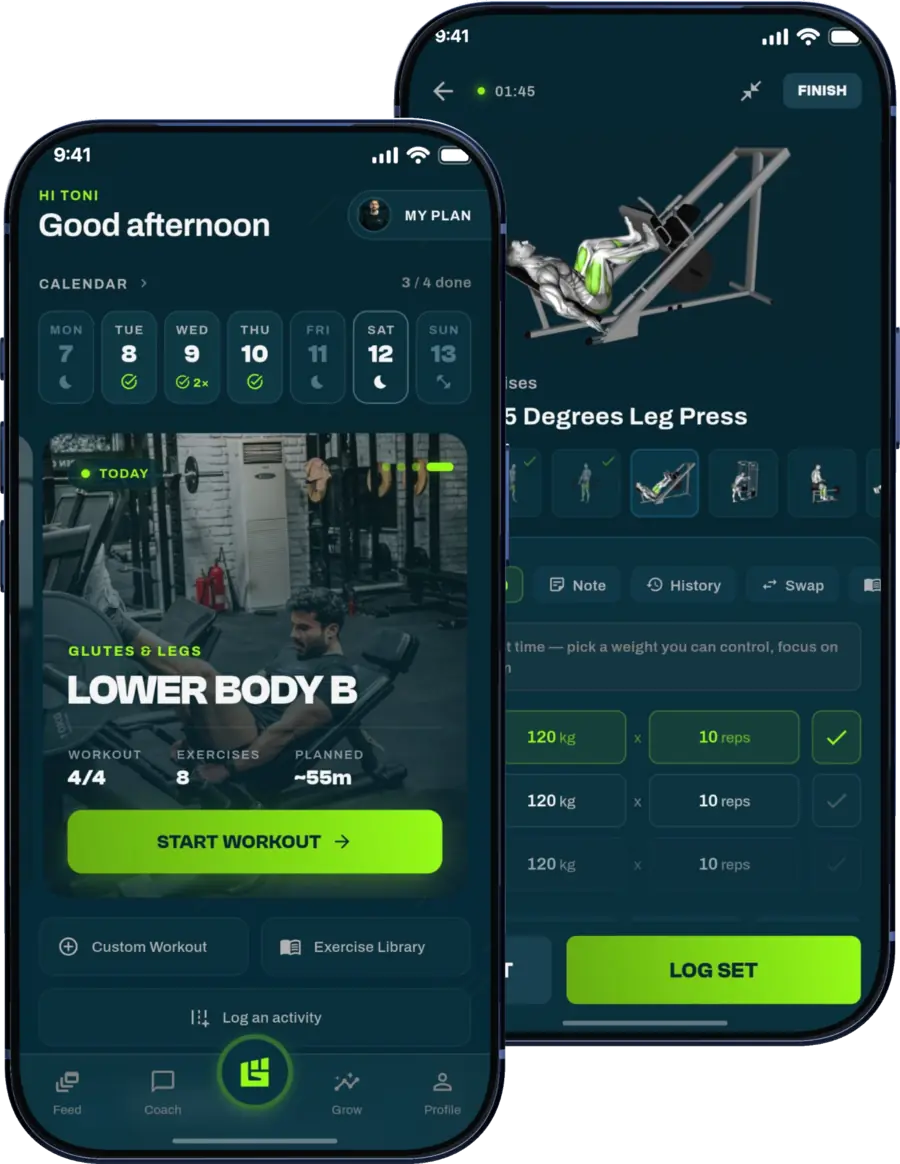
Get a personalized workout plan built around your goal, equipment and schedule. Train smarter, track every rep and keep moving forward, one workout at a time.







More frequency usually beats more gym days
The biggest mistake I see is assuming more training days automatically means more progress. They do not. Progress comes from giving a muscle a productive stimulus, recovering, and repeating that often enough to matter.
A 2026 Fitness App Market Report survey and related summary reported that 68% of fitness app users prefer full-body routines for time efficiency, and 3-day plans had 25% higher adherence rates than 5-6 day splits. The same source also cites a Sports Medicine meta-analysis showing 9.8% greater hypertrophy gains over 8 weeks for 3-day full-body training compared to traditional splits.
That matters because the best program is not the one that looks hardcore. It is the one you complete.
Why this works for muscle gain
Training your whole body across the week gives each muscle more regular practice and more regular growth stimulus. Instead of smashing one body part and then letting it sit for most of the week, you spread the work out.
That usually creates better training quality too. You come into each lift fresher. Your sets look better. Your effort stays higher.
Key takeaway: If your schedule is unpredictable, full-body training protects your progress better than a body-part split.
Who benefits most
This setup works especially well for:
- Busy professionals: You get three meaningful sessions instead of chasing six ideal ones.
- Beginners: You practice the main lifts more often, which speeds up skill development.
- Intermediate lifters with real-world schedules: You keep progressing without living in the gym.
- Home trainees: Fewer sessions often means better compliance and less equipment complexity.
A 3 day full body workout is efficient because it removes junk. Fewer filler exercises. Fewer wasted days. Fewer chances to fall off.
The Core Principles of a Smart Full Body Program
A good full-body plan is not just “do a bunch of exercises three times a week.” It works because the structure respects three things. Frequency, exercise selection, and recovery.
Get those right and the program works. Get them wrong and even a short plan feels exhausting.
Train often enough to improve
Each week should give you repeated exposure to the major lifts and muscle groups. That is one reason full-body training works so well for people who want muscle and strength without marathon sessions.
The practical schedule is simple. Train on non-consecutive days, usually Monday, Wednesday, and Friday. That spacing keeps the rhythm predictable and leaves room to recover.
If you are new to barbell work, learning the basics of bracing, bar path, and rep quality matters. A useful companion resource is this guide to powerlifting for beginners, especially if you want more context on the main lifts.
Build the program around compound lifts
The fastest way to waste time is to treat accessories like the main event. A smart plan starts with movements that train a lot of muscle at once.
Think in patterns:
- Squat pattern: Back squat, front squat, goblet squat, leg press
- Hip hinge: Deadlift, Romanian deadlift, trap bar deadlift
- Horizontal press: Bench press, dumbbell bench, push-up
- Vertical press: Overhead press, dumbbell shoulder press
- Horizontal pull: Row variations
- Vertical pull: Pull-ups, chin-ups, pulldowns
These lifts give you the most return for the time you spend. Accessories still matter, but they should support the compounds, not replace them.
Recovery is part of the program
Many people can survive high-frequency training for a few weeks. That does not mean they can progress on it for months.
A well-built 3 day full body workout manages fatigue by controlling session length, choosing the right amount of volume, and keeping rest days clean. Rest days are for recovery, walking, mobility work, and life. Not for turning the plan into a secret 6-day schedule.
Coach’s rule: If your full-body sessions leave you too beat up to train well two days later, the problem is usually volume, exercise choice, or effort control.
What works and what does not
Here is the trade-off most lifters need to understand.
| What works | What usually backfires |
|---|---|
| Repeating core lifts weekly | Changing exercises every workout |
| Moderate exercise count per session | Packing in every machine and isolation movement |
| Non-consecutive training days | Lifting hard on back-to-back days |
| Clean progression targets | Training by mood alone |
| Leaving a little in reserve on most sets | Grinding every set to failure |
Keep the plan simple enough to repeat
Your program should answer three questions before you walk into the gym:
- What are today’s main lifts
- How hard am I supposed to push
- How will I know I progressed
If the program cannot answer those clearly, it is too complicated.
That is why the best full-body routines feel almost boring on paper. The magic is not novelty. It is repeated, high-quality work on the right lifts, with enough recovery to do it again.
The Complete 3-Day Full Body Workout Routine
Monday morning. You have an hour, three training days this week, and no margin for a bloated bodybuilding split. A good full-body plan solves that problem by giving you enough work to drive progress without burying you in fatigue.
For busy lifters, an A/B rotation is usually the cleanest setup. You train on non-consecutive days and alternate two sessions across the week. Week 1 runs A, B, A. Week 2 runs B, A, B.
That structure is easy to recover from and easy to repeat. Research published at PMC also supports full-body training as a time-efficient option for building strength when volume and exercise selection are handled well.
3-Day Full Body Workout Schedule A/B Split
| Workout A | Workout B |
|---|---|
| Back squat, 3 x 5-8, tempo 3-1-1-0, rest 2-3 min | Deadlift, 3 x 6, tempo 2-1-1-0, rest 2-3 min |
| Bench press, 3 x 6-10, tempo 3-1-1-0, rest 2 min | Overhead press, 3 x 6-10, tempo 2-1-1-0, rest 2 min |
| Bent-over row, 3 x 8-12, tempo 2-1-1-1, rest 90 sec | Pull-ups or pulldown, 3 x 8-12, tempo 2-1-1-1, rest 90 sec |
| Romanian deadlift, 2-3 x 8-12, tempo 3-1-1-0, rest 90 sec | Front squat or goblet squat, 3 x 8-10, tempo 3-1-1-0, rest 2 min |
| Incline dumbbell press, 2-3 x 8-12, tempo 3-1-1-0, rest 90 sec | Seated cable row or chest-supported row, 2-3 x 8-12, tempo 2-1-1-1, rest 90 sec |
| Plank or ab wheel, 2-3 sets | Face pulls, 2-3 x 12-15, tempo 2-1-1-1, rest 60 sec |
A sample rotation looks like this:
- Week 1: Monday A, Wednesday B, Friday A
- Week 2: Monday B, Wednesday A, Friday B
How to run each workout
Treat the first three lifts as the session's main work. They carry the most value for strength and muscle gain, so they get your best focus, longest rest periods, and cleanest execution.
The last two or three movements support the plan. They add muscle where many lifters need it, help balance the weekly workload, and let you train around weak links without turning the session into a 90-minute project.
Keep the session in the 45 to 60 minute range. If time gets tight, cut one accessory movement before you cut squats, presses, rows, or pulls.
Exercise modifications by training level
The template matters. The fit matters more.
A common coaching observation is that two people can run the same plan and get very different results because their movement quality, limb lengths, injury history, and skill level are different. The right version of a full-body workout is the one you can train hard on, recover from, and progress for months.
| Movement pattern | Beginner option | Intermediate option | Advanced option |
|---|---|---|---|
| Squat | Goblet squat | Back squat | Front squat or paused squat |
| Hinge | Dumbbell Romanian deadlift | Romanian deadlift | Conventional deadlift |
| Horizontal press | Push-up or dumbbell bench | Barbell bench press | Bench with pause or incline rotation |
| Vertical press | Seated dumbbell press | Standing overhead press | Strict press with load progression |
| Row | Chest-supported dumbbell row | Bent-over row | Barbell or Pendlay row |
| Vertical pull | Assisted pull-up or pulldown | Pull-up | Weighted pull-up |
Use simple substitutions based on what your body tolerates and what you can perform well:
- Poor squat mobility: Goblet squats or heel-elevated squats
- Long femurs and back squat discomfort: Front squat or safety bar squat
- Shoulder irritation on straight-bar pressing: Neutral-grip dumbbell pressing
- Pull-up weakness: Assisted pull-ups or pulldowns
- Lower-back fatigue from rows: Chest-supported rows
If you want those adjustments made from your actual training performance instead of guesswork, use a Personalized strength training app.
How hard each set should feel
Effort has to match the lift.
Use this guide:
- Main lifts: Finish most sets with 1 to 2 reps left in reserve
- Accessory lifts: Train close to fatigue, then stop before form slips
- Final reps: Controlled and honest
That balance works. You get enough stimulus to grow, but you still have something left for the next session.
Weekly schedule example
A busy professional can run the week like this.
Monday
Open with squats and bench while energy is high. Add rows, a hinge, and core work after that.
Wednesday
Lead with the deadlift. Follow it with overhead press, vertical pulling, and your squat variation.
Friday
Repeat the opposite session from Monday and improve one clear variable. Add a rep, add a small amount of load, or clean up your execution within the same rep range.
That is the point of a smart 3-day full body workout. You are not just following a template. You are running a plan you can adjust to your structure, schedule, and recovery, then progressing it with intent.
Essential Warm-Ups and Mobility Drills for Peak Performance
Most warm-ups fail because they are random. Five minutes on a treadmill and a couple of arm circles do not prepare you for squats, presses, and hinges.
A useful warm-up raises body temperature, opens the joints you need, and activates muscles that improve your positions under load.
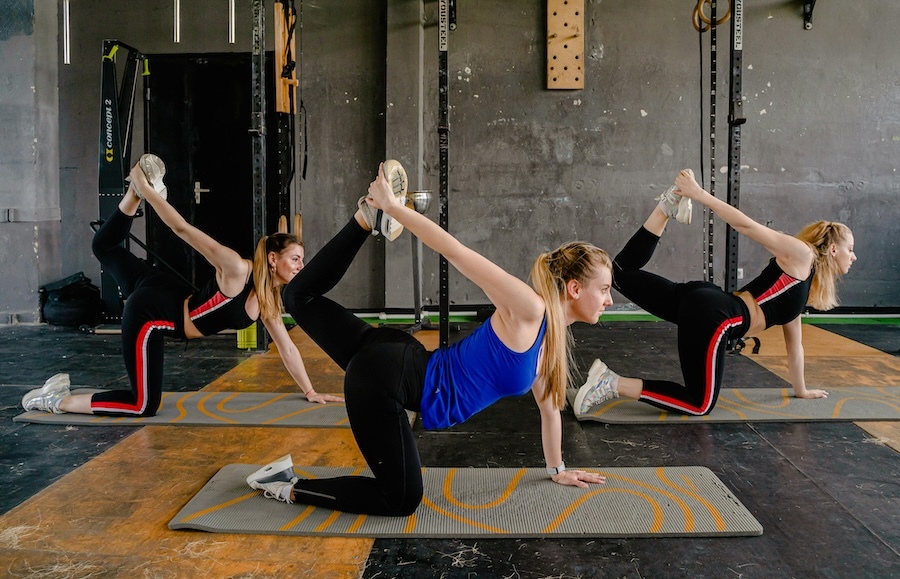
A simple 5 to 10 minute sequence
Use this before every 3 day full body workout:
- Cat-cow x 6 to 8 reps Loosen the spine and improve awareness of pelvic position.
- Thoracic spine rotations x 5 per side Useful before rows, benching, and overhead work.
- Leg swings x 10 per leg Open the hips before squats and hinges.
- Glute bridges x 10 to 12 reps Wake up the glutes so the lower back does not do all the work.
- Banded face pulls x 12 to 15 reps Prime upper back and rear delts for pressing and pulling.
- Bodyweight squat hold or pry squat for a few breaths Helps you find a better squat bottom position.
- Two to three ramp-up sets of your first lift Move from light to moderate before the first work set.
Match the warm-up to the workout
Your warm-up should reflect what you are about to do.
If you are deadlifting first, spend more time on hamstrings, hips, and bracing. If you are pressing first, add more shoulder and upper-back prep.
Use these add-ons when needed:
- Before squats: Ankle rocks, heel-elevated bodyweight squats
- Before bench or incline work: Scap push-ups, light dumbbell external rotations
- Before overhead pressing: Wall slides, thoracic extension over a bench or foam roller
What not to do
A warm-up should not fatigue you.
Avoid these common mistakes:
- Long static stretching: Save aggressive stretching for after training or separate mobility sessions.
- Too much cardio: You want readiness, not tired legs.
- Skipping movement rehearsal: Your first loaded set should not be your first real rep pattern of the day.
Coach’s note: If your joints feel stiff on the first work set, the warm-up was incomplete. If your muscles feel tired before the main lift, the warm-up was excessive.
A better way to think about mobility
Mobility is not a separate hobby. In most cases, you improve useful mobility by pairing simple drills with full-range strength work you can control.
That means a goblet squat can be both a lower-body exercise and a mobility tool. A face pull can build posture and improve shoulder positioning. A controlled Romanian deadlift can teach you to hinge without feeding back pain.
Done properly, your warm-up becomes part of your results, not a chore before them.
How to Progress Your Workout for Continuous Gains
Three weeks into a new plan, lifters usually split into two groups. One group is still adding reps or load because they know exactly what they did last session. The other group is repeating the same weights, missing rep targets, and hoping effort alone will carry them forward.
Progress requires a clear target and a record of what happened.
Start with linear progression
For newer lifters, simple works best. If you complete all prescribed sets and reps with solid form, add a small amount of weight next time. If the jump in load would be too large, add one rep per set instead.
A few practical examples:
- Squat 3 x 5-8. Hit 8 reps on all sets with clean depth and control, then raise the load and return to 5 reps.
- Row 3 x 8-12. Build reps first, then increase weight.
- Face pulls 3 x 12-15. Improve control and position before you make the stack heavier.
This works well early on because strength and skill usually improve together.
Use double progression when linear gains slow down
Double progression gives you more room to keep improving without forcing weight jumps that your joints, technique, or equipment setup cannot support.
Use it like this:
- Choose a rep range, such as 6 to 10
- Keep the same load until every set reaches the top of that range
- Increase the weight slightly
- Build back up from the low end
Busy lifters do well with this because it is easy to follow and easy to audit. You can look at your logbook and know whether you earned the next increase.
Add volume carefully
More weight is not always the right answer. Sometimes the better move is more productive work.
That might mean:
- Adding one set to a lagging lift
- Adding one accessory for a weak muscle group
- Giving a stubborn body part a little more weekly volume
There is a trade-off. Extra volume can drive growth, but only if recovery supports it. If sleep is poor, work stress is high, or soreness keeps carrying into the next session, adding more sets usually buries performance instead of improving it.
Track your work like a coach would
Lifters without a structured tracking method often guess their weights based on what felt hard last week. That approach creates stalls because memory is unreliable, especially when life gets busy.
Track these points every session:
- Exercise
- Load
- Sets and reps
- Rest periods
- How the final set felt
- Any pain, compensation, or technique breakdown
That last point matters. A set of 8 that looked crisp is different from a set of 8 that turned into a grind with your position falling apart.
A good app makes this much easier. GrabGains is useful here because it adjusts training around your equipment, recovery, and performance history instead of locking you into a fixed spreadsheet.
Personalize the progression, not just the template
Many full body plans break down at this point. The exercise list may be fine, but the progression model does not match the lifter.
Examples matter:
- Long femurs can make one squat variation more repeatable than another
- A shoulder history can make dumbbell pressing a better long-term option than a barbell
- Intermediate lifters often need tighter fatigue control, not more exercise variety
- Home trainees may need to progress a movement pattern with different tools across different weeks
The goal is to progress the training effect. Sometimes that means progressing the exact exercise. Sometimes it means progressing the pattern with a smarter substitute.
If you swap back squats for goblet squats for a few weeks because your lower back is irritated, you can still progress your squat pattern with better depth, more reps, slower tempo, or more load. That still counts.
Know what to do when progress stalls
A stall does not automatically mean the program failed. It usually means one variable needs to change.
Check these first:
- Are you hitting the prescribed reps, rest periods, and effort targets
- Is your technique better than it was three weeks ago
- Are you recovering between sessions
- Are you trying to push every lift at the same rate
- Has your bodyweight, appetite, or schedule changed
If those are in order, use one adjustment at a time:
- Change the rep range
- Swap to a close exercise variation
- Reduce volume for one week to clear fatigue
- Hold one lift steady while pushing a higher-priority movement
Keep the change small enough that you can tell what worked.
Recovery also affects progression more than many lifters admit. If nutrition is inconsistent, performance often flattens before muscle gain does. A simple muscle gain meal plan can help you stay consistent enough to support harder training.
The people who keep making progress are not guessing. They track, adjust, and personalize the plan to fit their body, recovery, and schedule. That is how a 3 day full body workout keeps working long after the first month.
Fueling Your Training for Faster Recovery and Growth
A hard session only creates the demand. Food, hydration, and sleep help you meet it.
You do not need a complicated nutrition philosophy to support a 3 day full body workout. You need repeatable habits that make recovery easier.

Keep nutrition simple and consistent
Focus on the basics first:
- Protein at each meal: This supports muscle repair after training.
- Carbs around training: They help fuel performance and make hard sessions feel better.
- Healthy fats daily: They support overall diet quality and help meals feel complete.
- Hydration all day: Do not try to catch up on water only during training.
If meal planning is the part that keeps breaking down, a structured muscle gain meal plan can make your week easier by removing daily guesswork.
Recovery habits that move the needle
Training three days per week gives you enough room to recover well, but only if you use the off days properly.
Prioritize these:
- Consistent sleep: Aim for a regular bedtime and enough total sleep to feel restored.
- Light activity on rest days: Walking, easy cycling, or relaxed mobility work can help you feel better between sessions.
- Post-workout meal routine: Eat a balanced meal after training rather than treating lifting like a fasted endurance event.
- Stress management: High life stress changes how much volume you can recover from.
What usually slows progress
Most recovery issues are not mysterious.
They usually come from one or more of these:
- Under-eating after hard sessions
- Poor sleep during busy work stretches
- Adding too much extra conditioning
- Living on convenience food and caffeine
- Ignoring soreness that turns into joint irritation
You do not need perfect habits. You need stable ones. The more consistent your recovery inputs are, the easier it is to progress the training.
Common Questions About Full Body Training
What if I miss a workout
Do not double up. Shift the next session forward and continue the rotation. Missing one day in a full-body plan hurts less because every session already covers the major muscle groups.
Can I do this program with home equipment
Yes. Use the movement pattern, not the exact gym exercise. Dumbbells, resistance bands, a pull-up bar, and a bench can cover a lot. Squats can become goblet squats, rows can become one-arm dumbbell rows, and presses can be done with dumbbells or push-up variations.
How long should I stay on a 3 day full body workout
Stay on it as long as you are progressing, recovering, and staying engaged. Many people quit good programs too early and replace them with novelty. Keep the structure. Rotate exercises only when your body, equipment, or progress calls for it.
Is it okay to add cardio
Yes, if you recover well. Keep it light to moderate on rest days or short after lifting if your main goal is still muscle and strength. If cardio starts dragging down your lower-body sessions, reduce it.
Is full-body training only for beginners
No. Beginners benefit from the frequent practice, but intermediates can make excellent progress on full-body training when volume and fatigue are managed properly. The plan only becomes a problem when lifters try to cram advanced-level volume into every session.
If you want a plan that adapts to your schedule, training history, and actual performance, GrabGains is built for that. It helps you train with more precision through adaptive programming, progress tracking, exercise guidance, and smart tools that make personalization easier whether you lift at home, in a gym, or on the go.
Get inspired and motivated