3 vs 5 day workout split: the ultimate guide for your goals
Choosing between a 3 vs 5 day workout? This guide breaks down the science of strength, muscle growth, and recovery to help you pick the right training split. Deciding between a 3 vs 5 day workout split boils down to a simple trade-off. A 3-day split is all about efficiency and recovery, while a 5-day split is built for higher volume and muscle specialization. The right choice for you depends on your goals, schedule, and where you're at in your lifting journey.


Deciding between a 3-day vs. 5-day workout split
Choosing your training frequency can feel like a puzzle, but it doesn't have to be. The best workout split is always the one you can stick with consistently. Once you understand the core idea behind each approach, you can make a smart decision that fits your life.
A 3-day split, often built around a full-body routine, is incredibly effective. It guarantees you hit each muscle group multiple times a week, a powerful signal for both strength and muscle growth. This makes it a fantastic choice for:
- Beginners who need to build a solid foundation with compound lifts.
- Busy professionals who can only make it to the gym a few times a week.
- Anyone needing more recovery time due to a stressful job, poor sleep, or a demanding lifestyle.
On the other hand, a 5-day workout split is designed for lifters who want to specialize and accumulate serious training volume. By dedicating entire sessions to specific muscle groups, you can hammer each one with more total work over the week. For advanced lifters, this is a key driver for breaking through plateaus and maximizing results.
Built for progress
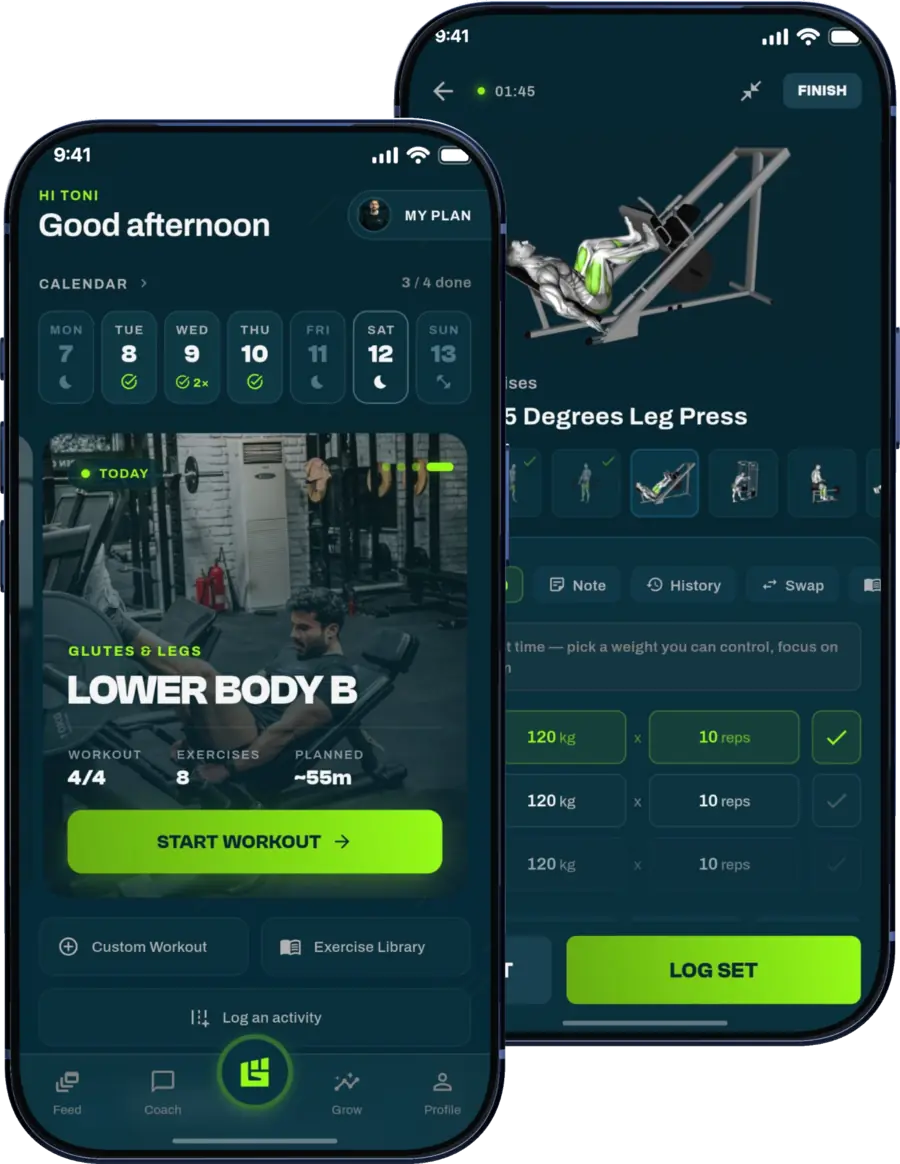
Take the guesswork out of training
Get a personalized workout plan built around your goal, equipment and schedule. Train smarter, track every rep and keep moving forward, one workout at a time.






This decision tree simplifies the choice: if time is your biggest hurdle, start with a 3-day split. If you need maximum volume to keep progressing, a 5-day split is the way to go.

As you can see, your main priority—whether that's being efficient with your time or maximizing it—points you straight to your ideal starting point.
Quick comparison: 3-day vs 5-day workout splits
To make your decision even clearer, the table below provides a snapshot of the fundamental differences between a 3-day and a 5-day workout routine.
| Factor | 3-Day Workout Split | 5-Day Workout Split |
|---|---|---|
| Time Commitment | Lower (approx. 3-4 hours/week) | Higher (approx. 5-7+ hours/week) |
| Best For | Beginners, busy people, recovery focus | Intermediates, advanced lifters, specialists |
| Recovery | Excellent (4 rest days per week) | Demanding (2 rest days per week) |
| Training Volume | Moderate; harder to increase total volume | High; easy to add volume and accessory work |
This quick breakdown should help you see which split aligns better with your current needs and lifestyle. Neither one is inherently "better"—it's all about what works for you.
The science of training frequency for strength gains
When your goal is pure, unadulterated strength, how often you train is a huge piece of the puzzle. The 3 vs 5 day workout debate isn't just about fitting sessions into your calendar; it's a question rooted in how our bodies adapt to heavy loads and build raw power. Getting stronger isn't just about growing bigger muscles—it's about teaching your nervous system a skill.
Every time you lift heavy, you're training your brain to get better and faster at firing up muscle fibers. It's like upgrading a tiny backroad into a multi-lane highway. This neurological adaptation is a cornerstone of strength, and it sharpens in direct response to how often you practice it.
The role of stimulation and volume
To get those neurological upgrades, a muscle needs to be stimulated often enough to "remind" the nervous system to stay on high alert. This is where training frequency comes in. Hitting a muscle group more often, like with a full-body routine three times a week, keeps those neural pathways buzzing.
For beginners, this frequent practice is a game-changer. Their nervous systems are like sponges, soaking up the repeated practice of core lifts like squats and deadlifts. A 3-day schedule offers a perfect blend of stimulus and recovery, letting them build a solid strength foundation without getting beaten down.
But as you get more experienced, the conversation starts to shift away from just frequency and toward total weekly volume—the total amount of work (sets x reps x weight) you do each week.
A 5-day split makes it much easier to accumulate the high training volume needed for advanced strength gains without making individual workouts painfully long or fatiguing. You can dedicate more quality sets to each muscle group.
This is where a 5-day split really starts to shine for seasoned lifters. It provides a framework to spread a much larger workload across the week. Instead of cramming everything into one brutal leg day, you might have two highly focused sessions. This allows for more high-quality work on key lifts and better recovery in between.
Research on frequency vs volume
The science on frequency and strength is well-established, but most studies point to one main conclusion: volume is king. More training days often just provide a convenient way to get more total work in.
A landmark 2018 meta-analysis, for example, found that higher training frequencies often led to better strength improvements. Groups training more frequently, similar to a 5-day split, saw significantly greater gains, with some studies reporting up to a 12.6% boost. But—and this is a big but—this was almost always because they also performed more total weekly volume.
The key takeaway is this: if total volume is held equal, a 3-day split can be just as effective for building strength. The choice really boils down to how you prefer to organize that volume and what your schedule allows. You can also explore our guide on key back exercises to see how different movements fit into these splits.
Ultimately, a 3-day workout delivers the high-frequency stimulation that's perfect for beginners or anyone prioritizing recovery. On the other hand, a 5-day workout provides the structure advanced lifters need to rack up the massive volume required to keep pushing their strength to new limits.
How workout splits impact muscle growth
When your goal is building muscle, the 3 vs 5 day workout split debate really boils down to how you stimulate growth. Scientifically, we call it muscle hypertrophy. It’s triggered by two main things: mechanical tension (lifting heavy) and muscle damage, which tells your body to start a repair process called muscle protein synthesis (MPS).
How you structure your week directly impacts how often—and how well—you can kick off that growth cycle. A smart split gives you enough stimulus to grow without tanking the recovery you need to actually build new muscle. It's a constant balancing act between work and rest.
Driving growth with training frequency
A 3-day full-body routine is incredibly effective for hypertrophy, especially if you’re a beginner or intermediate. The magic is in the frequency. By hitting every major muscle group three times a week, you’re constantly sending your body a signal to grow.
Every workout is a new trigger. Since the muscle protein synthesis response from a training session lasts about 24-48 hours, training that muscle again two days later lets you kick off another growth cycle right as the last one is winding down. You’re creating a near-constant state of muscle building.
The catch? You can only fit so much work into one session before it gets ridiculously long and you’re just going through the motions. This is where a 5-day split starts to shine, particularly for more advanced lifters.
Maximizing hypertrophy with volume
When it comes to hypertrophy, total weekly volume—the number of hard sets you do for a muscle group—is arguably the most important dial you can turn for long-term progress. A 5-day split is built to maximize exactly that. By dedicating each workout to just one or two muscle groups, you can hammer them with more exercises and more total sets.
This allows for a level of focus you just can’t get in a full-body routine. For instance, instead of squeezing in three or four chest exercises, a dedicated chest day might feature five to seven movements, letting you hit the muscle from every angle with a much higher workload.
Spreading your weekly volume across five days lets you bring higher-quality effort to each set. You're not gassed from training your whole body, so you can attack each movement with more intensity and focus. That means better muscle fiber recruitment and a stronger growth stimulus.
This isn't just theory. For hypertrophy, a 3-day full-body plan is great because of its 3x weekly frequency, but a 5-day split often allows for far more total volume. An 8-week study found that a 5-day split led to 10-20% more muscle growth in the quads and chest compared to a traditional "bro-split," even with identical total sets and reps. It highlights the power of combining high frequency and high volume, something advanced lifters often need to keep progressing.
The role of nutrition in muscle building
Whether you land on a 3-day or 5-day split, none of it matters if your nutrition isn't dialed in. Training provides the signal for growth, but protein provides the building blocks to actually construct new muscle tissue.
To make your workout split truly count, you have to fuel your body with enough protein to repair and rebuild. Checking out some high protein meal prep recipes to build muscle can give you the foundation needed to support all your hard work. This ensures your body has the raw materials for recovery and growth, turning your effort in the gym into visible results. You can also explore our detailed guide on the best chest exercises to slot into your hypertrophy-focused plan.
Balancing recovery to prevent overtraining
Progress isn't made in the gym; it's made while you recover. The 3 vs 5 day workout debate often comes down to how well you can manage your rest. If you're not recovering, you aren't building muscle or strength—you're just digging yourself into a hole of fatigue and stalled progress.
A good training split has to line up with your body's ability to repair itself. Things like sleep quality, stress from work and life, and your nutrition all play a huge role in your recovery capacity. Picking a routine that outpaces your ability to bounce back is just a fast track to burnout.
The recovery advantage of a 3-day split
A 3-day workout is structured with recovery as a top priority. With four full rest days baked into your week, your body gets plenty of time to repair damaged muscle fibers, top off its energy stores, and let your central nervous system chill out. This built-in buffer makes it an incredibly sustainable option for most people.
This split is probably your best bet if you're dealing with:
- A high-stress job that leaves you mentally and physically drained.
- Inconsistent sleep (less than 7-8 hours a night).
- A physically demanding lifestyle outside of your training.
- A caloric deficit for fat loss, which can seriously slow down recovery.
This approach pretty much guarantees you can hit your sessions with high intensity, because you’ll show up feeling rested and ready to go.
The genius of a 3-day split is that it builds recovery directly into your schedule. You don't have to be perfect with your sleep or stress management to keep making consistent progress.
And we're seeing more research back this up. A 2021 study on strength-trained athletes found that after a tough block of training, just three days of rest was enough to hold onto all their maximal strength. But after five days off, their upper-body strength took a noticeable dip. It suggests the rest periods in a 3-day split are right in that sweet spot for preserving strength.
The high recovery demands of a 5-day workout
On the flip side, a 5-day workout split puts a massive strain on your recovery. With only two rest days a week, your margin for error is razor-thin. This high-frequency style isn’t for the faint of heart—it demands a disciplined, almost athletic lifestyle to work long-term.
To make a 5-day split work, your recovery has to be a non-negotiable part of your life. That means you’re consistently nailing:
- Sleep: Hitting 8-9 hours of quality sleep every single night.
- Nutrition: Eating enough calories and protein to fuel all that repair and growth.
- Stress Management: Actively finding ways to keep life stress low so cortisol doesn't sabotage your recovery.
If your lifestyle can't support those demands, a 5-day split can quickly push you into overtraining. You'll know it when you feel it: persistent fatigue, nagging little injuries, a drop in motivation, and strength numbers that are stuck or even going down. While a 5-day plan can pack in more muscle-building volume, it only works if you can actually recover from it. For example, making sure your form is perfect on all your leg exercises becomes even more critical when your body has less time to bounce back.
Sample 3-day and 5-day workout plans
Theory is one thing, but seeing how a 3-day vs. 5-day workout actually looks on paper makes it all click. The templates below are clear, actionable starting points, whether you’re new to lifting and need efficiency or you're an intermediate lifter chasing serious muscle growth.
Think of these less as rigid lists and more as frameworks showing how volume, intensity, and recovery come together in each split.
Beginner 3-day full-body routine
If you're just starting out or your schedule is tight, a 3-day full-body routine is a fantastic choice. The focus is on big compound movements that build a solid, functional base. Hitting each major muscle group three times a week like this provides an incredible stimulus for growth. Your only job is to show up and aim for progress.
Workout A (Monday):
- Barbell Squats: 3 sets of 5-8 reps
- Barbell Bench Press: 3 sets of 5-8 reps
- Barbell Rows: 3 sets of 5-8 reps
- Overhead Press: 2 sets of 8-12 reps
- Plank: 3 sets, hold for 30-60 seconds
Workout B (Wednesday):
- Deadlifts: 3 sets of 5 reps
- Pull-Ups (or Lat Pulldowns): 3 sets of 6-10 reps
- Dumbbell Incline Press: 3 sets of 8-12 reps
- Leg Press: 2 sets of 10-15 reps
- Bicep Curls: 2 sets of 10-15 reps
Workout C (Friday):
- Barbell Squats: 3 sets of 5-8 reps
- Overhead Press: 3 sets of 5-8 reps
- Dumbbell Rows: 3 sets of 8-12 reps
- Dips (or Push-Ups): 2 sets to failure
- Triceps Pushdowns: 2 sets of 10-15 reps
This layout gives you two full rest days between workouts, which is perfect for recovery and helps you come back stronger each session.
Intermediate 5-day split for hypertrophy
Once your schedule and recovery can handle more, a 5-day split is where you can really ramp up the training volume and specialize. This classic "body part" split is all about maximizing the mechanical tension and metabolic stress on each muscle—two of the most important drivers for hypertrophy.
Day 1: Chest
- Barbell Bench Press: 4 sets of 6-10 reps
- Incline Dumbbell Press: 3 sets of 8-12 reps
- Dumbbell Flyes: 3 sets of 10-15 reps
- Cable Crossovers: 3 sets of 12-15 reps
Day 2: Back
- Deadlifts: 3 sets of 5 reps
- Pull-Ups: 4 sets to failure
- T-Bar Rows: 3 sets of 8-12 reps
- Seated Cable Rows: 3 sets of 10-15 reps
Day 3: Shoulders
- Seated Overhead Press: 4 sets of 6-10 reps
- Lateral Raises: 4 sets of 12-15 reps
- Bent-Over Dumbbell Raises: 3 sets of 12-15 reps
- Face Pulls: 3 sets of 15-20 reps
If you’re serious about building impressive, well-rounded shoulders, you can swap in other high-impact shoulder exercises to add some variety here.
Day 4: Legs
- Barbell Squats: 4 sets of 6-10 reps
- Romanian Deadlifts: 3 sets of 8-12 reps
- Leg Press: 3 sets of 10-15 reps
- Leg Curls: 3 sets of 12-15 reps
- Calf Raises: 4 sets of 15-20 reps
Day 5: Arms
- Close-Grip Bench Press: 3 sets of 8-12 reps
- Barbell Curls: 3 sets of 8-12 reps
- Triceps Pushdowns: 3 sets of 10-15 reps
- Dumbbell Hammer Curls: 3 sets of 10-15 reps
The real magic of a 5-day split is your ability to rack up a ton of high-quality sets for each muscle. Since you're only training one or two muscle groups per workout, you can go in fresh and maintain high intensity from your first rep to your last.
After you pick a split and jump in, grabbing a good Maximum Slim Workout Planner to track your fitness goals is a game-changer. Logging your sets, reps, and weights is the single best way to make sure you're consistently applying progressive overload and actually moving the needle.
How GrabGains creates your perfect workout split
Picking between a 3 vs 5 day workout can feel like a major commitment. But what if you didn’t have to guess? What if your workout plan could intelligently adapt to your life, goals, and progress, making sure you’re always on the most efficient path?
That’s exactly where modern fitness tech comes in, taking the guesswork out of the equation. Instead of locking you into a rigid schedule, an adaptive platform analyzes your performance and points you toward the ideal training frequency for you—whether that’s three, four, or five days a week.

Intelligent and adaptive planning
The real power of a smart fitness platform is its ability to build your training plan from the ground up. Right when you start, it asks for key details: your main goals (muscle growth, strength, endurance), your experience level, and how many days you can realistically get to the gym.
From there, it generates a starting point that actually fits your life. For instance:
- Goal: Muscle Growth + 3 Days Available: It might set you up with a high-frequency, full-body routine to maximize stimulus.
- Goal: Advanced Strength + 5 Days Available: It would likely create a specialized split to handle higher volume and intensity.
This makes sure you start on the right foot with a program built for your specific situation.
The most powerful feature of a personalized fitness app is its ability to adapt. As you log workouts, the system analyzes your performance, seeing when you’re progressing fast and when you might be hitting a plateau.
This is where the magic really happens. The app doesn’t just hand you a static PDF; it evolves with you. If you’re consistently crushing your 3-day workouts and recovery feels solid, it might suggest adding a fourth day to capitalize on your momentum. On the flip side, if you start missing reps on a 5-day split, it could recommend scaling back to make sure you don’t burn out.
Tools that empower your training
Beyond just choosing your split, actually executing it with precision is what gets you results. A great fitness app gives you the tools you need to walk into every workout with confidence. The https://grabgains.com/ platform, for example, acts like a personal trainer in your pocket by including features that solve common training roadblocks.
Key features include:
- Smart Progress Tracking: It visualizes your performance data over time, so you can clearly see your strength and volume trending up. This removes any doubt about whether your plan is actually working.
- Extensive Exercise Library: With professionally demonstrated exercises, you’ll never be unsure about proper form. Clear videos and step-by-step instructions help you perform every movement safely and effectively.
- Built-in Calculators: Tools like a 1-repetition max (1RM) calculator help you dial in the right weights for your working sets, ensuring you’re always training with the right intensity.
Ultimately, this kind of technology takes the complex choice between a 3 vs 5 day workout and turns it into a dynamic, data-driven process. It ensures your training frequency always matches your current capacity and goals, making your progress not just possible, but predictable.
Frequently asked questions
When it comes to picking a workout split, a few common questions always pop up. Let's clear the air and give you some straightforward answers so you can move forward with confidence.
Can you build significant muscle on a 3-day split?
Absolutely. You can build a ton of muscle on a 3-day split. A well-designed full-body routine is actually one of the most reliable ways to make gains, especially if you're a beginner or intermediate lifter.
The secret is frequency. By hitting each muscle group three times a week, you're constantly triggering muscle protein synthesis—the biological engine for growth. As long as you stick to the principle of progressive overload by steadily adding weight, reps, or sets over time, a 3-day split delivers more than enough stimulus to build an impressive physique.
When should you switch from a 3-day to a 5-day split?
The right time to switch is when your progress on a 3-day plan truly grinds to a halt. This typically happens when you can no longer cram enough effective volume into your sessions without them becoming brutally long or leaving you completely drained for days.
Before making the jump, make sure these two things are in place:
- Excellent Recovery: You're consistently getting 7-9 hours of sleep, your stress is managed, and your nutrition is locked in.
- Schedule Availability: Your life genuinely has room for five gym sessions a week without cutting into work, family time, or rest.
Don’t switch to a 5-day split just because you feel like you should be in the gym more often. It should be a strategic move to break through a real, hard-earned plateau.
What is the best 5-day split for a beginner?
Most beginners will get their best results from a 3-day full-body routine, period. But if your heart is set on a 5-day schedule, the Upper/Lower split is an outstanding choice.
This popular setup has you alternating between upper and lower body days (e.g., Upper, Lower, Rest, Upper, Lower). It guarantees you hit every muscle group about twice per week—a proven frequency for growth—while being far more manageable to recover from than a classic "bro split" that isolates just one or two muscles per day.
Ready to stop guessing and start growing? The GrabGains fitness platform takes the guesswork out of the 3 vs 5 day workout dilemma by building an adaptive plan that evolves with you. Let our smart technology analyze your goals and performance to create the perfect split for your needs. Download GrabGains on iOS or Android today and start training smarter.
Get inspired and motivated