8 Best Battle Rope alternatives for 2026
No battle ropes? No problem. Discover 8 powerful battle rope alternatives using kettlebells, bands, and bodyweight for intense cardio and power training. Battle ropes are effective. They also take up a lot of room, need a solid anchor, and aren't always the smartest choice for home training, travel training, or anyone managing cranky elbows, wrists, or shoulders. If you're standing in a garage gym, spare bedroom, apartment complex gym, or crowded commercial facility wondering how to get that same hard conditioning effect without dragging out a long rope, you're in the right place.
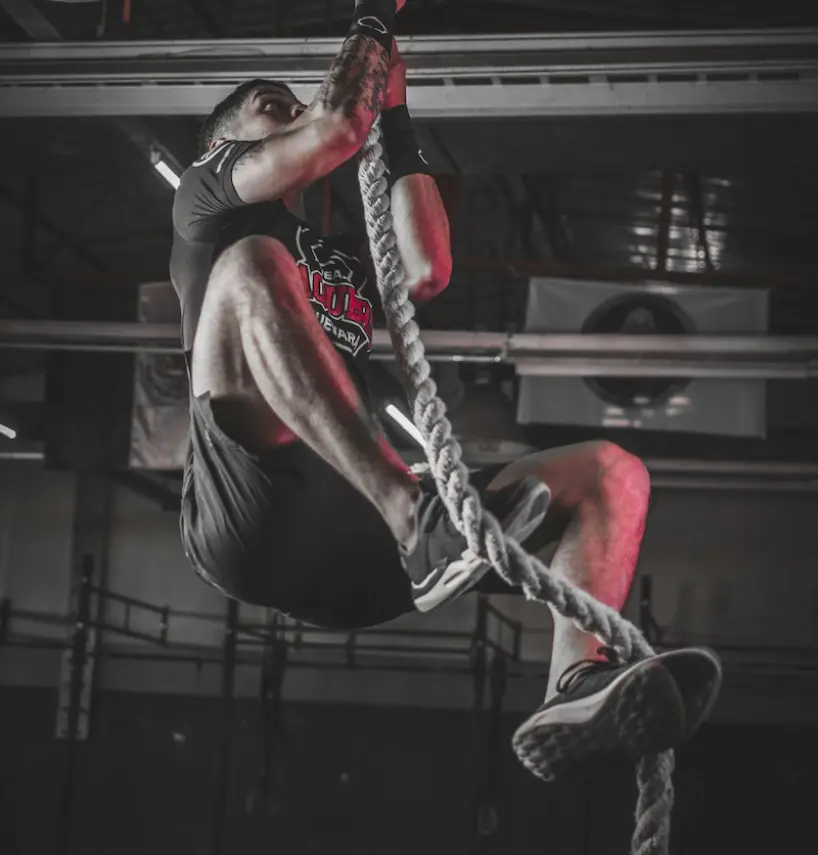
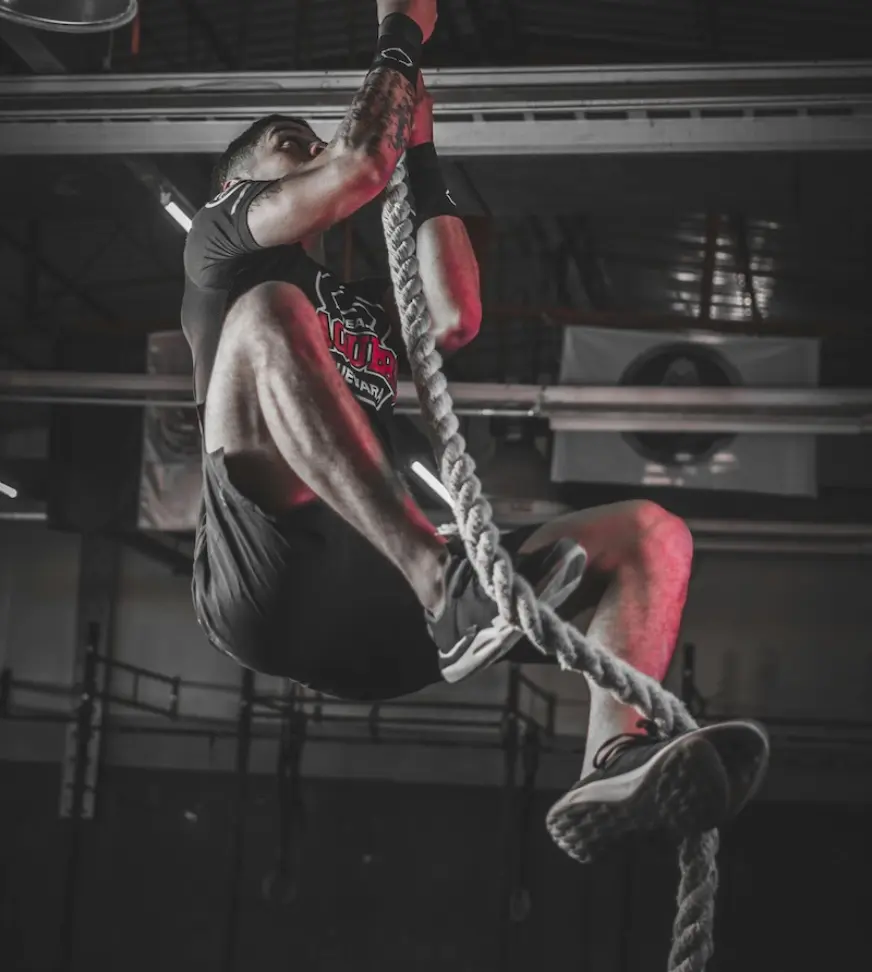
An ACE-sponsored study on battle rope intervals found participants reached an average heart rate of 148 ± 14.9 bpm, which was 79% of maximal heart rate, and average oxygen consumption of 26.9 ± 5.27 mL/kg/min, or 51 ± 9.5% of VO2max, during the session. That helps explain why so many coaches use battle ropes for conditioning, and why people want battle rope alternatives that keep the same full-body demand without the setup headache (ACE-sponsored battle rope research).
Traditional ropes also aren't very friendly to small training spaces. They often need long, clear lanes and a secure anchor, which is exactly why lifters and busy professionals keep searching for simpler options. If your goal is power, work capacity, fat-loss conditioning, or HYROX-style fitness, you don't need the rope itself. You need the training effect.
That's what this guide gives you. Eight battle rope alternatives that work, plus how to program each one for power, cardio, and strength-endurance. Some are better for home gyms. Some are better for athletes. Some are better when your joints need a break. All of them can be used hard and intelligently.
Built for progress
Take the guesswork out of training
Get a personalized workout plan built around your goal, equipment and schedule. Train smarter, track every rep and keep moving forward, one workout at a time.






If you also want conditioning that carries over to speed and field performance, these proven track and field workouts are worth a look.
1. Heavy medicine ball slams

If you want the closest thing to battle rope aggression without the rope, start here. Heavy medicine ball slams train violent hip extension, trunk stiffness, upper-body force transfer, and repeat-effort conditioning. They fit athletes, general fitness clients, and HYROX-style training equally well.
This movement works because the entire body contributes. Good slams don't come from the shoulders alone. They come from loading through the hips, extending hard, and finishing with the trunk and arms. That's why they feel athletic instead of just exhausting.
In practical settings, this is one of the easiest swaps for rope slams in a CrossFit gym, performance facility, or garage setup. You only need a durable slam ball or medicine ball and a floor that can handle impact.
How to do them well
Use a ball heavy enough that you have to create force, but not so heavy that the movement turns slow and segmented. For most adults, a moderate-to-heavy ball is the sweet spot. If the ball rebounds too much, use a dead-bounce slam ball instead of a wall ball.
A few coaching points matter more than everything else:
- Load through the hips: Reach the ball overhead, then hinge slightly before the slam.
- Brace before impact: Think ribs down, abs tight, then throw through the floor.
- Use the whole body: If it looks like a shoulder exercise, the load is wrong or the technique is off.
- Reset with purpose: Don’t lazily curl the ball back up. Own the pickup.
Practical rule: If your lower back feels this more than your abs and lats, you're chasing speed and losing position.
For power work, keep reps low and violent. For conditioning, use timed sets and try to maintain output across rounds. In team settings, I like pairing slams with short shuttles or broad jumps because it keeps the session athletic.
Best programming options
Three simple ways to use heavy medicine ball slams:
- Power focus: 3 to 4 sets of 8 to 12 reps, full effort, full recovery
- Conditioning focus: 30 to 45 seconds of work, then equal rest for multiple rounds
- Mixed circuit: 10 slams, 10 pushups, 20-meter sprint or fast march, repeated for quality
These work especially well inside Fully customized workouts because they're easy to progress by tracking reps per interval, round quality, and total workload.
Real-world use is simple. In a crowded gym where battle ropes are tied up or there isn't room to set them, medicine ball slams usually get you to the same training objective faster. They also teach people to project force into the ground, which carries over better to many field and court athletes than endless rope waves.
2. Kettlebell double-arm swings and high pulls
Battle ropes fry the upper body and lungs. Kettlebell swings do that while building a stronger posterior chain. That's the trade-off. If someone needs more carryover to hip power, deadlift patterning, and sprint mechanics, I pick swings over ropes most days.
Double-arm swings are the foundation. High pulls are the progression when you want more upper-back involvement and a slightly more aggressive finish. Both reward rhythm, timing, and force production. Both punish lazy mechanics.
This is also one of the best battle rope alternatives for people training in limited space. You're working in place, loading the hips, and getting a serious conditioning hit from a single tool.
What works and what doesn’t
What works is a clean hinge, violent hip snap, and relaxed arms. What doesn't work is turning the swing into a front raise. If the shoulders are doing most of the lifting, the set is already off track.
A few practical standards:
- Start with swings before high pulls: Earn the hinge first.
- Keep the bell close: A drifting bell yanks you forward and wastes force.
- Project from the hips: The bell should float because you drove it, not because you muscled it.
- Stop sets before form gets sloppy: Swings done tired and loose are how backs get angry.
For programming, I like short, hard efforts. Timed intervals fit this exercise better than grinding marathon sets. You can run them EMOM style, paired with carries, or mixed with push movements for complete conditioning.
When someone says swings bother their back, the problem usually isn't the swing. It's the hinge, the fatigue management, or the ego load.
Best programming options
Use kettlebell double-arm swings and high pulls in one of these formats:
- Power and explosiveness: 5 to 8 sets of 10 hard swings with solid rest
- Cardio and work capacity: 20 to 30 seconds hard, 20 to 40 seconds easy or rest
- Strength-endurance circuit: swings, goblet squats, pushups, then fast walking recovery
High pulls belong after the basic swing is clean. Add them in lower volume at first. They can be excellent for experienced trainees, but they expose poor timing quickly.
This option shines for HYROX prep and general conditioning because it trains repeated force production without needing a giant footprint. It also fits home training better than battle ropes in most cases. If you only own one conditioning tool, a kettlebell is more versatile.
3. Resistance band slams and explosive movements
Bands don't look as dramatic as battle ropes. They also solve a lot of the problems battle ropes create. They're portable, easy to store, easier on the joints, and useful for beginners who need to learn speed under control.
Elastic battle ropes have emerged more recently than traditional ropes, and the broader shift toward portable resistance tools reflects why so many lifters now favor band-based options for home and travel training. Stroops notes that traditional battle ropes have been mainstream for nearly 20 years, while elastic rope-style options emerged within the last 10 years and emphasize portability plus variable resistance (elastic battle ropes versus traditional ropes).
That same logic applies to standard resistance bands. You can anchor them overhead, at chest height, or low. You can slam, punch, row explosively, rotate, and anti-rotate. You can get a fast conditioning effect without absorbing the same repeated impact from rope slams on every rep.
Why bands are underrated
Bands see use in warmups and rehab, but are rarely taken further. That's a mistake. Heavy bands can create a nasty conditioning session if you treat them like a real training tool instead of an accessory.
Good options include:
- Overhead band slams: Anchor high and drive down hard
- Alternating band punches: Great for upper-body conditioning
- Rotational band strikes: Better for athletes who need transverse-plane work
- Fast band rows: Useful when you want speed without impact
The resistance profile changes through the range, so the finish of each rep gets harder. That can be useful for athletes who need to accelerate through movement instead of coasting through the end.
Best programming options
Band work responds well to density training and repeated rounds.
- Conditioning block: 20 to 40 seconds on, short rest, several rounds
- Power block: explosive reps with full reset between efforts
- Travel circuit: band slams, split squats, pushups, plank variation
Inspect the bands regularly. If a band shows cuts, fraying, or surface damage, retire it. That's not paranoia. That's basic safety.
For people who train in hotel gyms, office gyms, apartments, or shared spaces, this is one of the best battle rope alternatives available. It isn't as satisfying as a loud rope slam, but it's more practical, and practical training is the training that gets done.
4. Heavy bag work and dynamic striking
If your goal is hard intervals and upper-body fatigue, a heavy bag delivers. It also teaches timing, rhythm, and force transfer in a way battle ropes don't. That makes it a strong substitute for anyone who wants conditioning with a skill component.
Heavy bag work builds repeated power through the hips, trunk, shoulders, and arms. It also keeps the feet active. That's important. People often forget that battle ropes challenge the lower body because you have to hold position and produce force repeatedly. Good bag work does the same thing.
This option isn't ideal for everyone. If you have no striking background, don't jump straight into all-out punching rounds with bad wrists and no hand protection. Learn a few basic combinations, wrap your hands, and build volume gradually.
Where heavy bag training wins
The bag is excellent when you want conditioning that doesn't feel repetitive. Many trainees can push harder on the bag than they can on a bike or rower because the work stays mentally engaging.
Keep the rounds simple at first:
- Straight punches only: jab and cross for rhythm and breathing
- Three-punch combinations: better for sustained output
- Punch and move rounds: strike, reset feet, strike again
- Power finishers: short bursts at the end of a lifting session
Technique matters more than people think. Force starts from the floor, rotates through the hips, and finishes through a stable hand position. Wild arm punching burns you out fast and teaches nothing useful.
A heavy bag is conditioning disguised as skill practice. That's why people stick with it.
Best programming options
I like bag work in classic intervals. Work hard enough to breathe through the mouth, but keep the mechanics clean.
- General conditioning: moderate rounds with controlled combinations
- Anaerobic work: shorter, faster flurries with longer rest
- Finisher format: bag round, bodyweight movement, rest, repeat
This is a strong choice for home gyms that already have a bag installed. It isn't portable, and setup can be more annoying than bands or a medicine ball. But once it's there, it's an excellent battle rope alternative for anyone who wants intensity without doing the same wave patterns every session.
5. Bodyweight high-intensity interval training
No equipment. No anchor. No excuses. If you're traveling, training in a small apartment, or trying to squeeze in a hard session between meetings, bodyweight intervals are the fastest path to a battle-rope-style conditioning hit.
This category works because you can combine explosive lower-body work, upper-body fatigue, and core demand in a tight time window. Burpees, mountain climbers, jump squats, sprawls, and plank-driven variations all create the same kind of breathless, full-body output people chase with ropes.
It also solves the biggest practical problem battle ropes create. Space. One underserved angle in most battle rope content is how poorly ropes fit real home setups. A guide focused on portable alternatives points out that battle ropes are bulky and impractical for many home users, while compact options answer the access problem far better (portable battle rope alternative ideas).
The right way to build bodyweight intervals
Don't just pile random suffering together. Pick movements that cover different functions so one weak link doesn't ruin the whole round.
A simple structure works well:
- Engine movement: burpees or squat thrusts
- Fast core movement: mountain climbers
- Power movement: jump squats or split squat jumps
- Upper-body support movement: pushups or shoulder taps
Scale aggressively when needed. That isn't backing off. It's smart programming. A push burpee done crisply beats a jump burpee done with collapsing mechanics and a spiking heart rate that wrecks the rest of the workout.
Best programming options
This format is ideal for busy professionals because it starts fast and ends fast.
- Simple intervals: 40 seconds work, 20 seconds rest
- Short rounds: two to four movements repeated for several minutes
- Density test: complete as many quality rounds as possible in a fixed time
Use bodyweight HIIT when access is limited, time is tight, or you need a travel session that still feels athletic. It isn't perfect for maximal power development, but it absolutely works for work capacity, calorie-burning effort, and mental toughness.
If movement quality breaks down, cut the round or swap the exercise. There’s no prize for ugly fatigue.
6. Sled pushes and prowler work
Some battle rope alternatives mimic the arm action. Sled pushes don't. They replace the training effect with something more useful for many athletes. You get brutal conditioning, heavy leg drive, trunk stiffness, and almost no eccentric soreness compared with many other hard conditioning methods.
For HYROX athletes, field athletes, and anyone who wants conditioning that transfers to force production, sleds are one of the best options available. They also let you load heavy for strength-endurance or go lighter and faster for power and repeated sprint effort.
This is the least portable option on the list, but in a turf gym or performance facility, it's hard to beat.
Why sleds are such a strong substitute
Battle ropes are popular in gym settings, but they're not especially space-efficient. In market analysis, the broader battle ropes market was valued at approximately USD 527 million in 2024 and projected to reach USD 1,095 million by 2033, while battle ropes also require long setups and anchored space that many users don't have (battle ropes market outlook). That's a big reason coaches keep shifting clients toward compact or more floor-efficient tools.
A sled solves a different problem than ropes. It doesn't emphasize upper-body rhythm, but it does let you produce force continuously under fatigue with a simple learning curve. Learning a proper sled push often takes only minutes.
Best programming options
Use torso angle and load to change the training effect.
- Heavy pushes: lower speed, high force, longer recovery
- Light fast pushes: shorter bursts, faster turnover
- Contrast work: one heavy push followed by one lighter, aggressive push
- Circuit pairing: sled push with carries, burpees, or med ball work
Coaching points stay simple. Drive through the floor, keep the trunk braced, and don't let the hips shoot up. If the feet start slipping and the range shortens, the load is too heavy for the session goal.
For athletes prepping for events that demand repeated force under fatigue, sleds often outperform battle ropes as a primary conditioning tool. They aren't a practical home-gym solution, but if your gym has one, use it.
7. TRX and suspension training explosive movements
Suspension trainers don't look like a battle rope substitute at first glance. In practice, they're a smart option when your joints need lower-impact work and you still want full-body fatigue. The instability also forces the trunk to stay involved, which keeps the work from becoming isolated.
TRX shines when you combine explosive rows, assisted jump squats, suspended mountain climbers, and fast body saw variations. It won't replicate the exact feel of rope waves, but it can produce the same session outcome. High breathing rate, burning shoulders, trunk fatigue, and repeat-effort demand.

The big advantage is adjustability. Move your feet and the difficulty changes. That makes suspension work useful for beginners who need control and advanced trainees who need more density and instability.
How to make TRX conditioning actually hard
A lot of people waste suspension training by doing slow, easy accessory work only. There's nothing wrong with that, but if you want battle rope alternatives, you need intent and pace.
The best combinations usually alternate movement patterns:
- Explosive row
- Suspended squat or jump squat
- Suspended knee tuck or climber
- Pushup or plank-based variation
You can also use TRX for interval circuits in cramped spaces where sleds, ropes, and wall balls aren't possible. That's where it becomes valuable for home setups and apartment gyms.
Best programming options
The broader functional training equipment category is projected to grow from USD 3.67 billion in 2026 to USD 6.08 billion by 2034, which reflects ongoing demand for versatile tools such as suspension systems, bands, medicine balls, and rower-style conditioning options (functional training equipment market projection). That trend makes sense. Versatility matters when people train in limited spaces.
Use TRX work like this:
- Explosive interval format: short efforts with controlled resets
- Joint-friendly conditioning day: suspension circuit instead of impact-heavy jumping
- Upper-lower alternation: row, squat, climber, plank, repeat
Suspension training isn't my first pick for max power. It is one of my first picks when someone needs lower-impact conditioning with a strong core demand and limited equipment.
8. Wall balls and medicine ball throws
Wall balls are one of the most honest conditioning tools in functional fitness. They expose leg endurance, breathing control, timing, and upper-body fatigue all at once. If you've ever watched a solid athlete fall apart on a long wall-ball set, you know how effective they are.
They also fit the battle rope replacement role well because they create repeated, rhythmic power under fatigue. Squat, drive, throw, catch, absorb, repeat. That cycle looks different from rope waves, but the metabolic stress and total-body demand are very similar.
For HYROX-adjacent conditioning and general functional fitness, I like wall balls even more than battle ropes in many cases. They force lower-body contribution every rep, and they don't let you fake output with shallow effort.
How to get more from wall balls
Most mistakes happen in the catch and reset. People throw well, then collapse into the bottom position and lose rhythm. The best sets are efficient, not frantic.
Keep these standards in mind:
- Hit full-body extension on the throw
- Catch with the chest up
- Use the rebound into the next squat
- Breathe on rhythm instead of holding tension too long
Stay smooth for the first half of the set. The athlete who starts too hot usually gets buried first.
Medicine ball chest passes, scoop tosses, and rotational throws can also work if wall-ball targets aren't available. Those variations are especially useful for athletes who need more horizontal or rotational force.
Best programming options
Wall balls respond well to both intervals and rep targets.
- Conditioning intervals: steady efforts with equal rest
- Mixed metcon: wall balls paired with carries, rowing, or burpees
- Power-endurance sets: moderate rep chunks with short rest
A guide focused on HYROX-style substitutions notes that jump rope, bear crawls, med ball slams, and related options are often used when trainees need rope-free conditioning for event prep (battle rope alternatives for functional fitness). Wall balls belong in that same conversation because they create repeatable fatigue with clear progression.
Use them when you want a battle rope alternative that rewards pacing, leg drive, and total-body coordination. Just make sure you have a durable ball, a suitable wall target, and enough ceiling height to train without altering the throw.
Battle Rope Alternatives: 8-Item Comparison
| Item | Implementation complexity | Resource & cost | Expected outcomes | Ideal use cases | Key tip |
|---|---|---|---|---|---|
| Heavy Medicine Ball Slams | Medium, simple pattern but requires hip drive and timing | Low, medicine ball, minimal footprint, durable floor required | High explosive power, core and shoulder engagement, moderate cardio | HYROX, functional fitness, short power/conditioning circuits | Start with 12–20 lb; emphasize hip drive and 3–4 sets of 10–15 |
| Kettlebell Double-Arm Swings & High Pulls | Medium, technical hip hinge and rhythm needed | Low–Medium, one or more kettlebells, compact and portable | Strong posterior chain, scalable strength, sustained conditioning | Time-efficient strength-endurance, home or gym metcons | Prioritize hip hinge; use 30–60s intervals and track total volume |
| Resistance Band Slams & Explosive Movements | Medium, anchoring and band handling require setup | Very low, inexpensive bands, highly portable, minimal space | Variable resistance power, joint-friendly metabolic stimulus | Travel/home training, rehab, low-impact conditioning | Stack bands for progressive overload and inspect for wear regularly |
| Heavy Bag Work & Dynamic Striking | High, requires striking technique and pacing | Medium–High, bag, mounting, gloves; space and noise considerations | Upper-body power, hand speed, anaerobic conditioning, coordination | Combat sports, sport-specific power conditioning, stress relief | Use quality gloves/wraps; focus on hip rotation and 45–60s rounds |
| Bodyweight HIIT (Burpees, Mountain Climbers, Jump Squats) | Low, simple movements but high fatigue risk and form loss | None, zero equipment, minimal (6x6 ft) space | Very high cardio/metabolic conditioning, limited absolute strength gains | Busy professionals, travel, quick conditioning sessions | Use 40/20 or Tabata intervals and prioritize movement quality |
| Sled Pushes & Prowler Work | Medium, simple propulsion mechanics but technique matters | High, sled and turf space (20–40 ft), equipment cost and facility needed | Explosive lower-body power, high metabolic demand, measurable output | HYROX prep, athletic power-endurance, turf-based training | Start at ~50–75% body weight and perform 20–40 m pushes with full recovery |
| TRX & Suspension Training Explosive Movements | Medium, anchor setup and angle adjustments require learning | Low–Medium, TRX is portable but needs stable anchor point | Strength plus stability, strong core activation, scalable power | Travel/home workouts, core-focused circuits, rehab-friendly training | Adjust body angle to scale difficulty; start at 45–60° for learning |
| Wall Balls & Medicine Ball Throws | Low–Medium, rhythm and catch technique important | Low, medicine ball and wall space, inexpensive equipment | Combined lower/upper power, continuous high-rep metabolic stimulus | CrossFit-style conditioning, athletic power development, circuits | Use ~14–16 lb for most adults; focus on full-body extension and quick catches |
How to choose and program your battle rope alternative
The best battle rope alternatives aren't the flashiest ones. They're the ones that fit your space, your joints, your equipment, and your real goal. A lot of people choose based on what looks hardest on social media. That's usually a mistake. Choose based on what you can load well, repeat consistently, and recover from.
Start with the constraint that's limiting you. If space is the issue, use bands, bodyweight intervals, kettlebells, or TRX. If impact is the issue, bands, TRX, and sleds usually make more sense than repeated slams and jumps. If your goal is pure power, medicine ball slams and throws should move up the list. If your goal is ugly, grinding work capacity, swings, sled pushes, and wall balls usually win.
Battle ropes themselves have been around in mainstream training for nearly 20 years, which is why people still compare every conditioning tool back to them. But training has moved toward more portable and adaptable options because more people train at home, on the road, or in crowded shared spaces. That's a practical shift, not a trend for trend's sake.
Here's the simplest way I program these movements.
Match the tool to the goal
For power, use explosive reps with full intent and enough rest to keep output high. Medicine ball slams, medicine ball throws, kettlebell swings, and lighter sled pushes work best here. Keep the sets short. Stop before speed drops.
For conditioning, use timed intervals or repeated rounds. Wall balls, heavy bag work, bodyweight HIIT, resistance bands, and kettlebell intervals excel in this format. The key is sustainable intensity. If round one is a sprint and round three is survival, the pacing is off.
For strength-endurance, use moderate loading with controlled rest. Sled pushes, wall balls, kettlebell swings, and longer band circuits all fit. This is the lane for athletes who need to produce force while tired, not just spike effort for a few seconds.
Use a weekly structure that makes sense
You don't need all eight battle rope alternatives in one week. You need two or three that cover your needs.
A practical split looks like this:
- One power-focused day: slams, throws, or fast swings
- One conditioning-focused day: bag work, bodyweight HIIT, wall balls, or bands
- One hybrid day: sled pushes, kettlebell circuits, or suspension intervals
If you're also lifting hard, place these sessions where they won't sabotage your main work. Heavy slams before lower-body max strength work usually isn't smart. Sled pushes after a lower-body strength session often are. Wall balls the day before a high-volume squat session usually aren't. Program with some basic common sense about fatigue.
Progress the work instead of just surviving it
A lot of conditioning fails because people repeat the same suffering without a progression model. Track something. Reps per interval. Round completion. Distance. Load. Rest. Density. If the work never evolves, neither does your fitness.
The easiest progressions are simple:
- add a round
- add a small amount of load
- improve output in the same time
- reduce rest slightly
- clean up technique at the same workload
That last one matters. Better mechanics under the same stress is progress.
If recovery becomes the issue, don't just grind through it. Pull volume back, rotate a lower-impact option in, and handle the basics. Sleep, food, and smart scheduling still decide whether conditioning helps you or buries you. If soreness tends to derail your week, this guide on how to prevent muscle soreness after workout can help you manage the fallout.
You don't need a long rope to train power and conditioning well. You need a tool that fits your setup and a plan that fits your body. Pick one or two options from this list, run them for a few weeks, track the work, and adjust based on performance. That's how you turn battle rope alternatives from random substitutions into serious training.
GrabGains makes that process easier. If you want adaptive programming instead of guessing your sets, intervals, and exercise rotation, GrabGains helps you build personalized workouts, track performance, and learn movements through guided exercise videos. It's built for busy professionals, home trainees, beginners, and serious functional fitness athletes who want structure without wasting time.
Get inspired and motivated