Master Reverse Grip Bench Press for upper chest growth
Master the reverse grip bench press for perfect form. Boost upper chest & triceps growth with our guide covering setup, benefits, mistakes, & programming. Most bench press advice tells you to keep chasing the same fix for every problem. If your upper chest won't grow, add incline work. If your shoulders ache on flat bench, improve mobility. If your pressing stalls, bench more often. That advice works sometimes. It also leaves a lot of lifters stuck.
The reverse grip bench press is one of the few pressing variations that can solve more than one problem at once. It can give a stubborn upper chest a new stimulus, shift stress away from irritated shoulders, and build pressing strength through a different mechanical pattern. It's awkward at first, and that's exactly why many lifters dismiss it before they learn how useful it can be.
Used carelessly, it's a bad idea. Used correctly, it's one of the smartest specialty presses you can add to a program.
Why the reverse grip bench press is a secret weapon
Hearing "reverse grip bench press" often brings to mind a novelty lift. That's a mistake.
This movement has real history in serious strength training. The reverse grip bench press was popularized in the 1990s by elite powerlifters like Anthony Clark, who set an 804 lb world record with the lift after a shoulder injury prevented him from training the traditional bench press, as noted in John Phung's reverse grip bench press history. That alone should change how you look at it.
Clark didn't use it because it looked unusual. He used it because it let him keep pressing hard when conventional benching wasn't the best option.
Built for progress
Take the guesswork out of training
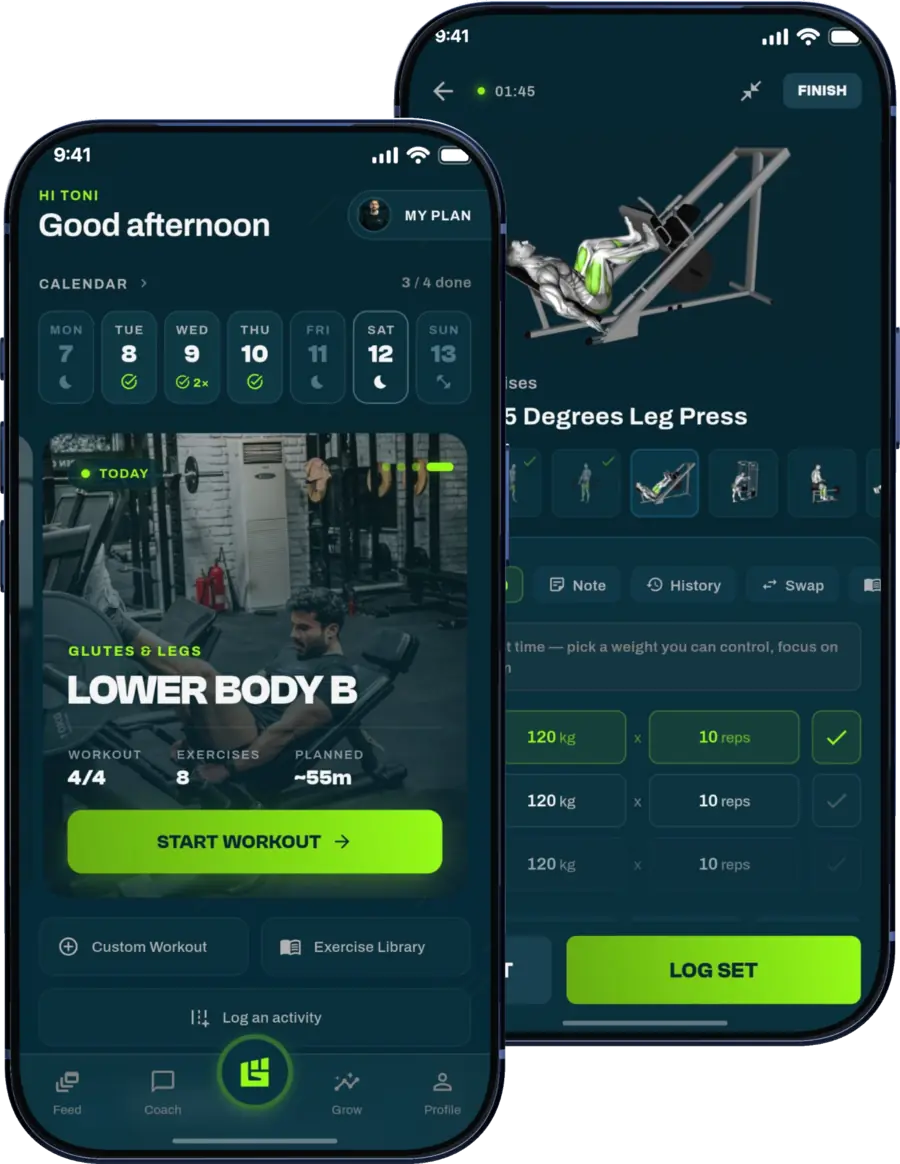
Get a personalized workout plan built around your goal, equipment and schedule. Train smarter, track every rep and keep moving forward, one workout at a time.






Why strong lifters keep coming back to it
The reverse grip bench press gives you a different pressing slot than the standard barbell bench. Your elbows stay closer to the body, your shoulder position changes, and the bar touches lower on the torso. For many lifters, that creates a pressing pattern that feels smoother on the front of the shoulder.
That doesn't mean it's automatically safer. It means the lift can be more shoulder-friendly for the right person with the right setup.
The reverse grip bench press isn't a circus trick. It's a specialty lift that earned its place because strong lifters could train through limitations with it.
It also helps with a very common plateau. Plenty of lifters can move respectable weight on flat bench while still struggling to build the upper chest and finish presses strongly. The reverse grip bench press changes the emphasis enough to make stale training productive again.
Where it fits best
This lift tends to shine for a few groups:
- Lifters with shoulder discomfort on standard bench who still want a heavy barbell press
- Bodybuilders chasing upper chest development without relying only on incline pressing
- Intermediate trainees stuck at a bench plateau who need a fresh strength stimulus
- Triceps-dominant pressers who want a variation that rewards elbow tuck and lockout strength
What doesn't work is treating it like a max-effort ego lift on day one. The learning curve is real. Grip security matters. Setup matters even more.
If you respect those trade-offs, the reverse grip bench press becomes a strategic tool, not a gimmick.
Target your upper chest and triceps like never before
The biggest reason to use the reverse grip bench press isn't that it's different. It's that the mechanics change where the work goes.
With a supinated grip, your shoulders rotate differently, your elbows naturally tuck more, and the bar path shifts lower on the body. That combination tends to put the clavicular head of the pectoralis major, along with the triceps, in a better position to contribute hard from the bottom through lockout.
Electromyography research has shown that the reverse grip bench press can increase upper pectoralis major activity by up to 30% compared to a standard overhand grip bench press, according to this reverse grip bench press analysis. That's the core reason this lift has stayed relevant for lifters who want more upper chest involvement.
Why the grip changes the stimulus
A standard flat bench usually spreads the work across the chest, triceps, and front delts in a way most lifters know well. The reverse grip version changes that feel immediately.
You usually notice three things:
- Upper chest engagement feels stronger because the pressing line better matches that area for many lifters
- Triceps stay heavily involved thanks to the tucked elbow position
- Front shoulder stress often feels lower because the movement doesn't force the same flare pattern many lifters use on regular bench
That last point matters. A lot of shoulder irritation on bench isn't caused by benching itself. It's caused by lifters forcing a pressing groove that doesn't match their structure, mobility, or injury history. The reverse grip bench press can clean that up by making a tucked, more controlled path easier to maintain.
Reverse grip vs incline press
Incline pressing is still useful. But it isn't the perfect answer for everyone.
Some lifters feel incline work mostly in the shoulders, especially when the bench angle is too steep or their front delts already dominate every press. In those cases, the reverse grip bench press can be a better upper chest builder because it lets them stay on a flat bench while still biasing the upper pecs.
Here's the practical difference:
| Exercise | Main advantage | Common drawback | Best use |
|---|---|---|---|
| Flat bench press | Heavy loading and total pressing strength | Can become lower chest and front delt dominant | General strength |
| Incline press | Familiar upper chest option | Some lifters feel more delts than pecs | Traditional upper chest work |
| Reverse grip bench press | Upper chest and triceps emphasis with a flatter pressing path | Awkward setup and grip demands | Plateaus, shoulder-sensitive pressing, upper chest focus |
Practical rule: If incline pressing lights up your shoulders more than your upper chest, the reverse grip bench press is worth testing.
Why it helps stalled progress
Plateaus happen when the body adapts to the same loading pattern and the same weak links keep limiting you. The reverse grip bench press often breaks that pattern because it rewards a different skill set.
It asks for tighter elbows, better bar control, and stronger triceps drive. It also gives the upper chest a more direct role than many lifters get from years of flat benching.
For hypertrophy, that means a new growth signal. For strength, it means building another pressing pattern that can carry over when your normal bench stalls.
What doesn't work is assuming muscle activation alone guarantees results. If your setup is sloppy, your wrists collapse, or you press toward your face too early, the lift loses most of its value. The muscle bias is real, but only if the execution matches it.
A step-by-step guide to perfect execution
The reverse grip bench press rewards precision. Small setup mistakes feel much bigger here than they do on a normal bench. That's why lifters who rush this movement often decide it "doesn't work," when the issue is that they never learned the groove.
Start by treating it like a technical lift.

Set up the bench and body first
Lie on the bench the same way you would for any serious press. Plant your feet firmly, squeeze your upper back into the pad, and create a stable base through the legs and torso. You don't need a dramatic arch, but you do need a proud chest and tight shoulder blades.
Your body should feel stacked and braced before your hands even touch the bar.
Grip the bar with a supinated grip, usually slightly wider than shoulder width. The bar should sit deep in the hand, not floating high in the fingers. That matters because the reverse grip can feel unstable if the wrist and palm don't line up well under the bar.
A slight wrist bend is normal. A collapsed wrist is not.
Make the unrack simple, not heroic
The unrack is where a lot of lifters lose confidence. The reverse grip position is less intuitive than a normal bench start, so getting the bar out cleanly matters.
If you have a spotter, use one. That's the best option, especially while you're learning.
If you train alone and know what you're doing, some experienced lifters use a setup transition similar to RepStack's triceps bench press variation to understand how a tucked-elbow pressing pattern should feel. That can help you build confidence before you take the reverse grip barbell version seriously.
Once the bar is unracked, let it settle over the upper torso with the elbows locked and the ribcage high. Don't start the descent until the bar feels balanced in your hands.
Keep the start calm. If the unrack feels rushed, the rep is already off.
lower the bar to the right touch point
The descent should be controlled, not slow for the sake of looking strict. Pull the bar down with tension and keep the elbows tucked toward the body.
This is the point many people miss. The bar does not come down to the same spot as a standard bench press. With the reverse grip bench press, the most reliable touch point is around the lower sternum to upper ab area. If you aim too high on the chest, the wrists and elbows drift into a weak position.
Think about bringing the bar down in a smooth horizontal arc while keeping your forearms stacked under it.
Useful descent cues
- Bend the bar into position by squeezing it hard
- Tuck, don't pin your elbows. They stay close, but not jammed
- Lower to the torso, not the throat
- Keep the chest up so the bar meets your body without your shoulders rolling forward
Breathing matters here too. Take a full breath before the rep, brace the trunk, and hold that pressure through the descent. Exhale only after the bar is moving securely through the hardest part of the press.
Own the bottom position
The bottom is where the reverse grip bench press either feels powerful or sketchy. If you've stayed tight, the bar will touch low, the wrists will stay stacked enough to support the load, and your elbows will be in a strong pressing angle.
If you've lost position, you'll feel it immediately. The wrists fold back, the elbows drift, and the bar feels like it's sliding away from your hands.
Pause just long enough to stay in control. You don't need to sink the bar or bounce it off the torso. You need contact and direction.
Press back in a slight arc
From the bottom, drive the bar up and slightly back. Not straight up from the touch point, and not wildly back toward the rack.
The finish position ends with the bar over the upper torso again. That subtle arc is what keeps the press strong and keeps the wrists from fighting the bar path.
On the way up, think about this
- Push through the heel of the palm
- Drive your feet into the floor to support the press
- Keep the elbows under the bar as long as possible
- Finish with control, not with a loose lockout
A lot of lifters press too far toward the face too early. That usually comes from trying to mimic the top half of a normal bench press. On reverse grip bench, that mistake makes the lift harder and less secure.
What a good rep should feel like
A clean rep feels compact. The bar starts stable, lowers to a low touch point, and comes off the body with triceps and upper chest working together. It should not feel like you're balancing a loose object over your neck.
If it does, reset and reduce the load.
The best first sessions with this lift are boring. Light weight, perfect path, patient setup. That's how you build a press you can trust later.
Avoid common errors that cause wrist strain and injury
Most lifters don't get into trouble with the reverse grip bench press because the exercise is, by its nature, reckless. They get into trouble because they load it too soon, grip it poorly, or force a bar path that doesn't match the lift.
Wrist discomfort is the most common complaint. In most cases, it's a technique and progression issue, not proof that your body "can't do" the movement.

Stop letting the wrist fold backward
The reverse grip puts your wrists in a position they probably haven't trained much under a barbell. If the bar sits too high in the hand or drifts toward the fingers, the wrist folds back and the whole rep feels unstable.
Fix that first.
Set the bar deeper in the palm and stack it as directly over the forearm as your mobility allows. Some wrist extension is normal. Excessive extension is where discomfort builds fast.
Many lifters experience wrist strain due to improper grip. A common strategy to build tolerance is to start with 50 to 60% of your estimated 1RM for sets of 8 to 12 reps and use neutral-grip dumbbell presses as a precursor, according to Healthline's reverse grip bench press guidance. That's smart advice because it gives the wrists and forearms time to adapt instead of forcing them to catch up under heavy loads.
Don't treat the learning phase like a strength test
This lift punishes impatience.
A lot of strong benchers assume they should be able to reverse grip press close to their regular working weights right away. Then they feel shaky, their wrists hate it, and they blame the exercise. The problem isn't the variation. It's skipping the accommodation phase.
Use a slower on-ramp:
- Start lighter than your ego wants so you can repeat good reps
- Use higher reps early to practice bar path and grip pressure
- Build forearm tolerance with neutral-grip dumbbell pressing
- Save hard sets for later when the movement feels natural
If your hands feel like the weak link, believe them. The fix is better practice, not more aggression.
Elbow flare ruins the point of the lift
If you let the elbows flare wide, you remove a lot of what makes the reverse grip bench press useful. The tucked position is part of why many lifters find it more comfortable on the shoulder and more effective for triceps and upper chest emphasis.
Flaring usually happens for one of two reasons. Either the bar is touching too high on the chest, or the lifter is trying to press in the same pattern they use for a regular bench.
The fix is simple. Lower the bar to the correct point on the torso and keep the upper arms close enough to the body that the press feels compact, not winged out.
Bad bar path creates bad reps
A common technical error is lowering the bar too high, then trying to press around that mistake. Another is pushing the bar back toward the rack too soon.
Both make the lift feel less secure.
Use this quick check:
| Error | What it looks like | Why it matters | Better fix |
|---|---|---|---|
| High touch point | Bar lands near mid chest | Wrists and elbows lose leverage | Touch lower on the torso |
| Early backward press | Bar shoots toward face too soon | Harder lockout, less control | Press up, then slightly back |
| Loose upper back | Chest collapses at the bottom | Shoulder position deteriorates | Retract shoulder blades and stay tall |
| Rushed unrack | Bar starts wobbling | Setup never stabilizes | Pause and settle before descending |
Don't skip the obvious safety rules
The reverse grip bench press asks for more respect than a machine press or a dumbbell fly. That doesn't make it dangerous by default. It means safety habits matter more.
Use a spotter when you can. Set safeties correctly if you're in a rack. Don't use collars if your setup makes a dump impossible. Don't take sloppy grinders on a movement you haven't mastered.
The worst way to learn this exercise is under panic.
A good reverse grip bench press session should feel controlled from start to finish. If it feels sketchy, something in the setup is off. Fix the setup before you think about adding weight.
Effective variations and advanced techniques
The standard barbell reverse grip bench press is the main version worth mastering, but it isn't the only version worth using. Different setups solve different problems.
Some lifters need more stability. Others need more freedom at the wrists and shoulders. And advanced trainees sometimes need a way to keep progressing without turning every set into a max attempt.
Barbell vs dumbbell vs smith machine
Each variation changes the demand profile.
The barbell reverse grip bench press is the best choice if your goal is strength carryover and long-term loading. It lets you build skill with a fixed implement and track progress clearly. The downside is obvious. It has the highest setup demand and the least room to hide technical errors.
The dumbbell reverse grip press is often the best starting point for lifters whose wrists need time to adapt. Dumbbells let each arm find a more natural path, and many people feel more comfortable learning the supinated press pattern that way. The trade-off is that getting dumbbells into position can be awkward, especially when fatigue sets in.
The Smith machine reverse grip press gives the most external stability. That can be useful when hypertrophy is the only goal and you want to focus on effort instead of balance. The cost is that the machine decides the path for you, which may or may not match your structure.
Here's the practical breakdown:
- Choose barbell if you want the full skill and strength benefit
- Choose dumbbells if wrist comfort and joint freedom are your priority
- Choose Smith machine if you're chasing controlled upper chest volume with minimal setup stress
When a variation works better than the main lift
A variation is useful when it solves a real problem. It isn't useful when it's just easier.
If a barbell reverse grip bench press consistently feels secure and productive, stay with it. If your wrists are the limiting factor and the chest never gets challenged, use dumbbells for a block and come back later. If you're tired after heavy pressing and want upper chest volume without more stabilization demand, the Smith machine can work well.
The best variation is the one that lets the target muscles work hard without your setup falling apart.
Advanced setup option for experienced lifters
One advanced method worth knowing is the grip flip. Coaches like Jim Stoppani have popularized this technique, where you unrack the bar with a standard overhand grip and switch to a reverse grip at the top, as described in Jim Stoppani's reverse grip bench press guide.
For experienced lifters, that can make heavy setup much cleaner. You avoid fighting the unrack from an awkward hand position and get into the reverse grip once the bar is already stable.
This is not a beginner move. If your basic reverse grip setup isn't locked in, adding a transition under load is unnecessary complexity.
Small changes that improve long-term progress
Advanced progress usually comes from tighter execution, not from flashy tricks.
Useful tweaks include:
- Paused reps to own the bottom position
- Controlled eccentrics to improve bar path awareness
- Back-off sets after standard benching when you want extra triceps and upper chest work
- Alternating blocks between barbell and dumbbell versions to manage joint stress
What doesn't work is collecting variations for the sake of variety. Pick one main version, learn it thoroughly, and use alternatives only when they solve a clear programming problem.
Programming for strength and hypertrophy
The reverse grip bench press works best when you give it a job. It can be a primary press, a secondary upper chest builder, or a triceps-focused accessory. Problems start when lifters throw it into training randomly and then wonder why it never sticks.
Your placement, loading, and weekly role should match your goal.
Use it differently for size and strength
If you're chasing hypertrophy, the reverse grip bench press usually works best when you can feel the upper chest and triceps doing the work without your grip becoming the limiting factor. That often means placing it early in the session, but not always as the first lift if you're also pushing heavy standard bench numbers.
If you're chasing strength, the lift needs enough priority to develop technical confidence. That usually means lower rep work with full control and longer rest periods, not rushed fatigue sets at the end of a workout.
According to aggregated data from millions of lifts, an intermediate 180 lb male lifter can typically reverse grip bench press 217 lb for a one-rep max, based on Strength Level's reverse grip bench press standards. Benchmarks like that help keep expectations realistic. They also remind lifters that this is a measurable strength movement, not just a pump exercise.
Sample reverse grip bench press programming
| Training Goal | Placement in Workout | Sets x Reps | Rest Period |
|---|---|---|---|
| Strength focus | First main press of the day | 4 to 6 sets of 3 to 5 reps | Long enough to recover fully |
| Hypertrophy focus | First or second chest press | 3 to 5 sets of 6 to 10 reps | Moderate rest with full control |
| Accessory triceps and upper chest work | After primary benching | 2 to 4 sets of 8 to 12 reps | Shorter rest, but never rushed form |
| Technique practice block | Early in session while learning | Several crisp submaximal sets | Rest as needed to repeat clean reps |
Where to put it in your week
The lift can work in more than one split, but the role changes.
On a chest day, use it as the lead press if upper chest development is the main priority. Follow it with a second press and then finish with fly or machine work.
On an upper body day, it often works better as the second big press after another compound movement. That keeps pressing volume high without forcing every adaptation through one pattern.
A simple way to think about it:
- Use it first when upper chest growth or shoulder-friendly pressing is the main goal
- Use it second when standard bench strength still gets top priority
- Use it as an accessory when you want more triceps-dominant pressing volume without adding another standard bench variation
Two practical templates
Chest day focused on upper chest growth
Start with reverse grip bench press for your main working sets. Then use an incline dumbbell or machine press for additional chest volume. Finish with a fly variation and direct triceps work.
This setup works well because the reverse grip bench press gets your freshest effort and the rest of the session supports the same target area from less technical positions.
Upper body day with balanced pressing
Open with your primary heavy press if you still compete or care most about regular bench performance. Then use the reverse grip bench press as your second compound press. Follow with rowing, shoulder work, and arm training.
This is often the sweet spot for busy lifters. You get the unique benefit of the lift without making the entire day revolve around learning a specialty movement.
Don't force the reverse grip bench press into every week forever. Use it when it solves a problem and keep it while it keeps paying you back
Progression that actually works
Progression on this lift should be conservative and repeatable. Add load only when bar path, wrist position, and touch point all stay clean. If one of those breaks down, the extra weight isn't progress.
For many lifters, the best marker isn't just the top set. It's whether every rep in the session looks the same.
Support work matters too. Triceps strength, upper back tightness, and wrist tolerance all affect how well this lift progresses. Recovery matters as well. If your nutrition is inconsistent, performance usually is too. If you need a practical overview, this guide to essential vitamins for fitness is a useful complement to the big rocks like total calories and protein.
If you want programming that adjusts as your performance changes, Fully customized workouts can help organize pressing variations like this more intelligently than a static template.
The reverse grip bench press is worth keeping when it does one of three things. It builds your upper chest better than incline work, lets you press hard with less shoulder irritation, or gives you a productive route around a pressing plateau. If it's not doing one of those jobs, use something else.
If you want a smarter way to fit lifts like the reverse grip bench press into a plan that matches your goal, GrabGains is worth a look. It builds adaptive workouts around your training focus, tracks your progress, and helps you choose the right exercise at the right time instead of guessing week to week.
Get inspired and motivated