The smarter 30 minute workout plan for real results
Discover a science-backed 30 minute workout plan that builds muscle and burns fat. Get expert routines and nutrition tips to maximize your fitness. A well-designed 30 minute workout plan is an incredibly effective way to build muscle and burn fat without spending hours in the gym. The key isn't how long you train, but the intensity and structure you bring to it. This plan is built on smart, evidence-based principles to make every single minute count.

Why 30 minutes is all you really need
It's a common myth that longer workouts automatically lead to better results. Many people think you have to grind for 60 to 90 minutes a session to see any real progress. But that mindset completely misses the most critical factor in any fitness routine: intensity.
A focused, high-intensity 30 minute workout plan can easily outperform a longer, distracted session. When your time is limited, you're forced to cut out the fluff—no more scrolling on your phone between sets or wandering aimlessly around the gym floor. Every exercise and every rest period has a purpose, creating a much denser and more productive workout.
Training smarter not longer
The power of a 30-minute session lies in its sheer efficiency. Don't think of it as a compromise for a busy schedule; think of it as a strategic approach to fitness. This method is built on proven principles that trigger significant physiological changes in a compressed timeframe.
Built for progress
Take the guesswork out of training
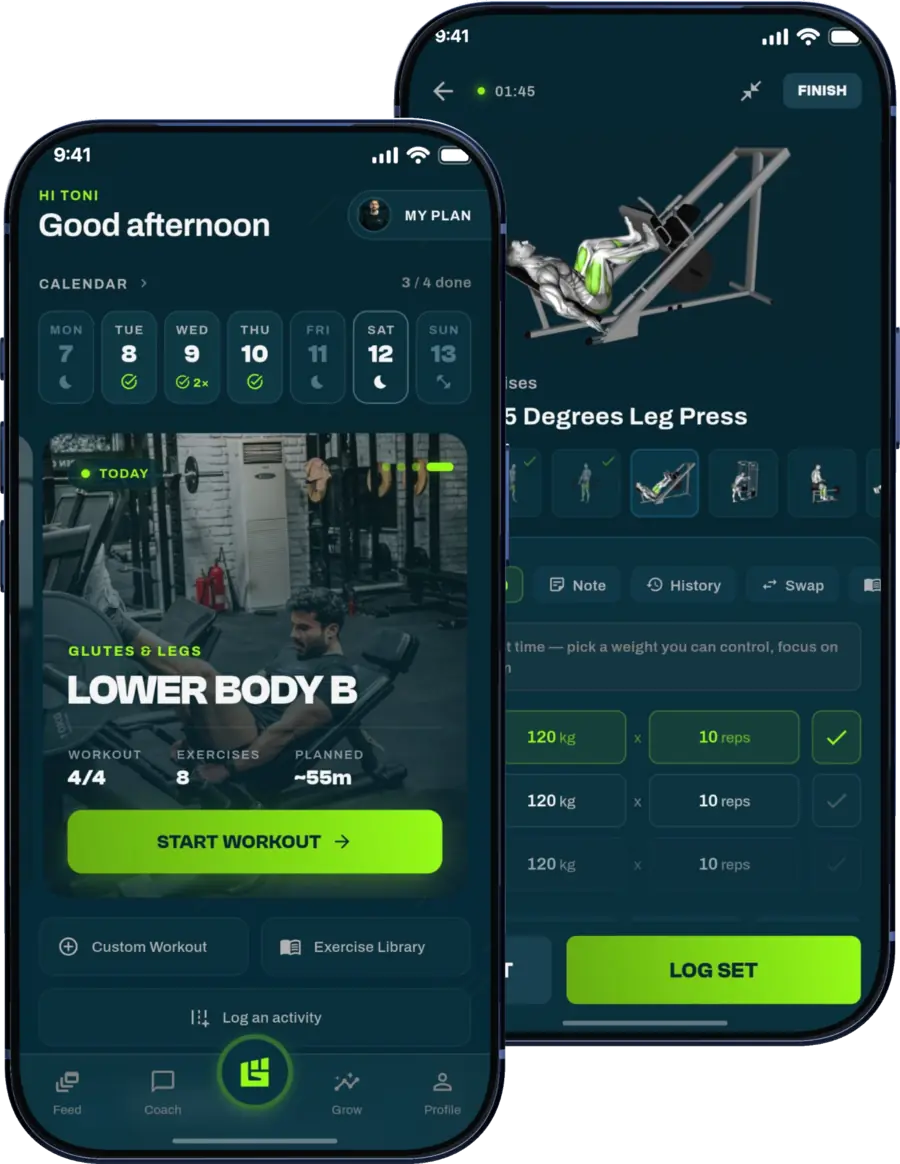
Get a personalized workout plan built around your goal, equipment and schedule. Train smarter, track every rep and keep moving forward, one workout at a time.






Before we dive into the specific workouts, it's helpful to understand the core concepts that make these shorter sessions so effective. They're not just random exercises thrown together; they're based on fundamental training principles that drive results.
Core principles of an effective 30 minute workout
A quick look at the fundamental concepts that make a 30-minute session so powerful for achieving your fitness goals.
| Principle | What It Means for You | Why It Matters in 30 Minutes |
|---|---|---|
| Intensity over Duration | The effort you put into each rep is more important than the total time spent training. | With only 30 minutes, you have to make every second count. High intensity ensures you're creating enough stimulus for change. |
| Progressive Overload | You must continually challenge your muscles by gradually increasing weight, reps, or difficulty over time. | This is the engine of all progress. Even in short workouts, you must push for more to keep your body adapting and growing stronger. |
| Metabolic Stress | Shorter rest periods and intense effort create a metabolic environment that promotes muscle growth and fat loss. | This maximizes your calorie burn during and after the workout, creating the "afterburn effect." |
| Compound Movements | Exercises that work multiple muscle groups at once (like squats or push-ups) give you more bang for your buck. | They are time-savers, hitting more muscles in less time, which is essential when the clock is ticking. |
These principles are the bedrock of the workout plan. By focusing on them, you ensure that even a brief session delivers a powerful stimulus for change. It's about the quality of the work, not just the quantity of time.
Unlocking the afterburn effect
One of the biggest perks of an intense 30 minute workout plan is how it revs up your metabolism. This is thanks to a phenomenon known as Excess Post-exercise Oxygen Consumption, or EPOC. You can just call it the "afterburn effect."
After a challenging session, your body has to work harder to get back to its normal resting state. This recovery process demands oxygen and burns extra calories for hours after you've stopped exercising. High-intensity workouts create a much bigger EPOC effect than low-intensity, steady-state cardio.
This means your 30-minute workout doesn't just burn calories while you're training—it keeps your metabolism elevated for the rest of the day. It’s a powerful way to make your workout work for you long after you’ve left the gym. At GrabGains, we design programs that use these principles to help you train smarter and see faster progress.
The anatomy of a perfect 30-minute session
To get the most out of a 30-minute workout plan, every second needs a purpose. A powerful session isn’t just a random collection of exercises; it’s a structured, three-part sequence designed to maximize performance, safety, and recovery in a tight timeframe.
Think of your workout like a short story with a clear beginning, middle, and end. Skipping the beginning (the warm-up) leaves you unprepared, while ignoring the end (the cooldown) gives you no resolution. Each phase is critical.
Start with a dynamic warm-up
The first five minutes are arguably the most important. You can’t just walk into a workout cold and expect your body to perform at its best. A proper warm-up isn't about holding static stretches; it’s about actively preparing your body for the work ahead.
The goal here is dynamic movement. You're moving your joints through their full range of motion, getting blood flowing to your muscles, and waking up your central nervous system. Think of it as telling your body, "It's time to work."
A simple yet effective dynamic warm-up could include:
- Arm Circles: 30 seconds forward, 30 seconds backward. This lubricates the shoulder joints, which is crucial for any pressing or pulling.
- Leg Swings: 30 seconds per leg, swinging forward-and-back, then side-to-side. This opens up your hips and readies your hamstrings.
- Bodyweight Squats: 10-15 reps to activate your glutes, quads, and core.
- High Knees & Butt Kicks: 30 seconds of each to get your heart rate up.
This small investment of time dramatically reduces your risk of injury and allows you to lift heavier and move better from the very first rep.
The heart of the workout: compound movements
With your body primed, it's time for the main event: the next 20 minutes. This is where you’ll build strength and burn calories. The secret to efficiency here is prioritizing compound movements.
Compound exercises are multi-joint movements that work several muscle groups at the same time. This is the ultimate "bang for your buck" strategy in a 30-minute workout plan. Instead of isolating a single muscle with an exercise like a bicep curl, you’ll perform movements that recruit your entire body.
By focusing on compound lifts, you're not just saving time—you're creating a greater metabolic demand, which leads to more calories burned both during and after your session. It’s the difference between targeted work and a total-body effort.
For example, a squat doesn’t just work your quads; it engages your glutes, hamstrings, and core. A bent-over row hits your back, biceps, and rear delts. For an in-depth look at exercises that build strong, balanced shoulders, you can check out our guide on shoulder exercises. This approach ensures you're training your body as an integrated system, which is how it functions in real life.
Finish strong with a strategic cooldown
The final five minutes are all about bringing your body back to a state of rest and kickstarting the recovery process. Your heart rate is high, and your muscles are fatigued. Stopping abruptly can cause dizziness, so a gradual cooldown is essential.
This phase is about slowing things down. Start with a few minutes of light activity, like walking or gentle cycling, to allow your heart rate to decrease gradually.
After that, transition into static stretching. Unlike the dynamic movements in your warm-up, this involves holding a stretch for 20-30 seconds. This is the perfect time to do it because your muscles are warm and pliable. Focus on the major muscle groups you just worked, like your chest, back, hamstrings, and quads. This helps improve flexibility, reduce muscle soreness, and calm your nervous system down.
Your weekly 30 minute workout schedule
Alright, you know what a solid 30-minute session looks like. Now it’s time to string those sessions together into a smart, repeatable weekly plan. This is where the real results happen. Below are three different workouts you can slot into your week, each built to get the most out of every minute.
Think of this as a flexible framework, not a rigid set of rules. You can mix and match these workouts based on your main goal, whether that's building all-around strength, shedding fat, or zeroing in on specific muscle groups. The name of the game is consistency.
Workout 1: full-body strength
This session is your bread and butter. A full-body strength workout is one of the most efficient ways to train because you hit every major muscle group in one go. By focusing on big, compound movements, you create a huge metabolic demand, which is a win-win for both building muscle and burning fat.
Here’s a simple but brutal structure for your full-body day:
- Goblet Squats: 3 sets of 8-12 reps. A fantastic compound move for your entire lower body.
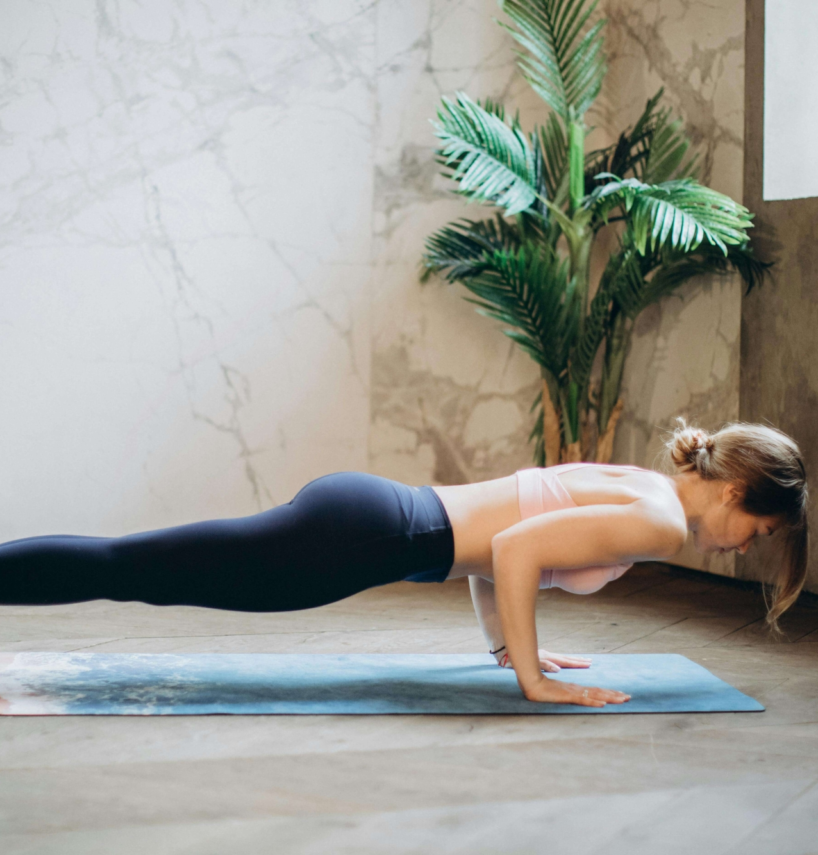
- Push-Ups: 3 sets to failure (as many good-form reps as you can grind out).
- Dumbbell Rows: 3 sets of 8-12 reps per arm. This will hammer your entire back and biceps.
- Glute Bridges: 3 sets of 15-20 reps.
- Plank: 3 sets, holding for 30-60 seconds.
Aim for 60-90 seconds of rest between sets. No dumbbells? No problem. Use a kettlebell for the squats, or even just your bodyweight. You can swap dumbbell rows for inverted rows using a sturdy table. This workout builds the foundation for everything else.
Workout 2: HIIT and core
High-Intensity Interval Training (HIIT) is your secret weapon for torching calories when you're short on time. This workout is all about short, explosive bursts of effort followed by brief recovery periods. We’ll cap it off with some targeted core work to build a rock-solid midsection.
This session is meant to be fast and uncomfortable. The goal is to push your limits during those "work" intervals.
Here's the plan for your HIIT and Core day:
- Jumping Jacks: 45 seconds on, 15 seconds rest.
- Mountain Climbers: 45 seconds on, 15 seconds rest.
- Burpees: 45 seconds on, 15 seconds rest.
- High Knees: 45 seconds on, 15 seconds rest.
Run through that circuit 3 times, taking a 60-second breather between each full round. Once you’ve survived the HIIT, jump straight into this core finisher:
- Leg Raises: 3 sets of 15 reps.
- Russian Twists: 3 sets of 20 reps (10 per side).
- Bicycle Crunches: 3 sets of 30 reps (15 per side).
Keep the rest between core exercises minimal. We want to keep that intensity sky-high.
The real magic of HIIT is what happens after you’re done. The "afterburn effect" (known as EPOC) keeps your metabolism running hot for hours, making it an incredible tool for fat loss on a tight schedule.
The simple flowchart below shows the three non-negotiable parts of every effective 30-minute session.
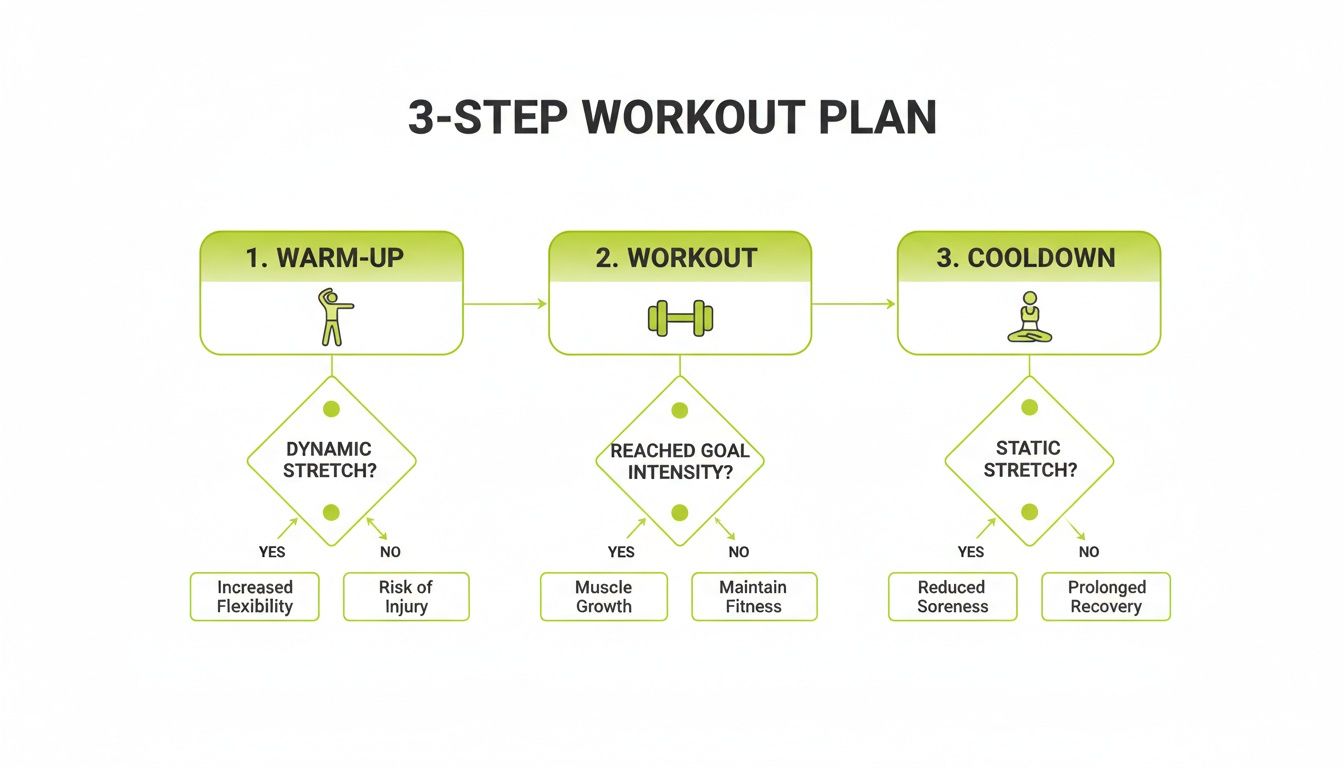
This just drives home the point: a great workout isn’t just about the main event. It’s a complete cycle of prep, effort, and recovery, all packed into your half-hour slot.
Workout 3: upper and lower split
If you're looking to give specific muscle groups a bit more attention, an upper/lower split is a fantastic choice. Instead of training your whole body every time, you’ll dedicate one workout to your upper body and another to your lower body. This lets you increase the volume and intensity on those target muscles, which is a great trigger for growth.
You’ll simply alternate these sessions through the week. For instance, hit Upper Body on Monday and Lower Body on Wednesday.
Upper Body Day:
- Dumbbell Bench Press: 3 sets of 8-12 reps. (Push-Ups are a solid alternative).
- Bent-Over Rows: 3 sets of 8-12 reps.
- Overhead Press: 3 sets of 8-12 reps.
- Bicep Curls to Arnold Press: 3 sets of 10 reps.
Lower Body Day:
- Romanian Deadlifts: 3 sets of 8-12 reps.
- Walking Lunges: 3 sets of 10-12 reps per leg.
- Calf Raises: 3 sets of 15-20 reps.
- Wall Sit: 3 sets, hold for as long as you possibly can.
Splitting your training this way is also smart for recovery. While your upper body is resting, you can hammer your legs, and vice versa. For more ways to effectively target your lower body, check out our deep dive on powerful leg exercises.
Putting it all together: a sample weekly schedule
So, how does this all fit into a real week? It really depends on how many days you can train. Let's start with a simple, effective three-day-a-week schedule that delivers great results while giving you plenty of time to recover.
Here’s a look at how you could structure your week for the best results and recovery.
Sample weekly 30 minute workout split
| Day | Workout Focus | Primary Goal |
|---|---|---|
| Monday | Workout 1 (Full-Body Strength) | Build foundational strength and muscle |
| Tuesday | Active Recovery (Walk, Stretch) | Promote blood flow and reduce soreness |
| Wednesday | Workout 2 (HIIT and Core) | Boost metabolism and build core stability |
| Thursday | Active Recovery | Aid muscle repair and preparation |
| Friday | Workout 1 (Full-Body Strength) | Increase strength and weekly volume |
| Saturday | Rest or Light Activity | Full recovery |
| Sunday | Rest or Light Activity | Full recovery |
This schedule gives you two solid strength days and a high-intensity cardio session to keep your metabolism fired up. Don't skip those active recovery days—they're just as crucial for reducing soreness and getting you ready for the next workout.
Fueling your fitness in less time
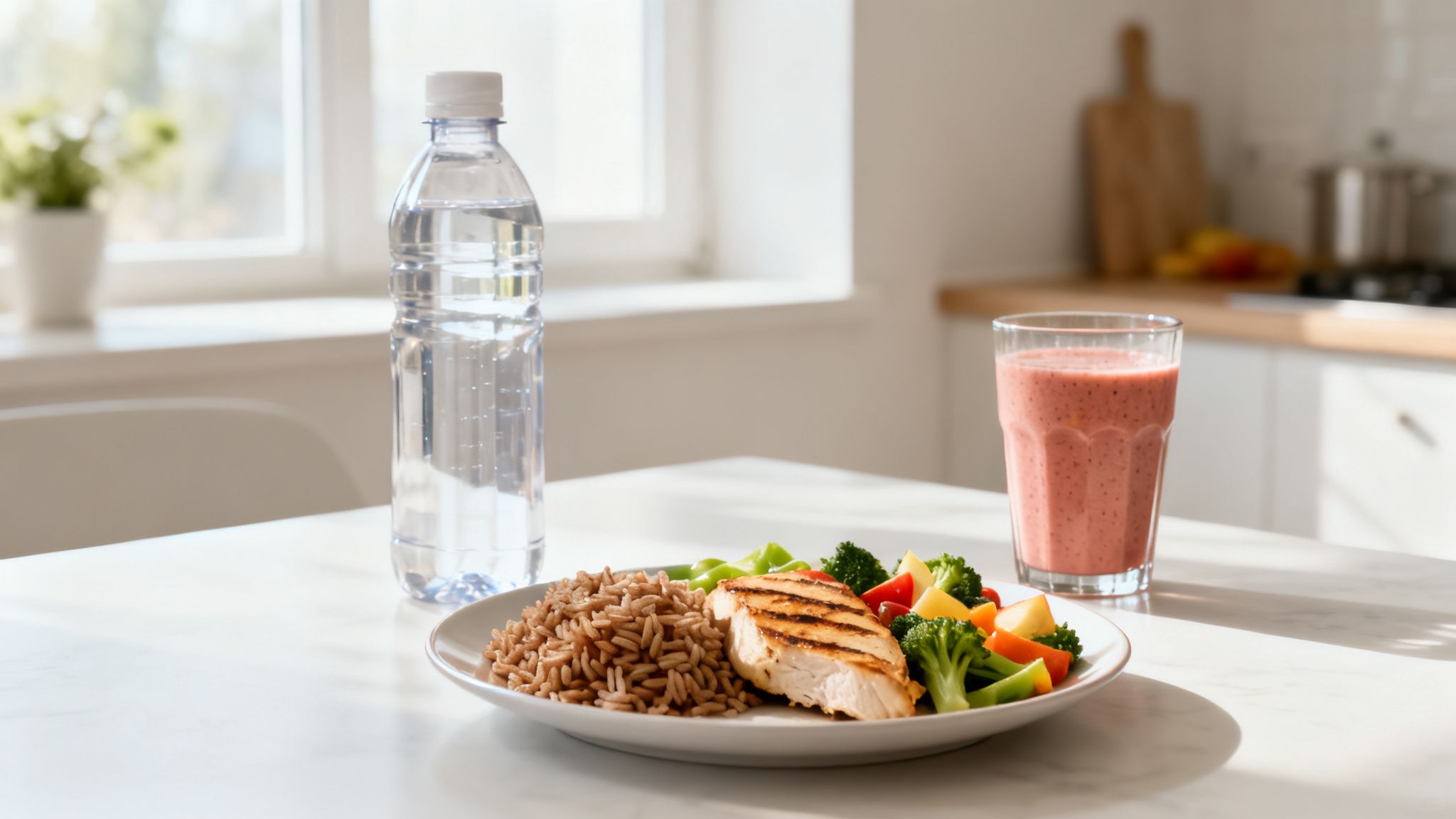 Intense, efficient workouts need smart nutrition to back them up. When you're crushing it in a short amount of time, what you eat before and after your session suddenly becomes a game-changer for energy, performance, and recovery. Let's be real: you can't get the most out of a powerful 30 minute workout plan running on fumes or without the right stuff to repair your muscles.
This isn't about getting bogged down with complicated meal plans. It’s about simple, practical principles to fuel your body correctly so you can make every single minute count. Think of your food as the essential support crew for your training.
Pre-workout fuel for peak performance
Timing is everything when it comes to your pre-workout snack. The goal is to give your body easy-to-access energy without making you feel weighed down or sluggish. For most people, eating a balanced snack or a small meal about 60-90 minutes before you start is the sweet spot.
This meal should be mostly simple carbs with a little bit of protein. Carbs are your body's go-to energy source, and this tops off your glycogen stores to power you through those tough sets. The protein is there to get your muscles ready for the work ahead and can help reduce muscle breakdown.
Here are a few simple, no-fuss pre-workout ideas:
- A banana with a spoonful of peanut butter
- A small bowl of oatmeal with some berries
- A slice of whole-wheat toast with avocado
- An apple with a handful of almonds
These options deliver sustained energy without sitting heavy in your stomach. Definitely steer clear of big, high-fat meals right before training—they take ages to digest and will just leave you feeling tired.
Post-workout recovery and repair
That 30-60 minute window right after your workout? It’s often called the "anabolic window," and for good reason. This is prime time for kickstarting muscle repair and restocking the energy you just torched. Your post-workout meal should nail two things: protein and carbs.
Protein gives your body the amino acids it needs to repair the micro-tears in your muscles from training, which is literally how they get stronger. The research is pretty clear that getting 20-30 grams of quality protein after a workout really fires up muscle protein synthesis.
Carbs are just as critical. They get to work refilling the glycogen stores you used up, which is essential for recovery and getting your body ready for the next session. A 2:1 or 3:1 ratio of carbs to protein is a solid target for most people.
"Think of post-workout nutrition as refueling and rebuilding. Protein is the brick, and carbohydrates are the mortar. You need both to repair the structure efficiently and build it back stronger than before."
Simple and effective post-workout meals look like this:
- A protein shake with a banana blended in
- Grilled chicken breast with a side of sweet potato
- Greek yogurt topped with fruit and a bit of granola
- Scrambled eggs with a slice of whole-grain toast
Hydration is non-negotiable
This one gets overlooked all the time, but proper hydration is the foundation of good performance. Even being slightly dehydrated can tank your strength, focus, and endurance, making that 30 minute workout plan feel way harder than it needs to be.
Don't just chug water during your workout; sip it consistently throughout the day. A good guideline is to drink 16-20 ounces of water a couple of hours before you train, then another 8-10 ounces about 20 minutes before you start. During the workout, take sips between sets, and make sure you rehydrate well afterward to replace everything you lost through sweat.
How to keep making progress and avoid plateaus
The real test of any fitness plan isn’t getting started—it’s what you do in week four, week eight, and beyond when the initial excitement wears off. Your body is incredibly smart and adapts quickly.
The exercises that felt tough on day one will eventually become your new normal. If you don't adjust, your progress will grind to a halt. This is the dreaded plateau.
Avoiding this stall isn't about randomly working harder; it's about working smarter by consistently giving your body a new reason to adapt. The key to long-term success with your 30 minute workout plan is a simple but powerful principle called progressive overload.
The golden rule of gains: progressive overload
Progressive overload is the foundation of all strength and muscle gain. It just means gradually increasing the stress you place on your body during training. If you don't continually challenge your muscles, they have no reason to grow stronger.
Think of it like this: if you lift a 20-pound dumbbell for 10 reps today, your body adapts to handle that specific stress. If you come back next week and do the exact same thing, your body thinks, "Been there, done that," and has no incentive to change. You have to give it a slightly harder task to conquer.
Smart ways to apply progressive overload
Increasing the challenge doesn't always mean grabbing a heavier weight, though that's a great option. There are several ways to apply progressive overload, making it adaptable for any fitness level or equipment setup.
Here are the most effective methods to use:
- Increase the Weight: This is the most straightforward method. If you hit all your reps on goblet squats with a 30-pound dumbbell, try a 35-pounder next week.
- Increase the Reps: Don't have heavier weights? No problem. If you managed 8 push-ups last week, fight for 9 or 10 this week. More reps with the same weight is still progress.
- Increase the Sets: Adding another round of work is a great way to increase total volume. Doing 4 sets of an exercise instead of 3 is a significant jump that signals your muscles to adapt.
- Decrease Rest Time: Want to ramp up the intensity? Shorten your rest periods. If you normally rest for 90 seconds, try cutting it to 75. Your muscles will feel the difference.
The goal isn't to change everything at once. Pick just one of these methods for a specific exercise and focus on improving it week over week. Consistent, small steps forward are what lead to massive transformations over time.
Why you must track your workouts
You can't progress what you don't measure. "Going by feel" is a recipe for stagnation because it's nearly impossible to remember exactly what you lifted or how many reps you did last Tuesday.
A simple workout log is your most powerful tool for ensuring you're applying progressive overload. It doesn’t need to be fancy—a note on your phone or a small notebook works perfectly.
For each workout, jot down the exercises, weight, sets, and reps you completed. Before your next session, take 30 seconds to review your last performance. Your mission is simple: beat yesterday's numbers. This turns every workout into a mini-challenge and gives you a clear, objective target to hit.
If you're looking for new movements to add to your routine, check out our library for some great compound back movements to track.
Breaking through a stubborn plateau
Even with consistent tracking, you might eventually hit a wall where adding another rep or more weight feels impossible. This is completely normal. When it happens, you have a few options to shake things up and get back on track.
One of the most effective strategies is a deload week. This means reducing your training intensity for a week—either by using lighter weights or cutting your volume in half. It gives your body and central nervous system a much-needed break to fully recover, often allowing you to come back stronger.
This approach reinforces the idea that intensity often matters more than duration. Recent studies even show that short, intense workouts benefit your health, proving that brief, powerful efforts are fantastic drivers of fitness.
Common questions about 30 minute workouts
Jumping into a new routine always kicks up a few questions. When it comes to making a 30 minute workout plan a real part of your life, you want to know it’s actually going to work for your goals. We've tackled the most common ones below to clear up any doubts.
These are the practical, real-world answers you need before you even start your first session.
Can I really build muscle with only 30 minute workouts?
Yes, absolutely. The trigger for muscle growth isn't how long you spend in the gym—it's the intensity of the work you put in. To build muscle, you have to push your muscles close to failure, creating a stimulus that forces them to adapt and get stronger.
A well-designed 30 minute workout plan cuts out the fluff and makes you focus on high-quality, challenging sets. As long as you consistently apply progressive overload—lifting heavier, adding reps, or making the exercise harder over time—you’re giving your muscles the exact signal they need to grow. It’s just as effective as many longer, less focused workouts. For some great examples, check out our library of effective chest exercises that you can easily slot into your plan.
How many days a week should I do this workout?
For most people, aiming for 3 to 4 sessions a week is the sweet spot. This gives your muscles enough stimulus to drive progress without running you into the ground. It also leaves you with crucial recovery time, which is when the real repair and growth happens.
Consistency is always better than frequency. It's far more effective to nail three great workouts every week than to half-heartedly attempt five and burn out.
Listen to your body. If you’re feeling wiped out or unusually sore, taking an extra rest day isn’t weakness—it's a smart move that prevents injuries and supports long-term gains.
What if I only have dumbbells or no equipment?
No problem at all. This plan is designed to be flexible, so not having a full gym won't hold you back. For pretty much every barbell or machine exercise, there's a bodyweight or dumbbell alternative that hits the same muscles just as hard.
Here are a few easy swaps:
- Barbell Bench Press: You can switch this for a dumbbell bench press or some challenging push-up variations.
- Barbell Back Squat: A dumbbell goblet squat or bodyweight pistol squat progressions are perfect replacements.
- Cable Rows: Single-arm dumbbell rows are a fantastic substitute you can do anywhere.
The principles of intensity and progression don't care what you're lifting. They work just as well with your own body weight as they do with a heavy barbell.
How quickly can I expect to see results?
Everyone's body responds a bit differently, but you can generally expect to feel stronger and have more energy within the first 2 to 4 weeks of consistent training. These initial improvements are mostly neurological—your brain just gets better at telling your muscles what to do.
Visible changes, like more muscle definition or a noticeable shift in how your clothes fit, typically start showing up after 6 to 8 weeks. Of course, this all depends on how consistent you are with your workouts and whether your nutrition is supporting your efforts. The best way to stay motivated is to track your progress and watch your strength numbers climb week after week.
Ready to stop guessing and start progressing with a plan that adapts to you? The GrabGains app uses AI to build truly personalized workouts that evolve with your performance. With over 350 exercises, smart progress tracking, and plans for every goal, it's like having a personal trainer in your pocket. Pre-register today and be the first to train smarter, not longer.
Get inspired and motivated