Why your arms aren't growing: The ultimate guide to building bigger biceps and triceps
Are your arms not growing despite consistent training? Uncover expert tips, proven routines, and nutrition advice to finally build bigger biceps and triceps. If you feel like your arms are completely stalled no matter how hard you train, you are not alone. This frustrating plateau usually comes down to a few key mistakes: not enough training volume, poor exercise selection, or a lack of progressive overload. Fixing this is about training smarter, not just harder.
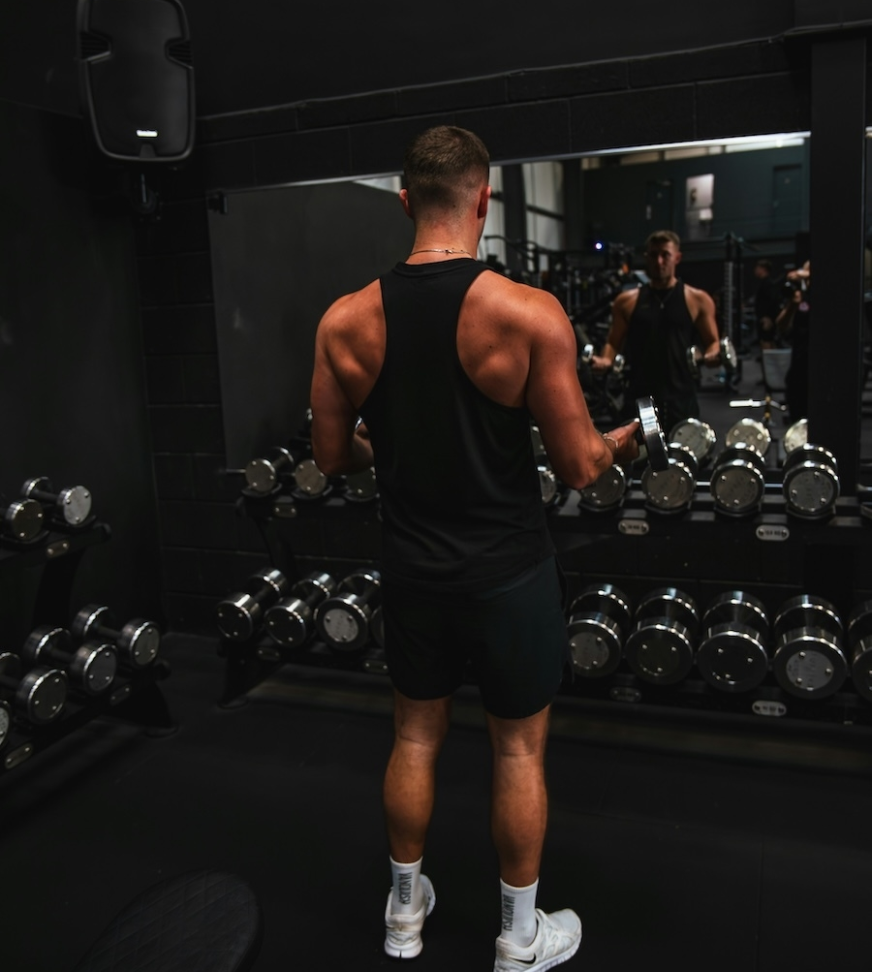
Why your arms are Not growing despite your efforts
It's one of the most common frustrations in any gym. You're hitting curls and pushdowns every week, but the tape measure just won't budge. You see other people making progress while your arms seem stuck in a stubborn holding pattern.
That feeling can be incredibly demotivating, but the good news is that the solution is almost always within your control. The problem is rarely a lack of effort; it's usually how that effort is being applied.

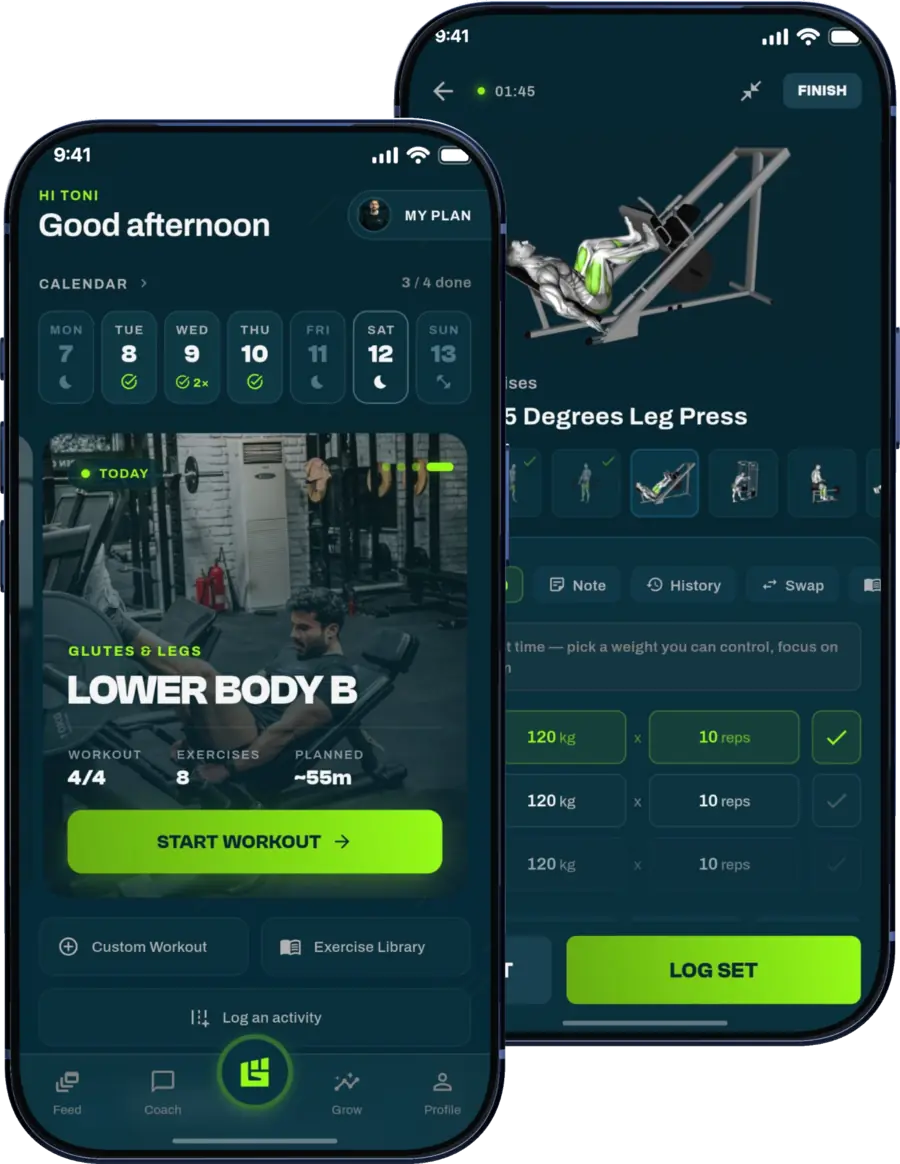
Built for progress
Take the guesswork out of training
Get a personalized workout plan built around your goal, equipment and schedule. Train smarter, track every rep and keep moving forward, one workout at a time.






This "arms not growing" phenomenon is surprisingly widespread. While genetics do play a role, most issues stem from correctable training errors. Many people simply are not creating a strong enough signal to force their biceps and triceps to adapt and grow.
Diagnosing the Problem
Understanding why you have hit a plateau is the first real step toward fixing it. Your arm muscles, especially the biceps and triceps, are smaller than big muscle groups like your back or legs. This means they respond differently to training and are more sensitive to mistakes in programming, nutrition, and recovery.
Before you can build a better plan, you need to identify what's holding you back. The table below summarizes the most common culprits.
Top Reasons Your Arms Aren't Growing
| Problem Area | Common Mistake | Quick Fix |
|---|---|---|
| Training Volume | Doing too few sets per week (under 10-12 direct sets). | Increase to 15-20+ high-quality sets for biceps and triceps weekly. |
| Technique | "Ego lifting" with momentum, swinging, and poor form. | Lower the weight and focus on a full range of motion with a strong squeeze. |
| Exercise Choice | Sticking to the same 2-3 exercises forever. | Rotate exercises every 4-8 weeks to introduce new stimulus. |
| Progression | Lifting the same weight for the same reps every week. | Add weight, reps, or sets over time to force adaptation. |
| Frequency | Training arms only once a week. | Hit arms directly 2-3 times per week with lower volume per session. |
Here are the most frequent issues stalling arm development:
- Insufficient Volume: You might simply not be doing enough work. Smaller muscles often need direct, focused attention with plenty of sets and reps to get the message to grow.
- Poor Form: Using momentum or "ego lifting" shifts tension away from your biceps and triceps and onto bigger, stronger muscles like your shoulders and back.
- Lack of Variety: Sticking to the same two or three exercises for months on end lets your muscles adapt, which grinds progress to a halt. Your body needs new stimuli to grow.
The most common mistake is performing endless sloppy reps with heavy weight. Quality will always beat quantity. If your shoulders are shrugging and your back is swinging during a bicep curl, you're training your ego, not your arms.
One often overlooked reason for lagging arms is a weak grip that limits how much weight you can handle on key lifts. Sometimes, a simple fix can help you improve your grip for max performance and finally unlock new gains.
By addressing these common pitfalls, you can turn your frustration into real, measurable progress.
Conducting Your Personal Arm Growth Audit
If your arms have stopped growing, the answer is not to just throw more random exercises at them. It’s time to stop guessing and start investigating. We need to become a detective and figure out exactly what’s causing the plateau.
This audit is about getting honest data on what you are actually doing in the gym, not what you think you are doing. By taking an objective look at your habits, we can pinpoint the real roadblocks and build a targeted plan that finally sparks new growth.

Analyze your training volume and frequency
Training volume—your total number of hard sets—is a huge driver of muscle growth. But more isn't always better. Too little, and your arms have no reason to adapt. Too much, and you will crush your ability to recover, killing your progress before it starts.
For most people, the sweet spot for direct arm work is somewhere between 10 to 20 hard sets per week for both your biceps and triceps. If your arms are a stubborn weak point, you might need to push toward the higher end of that range.
Let's get some real numbers. Grab a notebook or open a notes app and track every single direct arm set you perform for one full week. Be brutally honest with yourself.
- Bicep Sets: How many total sets of curls did you actually complete?
- Tricep Sets: How many total sets of pushdowns, extensions, and close-grip presses did you do?
- Training Frequency: On how many separate days did you hit arms directly?
If your weekly total for either muscle is under 10 sets, you have probably found a major reason for the stall. On the flip side, if you're hammering out 30+ sets a week and still not seeing results, your problem is likely poor recovery or a lack of intensity in those sets.
Scrutinize your lifting technique
This is where ego gets in the way of gains. Piling on too much weight forces other muscles to take over, effectively stealing the tension right off your biceps and triceps. If you're swinging the weight on curls or heaving with your chest and shoulders on pushdowns, your arms are not getting the stimulus they need to grow.
The single best way to check your form? Film yourself.
Set up your phone and record a set of preacher curls or tricep extensions. Watch it back. Are your shoulders staying locked down? Is your torso rigid, or are you using momentum to start the lift?
Focus on the mind-muscle connection. Every rep should be deliberate. You need a controlled negative (the lowering phase) and a powerful squeeze at the top. If you can’t feel the target muscle burning, the weight is too heavy. Drop it by 20-30% and focus entirely on perfect execution.
Evaluate Your Exercise Selection
Doing the same three exercises for months is a recipe for stagnation. Your muscles are incredibly adaptive; once they master a specific stressor, they have zero incentive to keep growing. A smart audit means looking at the variety and purpose of every exercise in your routine.
Look at your training log. Are all your bicep movements just standard standing curls? Are all your tricep exercises some form of pushdown? Your arms are more complex than that.
- For Biceps: Make sure you are hitting the muscle from different angles. You need a movement with your arms in front of your body (like preacher curls), one with your arms behind you (like incline dumbbell curls), and one with your arms at your sides (like hammer curls).
- For Triceps: A complete tricep workout includes an overhead movement to stretch the long head (like overhead extensions), a pressing movement (like a close-grip bench press), and a pushdown movement.
If your routine is missing this variety, you are leaving gains on the table. Sometimes, just swapping one or two exercises for new variations is enough to kickstart a fresh wave of growth. By auditing these three areas—volume, technique, and exercise choice—you will move from frustrating guesswork to a clear, data-driven plan for bigger arms.
The Blueprint for building biggerarms
Alright, you have taken a hard look at what you are currently doing. Now it's time to build a smarter plan. Getting your arms to grow is not about mindlessly adding more curls—it's about applying the core principles of muscle growth directly to your biceps and triceps.
If your arms have hit a wall, the fix is almost always found in a structured, no-nonsense approach to your training. This means we are moving past random workouts and doubling down on the three pillars of hypertrophy: frequency, volume, and intensity. When you get these right, you create the exact stimulus your arms need to finally start growing.
Master Your Training Frequency and Volume
One of the most common mistakes is lifters hammering their arms just once a week. A dedicated "arm day" might feel productive, but a more frequent approach delivers better results. Hitting your arms 2-3 times per week keeps them in a near-constant state of repair and growth. This doesn't mean doing three marathon arm sessions. Instead, you'll split your total weekly work into smaller, more effective workouts.
Speaking of work, how much is enough? For stubborn muscles, you have to provide a strong enough signal to grow.
- Biceps: Aim for 12-20 total direct sets per week.
- Triceps: Aim for 12-20 total direct sets per week.
So, if you train arms twice a week, each session might have 6-10 sets for biceps and another 6-10 for triceps. This lets you attack each workout with higher intensity without the junk volume that just leads to fatigue.
Calibrate your training intensity
All the volume in the world will not matter if your sets are not genuinely hard. For many people, intensity is the missing piece of the puzzle. You have to train close to muscular failure—the point where you can't squeeze out another rep with good form.
A great way to measure this is using the Rate of Perceived Exertion (RPE) scale.
On a scale of 1 to 10, your working sets need to live in the 7-9 RPE range. A 7 RPE means you have three good reps left, an 8 means two, and a 9 means just one rep left in the tank. True failure (a 10 RPE) should be saved for the very end of a training block, if at all.
If you finish a set of 12 and feel like you could have knocked out five more, your intensity is too low to force your arms to grow. Add weight or reps until you are consistently working in that sweet spot.
Apply intelligent progressive overload
Progressive overload is the golden rule of getting bigger and stronger. To grow, you must constantly challenge your muscles with more than they are used to. But simply piling on more weight is just one way to do it.
Here are a few ways to apply progressive overload to your arm training:
- Add Reps: Did 10 reps last week with 30 lbs? Aim for 11 or 12 this week with the same weight.
- Add Weight: Once you can hit 12 clean reps, bump the weight up and aim for 8-10 reps.
- Improve Form: Slowing down the negative (the lowering part of the lift) or adding a one-second squeeze at the top increases time under tension, creating a powerful new stimulus.
- Decrease Rest: Shaving your rest time between sets from 90 to 75 seconds makes the whole workout more demanding.
Track every workout. You can't know what to beat if you don't know what you did last time. This is where a good training log or an advanced tool from a site like GrabGains can be a game-changer, automatically tracking your progress and suggesting what to do next.
Don’t forget about recovery and periodization
You can have the most dialed-in training plan on the planet, but it's worthless without proper recovery. You do not grow in the gym; you grow when you rest. Recovery is not optional—it is what turns your hard work into actual muscle.
Getting less than 7 hours of sleep can tank your growth hormone production, and skipping deloads can seriously blunt your gains over time.
Finally, you cannot redline your training forever. Periodization is just a fancy term for planning your training in cycles to avoid burnout and keep progressing. A simple way to do this is to train hard for 3-4 weeks, then take a "deload" week where you cut your volume and intensity by 40-50%. This deload week gives your body and nervous system a chance to fully recover, so you can come back even stronger for the next push.
Choosing the the right exercises for biceps and triceps
If your arms have stopped growing, your exercise selection is almost always the first place to look. Just showing up and mindlessly repping out the same old barbell curls will not force new growth. You need to be more strategic.
Breaking through a plateau means choosing movements that challenge your biceps and triceps from multiple angles and with different kinds of tension. You have to hit the muscles from all sides to build them bigger and stronger—targeting the bicep's long head for that coveted peak or the tricep's long head for sheer mass.
Bicep exercises for complete development
A well-rounded bicep workout does not just mean doing more curls. It means hitting the muscle from three distinct positions: with your arms in front of your body, at your sides, and behind your body. This ensures you are stressing the bicep through its full range, which is critical for unlocking new growth.
Here are some of the most effective movements for each position:
- Arms in Front (Shortened Position): Exercises like preacher curls (barbell or dumbbell) and concentration curls are perfect here. They put maximum tension on the bicep when it’s fully squeezed, helping build that prominent peak. The trick is to keep your upper arm completely locked in place so your shoulder cannot cheat.
- Arms at Your Sides (Mid-Range): This is your bread and butter. Classic standing dumbbell curls and barbell curls own this category. For a slightly different stimulus, hammer curls bring the brachialis and brachioradialis into play, which builds thickness and makes your entire arm look more substantial.
- Arms Behind (Stretched Position): Movements like incline dumbbell curls are the undisputed king here. When you lie back on an incline bench, your arms hang behind your torso, placing a deep stretch on the long head of the bicep before you even start the curl. This stretch-mediated hypertrophy is an incredibly powerful growth stimulus.
The secret to a great bicep workout is not a long list of exercises. It's choosing one highly effective exercise from each of these three categories and executing it with flawless form and high intensity.
By cycling through these different curl variations, you introduce new stressors to the muscle. This intentional variety is often the missing ingredient for anyone struggling with stagnant arm growth.
Tricep exercises for building mass
Let’s get one thing straight: the triceps make up roughly two-thirds of your upper arm mass. If you want bigger arms, building powerful triceps is non-negotiable. And just like with biceps, a complete tricep routine should include exercises that hit all three heads, especially the large long head.
To do this right, you need a mix of overhead movements, heavy presses, and pushdown variations.
- Overhead Movements (Stretched Position): Any exercise where your arm goes overhead puts a massive stretch on the long head of the tricep. Overhead dumbbell extensions (with one or two hands) and overhead cable extensions are fantastic choices. These are your primary mass-builders for the triceps, period.
- Pressing Movements: These are your pure strength builders. Close-grip bench presses and dips (on parallel bars or a bench) allow you to move serious weight and overload the triceps. These compound movements hammer all three heads and are fundamental for building dense, powerful arms.
- Pushdown Movements (Contracted Position): Standard cable pushdowns (with a rope or bar) are great for isolating the lateral and medial heads of the tricep. They allow for a rock-solid peak contraction and are perfect for finishing off your workout with a high-rep pump.
Bicep and tricep exercise variation comparison
Knowing why you are doing an exercise is just as important as doing it. Are you trying to build your bicep peak, add overall arm mass, or just get stronger? This table breaks down some of the best choices to help you build a smarter routine.
| Exercise | Primary Target | Key Benefit |
|---|---|---|
| Incline Dumbbell Curl | Biceps (Long Head) | Creates a deep stretch, promoting growth in the bicep peak. |
| Preacher Curl | Biceps (Short Head) | Provides intense peak contraction for a fuller-looking muscle. |
| Hammer Curl | Brachialis & Biceps | Builds arm thickness and forearm size for a more powerful look. |
| Overhead Extension | Triceps (Long Head) | Stretches the largest part of the triceps, crucial for overall mass. |
| Close-Grip Bench Press | All Tricep Heads | Allows for heavy overload, building foundational strength and density. |
| Rope Pushdown | Triceps (Lateral Head) | Great for isolation and achieving a strong squeeze to define the outer tricep. |
The key takeaway is that variety needs a purpose. Do not just do different exercises for the sake of it. Understand exactly why you are choosing a particular movement and how it fits into your master plan to finally get your arms growing again.
Fueling your growth with smart nutrition and recovery
All the hard work you put in at the gym is just the starting point. Lifting weights breaks down muscle tissue, but the real growth happens outside the gym—powered by what you eat and how you recover. If your arms have hit a wall, it’s time to get as serious about your food and sleep as you are about your curls.
You can have the most dialed-in training plan on the planet, but without the right building blocks, your body simply cannot construct new muscle. It’s like sending a construction crew to a job site with no bricks. Let’s make sure your crew is fully supplied.
The non-negotiable calorie surplus
To build muscle, you have to be in a calorie surplus. It’s non-negotiable. This just means eating more calories than your body burns each day. Your body needs that extra energy to fuel the demanding process of repairing the micro-tears from training and synthesizing new muscle tissue.
A classic mistake is trying to stay shredded while building bigger arms by keeping calories too low. For consistent growth, a modest surplus of 250-500 calories above your daily maintenance is the sweet spot. This provides just enough fuel for muscle gain without packing on excessive body fat.
Macronutrients: The building blocks
Once your calorie target is set, you need to look at where those calories come from: protein, carbs, and fats. Each one has a specific job to do.
- Protein: This is literally what your muscles are made of. Without enough protein, your body can’t repair and build bigger arms. You should be eating 0.8 to 1 gram of protein per pound of body weight every single day. For a 180-pound person, that’s 144-180 grams.
- Carbohydrates: Carbs are your body's preferred fuel source. They give you the energy for intense arm workouts and replenish your muscle glycogen stores afterward. Do not be afraid of carbs; they are critical for growth and recovery.
- Fats: Healthy fats are essential for producing key hormones like testosterone, which plays a massive role in muscle building. They also support your overall health and help your body absorb nutrients.
If this feels overwhelming, it’s worth taking some time to learn how to count your macros properly. It’s a skill that pays off big time.
The power of sleep and recovery
Here’s a fact: your muscles do not grow while you are lifting. They grow while you sleep. This is when your body releases growth hormone and gets to work repairing all the tissue you broke down. Skimping on sleep is one of the fastest ways to kill your gains.
You need to aim for 7-9 hours of quality sleep per night.
Recovery is not just something that happens. It is an active part of your training plan. You have to prioritize sleep and downtime just like you schedule your workouts.
Beyond sleep, you have to manage your stress. Chronic stress leads to high levels of cortisol, a catabolic hormone that can actually break down muscle tissue. Simple things like meditation, taking a walk, or just unplugging from your phone can have a direct, positive impact on your ability to build muscle. Finally, don’t forget to plan your rest by taking a deload week every 4-8 weeks.
Common sticking points for arm growth
Even the best-laid plans can hit a wall. When your arms stop growing, it’s easy to get frustrated and start second-guessing your entire routine. Let's tackle some of the most common questions and clear up the confusion so you can get back to what works: smart, consistent training.
How long does It realistically take to add an inch to my arms?
Adding a full inch to your arms is a major milestone, and the timeline hinges on your training history, genetics, and how dialed-in your program is.
If you are relatively new to lifting and you nail your training and nutrition, gaining 0.25 inches a month is a fantastic rate of progress. At that pace, you could see that full inch in four to six months.
For advanced lifters, progress slows down considerably. Adding that same inch could take eight to twelve months, maybe even longer. The key is to shift your mindset from big monthly jumps to small, steady gains. Track your measurements consistently—flexed, unflexed, and first thing in the morning—to see the real, long-term trend.
Should I train arms on their own day?
Both approaches—a dedicated arm day or pairing them with larger muscle groups—can deliver great results. The right answer depends on your schedule, recovery, and just how badly you want to fix the "arms not growing" problem.
A common and time-efficient method is to pair arms with synergistic muscle groups:
- Biceps after Back Day: Your biceps are already fired up from all the rows and pull-downs.
- Triceps after Chest or Shoulder Day: Your triceps get plenty of work from all your pressing movements.
This strategy makes it easy to hit your arms 2-3 times per week without spending extra days in the gym.
But if your arms are a serious weak point, a dedicated arm day can be a game-changer. It allows you to hit them with maximum focus and intensity when you’re completely fresh, creating a powerful new stimulus to shock them into growth.
Try giving a dedicated arm day a shot for an 8-12 week training block. If you see a noticeable difference, you may have found your solution.
Is It better to use heavy weight or high reps?
The honest answer? You need both. Your muscles grow from different kinds of stress, and a well-rounded program hits them from all angles.
Lifting heavy in the 5-8 rep range creates immense mechanical tension. This is a primary driver for building dense, strong muscle fibers. Think heavy close-grip benches and weighted chin-ups.
On the other hand, lighter weight for higher reps—in the 12-20+ range—generates a ton of metabolic stress. That’s the "pump" you feel as blood floods the muscle, and it's another crucial pathway for hypertrophy. Cable curls and tricep pushdowns are perfect for this. A smart arm workout will have a mix of both.
Do I need supplements to make my Arms grow?
No, you absolutely do not need supplements for arm growth. They can help, but only after you have got the fundamentals locked in. Your training, nutrition, and sleep make up 95% of your results. Supplements are the final 5%.
If you're looking for that extra edge, the most proven supplements for muscle growth are:
- Creatine Monohydrate: Helps you push out a few more reps and improves strength output.
- Protein Powder: A convenient tool to make sure you are hitting your daily protein goal.
- Pre-Workout: Can give you the energy and focus needed to train with higher intensity.
Just remember: no pill or powder can make up for a bad diet or skipped workouts. Master the basics first.
Ready to stop guessing and start building a truly personalized workout plan? The GrabGains AI-powered platform creates adaptive routines that evolve with you, ensuring you're always progressing. Pre-register today and be the first to experience a smarter way to train.
Get inspired and motivated