How to avoid gym injuries and train smarter in 2026
Tired of setbacks? Learn how to avoid gym injuries with our guide on warm-ups, proper form, and smart recovery to ensure consistent, long-term progress. Let's be real: your biggest obstacle in the gym isn't the weight on the bar. It's the risk of getting sidelined by a preventable injury. The secret to a long, successful fitness journey isn’t about lifting as heavy as possible—it's about training smart.
A solid plan is built on proper form, gradual progression, and consistent recovery. Think of it as your foundation. It starts with a good warm-up, focuses on mastering your technique before adding weight, and means listening to your body to sidestep injuries before they happen.
Before we get into the step-by-step strategies, here's a quick overview of the key pillars that keep you safe and strong in the gym.


Your quick guide to minimizing injury risk
This table breaks down the core principles of injury prevention. Think of it as your high-level checklist for every single workout. We'll explore each of these pillars in detail throughout the guide.
| Pillar of Prevention | Key Action | Why It Matters for You |
|---|---|---|
| Pre-Workout Prep | Always perform a dynamic warm-up and movement screening. | Prepares your muscles, joints, and nervous system for the demands of your workout, reducing the risk of strains and sprains. |
| Technique First | Master proper form on every exercise before adding weight. | Ensures the right muscles are doing the work, preventing undue stress on vulnerable joints and connective tissues. |
| Smart Programming | Follow a structured plan with gradual, progressive overload. | Avoids sudden jumps in weight or volume that your body isn't ready for, which is a leading cause of overuse injuries. |
| Active Recovery | Incorporate mobility work, stretching, and rest days. | Helps your body repair and adapt, improving flexibility and reducing the chronic tightness that can lead to poor movement patterns. |
With these pillars in mind, let's look at why they're so critical.
Why gym injuries are on the rise
Stepping into the gym should feel like a win—a clear, positive step toward your goals. But for a growing number of people, that journey gets cut short by an injury that could have been avoided.
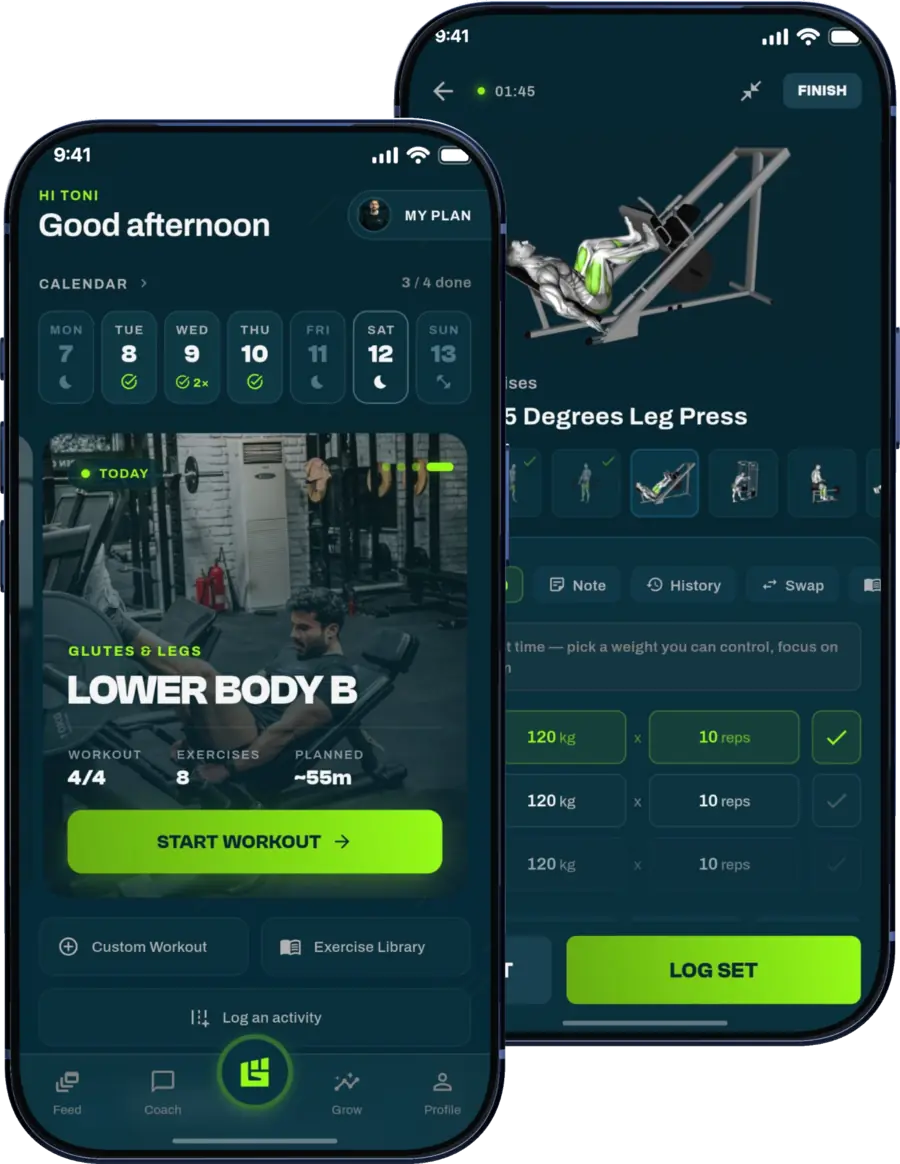
Built for progress
Take the guesswork out of training
Get a personalized workout plan built around your goal, equipment and schedule. Train smarter, track every rep and keep moving forward, one workout at a time.






These aren't just minor aches and pains. A bad injury can completely derail a competitive season for an athlete or create huge setbacks for a busy professional just trying to stay healthy. The first step to making sure this doesn't happen to you is understanding why it happens so often.
The most common culprits
Most gym injuries aren't freak accidents. They're the result of a few common, and entirely correctable, mistakes.
- Ego Lifting: This is the classic trap of putting more weight on the bar than you can handle with good technique. It forces your body into compromised positions, shifting the load from your muscles to your joints and ligaments.
- Poor Form: Even with a sensible weight, using bad form creates dangerous imbalances. Repetitive, sloppy movements—like rounding your back on a deadlift or letting your knees collapse on a squat—are a direct path to chronic pain or a sudden, acute injury.
- Skipping the Warm-Up: Jumping straight into your workout is like flooring the gas on a cold engine. Your muscles, joints, and nervous system need to be primed and ready for the work you're about to ask of them.
A proactive, safety-first mindset is your best defense. It's not just about avoiding pain—it's about ensuring your fitness journey is a long and rewarding one.
The numbers tell a sobering story
The data paints a clear picture. Recent statistics show a sharp rise in exercise-related injuries. In just one year, incidents involving exercise equipment jumped from 409,224 to 445,642, an 8.3% increase.
By 2026, the National Safety Council reported that exercise-related injuries had climbed to 564,845. This trend highlights a growing problem affecting everyone from dedicated athletes to weekend warriors. You can dive into the complete gym safety statistics to see the full scope of these trends.
This isn't meant to scare you out of the gym. It's a powerful reminder that a thoughtful, informed approach is non-negotiable.
By understanding these common pitfalls, you can take deliberate steps to protect yourself. Modern tools can also play a huge role here. For example, the GrabGains app gives you professionally demonstrated exercise videos and structured workout plans, helping you build a safe foundation right from your very first session.
Building your pre-workout foundation
Let’s be honest. Walking into the gym and jumping straight into your first heavy set is one of the fastest ways to get hurt. It's a mistake I see all the time, and it's completely avoidable. A solid pre-workout routine isn’t just about a five-minute jog on the treadmill; it’s about setting the stage for a safe, strong, and effective session.
Think of it as a quick pre-flight check for your body. Before you ask your muscles to handle heavy loads, you need to make sure they’re awake, your joints are moving freely, and your brain is connected to what you're about to do. Spending just 10-15 minutes on this pays off in a huge way, both in how you perform and how long you stay in the game.
Get moving with a purposeful warm-up
A good warm-up has three simple goals: raise your core temperature, get your joints mobile, and fire up the specific muscles you're about to train. That old-school advice to hold a bunch of static stretches for 30 seconds? Save that for after your workout. Before you lift, you need to be moving.
This is where dynamic stretching comes in. It’s all about actively moving your joints and muscles through their full range of motion. This does more than just make you feel loose—it drives blood to the muscles, sharpens your coordination, and gets that mind-muscle connection firing on all cylinders.
So, if it’s leg day, a good dynamic warm-up might look like this:
- Leg Swings: Forward-and-back and side-to-side to open up your hips.
- Bodyweight Squats: To grease the groove of the movement pattern and warm up your quads, glutes, and ankles.
- Walking Lunges with a Twist: To bring your core into the mix and work on hip mobility.
This simple flow chart breaks it down perfectly: be aware of how you feel, prepare your body with a smart warm-up, and then focus on clean technique.

Think of your warm-up as the essential bridge between showing up and lifting safely. Don't skip it.
Do a quick 60-second body scan
Before you even start your first warm-up set, take a minute to check in with yourself. This is a habit that separates smart lifters from sidelined ones. Ask yourself a few quick questions:
- How was my sleep last night?
- Do I feel unusually sore or tight anywhere?
- What’s my energy level on a scale of 1-10?
Your body gives you feedback every single day. Listening to it isn’t a sign of weakness—it’s a sign of intelligence. Pushing through serious fatigue or sharp pain is just asking for trouble.
This check-in gives you the power to adjust on the fly. If your shoulder is feeling a bit cranky, maybe you swap the barbell bench for dumbbell presses to give it more freedom. If your energy is in the tank, maybe you knock 10-15% off your working weights and just focus on perfect form.
Wake up the right muscles
The last piece of the puzzle is activation. These are low-effort exercises designed to "switch on" the main muscles for the day's session. Getting this right ensures your key movers are ready to do their job from the very first rep, which stops other, smaller muscles from having to jump in and compensate.
For example, before a big deadlift session, you might do:
- Glute Bridges: To make sure your glutes are awake and ready to drive the lift.
- Banded Pull-Aparts: To activate your upper back and lats, which are critical for keeping your spine stable.
This is where having a tool like the GrabGains exercise library comes in handy. It’s packed with professionally demonstrated movements, so you can quickly find the right activation drills for your workout and see exactly how to perform them for maximum benefit. A quick search gives you the perfect moves to prime your body for a safe and powerful lift.
Mastering form for safe and effective lifts

Once your body is primed from a solid warm-up, the next priority is locking in your technique. Let's be honest: sloppy, ego-driven form is the fastest ticket to the sidelines.
True strength isn’t just about muscling weight from point A to point B. It's about controlling that weight through a full, stable range of motion. This is where the mind-muscle connection makes all the difference. Instead of just "doing a squat," you need to be actively thinking about driving your knees out, keeping your chest up, and squeezing your glutes.
This intentional focus ensures the right muscles do the work, not your vulnerable joints. Nailing your technique is the only way to guarantee long-term progress.
Dissecting common form mistakes
Every lifter has to fight bad habits. Spotting these common flaws in your own movements is the first step to fixing them and building a more resilient body.
The Squat:
- Mistake: Knees collapsing inward (valgus collapse). This puts a ton of stress on your knee ligaments.
- Fix: Think "spread the floor" with your feet. Using a light resistance band around your knees during warm-up sets is a great way to teach your hips to fire properly.
The Deadlift:
- Mistake: Rounding your lower back. This is a classic error, especially when initiating the lift or getting fatigued, and it's a direct path to a back injury.
- Fix: Brace your core like you're about to take a punch. Keep the barbell glued to your shins and focus on pushing the floor away instead of pulling the weight up.
The Bench Press:
- Mistake: Flaring your elbows out to 90 degrees. This creates a weak pressing angle and puts your shoulder joint in a risky position.
- Fix: Tuck your elbows to a 45- to 75-degree angle. This simple adjustment engages your lats for stability and gives you a much stronger, safer press.
You can’t build a strong house on a weak foundation. Likewise, you can't build a strong body on poor movement. Prioritize form over weight, every single time.
This isn’t just about preventing injury; it's about getting better results. Clean reps stimulate muscle far more effectively, leading to more growth with less risk.
Your pocket personal trainer
In this day and age, you’ve got a powerful coaching tool right in your pocket. Filming your lifts—especially your heavy working sets—is one of the smartest things you can do.
What you feel like you're doing and what you're actually doing can be two totally different things. A quick video might reveal your squat isn't as deep as you thought, or that your back starts to round on those final deadlift reps.
This simple habit gives you immediate, undeniable feedback. You can instantly compare your form to professional examples and make corrections on the next set. This is where a digital tool with a deep exercise library becomes invaluable. The GrabGains platform has clear, expert-led exercise videos, giving you a reliable benchmark for safe and effective lifting.
Knowing when to get an expert eye
Self-analysis is great, but sometimes you just need a professional. If you’re consistently struggling with a movement, feeling pain, or just want to fast-track your progress, hiring a qualified coach is one of the best investments you can make. They can give you real-time cues and drills tailored to your exact needs.
The stakes are high. One study analyzing U.S. emergency department data found 582,972 craniofacial injuries related to exercise equipment over a decade. The annual rate of these injuries shot up by 32.7% during that period, with head injuries accounting for a staggering 45% of the total.
These aren't just numbers; they're preventable incidents. You can dig into the full findings on exercise-related head injuries to see the trends for yourself.
By putting technique first, using video for feedback, and knowing when to ask for help, you build the foundation for a lifetime of sustainable, injury-free gains.
Programming lifts for sustainable progress
In the gym, the "more is better" mindset is a dangerous trap. While you have to push your limits to get stronger, relentless intensity without a smart plan is a fast track to burnout and injury.
Those nagging aches that never seem to go away? They’re often the product of overtraining and haphazard load management, the silent culprits that derail your progress. The real key to long-term success isn't just working hard—it's programming your lifts for sustainable progress.
This means embracing progressive overload in a way that respects your body's ability to recover. True strength isn't built in a single heroic lift; it's built brick by brick, session after session, over months and years.
How to progress without breaking
Progressive overload is simple: you gradually increase the demand on your muscles. But most people mistakenly think this only means adding more weight to the bar. While load is a huge part of it, there are smarter ways to make an exercise more challenging.
Smart progression involves playing with a few key variables:
- Intensity (Weight): The most obvious one. Small, consistent jumps in weight are a staple of building raw strength.
- Volume (Sets/Reps): Simply doing more total work. This could mean adding one more set to your squats or grinding out one more rep than last week with the same weight.
- Frequency: Training a muscle group more often each week, but only if you can recover from it properly.
- Technique and Tempo: Improving your form or slowing down the eccentric (lowering) phase of a lift can dramatically increase its difficulty and effectiveness without adding a single pound.
The goal is to find the minimum effective dose of stress that forces your body to adapt. You want to nudge your body to get stronger, not sledgehammer it into submission.
Periodization for the everyday athlete
You don't need a PhD in exercise science to benefit from periodization. It’s just a fancy word for organizing your training into cycles. A simple way to do this is to plan your workouts in blocks, usually lasting 4-6 weeks.
During each block, you can focus on gradually increasing one of the variables mentioned above.
For example, a lifter focused on hypertrophy might spend a four-week block trying to increase their reps on all major lifts. Once they can hit the top of their rep range (say, 12 reps) with clean form, they can increase the weight and start the process over.
This structured approach stops you from randomly adding weight or volume, which is a classic recipe for stalled progress and overuse injuries. For a HYROX athlete, this might mean managing running volume one week and lifting intensity the next to keep their system from being overwhelmed.
The power of the deload
One of the most valuable—and most skipped—tools for injury prevention is the deload week. This is a planned period where you intentionally reduce your training intensity and volume.
It’s not a week off. It’s an active recovery strategy that allows your nervous system, joints, and connective tissues to fully heal from the stress of hard training.
Typically scheduled every 4-8 weeks, a deload involves cutting your weights and total sets by about 40-60%. You still go through the motions and keep your routine, but you leave the gym feeling refreshed, not wrecked. This proactive rest stops injuries before they start and is a hallmark of intelligent, long-term training.
If you’re looking for a program that intelligently incorporates these principles, using a Personalized strength training app can take all the guesswork out of planning your cycles and deloads.
Ultimately, programming for sustainable progress is about listening to your body's feedback. Some days you'll feel strong and ready to push; on others, you might need to scale back. This self-awareness, combined with a structured plan, is your best defense against injury and the secret to hitting PRs for years to come.
Prioritizing recovery to build resilience

The work you do in the gym is only half the equation. Your real gains—the strength, size, and resilience—aren't forged during that last heavy rep. They’re built in the hours and days after you train.
Ignoring recovery is like building a house on a foundation that hasn't set. Every workout puts stress on your body. That stress is a good thing, but adaptation only happens when you give your body the tools it needs to repair and come back stronger. A smart recovery plan is the key to unlocking your potential and avoiding the nagging pains that derail so many lifters.
Cooling down the right way
Your workout isn’t over when you drop the last weight. A proper cool-down is your first step in shifting your body from a state of high alert back to baseline, and it's your best defense against post-workout stiffness.
Instead of just walking out the door, dedicate 5-10 minutes to this process. It doesn't need to be complicated.
- Light Cardio: Spend a few minutes on a bike or treadmill at a very low intensity. This helps flush out metabolic byproducts like lactic acid from your muscles.
- Static Stretching: Now is the time for holding stretches. Unlike the dynamic warm-up, static holds help relieve the muscle tension you just built up.
This simple routine signals to your body that the work is done. It's time to repair.
Unlocking mobility with stretching and foam rolling
Immediately after a workout, your muscles are warm and pliable. This makes it the perfect opportunity to work on your mobility with static stretching and foam rolling.
Static stretching involves holding a position for a sustained period—typically 30-60 seconds—to help lengthen muscle fibers and improve your long-term range of motion. Focus on the main muscles you just trained. If you just finished a tough leg day, hit your hamstrings, quads, and hip flexors.
Recovery isn’t passive; it’s an active process. What you do after your workout is just as important as what you do during it. Think of it as investing in your next great session.
Foam rolling works in tandem with stretching by breaking up adhesions, or "knots," in your muscles and fascia. By applying pressure to these tight spots, you can release tension, boost blood flow, and cut down on soreness. Spend about a minute rolling out major muscle groups like your quads, lats, and glutes, pausing on any tender areas. For even deeper release, incorporating professional massage therapy sessions can make a world of difference.
Recovery beyond the gym floor
True resilience is built outside the gym. Your cool-down is crucial, but it won't make up for neglecting the three pillars of recovery: sleep, nutrition, and hydration. These are non-negotiable if you're serious about making progress and staying injury-free.
Sleep: Your body's prime repair time This is when your body ramps up production of human growth hormone (HGH), which is vital for repairing damaged muscle tissue. Aiming for 7-9 hours of quality sleep is one of the most effective recovery tools you have.
Nutrition: Rebuilding the right way Within an hour or two after your session, a meal rich in protein and carbohydrates is essential. Protein supplies the amino acids needed for muscle repair, while carbs replenish the glycogen stores you burned through during training.
Hydration: Keeping your system running You lose a significant amount of fluid through sweat during a tough workout. Even minor dehydration can hurt muscle function and slow down recovery. Make sure you're sipping water throughout the day—not just when you feel thirsty—to replenish what you lost.
Your top questions on gym injury prevention, answered
Let's cut to the chase. When you're serious about training, you're bound to have questions about staying injury-free. This section tackles the most common concerns I hear, giving you direct, no-fluff answers to help you train hard and smart.
What are the most common warning signs of an impending injury?
You have to learn the difference between muscle soreness and true pain. That general, achy feeling after a tough workout (DOMS) is normal. Sharp, stabbing, or radiating pain that gets worse with movement is a big red flag. Your body is sending a clear signal to stop.
Other telltale signs include:
- Localized swelling, redness, or warmth around a joint.
- A "clicking" or "popping" sound that's immediately followed by pain.
- A sudden, noticeable drop in your range of motion.
- A feeling of instability, like your knee wanting to "give out."
If a specific spot hurts every time you do an exercise, that’s not something you push through. It’s a signal to stop, check your form, lighten the load, or get it looked at. Ignoring these warnings is how minor issues become major setbacks.
How do I know if I am lifting too heavy?
The most obvious sign is when your form breaks down just to finish a rep. This is where most injuries are born.
Form breakdown can look like a lot of things: using momentum to swing a bicep curl, rounding your lower back on a deadlift, or being unable to control the weight on its way down. Another clear sign is feeling sharp pain in your joints instead of the deep burn of muscle fatigue.
Those last few reps should always be challenging, but they must be clean. If you have to cheat the movement to finish the set, your ego is writing checks your body can't cash. Drop the weight and focus on actually stimulating the muscle.
Can I still train if I have a minor tweak?
Yes, but you have to be smart about it. We call this "training around" an injury, and it's a great way to stay active without making things worse.
The number one rule is simple: avoid any movement that causes direct pain. For example, if your shoulder is nagging you during an overhead press, swap it out. You could do lateral raises, cable rows, or other exercises that don't cause any discomfort. You can also focus on different body parts, work on mobility, or do some light activity to promote blood flow.
However, if the pain is severe, sticks around for more than a few days, or gets worse, it's time to stop and get a proper diagnosis. Consulting with sports medicine professionals can give you specialized advice for preventing and treating these kinds of issues.
How often should I take a deload week?
A proactive deload is usually a good idea every 4-8 weeks of consistent, hard training. The real answer, though, is to learn to listen to your body's feedback.
You definitely need a deload if you notice:
- Persistent fatigue that a good night's sleep can't fix.
- A lack of motivation or even "dreading" your workouts.
- Your progress has stalled or you're getting weaker on your main lifts.
- Aches and pains that just won't go away.
A deload week doesn't mean you just sit on the couch. It’s a strategic reduction in your training volume and intensity, typically by about 40-60%. This gives your nervous system and connective tissues a much-needed chance to recover, reducing cumulative stress and slashing your risk of an overuse injury.
At GrabGains, we believe a smart training plan is your best defense against injury. Our app intelligently incorporates principles of progressive overload and recovery, helping you build strength sustainably. Download GrabGains on iOS or Android today to experience truly personalized fitness.
Get inspired and motivated