How do you do side crunches? A step-by-step guide
Learn how do you do side crunches with perfect form. This guide covers setup, common mistakes, variations, and how to build a stronger core and obliques. If you're searching how do you do side crunches, there's a good chance you've already tried a few reps and felt them everywhere except your obliques. Usually the neck takes over, the hips start helping, or the movement turns into a rushed side bend that looks like ab work but doesn't train the muscles you want.
A good side crunch is small, controlled, and very deliberate. When it's done right, you feel a hard squeeze along the side of your waist, not strain in your lower back and not tension in your throat. That difference comes from setup, breathing, and patience more than effort.
Why side crunches are a core workout essential
Many perceive "core" to mean the front of the abs. That's incomplete training. Side crunches primarily target the obliques, the muscles that help you rotate, resist rotation, and stabilize your spine when you move through daily life or sport.
That matters because the obliques don't just make your waist look more developed. They help you transfer force from your lower body to your upper body, hold posture when you're tired, and keep the torso organized when you're cutting, reaching, carrying, or changing direction.
A 2016 EMG study published in PMC found that side-position exercises, including side crunches on a ball and side bridge variations, produced significantly greater external oblique activity than the standard crunch or bent-knee sit-up (p<0.05). In plain English, that means side-oriented work asks more from the muscles on the side of your trunk than traditional crunch patterns do.
Built for progress
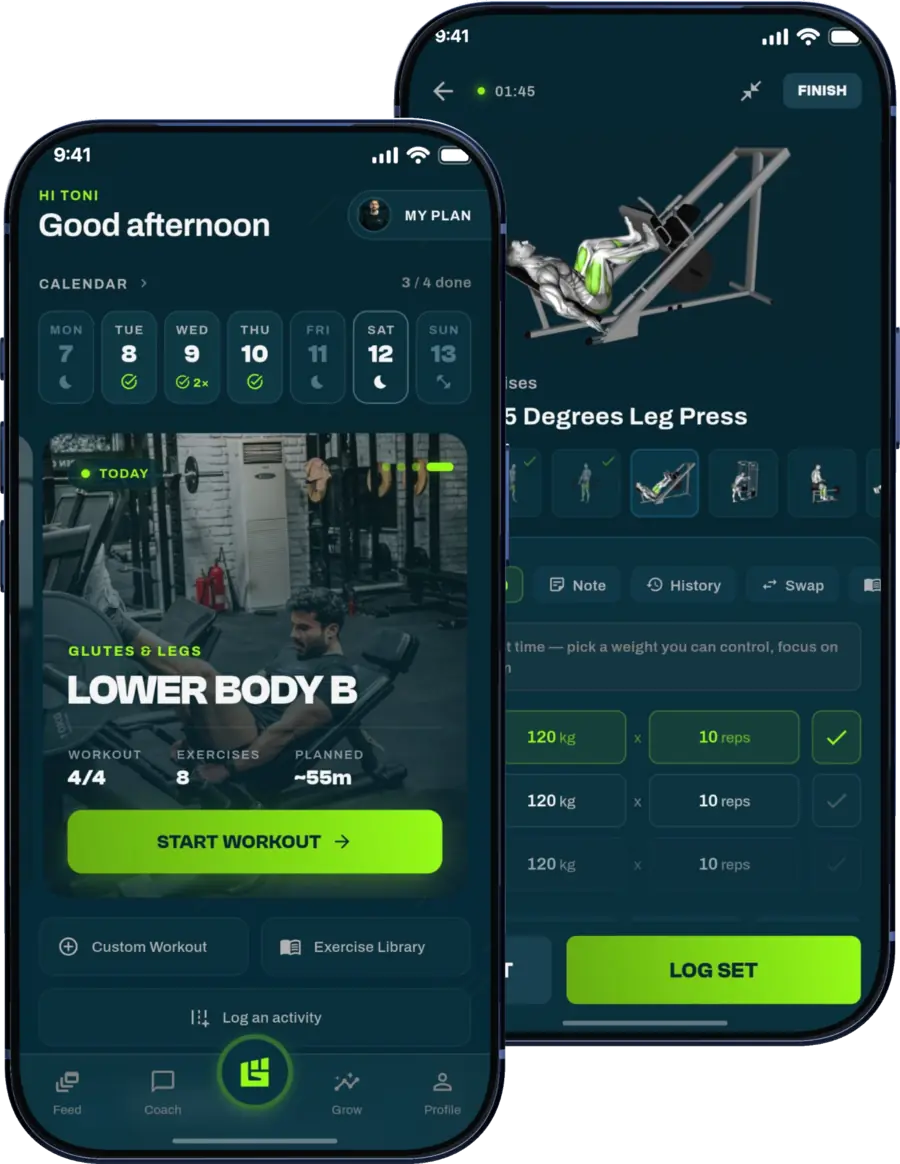
Take the guesswork out of training
Get a personalized workout plan built around your goal, equipment and schedule. Train smarter, track every rep and keep moving forward, one workout at a time.






Why the movement pattern matters
Traditional crunches mostly bias trunk flexion. Side crunches train lateral flexion with an oblique emphasis. If your routine only includes front-facing ab work, you're leaving out a major function of the core.
That gap shows up in a few ways:
- In the gym: You can plank for a while, but still struggle to control twisting or side-bending movements.
- In sports: Direction changes and rotation feel less crisp.
- In daily life: Carrying bags on one side, reaching awkwardly, or getting out of a car can expose weak side-body control.
Strong obliques don't just create a better contraction. They create a more organized torso.
Who benefits most from side crunches
Side crunches fit almost everyone when the variation matches the person.
They work well for:
- Beginners who need to learn where the obliques are and how to contract them
- Lifters who want more balanced trunk strength
- Runners who need better side-to-side stability and force transfer, especially if they already use focused ab workouts for runners
- Functional athletes who need core control under fatigue
The big takeaway is simple. Side crunches aren't filler. They're one of the cleanest ways to teach your body to shorten the side of the torso on purpose and build a stronger, smarter midsection.
Mastering the foundational side crunch form
The classic floor side crunch is still the best place to start. It gives you enough support to learn the pattern, but not so much support that you can hide sloppy form.

Set up your body first
Use this exact sequence for the floor-based version from Spotebi's side crunch guide:
- Lie on your right side on an exercise mat with legs fully extended and stacked, with knees slightly bent for stability.
- Place your right hand flat on the floor in front of you for support.
- Put your left hand behind your head with the elbow flared wide.
- Inhale to brace your core.
- Exhale and contract your left obliques to lift your head, shoulders, and upper torso sideways toward the ceiling, aiming for a 20 to 30° lateral flexion angle.
- Pause for 1 to 2 seconds at the top.
- Inhale and lower slowly.
- Perform 10 to 15 reps per side for 2 to 3 sets.
Those are the mechanics. The coaching cues below are what make the reps work.
What each setup cue is doing
Legs stacked keeps the torso from rolling around. If the top leg drifts back or the hips rotate, the movement stops being a clean oblique crunch.
Bottom hand lightly on the floor gives balance, not assistance. If you push hard into the hand, you unload the trunk and miss the point of the exercise.
Top hand behind the head is there to support the head's weight. It isn't there to yank you upward.
Elbow wide helps keep the chest open and the neck long. When the elbow folds inward, people usually pull with the arm and round through the upper spine.
How to execute the rep
Think about bringing your lower rib cage toward the top of your pelvis on the side that's facing up. That's the motion. Not a twist. Not a sit-up. Not a swing.
As you exhale, lift just enough to feel the side body shorten. The range is modest on purpose. Better results come from a small, exact rep than a big messy one.
Use this internal checklist during every repetition:
- Brace before moving: Set the trunk first so the rep starts from tension, not momentum.
- Lift from the side body: Try to feel the upper-side obliques shorten.
- Keep the hips quiet: Your pelvis shouldn't rock backward.
- Own the top position: The pause is where the mind-muscle connection sharpens.
- Lower slowly: Eccentric control teaches you to stay on the target muscle.
Practical rule: If you can't pause at the top without wobbling or losing position, the rep was too fast.
Where you should feel it
A correct side crunch usually creates a strong contraction from the lower ribs down toward the side of the waist. You may feel some work in the deeper core and a little stabilizing effort through the bottom side, but the main sensation should be on the side that's actively crunching.
You should not feel:
- sharp tension in the neck
- pinching in the low back
- cramping at the front of the hip
- a need to heave yourself upward
If you do, clean up the setup before adding more reps.
Breathing changes the quality of the rep
Breathing isn't a minor detail here. It's one of the best ways to improve the movement.
Try this:
| Phase | What to do | Why it helps |
|---|---|---|
| Start | Inhale and brace | Creates trunk pressure and stability |
| Lift | Exhale as you crunch | Helps the ribs come down and improves oblique contraction |
| Top | Brief hold | Reinforces control and awareness |
| Lower | Inhale slowly | Prevents rushing and keeps the rep organized |
That exhale should feel active, not dramatic. You're not blowing air out as hard as possible. You're using the breath to tighten the trunk and guide the motion.
Make the movement smaller if needed
One of the best beginner adjustments is reducing the range. If you try to come too high, you'll often rotate or pull with the neck. A smaller lift with a real squeeze beats a larger lift every time.
Another simple option is to bend the knees more. That can make the position feel more stable and easier to control.
Use the floor side crunch until you can do every rep with the same shape. Smooth start, clean squeeze, slow lower. That's mastery.
Common Side Crunch mistakes and how to fix them
Most bad side crunches aren't caused by weak abs. They're caused by compensation. The body wants to finish the rep any way it can, so it recruits the neck, hip flexors, momentum, or spinal twisting.

That's why people say they “feel” side crunches but don't get much from them. They completed the reps, but the target muscle never got quality work.
Mistake one: pulling on the neck
This is the classic error. The hand behind the head turns into a handle, and the rep becomes a head yank.
Fix it by keeping the elbow wide and letting the hand only support the head. Think about leading with the shoulder and ribs, not the chin.
Use this cue: Shoulder toward hip, not chin toward chest.
Mistake two: rotating instead of laterally flexing
A lot of people turn the side crunch into a twisting crunch. That shifts the demand and usually ruins the clean side-body squeeze.
Keep your chest and hips facing forward. You're closing the space on one side of the body, not turning toward the floor or ceiling.
Use this cue: Shorten your side like you're closing a book.
Mistake three: using momentum
Fast reps can make the set feel hard, but they often reduce useful tension. If the torso bounces up and drops down, the obliques never own the movement.
Slow down enough to pause at the top and lower with control. That instantly makes the exercise more honest.
Use this cue: Earn the top, don't fling yourself there.
Mistake four: letting the hips do the work
Some lifters subtly drag the torso with the hips or let the legs shift around to create motion. That usually happens when the obliques fatigue.
Keep the hips stacked and quiet. The side crunch should come from the trunk.
If your hips are rocking, your obliques aren't driving the rep cleanly.
Mistake five: chasing a bigger range than you can control
More height isn't better if you lose position. The side crunch is a short-range isolation movement. Once form breaks, extra range usually means extra compensation.
A smaller crunch with a harder contraction is the better rep.
Why this matters for your back
Proper form isn't just about feeling the right muscle. It also changes how the exercise loads your body. According to Mayo Clinic's core exercise guidance, side crunches done correctly yield superior oblique engagement with less rectus abdominis activation and minimize compressive spinal forces by 30 to 40 percent compared to sit-ups. The same verified data notes that proper core training can lower spine injury risk by 25 percent, and that low back pain costs over $100 billion annually in US healthcare.
That doesn't mean side crunches are magic. It means precision matters.
Quick fix checklist
Run through this when a set feels off:
- Neck getting tight: Widen the elbow and relax the jaw.
- Low back talking back: Reduce the range and brace harder before moving.
- Front of hip cramping: Stop driving from the leg side. Focus on ribs toward hip.
- No oblique burn: Slow the tempo and hold the top.
Often, a different exercise is unnecessary. They need cleaner reps.
How to Progress and Regress Your Side Crunches
A side crunch should match your current control level. If the floor version feels awkward, regress it. If it's crisp and easy, progress it. Good training lives in that middle ground where the rep is challenging but still clean.

Regressions that actually help
Start easier if you can't feel the target muscle or if your form falls apart early.
Here are the most useful regressions:
- Bent-knee side crunch
Bend both knees more than the standard version. This usually improves balance and makes it easier to keep the hips stacked. - Short-range side crunch
Lift only a little, then pause. This is excellent for learning control and finding the obliques. - Supported setup with extra padding
If the side-lying position feels uncomfortable on the hip, use a folded towel or softer mat. Comfort improves consistency.
These aren't “lesser” versions. They're teaching tools. A good regression lets you train the right pattern right away.
The standing side crunch as a functional option
Some people do better standing than lying on the floor, especially if they want a low-impact option for home sessions.
According to OnePeloton's side crunch guide, the standing side crunch is performed by standing with feet hip-width apart and hands behind the head, then exhaling as you flex the right obliques and drive the right knee toward the right elbow. A key benchmark is 45° trunk flexion without torso rotation. The same verified data states this variation burns approximately 8 to 12 kcal per minute for a 75 kg person and improved rotational power by 12 to 18 percent after 6 weeks.
Standing side crunches work well when you want:
- a more athletic feel
- less pressure on the hip from side-lying work
- a simple bodyweight core movement in a circuit
Progressions for stronger lifters
Once the base version is under control, progress by increasing difficulty without losing the core action.
A practical order looks like this:
| Level | Variation | Best for |
|---|---|---|
| Beginner | Bent-knee side crunch | Learning position and balance |
| Early intermediate | Standard floor side crunch | Building clean oblique contraction |
| Intermediate | Slower tempo and longer top pause | Increasing time under tension |
| Advanced | Oblique V-up or loaded variation | More demand and stronger contraction |
How to know you're ready to move up
Progress only when you can do all reps with these standards:
- No neck pulling
- No hip rocking
- Clear pause at the top
- Controlled lowering
- Same form on both sides
If one side is noticeably worse, stay there longer. Uneven control is common, and forcing harder variations too soon usually makes the stronger side stronger and the weaker side sloppier.
Better athletes don't just add difficulty. They keep the same movement quality as the exercise gets harder.
Explore Advanced Side Crunch Variations
Once you own the bodyweight version, advanced variations give you two things the basic side crunch can't always provide on its own. More stability demand and more resistance.

The mistake here is jumping into harder options without preserving the same core action. If the advanced version turns into flailing, you've outgrown the exercise selection, not because it's too easy, but because the variation is too advanced for your current control.
Stability ball side crunch
A stability ball changes the feel immediately. The unstable surface asks the trunk to organize itself before and during the crunch, which can sharpen awareness and make the obliques work harder to maintain position.
Use it like this:
- Set your side body across the ball with your feet anchored wide.
- Keep the hips stacked instead of letting the top hip roll open.
- Place one hand behind the head and the other where needed for balance.
- Crunch through the side body without turning it into a twist.
- Lower slowly so the ball doesn't throw you around.
This variation is useful when you want more challenge without loading the movement externally.
Weighted side crunch
If your goal is muscle growth, external load eventually matters. A dumbbell or plate held at the side of the head or across the upper torso can make the obliques work harder, but only if the setup stays strict.
A few hard rules help:
- Start light: Added resistance magnifies every mistake.
- Keep the range honest: Don't chase height to “justify” the load.
- Control the lowering phase: That's where many reps fall apart.
- Stop before form shifts into neck pulling or hip movement.
Weighted side crunches are best for lifters who already have a clear mind-muscle connection. If you still struggle to feel the obliques on bodyweight reps, loading the exercise usually makes the wrong muscles work harder.
Oblique V-up
The oblique V-up is a major jump. It combines trunk lift and leg lift, so the demand on balance, timing, and core coordination rises fast.
This variation works best if:
- you can already perform standard side crunches with clean control
- you can keep the pelvis steady
- you don't rely on momentum
The reward is a much higher skill demand and a stronger challenge to the side body. The trade-off is that it becomes easier for hip flexors to steal the rep. That's why I only program it for people who can move slowly and keep the torso in charge.
How to choose the right advanced variation
Pick the variation that matches your goal, not the one that looks hardest.
- Choose the stability ball if you want more balance and trunk organization.
- Choose weighted side crunches if hypertrophy is the goal.
- Choose the oblique V-up if you want a harder coordination and control challenge.
If your reps stop looking like side crunches and start looking like survival, scale back. Advanced training should make the target muscle work harder, not hide it.
Programming Side Crunches into Your Routine
Doing side crunches occasionally is fine. Programming them on purpose is better.
Most tutorials stop at form. They show you the movement, then leave you to guess how to build it over time. As noted in this verified summary from the referenced YouTube instructional analysis, most tutorials lack guidance on progressive overload for side crunches, even though evidence-based training requires progression in reps, sets, or resistance. That's the gap that keeps a useful exercise from delivering long-term results.
Where side crunches fit best
Side crunches work best when performed:
- Near the end of a strength workout as targeted core work
- Inside a short core circuit with anti-rotation and bracing patterns
- On home workout days when you need efficient training without much equipment
If you're lifting heavy compounds first, side crunches usually belong later. You don't want a fatigued trunk before squats, carries, or overhead work.
Simple set and rep targets
The most practical starting point is still the standard prescription used earlier in the article. Use 10 to 15 reps per side for 2 to 3 sets on a version you can control.
From there, apply progression with intent:
| Goal | Starting approach | Progress when |
|---|---|---|
| Skill and control | Clean bodyweight reps with pauses | Every rep feels identical |
| Endurance | Add reps gradually within your chosen variation | You no longer lose tension late in the set |
| Strength and hypertrophy | Add resistance or increase time under tension | Bodyweight work feels too easy and stays clean |
Pair side crunches with complementary core work
A complete core session shouldn't rely on side crunches alone. Pair them with movements that resist motion as well as create motion. That usually means mixing them with planks, carries, dead bugs, bird dogs, or anti-rotation work.
Before those sessions, it's smart to prep your trunk and hips properly. If you need a simple framework, this guide on how to warm up before exercise is a useful starting point.
The best core training doesn't just make your abs tired. It makes your torso more capable.
Adaptive programming solves the biggest issue with side crunches. It removes guesswork. If your reps improve, the exercise should evolve. If your form slips, the plan should pull you back to a version you can own. That's why tools built around progression matter. GrabGains is designed around that idea, so exercises don't stay static when your body doesn't.
If you want side crunches to become more than a random ab finisher, GrabGains can help you train them with structure. The platform builds personalized workouts, tracks your progress, and adjusts your plan as your performance changes, so you keep improving without guessing what to do next.
Get inspired and motivated