The ultimate gym warm up routine to boost performance in 2026
Stop wasting time on old warm ups. Learn the ultimate gym warm up routine to prevent injury, unlock strength, and maximize every single workout session. An effective gym warm up routine is more than just a five-minute jog on the treadmill. It's a strategic sequence that primes your body for the work ahead, ensuring every rep counts.
A good warm-up is about preparing for peak performance and preventing injury, not just going through the motions.


Why your current gym warm-up is holding you back
Let's be honest: that casual five-minute cardio session followed by a few half-hearted arm swings isn't doing you any favors. We need to stop treating the warm-up as a chore and start seeing it for what it truly is—the first and most critical step to a great workout.
Many of us learned outdated methods that can do more harm than good. The classic example is holding long, static stretches before a heavy lift. This old-school approach actually tells your muscles to relax right when you need them to be firing on all cylinders, sabotaging your strength before you even touch a weight.
The modern approach to a gym warm-up
A modern, evidence-backed warm-up isn't just about 'getting warm'; it’s a tool to achieve a state of true readiness. It’s about actively preparing your body for the specific movements and loads you’re about to take on.
Built for progress
Take the guesswork out of training
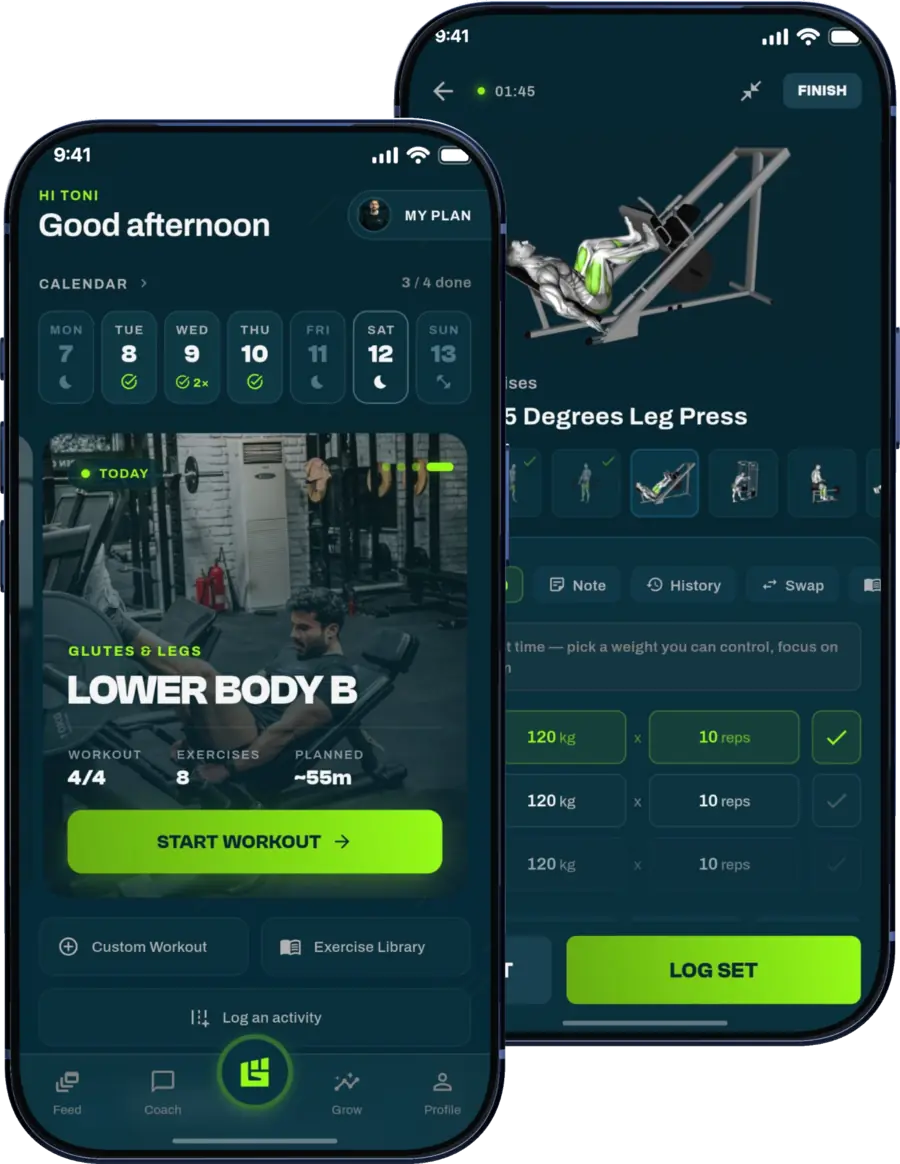
Get a personalized workout plan built around your goal, equipment and schedule. Train smarter, track every rep and keep moving forward, one workout at a time.






This kind of strategic prep has a real, measurable impact. A major scientific review found that a proper warm-up boosted performance in an incredible 79% of the criteria examined. The improvements weren't small, either—they ranged from a 1% to a significant 20% increase in strength and power. Read the full research about these performance findings.
A good warm-up makes you stronger, faster, and more resilient. It’s not an optional extra; it's the foundation of a successful workout.
Moving from 'warm' to 'ready'
So, what's the real difference between just feeling warm and being truly ready? It all comes down to what a proper warm-up actually accomplishes.
- Increased Core Temperature: A light sweat is a good sign. It means your core temperature is up, making your muscles more pliable and less likely to strain.
- Enhanced Blood Flow: Better circulation is key. It delivers the oxygen and nutrients your muscles need to perform and endure the work you're about to do.
- Nervous System Activation: Think of it as a wake-up call for your central nervous system. This improves the mind-muscle connection, leading to better coordination and more power.
- Improved Joint Mobility: Dynamic movements help lubricate your joints with synovial fluid, allowing you to move through a full, safe range of motion during your lifts.
When you shift your mindset, you transform a skipped step into a powerful performance tool that sets the stage for every single rep.
The three pillars of an effective warm up
A proper warm up isn't just about walking on the treadmill for ten minutes. A truly effective gym warm up routine is a structured, purposeful sequence that prepares your body for the work ahead. Think of it as a bridge, moving you from a resting state to being ready to perform at your best.
This bridge is built on three pillars: Activation, Dynamic Mobility, and Specific Priming. Each one plays a distinct role, and skipping any of them is like leaving a support out—it compromises your safety and performance. When done right, every minute of your warm up directly contributes to a better, stronger workout.
Unfortunately, many lifters still follow an outdated and ineffective path, which often leads to poor lifts and a higher risk of injury.

As you can see, a little cardio followed by some old-school static stretching can actually weaken your performance. It's time to build a better warm up.
To give you a clear overview, here’s how the three pillars of a modern warm up fit together.
The three pillars of a modern warm up
| Pillar | Purpose | Example Exercises |
|---|---|---|
| Activation | To "wake up" the target muscles and establish a mind-muscle connection. | Glute Bridges, Banded Side Steps, Bird-Dogs |
| Dynamic Mobility | To improve joint lubrication and active range of motion for the upcoming lifts. | Leg Swings, Cat-Cow, Arm Circles, Thoracic Rotations |
| Specific Priming | To practice the exact movement pattern of your main lift and prepare the nervous system. | Empty Barbell Squats, Light Kettlebell Swings, Bodyweight Push-ups |
This systematic approach ensures you're not just warm—you're genuinely ready to lift. Let's break down each pillar.
Pillar 1: activation
Activation is about sending a "you're up next" signal to the specific muscles you're about to train. This phase involves low-intensity, targeted exercises designed to fire up muscles that might be dormant from sitting or daily life. It’s all about establishing a strong mind-muscle connection before you add any real weight.
For example, on a heavy squat day, you want your glutes, quads, and core firing on all cylinders. Activation here might include glute bridges or bird-dogs. These movements don’t create fatigue; they just ensure your glutes are engaged so your lower back doesn't have to pick up the slack.
Pillar 2: dynamic mobility
Once your muscles are awake, it's time to get your joints ready to move. Dynamic mobility uses controlled, active movements to take your joints through their full range of motion. This is completely different from static stretching, where you just hold a position.
This process lubricates the joints with synovial fluid—think of it as oiling a stiff hinge. It improves your active range of motion, letting you hit proper depth in a squat or get full extension in an overhead press without fighting your own body. Improving this range of motion with essential mobility exercises is a cornerstone of preparing your body for what's to come.
Dynamic mobility isn't about forcing yourself into a split. It’s about owning the range of motion you actually need for the lifts you’re about to perform.
A few great examples include:
- Leg Swings: To open up the hips before squats or deadlifts.
- Cat-Cow Stretches: To mobilize the spine before hinging or rowing.
- Arm Circles: To prepare the shoulder joint for any pressing or pulling.
Pillar 3: specific priming
This is the final step and your most direct link to the main lift. Specific priming is all about "grooving the pattern"—performing the actual exercise you’re about to do, but with a very light load or just your bodyweight. This fires up your central nervous system and tells it what’s coming.
If you’re about to bench press, this means starting with just the empty barbell. You'll focus on perfect form: your setup, the bar path, and your breathing. A few sets of 5-10 smooth reps will prime that exact motor pattern.
This also gives you a chance to check in with your body. How do your shoulders feel? Is anything tight? This is your last chance to make small adjustments before you start adding weight to the bar.
Building your warm up for different training goals
Your warm-up should never be a generic, one-size-fits-all routine. The way you get ready for a heavy deadlift day looks completely different from how you'd prep for a fast-paced cardio circuit.
Think of your warm-up as a mission briefing for your body. It signals what’s coming and prepares it to perform safely and effectively. Let’s walk through how to build the right warm-up for three common training goals.
The strength day warm up routine
When the goal is moving heavy weight, your warm-up has two jobs: activate the primary muscles you’re about to use and prime your central nervous system (CNS) for heavy loads. This prep work gives you the stability and readiness needed to generate maximum force for big lifts like squats, the bench press, or deadlifts.
For a heavy lower body day, that means waking up the hips, glutes, hamstrings, and core.
- Activation: Start by firing up your posterior chain. Glute bridges and banded side steps are perfect for this. They get your glutes working so they can contribute powerfully to the lift, which takes a ton of stress off your lower back.
- Mobility: Next, you need to open up your hips and ankles. A light goblet squat is my go-to. I like to pause at the bottom and use my elbows to gently push my knees out. This not only mobilizes the hips but also helps groove the squat pattern itself.
- Priming: Finally, grab an empty barbell. Run through your main lift (like squats) for a few sets of 5-8 reps, focusing on perfect technique. This is the last signal to your brain and body that it's time to move some serious weight.
Strength Day Warm Up Example (10-12 Minutes):
- General Warm Up: 3-5 minutes on the bike or rower (easy pace).
- Activation Circuit (2 rounds): 15 Glute Bridges, 15 Banded Side Steps per side.
- Mobility & Priming (2 rounds): 10 Bodyweight Squats, 8 Light Goblet Squats.
- Ramping Sets: Begin your main lift with the empty bar and gradually add weight.
The functional fitness or HYROX warm up
For high-intensity functional fitness—think HYROX or CrossFit-style workouts—your warm-up needs to prepare your entire body for a huge variety of movements and sustained cardio. The goal here is total-body mobility and getting your heart rate elevated.
This kind of gym warm up routine has to be dynamic and cover all your bases.
- Cardio Base: Kick things off with 5 minutes of light cardio, preferably on a machine you'll use in the workout, like a rower or SkiErg. This gets your core temperature up and gives your cardiovascular system a heads-up.
- Full-Body Mobility: Focus on movements that flow together and hit multiple joints at once. Inchworms are fantastic for this; they stretch your hamstrings while firing up your shoulders and core. Add some walking lunges with a torso twist to open up your hips and thoracic spine.
- Movement Rehearsal: Briefly run through a few key movements from the workout, but with no weight. If the WOD calls for kettlebell swings and burpees, do a few reps of each to dial in the pattern before the clock starts and the intensity ramps up.
For anyone serious about this style of training, a Personalized strength training app can be a game-changer, offering workouts tailored to these specific demands.
The 5-minute time-crunch warm up
Let’s be real, some days you’re just short on time. Skipping a warm-up is never the answer, but you can absolutely get an effective prep session done in 5 minutes if you’re smart about it. The secret is picking compound movements that give you the most bang for your buck.
Think of this as your emergency "get ready now" protocol.
- Jumping Jacks (1 minute): A classic for a reason. It gets your heart rate up fast and sends blood flow everywhere.
- Bodyweight Squats (1 minute): Activates your entire lower body and mobilizes your hips, knees, and ankles all at once.
- Cat-Cow (1 minute): Quickly gets your entire spine moving, which is critical for just about any lift you can think of.
- Arm Circles & Leg Swings (1 minute): Spend 30 seconds on each to dynamically open up your shoulder and hip joints.
- Bird-Dog (1 minute): Fires up your core and improves the stability that connects your upper and lower body.
This quick routine hits all the major muscle groups and joints, making sure you’re ready to train safely even when you’re up against the clock.
Common warm up mistakes that sabotage your lifts
Even with the best intentions, it’s easy to get your warm up wrong. A flawed routine doesn't just waste your time—it can actively drain your strength and dial up your risk of injury before you even touch your first working set.
Let's clear up the most common errors I see every day in the gym so your gym warm up routine actually sets you up to perform.
The biggest mistake, by far, is doing long, lazy static stretches right before you lift. For decades, holding a deep hamstring or quad stretch was the gold standard. We now know it’s a total performance killer.
The problem with pre-workout static stretching
When you hold a stretch for a long time, you're sending a signal to your muscles and central nervous system to relax and lengthen. That’s perfect for a post-workout cool-down, but it’s the exact opposite of what you want before a heavy squat or bench press. You need your muscles to be springy, responsive, and ready to contract with force.
Did you know that old-school static stretching can tank your performance by up to 5-10% in power and speed? Holding a pose for 30-90 seconds actually tells your muscles to chill out, reducing their force output and making you weaker for your session. You can read more about the science behind warming up on WebMD.
The Fix: Swap your static holds for dynamic movements. Instead of sitting on the floor pulling your hamstring, do some walking leg kicks. Instead of holding a quad stretch against the wall, perform walking lunges. These active movements get your body ready for action without putting the brakes on your power.
Other costly warm up errors
Static stretching isn't the only pitfall. A few other common habits can completely derail your training session. Being aware of them is the first step toward building a warm up that works.
- Warming Up Too Intensely: Your warm up should energize you, not exhaust you. Going all-out on the bike or doing too many activation drills can lead to pre-fatigue, leaving you gassed before your main lifts. Aim for an effort level of 3-4 on a 1-10 scale.
- Not Warming Up Enough: On the flip side, a quick 60 seconds of arm swings won't cut it. An insufficient warm up leaves your muscles cold, joints stiff, and nervous system unprepared. That's a perfect recipe for a lackluster workout and potential injury.
- Taking a Long Break After Warming Up: The benefits of a good warm up are temporary. If you finish your routine and then spend ten minutes scrolling your phone or chatting, your core temperature drops and your muscles go cold again. You’ve lost that state of readiness. Aim to start your first working set within 3-5 minutes of finishing your warm up.
How to know when you are properly warmed up
A great gym warm up routine has nothing to do with watching the clock. It’s about listening to your body and learning to recognize the signals that say you’re truly ready to perform.
When you can read these cues, you move past just going through the motions and into a state of genuine readiness. It’s a skill that pays off with better, safer lifts.

Physical readiness cues
Your body gives you clear signs when it’s primed to work. The first and most obvious is breaking a light sweat. You’re not looking to be drenched, but that slight sheen means your core temperature is up, making your muscles more pliable and ready for action.
Next, pay attention to how your joints and muscles feel. That stiffness you walked in with should be gone. Your hips, shoulders, and knees should move smoothly through their full range of motion without any of the initial creaks or tightness.
A warm-up is complete not when a timer goes off, but when your body gives you the green light. Learning to read these internal signals is a skill that will pay dividends in both performance and injury prevention.
Mental and performance cues
A proper warm-up doesn’t just get your body ready; it gets your head in the game. You should feel your focus shift from the stresses of the day to the workout ahead. This mental switch is just as important as the physical prep.
The final check comes when you get under the bar for your first exercise. During your initial "ramping sets," the movement should feel smooth and automatic. If you’re squatting, the empty bar should feel light and the pattern grooved-in.
This feeling of crisp, snappy movement is the ultimate confirmation. It tells you your nervous system has switched on and you’re ready to start adding weight.
Your warm-up questions, answered
When it comes to warm-ups, there's a lot of conflicting advice out there. Let's cut through the noise and tackle some of the most common questions I hear in the gym.
Here are straight, practical answers to help you get your prep work right, every single time.
How long should a gym warm up be?
The sweet spot is between 10 to 15 minutes.
This gives you just enough time to get your blood flowing, wake up the right muscles, and mobilize your joints without burning through the energy you need for your main lifts. Anything under eight minutes probably isn't enough, and stretching it past 20 minutes can start to eat into your performance.
Should I do cardio before or after my lifts?
A quick, 5-minute cardio session before you lift is a great way to raise your core temperature and increase blood flow. Think of it as part of the warm-up.
However, save any long or intense cardio for after your strength training. Hitting the treadmill hard beforehand will pre-fatigue your muscles and nervous system, which is a recipe for poor form, reduced strength, and a less effective workout.
Is it okay to skip my warm up if I’m short on time?
Never. Skipping your warm-up is a terrible trade-off that dramatically increases your risk of injury while tanking your performance.
If you're pressed for time, a focused 5-minute dynamic warm-up is infinitely better than nothing. Just stick to movements that mimic what you’re about to do—like bodyweight squats and hip circles before a leg day. A short, specific warm-up is always the right move.
A proper warm-up primes your body for peak performance. Many gym-goers also wonder about optimal heat exposure in relation to their training, often asking about the best time for a sauna before or after workout to aid recovery.
Do I need a different warm up for each workout?
Yes, absolutely. Your warm-up should always be specific to the workout you're about to do. The entire point is to prepare the exact muscles and movement patterns you'll be using for that day's session.
The prep work for a heavy deadlift day looks completely different from what you'd do before an upper-body bench session. Tailoring your warm-up ensures you get the most out of every lift.
Ready to stop guessing and start training with a plan that adapts to you? GrabGains builds personalized workouts that match your goals, including smart warm-ups. Download GrabGains on iOS or Android today and start training smarter.
Get inspired and motivated