Master close grip pull ups: Your Complete Guide
Master close grip pull ups with our guide. Learn form, muscles, progressions & workouts to build a stronger back & bigger biceps. You’re putting in the work. You row, pulldown, curl, and maybe even grind through standard pull ups, yet your upper back still looks flat and your arms don’t seem to grow in proportion to your effort. That’s usually not a motivation problem. It’s a movement selection problem.
Close grip pull ups deserve more attention than they get. They sit in a useful middle ground between pure back work and arm-dominant pulling. Done well, they build pulling strength, drive bicep growth, and often feel better on the shoulders than wider grips. Done poorly, they turn into a swinging, wrist-angry mess that stalls progress fast.
The Overlooked Key to Unlocking Upper Body Strength
A common pattern shows up in lifters who train hard but stop progressing. They keep adding more sets to rows, more cable work, more random burnout finishers, yet their vertical pulling strength barely moves. Their elbows flare, their shoulders shrug up, and every pull turns into a fight against bad mechanics.
Close grip pull ups often clean that up.
The reason is simple. A narrower hand position changes the path of the elbows and makes it easier to pull with a stronger combination of back and arm muscles. For lifters who can’t feel their lats on wider grips, or who always seem to hit the same rep ceiling, this variation usually gives them a clearer pattern to own.
Built for progress
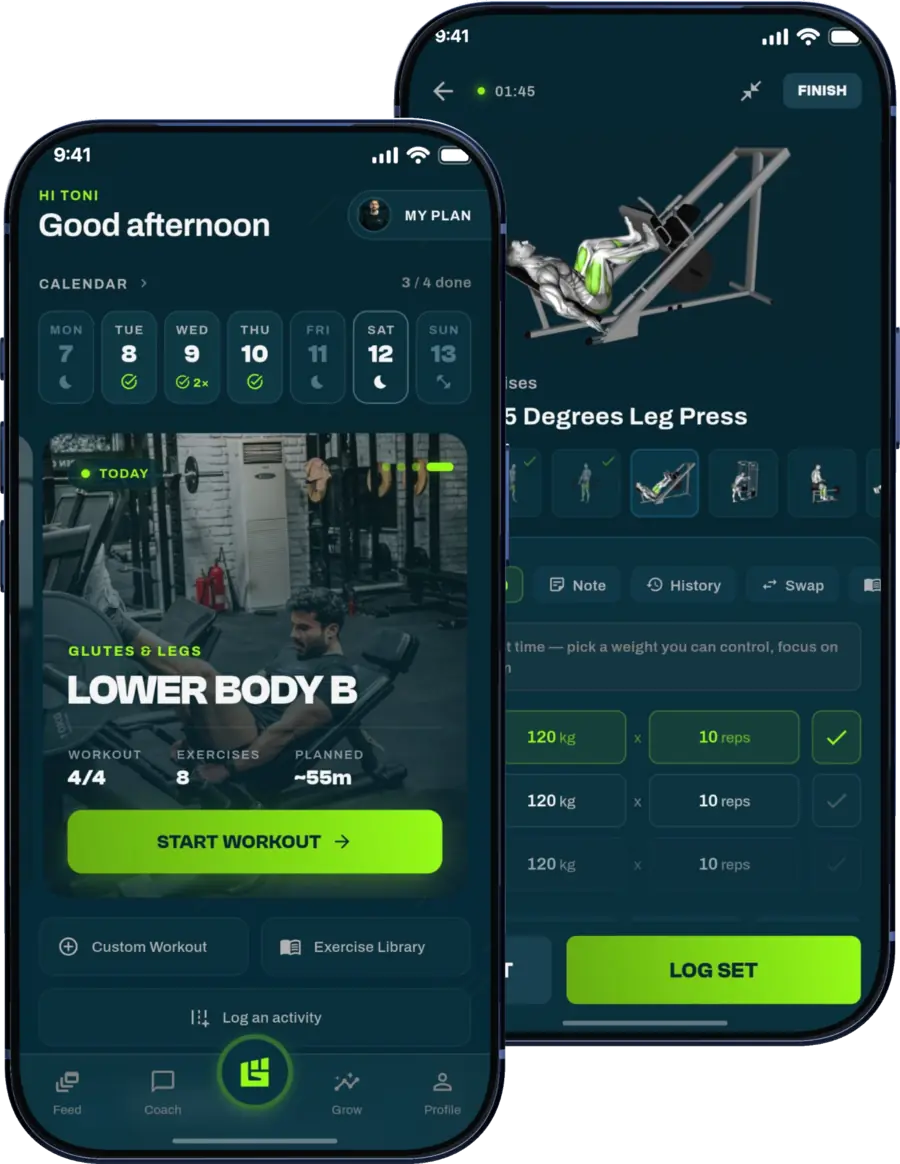
Take the guesswork out of training
Get a personalized workout plan built around your goal, equipment and schedule. Train smarter, track every rep and keep moving forward, one workout at a time.






That doesn’t mean it replaces everything else. It means it fills a gap many programs ignore.
Why this variation works when standard pulling stalls
Most plateaus come from one of three issues:
- Disadvantageous mechanics: The grip is too wide for the lifter’s structure, so the movement becomes all shoulder stress and not enough productive pulling.
- Weak elbow flexors: The back can contribute, but the biceps and forearms can’t keep the rep moving.
- No progression plan: Pull ups get tested, not trained.
If you’re also balancing pressing volume, it helps to look at how your whole upper body plan fits together. A practical comparison of other upper body exercises can help you see where vertical pulling should sit relative to push-ups and bench work.
Close grip pull ups aren’t a trick variation. They’re often the shortest path back to quality pulling for people who’ve made wide grip work harder than it needs to be.
Who should pay attention
This variation tends to be especially useful for:
- Beginners: It gives a more manageable pulling pattern than a wide overhand setup.
- Hypertrophy-focused lifters: It creates a strong stimulus for the arms and lower lat region.
- Busy trainees: It delivers a lot of return from one bodyweight movement.
- Home gym users: A doorway bar and sound technique are enough to make it productive.
If your current pull up work feels more frustrating than effective, close grip pull ups are worth treating as a main lift for a while, not just an accessory.
Why Close Grip Pull Ups Are a Back and Bicep Powerhouse
Close grip pull ups reward mechanics that many lifters can train hard. With the hands pulled in, the elbows stay closer to the torso, the shoulder usually sits in a more manageable position, and the biceps can contribute more forcefully through the middle and top of the rep.
That combination matters for both size and longevity.

What the muscle recruitment tells us
A close grip does not isolate the arms or take the back out of the lift. It changes how the work is shared.
In a narrower pulling pattern, elbow flexion becomes a bigger part of finishing each rep. That gives the biceps and brachialis more useful work while the lats, teres major, and mid-back still drive shoulder extension and scapular control. For lifters chasing bigger arms without giving up back development, that is a strong trade-off.
The shoulder mechanics are part of the appeal too. A very wide grip pushes some lifters into positions they cannot control well under fatigue. A close grip usually allows a cleaner humeral path, less flaring, and a stronger top position without turning the rep into a neck reach or upper trap shrug.
Why it often feels stronger and cleaner
Many trainees notice they can get more full-range reps with a close grip than with a wide one. The reason is not magic. The setup often reduces wasted motion and lets force travel through a line that better matches their structure.
That usually shows up as:
- A tighter elbow path: Better force transfer for many body types
- More direct arm contribution: Useful for bicep growth and sticking-point strength
- A friendlier shoulder position: Often easier to tolerate than extreme abduction
- More repeatable volume: Better reps before form breaks down
There is also a practical shoulder-health angle here. Close grip pull ups often let lifters train vertical pulling without cranking the shoulders into a position that their mobility does not support. That does not mean the exercise is automatically pain-free. If the wrists are forced into an awkward straight-bar position, or if the lifter hangs passively at the bottom, irritation can still show up fast.
I see wrist strain most often in two cases. The grip is too narrow to let the forearms line up naturally, or the athlete keeps pulling through a fixed bar when a neutral or rotating handle would suit their joints better. In those cases, bringing the hands slightly wider, using rings, or swapping in a neutral-grip variation is usually a better call than forcing the textbook version.
Coaching lens: If close grip pull ups light up the biceps and lats but your wrists complain first, adjust the implement before you blame the exercise.
What goals match this exercise best
Close grip pull ups fit especially well when the goal is to build a stronger vertical pull with more arm involvement.
| Goal | Why close grip helps |
|---|---|
| Bicep growth | The longer elbow flexion demand gives the arms a bigger role across the rep |
| Back thickness | A close elbow path helps many lifters train the lats and upper back without cutting range short |
| Strength progress | Cleaner mechanics usually make it easier to add reps, load, or tempo work |
| Shoulder-friendly pulling | Many lifters handle the position better than a very wide overhand setup |
The trade-off is straightforward. A wider grip can still be useful if you want more upper-back challenge and you have the shoulder motion to do it well. But if the goal is productive pulling volume, stronger biceps, and a setup you can keep in the program for months, close grip pull ups are often the smarter main variation.
Perfecting Your Close Grip Pull Up Form Step by Step
Technique decides whether this movement builds you up or just beats up your joints. Most errors happen before the first inch of the pull. The setup is where good reps start.

Set your grip and body position
For a close grip pull-up, Generation Iron notes that hands should be positioned 6-8 inches apart. Use a pronated overhand grip unless you have a specific reason to train the supinated version separately.
Start from a dead hang, but don’t just hang loose. Let the feet clear the floor, cross the ankles if that helps you stay organized, and create an active hang by rolling the shoulders down and back slightly. Your elbows stay locked at the bottom, but the shoulders shouldn’t be dumped into a passive shrug.
Use this checklist before every set:
- Grip the bar hard. A loose grip leaks tension into the forearms and shoulders.
- Brace the trunk. Think ribs down and abs on.
- Set the head neutral. Don’t reach the chin early.
- Own the hang. The rep should start from stillness, not from a swing.
Start the pull with the right muscles
The rep shouldn’t begin with the arms yanking. It should begin with the shoulder blades and elbow path.
Generation Iron also states that the pull should be initiated by tucking the elbows to the sides and squeezing the shoulder blades, pulling until the chin clears the bar. That cue works because it stops the common mistake of flaring out and turning the rep into a messy shoulder-dominant movement.
Think of the first half of the rep like this:
- Pull the elbows toward your waist
- Keep the chest proud without over-arching
- Let the shoulder blades move, but don’t shrug
- Drive straight up, not back into a big lean
Pull your body to the bar. Don’t throw your chin at it.
If you feel only your forearms, you’re likely over-gripping without setting the upper back. If you feel pinching in the front of the shoulder, your elbows are probably drifting out too early.
Finish the top without cheating it
The top position is simple. Your chin clears the bar, you stay tight, and you avoid turning the finish into a neck reach. A short pause at the top can help if you tend to rush through the rep.
The rep should feel strongest when these things happen together:
- Elbows stay close
- Upper back stays engaged
- Core remains braced
- Chin clears the bar because the body rose, not because the neck stretched
A rep only counts if you control the path into the top.
Control the lowering phase
The eccentric is where strength gets built and technique gets exposed. Lower under control back to full extension. Don’t drop out of the top and lose your shoulder position halfway down.
A good descent looks like this:
| Phase | What to do | What to avoid |
|---|---|---|
| Top | Hold tension briefly | Relaxing and falling |
| Mid-range | Lower smoothly with elbows tracking close | Letting elbows flare |
| Bottom | Reach full extension with control | Cutting the range short |
Try a mental count on the way down so you don’t rush. If your body starts swinging during the descent, that’s usually a sign you lost abdominal tension or pulled on a bad path during the way up.
What the rep should feel like
A solid close grip pull up usually creates tension in several places at once:
- Biceps and forearms: strong, immediate contribution
- Lower lat and mid-back: active through the whole pull
- Abs and glutes: keeping the body from folding or swinging
If your low back feels the movement more than your abs, your rib cage is probably flaring and your body is losing shape. If your neck feels loaded, you’re shrugging or chasing the bar with your face.
The cleanest reps often look less dramatic than gym-floor reps. That’s a good sign. Efficient pulling is usually quiet, controlled, and repeatable.
Scaling the Movement From Beginner to Advanced
You jump to the bar, fight for one ugly rep, feel your wrists light up, and wonder whether close grip pull ups just are not for you. In practice, that usually means the progression is wrong, not the exercise. Close grip pull ups respond well to patient scaling because the limiting factor changes as you get stronger. Early on, it is often grip, scapular control, and confidence at full hang. Later, it becomes elbow flexor strength, trunk stiffness, and the ability to keep the wrists and shoulders in a strong path under fatigue.
If you can’t do a full rep yet
Start with drills that preserve the close grip position and let you practice the right joint angles. That matters here because the narrower hand spacing usually increases elbow flexor demand and can feel better on the shoulders for many lifters, but only if the wrists can stay stacked and the shoulders can depress cleanly.
The best beginner options are:
- Band-assisted close grip pull ups: Use the lightest band that still gives you a smooth full range. If the band slingshots you through the bottom, it is doing too much.
- Negative reps: Step to the top and lower for a controlled count. This builds strength in the exact range where many beginners lose position.
- Isometric holds: Hold the top, 90-degree elbow position, or just off the bottom. Mid-range holds are especially useful if you can start the rep but stall halfway.
- Scapular pull ups: Practice shoulder depression and slight retraction without turning it into a mini row.
Wrist strain needs to be addressed early, not tolerated. If a straight bar bothers your wrists in a close grip, try a neutral-grip attachment, gymnastic rings, or a slightly wider hand position until your tissues adapt. Rings are often the easiest fix because they let your forearms rotate naturally instead of forcing one fixed path.
A simple starting template works well: 3 to 5 sets of assisted reps for practice, then 2 to 3 sets of negatives or holds. Keep every rep clean. If you want help organizing that progression into Fully customized workouts, use a plan that adjusts assistance, volume, and exercise choice based on what breaks down first.
If you can do a few reps already
Many lifters stall when they hit one hard set, chase failure, then repeat the same ceiling every week.
Build volume before you chase intensity. For close grip pull ups, that usually means more total clean reps across several sets, better control at the bottom, and fewer reps that turn into neck reach or hip swing. Two weekly exposures work well for many people because the pattern improves with frequent practice, and recovery is usually manageable if you stop sets before form slips.
Use this progression order:
- Add total reps first
- Then improve rep quality
- Then add load or harder variations
A practical target is to own 15 to 25 strict reps across your workout before you start loading the movement heavily. That base tends to build better biceps stimulus, better tolerance at the elbows, and more repeatable technique than rushing to a weight belt too early.
If bodyweight reps are already strong
Advanced lifters need a progression that matches the weak link. Adding difficulty without identifying the limiter is how good reps turn into irritated elbows and cranky wrists.
Use one of these paths:
| Progression | Best use | What it builds |
|---|---|---|
| Weighted close grip pull ups | Max strength | Force production and low-rep strength |
| Tempo reps | Hypertrophy and joint control | Longer tension, cleaner mechanics |
| Paused reps | Sticking point work | Strength in weak positions |
| Chest-to-bar attempts | Advanced upper-back finish | End-range control and range |
Weighted reps are the right choice if you can keep the same bar path and shoulder position you use at bodyweight. Tempo reps are often better if your wrists get irritated under load or your lower half starts swinging once the set gets hard. A 3-second descent with a 1-second pause near the top will expose whether you own the position.
For lifters training for biceps growth, close grip pull ups often outperform wider grips in practice because the elbow flexors stay more involved through a useful range and the setup is easier to load progressively without turning the movement into a partial lat-only effort. For shoulder comfort, they can also be a smart long-term option because the narrower setup usually asks for less abducted shoulder position than a very wide grip.
Advance the movement with intent. If your wrists hurt, modify the implement. If your elbows ache, reduce load and tighten up the eccentric. If your reps stay crisp, keep progressing.
Programming Close Grip Pull Ups for Your Goals
Close grip pull ups work best when they’re treated like a primary movement, not an afterthought squeezed in after rows, curls, and fatigue. Put them early in the workout when your grip, trunk stiffness, and pulling pattern are fresh. That one change usually improves rep quality immediately.
The exact sets and reps should match the result you want. Muscle gain, strength, and endurance all ask for a different flavor of effort.
Sample Programming for Close Grip Pull Ups
| Goal | Sets | Reps | Rest | Notes |
|---|---|---|---|---|
| Technique and skill | 4-6 | low, clean reps | moderate rest | Stop each set before form slips. Use assistance if needed. |
| Hypertrophy | 3-5 | moderate reps | moderate rest | Focus on full range, smooth lowering, and consistent weekly volume. |
| Strength | 4-6 | low reps | longer rest | Add weight only when bodyweight reps stay strict. |
| Endurance | 2-4 | higher reps or submax sets | shorter to moderate rest | Keep reps clean. Avoid turning sets into kipping practice. |
How to match the lift to the goal
For hypertrophy, close grip pull ups shine because they let you train the back and biceps together with a long, useful range. Most lifters do well with moderate reps and controlled eccentrics. If the last few reps turn into neck reach and leg swing, the set went too far.
For strength, use lower reps and longer rest. Add weight only when every rep starts from control and finishes without kicking. A dip belt, a small plate, or a dumbbell held securely can work, but the loading method matters less than keeping the movement strict.
For endurance or work capacity, use submaximal sets instead of one all-out grinder. That keeps the movement pattern clean and lets you accumulate meaningful volume.
Where it belongs in the week
Use close grip pull ups on a pull day, upper day, or full-body day. Pair them with movements that don’t compete too hard for the same grip and elbow resources.
Good pairings include:
- Chest-supported rows: add horizontal pulling without overloading the lower back
- Straight-arm pulldowns: reinforce lat function without more elbow flexion
- Hammer curls: support forearm and brachialis strength
- Face pulls: balance shoulder mechanics
Avoid burying them after high-fatigue deadlifts or giant circuits if your goal is to improve the lift itself.
How to keep progress moving
Programs stall when the same rep target and same effort level show up every week. Rotate the stress slightly. Run a block focused on clean volume, then a block focused on added load, then a block that brings the reps up again with better control.
If you want the planning handled for you, Fully customized workouts make that progression easier to manage without guessing what to change next.
The key principle is simple. Don’t just do close grip pull ups. Progress them with intent.
Common Mistakes and Essential Safety Tips
Most problems with close grip pull ups aren’t strength problems. They’re execution problems. People blame the exercise when the issue is that the rep became loose, rushed, or forced past what the joints could tolerate.
One issue deserves more attention than it gets. AQF Sports notes that wrist strain is a common but poorly addressed issue with close grip pull-ups, and that many tutorials don’t give specific guidance on wrist conditioning, grip angle optimization, or resilience-building progressions. That matches what shows up in practice. Lifters often feel wrist irritation first, then start changing their path in ways that create elbow or shoulder issues next.
The mistakes that ruin good reps
These are the most common ones I see:
- Swinging into the rep: Momentum hides weakness and strips tension from the target muscles.
- Elbows flaring out: The rep loses its close-grip advantage and often irritates the shoulders.
- Shortening the bottom range: You stop building strength where many lifters are weakest.
- Reaching with the chin: This fakes the finish and overloads the neck.
- Grinding through pain: Discomfort from effort is one thing. Joint pain is not a rep quality badge.
How to manage wrist strain intelligently
If your wrists hate the close position, don’t force the exact bar setup and hope tissues adapt on their own. Change the environment first, then build tolerance.
Use a practical progression:
- Warm the wrists before pulling. Controlled wrist circles, light hangs, and gentle loaded support work help.
- Experiment with grip width slightly. “Close” doesn’t mean jammed together at all costs.
- Use neutral grip handles if available. Many lifters tolerate them better than a fixed straight bar.
- Deload with bands or isometric holds. Keep exposure to the pattern without full demand.
- Build up slowly. More volume is not better if each set irritates the same spot.
If a grip variation lights up your wrists every session, that variation isn’t wrong forever. It’s wrong for you right now.
Safety habits that actually help
A few simple habits solve most avoidable issues:
| Problem | Better choice |
|---|---|
| Cold first set | Do scapular pull ups and light hangs first |
| Shoulder discomfort | Narrow or neutral setup, plus better trunk tension |
| Forearm burnout too early | Reduce unnecessary death-gripping and manage total pulling volume |
| Form collapse near failure | End the set earlier and add another clean set instead |
Close grip pull ups are worth keeping for years, not just for one hard training block. Respect the joints, keep the reps honest, and progress only what you can control.
If you want a smarter way to build pull-up strength without guessing your next progression, GrabGains can help you train with adaptive programming, clear exercise guidance, and workout structure that fits your actual schedule.
Get inspired and motivated