What is the best time to workout? Your ultimate guide
Discover the best time to workout for your goals. Align your fitness schedule with your body clock to optimize fat loss, muscle gain, & performance. Let's get one thing straight: the best time to workout is whenever you can actually get it done. While we can dig into the science of morning vs. evening training, the perfect time on paper means nothing if you can’t stick to it. Consistency is the real key to getting results.
The best time to workout is when you actually do it
Trying to fit exercise into a packed schedule can feel impossible. Should you force yourself out of bed for a 6 AM run? Or drag yourself to the gym after a long day at work? The honest answer is that building a routine you can maintain is far more important than chasing some "optimal" time slot.
The goal is to remove as many obstacles as you can. If you’re not a morning person, scheduling daily pre-dawn workouts is setting yourself up to fail. If your evenings are packed with family time and chores, planning to train then will only add to your stress. The most effective plan is the one you don’t have to constantly talk yourself into doing.
You'll get much better results by training 3-4 times a week in the evening than by forcing yourself to hit the gym just once a week in the morning. Regularity always wins.
Built for progress
Take the guesswork out of training
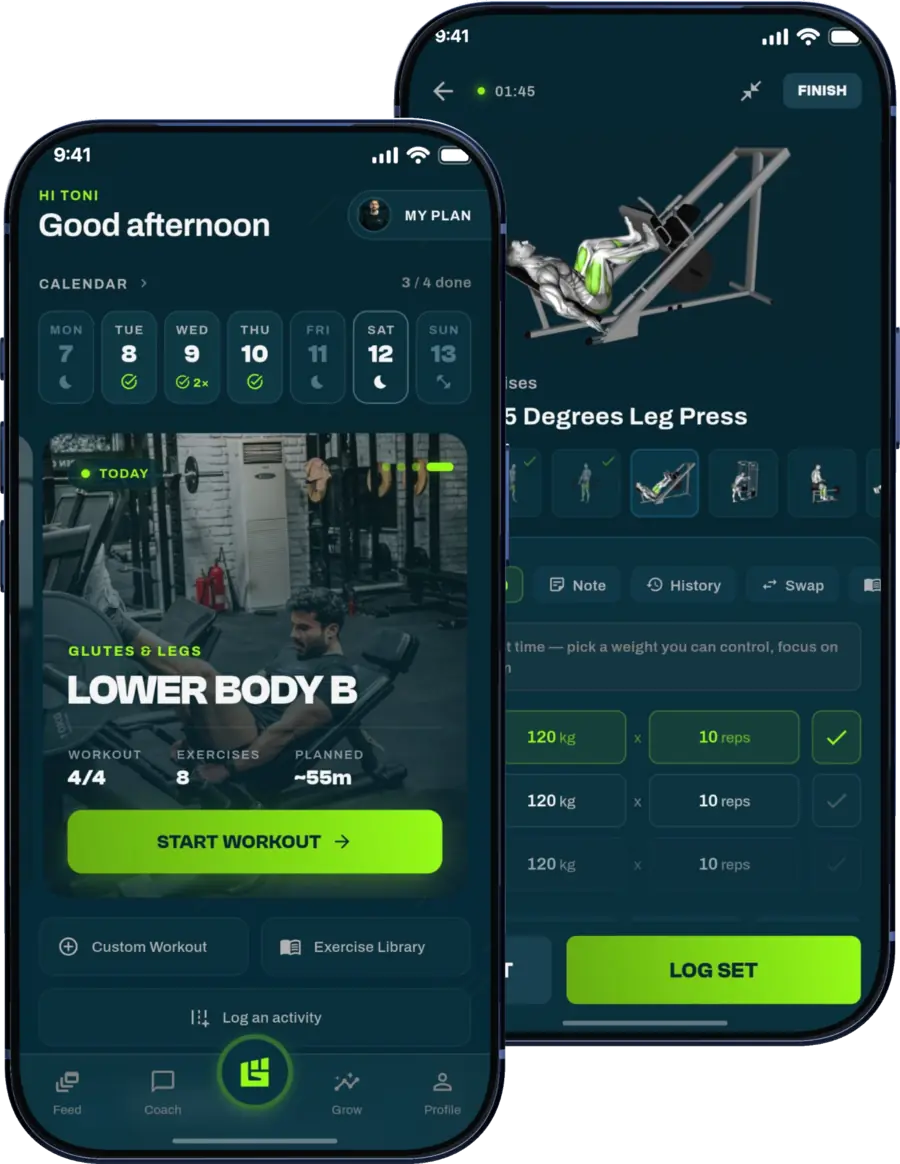
Get a personalized workout plan built around your goal, equipment and schedule. Train smarter, track every rep and keep moving forward, one workout at a time.






Finding your initial groove
To get started, take a moment to think about your daily energy levels and where you have gaps in your schedule. A quick, honest look at your day will point you toward the most practical window for a workout.
Ask yourself these questions:
- Energy and Focus: Are you sharpest after your morning coffee, or do you come alive in the late afternoon?
- Logistics: When do you have undisputed free time? Lunch breaks, right after work, or even late at night are all fair game.
- Motivation: Do you prefer to get your workout "out of the way" and feel accomplished, or do you need it to de-stress after the workday is over?
Answering these will help you find a time you can realistically commit to. And remember, the "best" time isn't set in stone. What works for you this month might not work next year, and that’s perfectly fine. The key is to adapt and keep moving.
Morning vs. evening workouts at a glance
This table gives you a quick look at the trade-offs, helping you see which time of day might align better with your goals and lifestyle right now.
| Time of Day | Primary Benefits | Potential Drawbacks |
|---|---|---|
| Morning | Helps build a consistent routine, boosts metabolism for the day, and gives you an early sense of accomplishment. | Body temperature is lower, so a longer warm-up is needed. Can be tough to stick with if you're not a "morning person." |
| Evening | Body temperature and strength levels are at their peak, which can lead to better performance. Great for relieving stress from the day. | Gyms are often more crowded. Intense exercise close to bedtime may interfere with sleep for some people. |
Ultimately, neither option is universally "better." The right choice is the one that removes the most friction from your life and allows you to show up, week after week.
Understanding your internal body clock
Ever feel like you’re fighting your own body just to get a workout in? Some days you’re full of energy, while other days feel like a total slog. The reason often comes down to your circadian rhythm.
Think of it as your body's internal 24-hour master clock. It’s the invisible schedule that governs when you feel alert, hungry, tired, and ready for action. This clock controls everything from your body temperature and hormone levels to your physical strength.
Understanding this rhythm is the first step to scheduling your workouts for better results with less effort. It's all about working with your biology, not against it.
What is your chronotype
Your chronotype is simply your body's natural preference for being active and sleeping at certain times. It's your personal "setting" on that 24-hour clock.
Most of us fit into one of three general groups:
- Morning Larks: You’re an early bird. You wake up easily, have the most energy before noon, and naturally start winding down as the evening approaches.
- Night Owls: You come alive later in the day. Mornings are a struggle, but your energy and focus peak in the afternoon and evening.
- Hummingbirds: You’re somewhere in the middle. Most people fall into this category, with relatively steady energy levels throughout the day and no major morning or evening peaks.
Knowing your chronotype isn't just a fun fact—it's a practical tool. Trying to force a high-intensity workout at 6 AM when you’re a natural night owl is a recipe for a sluggish, unproductive session. It's an uphill battle you don't need to fight.
Here’s how a daily schedule might look for a morning person versus an evening person.

As you can see, both morning and evening routines can easily fit into a busy day, leaving plenty of time for work and rest. The key is choosing the one that fits you.
Aligning workouts with your body clock
Once you know your chronotype, you can start planning your training to match it. This is where things get interesting, because your body is physically primed for performance at specific times of the day.
Your body temperature, hormone levels, and reaction time all fluctuate throughout the day. Core body temperature, for example, is typically lowest in the early morning and peaks in the late afternoon. A warmer body means your muscles are more pliable, which can reduce injury risk.
For morning larks, an early workout feels great because it lines up perfectly with their natural energy peak. It also helps lock in a consistent routine before the day’s distractions pile up.
Night owls, on the other hand, often discover their true strength in the afternoon or evening. This is when their body temperature is higher, reaction times are quicker, and strength output is often at its highest for the day. Training when your body is primed to go means you'll have more fuel in the tank, lift heavier, and actually enjoy it more.
By learning to respect your internal clock, you stop fighting an unnecessary battle and start using your own biology to your advantage. This simple shift can make all the difference.
The scientific case for afternoon workouts for strength
If your goal is to move heavy weight and chase new personal records, a lot of the science points toward the afternoon as your prime time to train. While nothing beats consistency, training when your body is naturally peaking can give you a real edge. For anyone chasing pure strength, that peak usually shows up between 2 PM and 6 PM.
Think of your body like an engine. In the morning, it's still cold and needs a good warm-up. By the afternoon, it's running at its optimal temperature, ready to fire on all cylinders. This isn’t just a feeling—it’s a physiological fact.

During this afternoon window, a few key biological factors line up to create the perfect storm for a powerful session. It’s not a magic bullet, but it's a natural boost that can make a noticeable difference in your lifts.
The warmth advantage for muscle performance
One of the biggest factors here is your core body temperature. It naturally rises all day and hits its highest point in the late afternoon, which is a massive advantage for strength training.
Warmer muscles are more pliable and elastic. This increased flexibility means you can hit a greater range of motion—think deeper squats or a better arch on your bench press—while also lowering your risk of strains and injuries.
This natural warm-up effect means your body is primed and ready for heavy loads. You’ll probably feel less stiff and more mobile, which helps you execute big lifts with better form and more force. It's exactly why so many competitive powerlifters and athletes schedule their heaviest sessions for the afternoon.
Hormonal peaks and sharpened reflexes
It's not just about body temperature; your internal systems are also firing on all cylinders. Key hormones like testosterone often see a favorable spike in the afternoon. Since testosterone is a major player in muscle protein synthesis, this creates an environment that's much more primed for building strength and size.
At the same time, your reaction time and neuromuscular coordination are typically at their sharpest. This translates to better performance in a few ways:
- Faster Reactions: For explosive movements like Olympic lifts or box jumps, quicker reaction times mean more powerful and efficient reps.
- Improved Coordination: The mind-muscle connection feels stronger, helping you recruit the right muscles and stay stable under a heavy bar.
- Enhanced Focus: Many people get a second wind of mental alertness in the afternoon, which is perfect for staying dialed in through tough sets.
This combo of physical readiness and mental sharpness makes the afternoon an ideal window for your most challenging workouts. Strength athletes often find their body peaks between 2 PM and 6 PM, hitting a maximum temperature that can unlock up to 20% more strength and flexibility, plus peak lung efficiency for better endurance. This window can boost oxygen uptake, letting you push through those grinder sets.
However, it's important to mention that a deep systematic review of 26 studies found limited proof that one specific time is universally best for gains. The real hack? Train at the time you'd typically compete or need to perform. You can explore the full research on training time adaptation to learn more.
Maximizing power and strength output
When you put it all together—higher body temperature, better hormone levels, and quicker reflexes—the result is a real, measurable increase in performance. Multiple studies have shown that both strength and power output are often greater during afternoon workouts compared to morning sessions.
For the average person in the gym, this might mean squeezing out an extra rep on your final set or finally adding another 5-10 pounds to the bar. For a competitive athlete, it could be the difference between hitting a new PR and getting stuck at a plateau.
As you plan out your training week, think about scheduling your heaviest days—like a heavy squat or deadlift day—for the afternoon. By lining up your toughest sessions with your body's natural peak, you give yourself the best possible shot at success and making steady progress toward your strength goals.
Why morning workouts win for fat loss and habit building
If your main goal is to drop some fat and finally build a fitness routine that sticks, getting it done in the morning gives you a huge advantage—both mentally and physically. It’s less about the "perfect" time and more about making your health a priority before the day has a chance to get in the way. For a lot of people, this is the secret to consistency.
You’ve probably heard of "fasted cardio." It's one of the biggest reasons morning workouts are so popular for fat loss. The logic is simple: when you train before breakfast, your body's quick-energy stores (glycogen) are running low after a night of sleep. This forces your body to pull fuel from its fat reserves instead, which can increase fat oxidation.
Think of your energy stores like two different fuel tanks in a car. You have a small tank of high-octane gas (glycogen) for quick bursts and a much larger tank of diesel (body fat) for the long haul. A fasted morning workout encourages your engine to start pulling from that bigger diesel tank sooner.
The power of habit stacking
Beyond the science, there’s a simple, undeniable win: you get it done. A work crisis, a family dinner, or just feeling wiped out is far more likely to torpedo a 6 PM workout than a 6 AM one. When you train first thing, you’re protecting your workout from the chaos of life.
This creates powerful momentum. By starting your day with an act of discipline, you’re more likely to keep making good choices. You've already put in the work, so that afternoon donut doesn't look as tempting. You’re already invested.
Of course, this only works if it's sustainable. You have to weigh the trade-offs and decide whether to prioritize sleep versus working out early. If you're chronically exhausted from waking up early, the benefits quickly disappear.
The most powerful part of a morning routine isn't just the workout itself—it's the statement you make to yourself. By putting your health first, you reinforce the mindset that you are committed to your goals, day in and day out.
Appetite control and all-day activity
Another perk of morning exercise is its impact on your appetite. Some studies suggest a morning session helps regulate hunger hormones, which can mean fewer cravings and better portion control for the rest of the day. For anyone trying to create a calorie deficit, that can be a massive help.
For instance, a 45-minute morning workout might be all it takes to keep your appetite in check all day, making it easier to stay on track.
And while morning exercisers often stay more active in general, don't forget the big picture. If longevity is a goal, make sure strength training is in the mix. Just 30-60 minutes a week can cut your risk of all-cause death by 10-20%. Even better, combining it with aerobic exercise could lower that risk by up to 42%. You can learn more about how workout timing impacts your health goals.
Between the enhanced fat burning, the foolproof scheduling, and the appetite control, it’s easy to see why mornings are the best time to workout for so many people chasing fat loss. It simplifies the process and builds the discipline that creates real, lasting change.
How evening exercise supercharges your metabolic health
Most people see an evening workout as a great way to blow off steam after a long day. While that’s true, it’s also a powerful tool for improving your metabolic health, especially in how your body handles the food you’ve eaten.
An evening session can act like a metabolic cleanup crew for your system. It helps you burn through the fuel from your meals and gets your body ready for a night of rest and recovery. This simple shift can make a huge difference in how you manage blood sugar and fats long-term.
Evening exercise for better blood sugar control
One of the biggest wins for evening exercise is its effect on glycemic control—your body’s ability to manage blood sugar. When you train, your muscles become far more sensitive to insulin, the hormone that moves glucose from your blood into your cells for energy.
This boost in insulin sensitivity means your body can do its job with less effort. For anyone focused on avoiding insulin resistance or just wanting more stable energy, a post-dinner walk or gym session can be a game-changer. It helps flatten the blood sugar spike from your meal, setting you up for a more balanced metabolic state overnight.
Think of it this way: An evening workout gives your muscles one last job for the day—soaking up any leftover blood sugar. This leaves less of it floating around in your bloodstream while you sleep, which supports better metabolic health and can even help you wake up feeling more refreshed.
A fascinating study showed this perfectly. Researchers took a group of overweight, sedentary men and put them on a high-fat diet for 10 days, with 65% of their calories from fat. Within just five days, their metabolic health was in trouble. But the group that exercised in the evening saw their cholesterol levels drop and blood sugar control improve far more than the group exercising in the morning. You can discover more about how evening exercise boosts metabolic health from this study.
The impact on cholesterol and heart health
The benefits don't stop at blood sugar. That same study showed that evening workouts have a major impact on blood lipids, like cholesterol—especially after a high-fat meal.
When you exercise later in the day, you’re telling your body to burn those fats for fuel instead of storing them. This process helps lower triglycerides and "bad" LDL cholesterol, both of which are major risk factors for heart disease.
Here’s how an evening session can support your heart:
- Improved Lipid Profile: By burning fatty acids for energy, evening workouts help lower circulating triglycerides and LDL cholesterol.
- Lowered Blood Pressure: The combination of post-workout endorphins and better blood vessel flexibility can contribute to healthier blood pressure.
- Reduced Inflammation: Regular exercise is a powerful anti-inflammatory, and an evening routine helps offset the effects of a sedentary day or a rich meal.
If you spend most of your day at a desk, an evening workout is a fantastic way to hit the reset button on the metabolic effects of being inactive. It’s a simple, proactive step toward building a more resilient system that’s ready to handle whatever you throw at it.
Finding your personal best workout time
We've covered the science behind morning, afternoon, and evening training, but let's be real: the best time to work out is the time you'll actually do it. And do it well.
It’s about finding your personal sweet spot—that perfect intersection of your body’s natural rhythm, your fitness goals, and the messy reality of your daily schedule. This is where you move past generic advice and start building a strategy that works for you.
How to run your own workout timing experiment
To find your performance window, you just need to play detective for a couple of weeks. The plan is simple: train at different times and track how you feel and perform. No complicated spreadsheets needed.
Spend one week training in the mornings. The next week, shift your sessions to the afternoon or evening. During each workout, pay attention to a few key performance markers.
This isn't about finding one "perfect" time and sticking to it forever. It's about learning your body's patterns so you can make smarter decisions. You might find you're a beast for heavy squats in the afternoon but prefer morning sessions for cardio. That’s valuable information.
Key metrics to track
Grab a notebook or use your phone to log your feedback. For each workout, rate these four things on a simple 1-10 scale.
- Energy Level: How did you feel walking into the gym? (1 = Dragging yourself there, 10 = Bouncing off the walls)
- Perceived Strength: How strong did your muscles feel during your lifts? (1 = Everything felt heavy, 10 = Unstoppable)
- Focus & Motivation: How locked-in were you? (1 = Distracted and just going through the motions, 10 = Completely in the zone)
- Post-Workout Mood: How did you feel right after? (1 = Drained and cranky, 10 = Energized and accomplished)
After two weeks, you’ll have a clear picture of your body's daily performance curve. You might be surprised to find your strength peaks at a time you never considered. This data is your new blueprint for scheduling workouts that deliver the best possible results.
Of course, a great workout is only half the battle. Remember that optimizing your deep sleep and recovery is just as critical for making real progress. Use what you learn from your experiment to build a routine that’s not just effective, but sustainable.
Frequently asked questions about workout timing
We've gone through the science, but you might still have a few practical questions. Let's clear up some of the most common ones.
Can I switch my workout times?
Of course. Life happens, and your workout schedule should be able to bend without breaking. You're not locked into one time slot forever.
In fact, changing things up can sometimes help you find a new performance sweet spot. The most important thing is overall consistency—hitting your workouts week after week is what matters, not whether they all happen at the exact same time.
Is it better to eat before or after a workout?
This really comes down to your goal. If you're doing a morning session for fat loss, training fasted might give you a slight edge.
For afternoon or evening strength training, a meal with carbs and protein about 1-2 hours before you lift will give you the fuel you need to perform. And no matter when you train, a post-workout meal is always a good idea to kickstart recovery and repair.
What if I can only work out late at night?
If a late-night session is your only shot, take it. A workout then is far better than no workout at all. While some studies show intense exercise right before bed can interfere with sleep, plenty of people—especially night owls—find it helps them unwind.
The key is to listen to your body. If you feel wired and can’t fall asleep, try finishing your workout at least 90 minutes before your head hits the pillow. You could also lower the intensity a bit.
Ultimately, your body will tell you what works.
Ready to stop guessing and start training smarter? GrabGains builds a personalized workout plan that adapts to your goals, schedule, and performance. Find your personal best time to workout and get a plan that truly works for you.
Get inspired and motivated