Cardio before or after weights? The definitive guide
Settle the cardio before or after weights debate. Learn how to sequence your workouts for maximum muscle gain, fat loss, and performance. So, what’s the final answer? Should you do cardio before or after you lift weights?
The short answer is simple: it all comes down to your primary goal. If you’re training to build muscle and get stronger, you should always lift weights first. But if you’re training for a marathon or another endurance event, it’s better to do your cardio first.
This approach, known as goal-specific sequencing, makes sure you have the most energy available for the activity that matters most to your progress.

The final answer on cardio before or after weights
The debate over workout order is one of the most common questions in fitness, but the truth is, there’s no single “best” answer for everyone. The right sequence is the one that aligns with what you want to achieve.
Think of it this way: your body only has a finite amount of energy to spend in any given workout. The very first thing you do gets the best of your focus and fuel. Whatever comes second will always be done in a more fatigued state.
That’s why matching your workout order to your goals isn’t just a small detail—it’s a non-negotiable part of getting the best results.
Built for progress
Take the guesswork out of training
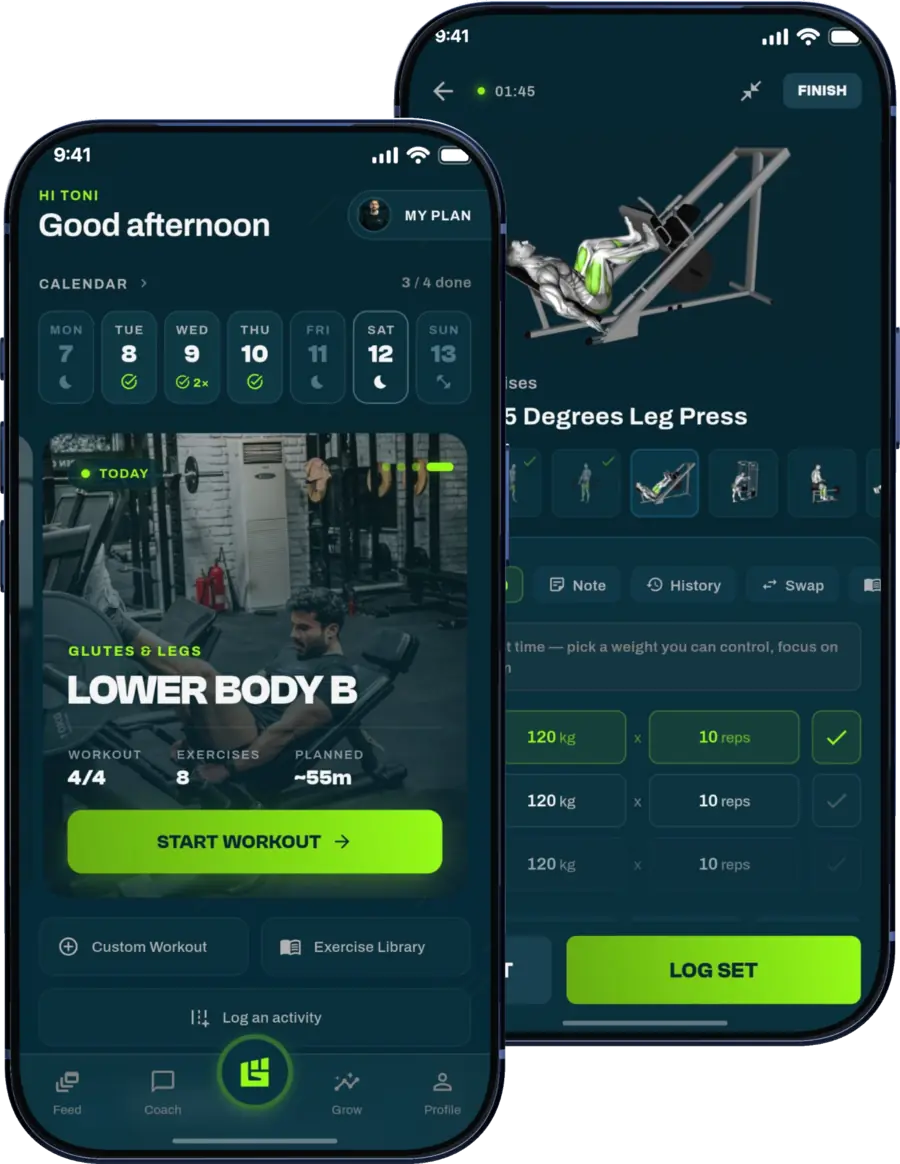
Get a personalized workout plan built around your goal, equipment and schedule. Train smarter, track every rep and keep moving forward, one workout at a time.






The interference effect
On a physiological level, your body has very different responses to strength and endurance training. Lifting weights signals your body to build muscle (anabolism), while endurance cardio activates pathways for aerobic adaptation.
When you do both in the same session, you can create a biological conflict known as the interference effect. In short, the signals from endurance training can sometimes dampen the signals for muscle growth. Choosing the right workout order helps minimize this conflict and tells your body exactly what you want it to prioritize.
Workout order based on your primary fitness goal
To make the decision easy, here is a quick-reference table. Use it to find the recommended workout sequence based on what you want to achieve.
| Primary Goal | Recommended order | Key rationale |
|---|---|---|
| Muscle Growth / Strength | Weights Before Cardio | Preserves maximum energy and glycogen for heavy lifting, promoting strength gains and hypertrophy. |
| Endurance Performance | Cardio Before Weights | Allows you to perform your run, cycle, or swim with fresh legs and peak cardiovascular capacity. |
| Fat Loss / Body Recomposition | Weights Before Cardio | Maximizes calorie burn through the "afterburn effect" (EPOC) and conserves strength to maintain muscle mass. |
| General Health & Fitness | Either Order / Alternate | The order is less critical. Focus on consistency and choose the sequence you enjoy the most to stay committed. |
With this framework, you can align every workout with your specific fitness ambitions, ensuring you’re always training as effectively as possible.
This decision tree gives you a clear visual guide for choosing your workout order, depending on whether your goal is more focused on muscle or endurance.

The key takeaway is that your primary goal should be the starting point for structuring every single workout. Once you understand this simple principle, all the guesswork disappears, and you can get straight to training for what you want to achieve.
How your body responds to workout order
When you walk into the gym, your body doesn't just register "exercise." It sees specific demands that trigger very different physiological responses. The order you place those demands in—cardio before weights or vice versa—changes how your body uses energy and signals for growth.
Think of your muscles as having a limited tank of high-octane fuel for your workout. This fuel is supplied by different energy systems, and knowing how they work is the key to structuring your training for the best results.
A quick look at your body's energy systems
Your body uses three main energy systems during exercise. They don't switch on and off like a light; they work together on a sliding scale depending on what you’re asking your body to do.
- ATP-PC System: This is your explosive-power system. It provides immediate energy for very short bursts, like a one-rep max attempt or a quick sprint. It's the first to fire up but it's gone in about 10-15 seconds.
- Glycolytic System: When your explosive energy runs out, this system takes over. It breaks down stored carbs (glycogen) to fuel intense efforts lasting from 30 seconds to about two minutes. This is what powers most of your weightlifting sets.
- Oxidative System: For longer, lower-intensity activities like jogging, your body shifts to the oxidative system. It uses oxygen to burn both carbs and fat, creating a slow, steady energy supply that can go for hours.
Weightlifting primarily runs on the first two systems—the ATP-PC system for a heavy single and the glycolytic system for a set of 8-12 reps. Cardio mostly uses the oxidative system, but it will dip into your glycolytic system during high-intensity intervals. That overlap is where the problem starts.
The glycogen dilemma: why cardio first can sap your strength
Your muscles’ main fuel for lifting weights is glycogen. It's what lets them contract powerfully, rep after rep. When you do cardio before you lift, you start draining that critical fuel tank before your strength workout even begins.
Even a moderate 30-minute run can burn through a big chunk of your glycogen stores. By the time you get to the squat rack, your muscles are already running on fumes. This directly leads to a drop in performance.
When you do cardio first, you’re essentially starting your strength workout with a handicap. Your muscles simply don't have the readily available energy to perform at their peak, which means fewer reps, less weight lifted, and weaker muscle-building signals.
Research backs this up. A study in the Journal of Strength and Conditioning Research found that when men did intense cardio before their strength workout, their muscular endurance dropped significantly. That’s because even moderate cardio can burn through 30-40% of your available muscle glycogen, leaving little in the tank for heavy lifting. You can read the full findings on why lifting before cardio is better for strength gains.
The hormonal response to workout order
It’s not just about energy. Your workout order also shapes your body's hormonal environment. Exercise triggers the release of key hormones that manage muscle growth, fat loss, and stress. The sequence of your training can tilt this hormonal balance in your favor—or against it.
Two of the most important hormones for building muscle are testosterone and human growth hormone (HGH). Heavy resistance training is a powerful way to boost both. On the other hand, long or intense cardio can increase cortisol, a stress hormone known for its catabolic (muscle-breakdown) effects.
When you lift weights first, you create an anabolic, muscle-building hormonal state. Following up with cardio helps keep cortisol in check. But if you do it the other way around—hitting the treadmill hard first—you can spike cortisol right before you ask your body to build muscle, creating a conflicting signal. For anyone whose priority is strength and muscle, the science is clear: lift first to get the hormonal advantage.
The Smartest Sequence for Fat Loss and Muscle Gain
If you're training to change your body composition—stripping away fat while building or preserving muscle—your workout order is a critical tool. Deciding whether to hit the treadmill or the squat rack first isn’t a small detail. It directly shapes your results, both in the gym and on the scale.
For anyone chasing a lean, strong physique, the sequence you choose can either speed up your progress or hold you back. The key to better fat loss and muscle gain is managing your energy and deciding what to ask of your body first. Prioritizing resistance training sets off a powerful chain reaction that helps you burn more calories, hold onto hard-earned muscle, and even feel more energized for the rest of your day.
The afterburn effect and calorie burn
One of the biggest wins for lifting weights first is maximizing the “afterburn effect,” known in science as Excess Post-exercise Oxygen Consumption (EPOC). This is just a technical term for the extra oxygen your body needs to get back to its resting state after a tough workout.
Intense resistance training, especially sessions built around big compound movements, creates a huge metabolic disturbance. Your body has to work for hours afterward to repair muscle fibers, restock energy stores, and rebalance hormones. This entire recovery process demands energy, meaning you keep burning extra calories long after you’ve left the gym.
When you do cardio before lifting, you show up to the weights partially fatigued. This caps your ability to lift with the intensity needed to trigger a big EPOC response. By hitting the weights while you’re fresh, you can work harder, lift heavier, and create a much larger afterburn, leading to a higher total calorie burn over the next 24 hours.
Conserving energy for more effective lifts
Beyond the afterburn, lifting first is simply more efficient for building and maintaining muscle, especially when you’re in a fat loss phase. To stimulate muscle growth, you have to challenge your muscles with enough weight and volume. That requires your full strength and focus.
If you start with a 30-minute cardio session, you burn through precious glycogen—your muscles' go-to fuel for powerful contractions. As a result, your performance on key exercises like squats, deadlifts, and presses will take a hit. You’ll either complete fewer reps or be forced to use lighter weights, which sends a weaker signal for muscle preservation and growth.
A resistance-first approach ensures that 100% of your energy goes toward the activity that actually builds and maintains muscle mass. This is non-negotiable when you're in a calorie deficit, as your body is already looking for ways to conserve energy—which can include breaking down muscle tissue.
This strategic order makes a real, measurable difference. A groundbreaking study showed that a resistance-first group saw significantly greater reductions in overall body fat compared to a group that did cardio first. The results were especially noticeable in the loss of visceral fat, the dangerous fat that surrounds your organs. You can dig into the study's findings on workout order for more details.
From the gym to your daily life
The benefits of a smarter workout sequence don’t stop at the gym door. The same study highlighted a fascinating real-world advantage: the group that lifted weights first was more active throughout the rest of the day.
Here’s how that broke down:
- Resistance-First Group: Increased their daily activity by an average of 3,500 steps.
- Cardio-First Group: Increased their daily activity by only 1,600 steps.
That difference is huge. Doing intense cardio first can leave you with a lingering fatigue that makes you more likely to be sedentary later on. In contrast, lifting first leaves you feeling strong and energized, encouraging more movement throughout the day—a key driver of successful, sustainable fat loss.
While the "weights before cardio" rule holds up for most people training for strength or fat loss, it has one massive exception: endurance athletes.
If you're training for a marathon, a triathlon, or a grueling functional fitness event like HYROX, flipping the script isn't just an option—it's essential for hitting peak performance.
The logic is simple. An endurance athlete’s number one goal is improving their capacity for sustained cardiovascular work. That means training your heart, lungs, and muscles to fight fatigue over long distances or extended time. To do that right, you have to tackle your main sport—running, cycling, or swimming—when you are 100% fresh.
Prioritizing your main event
Picture a marathon runner trying to start a long training run after a heavy leg day. Their quads, hamstrings, and glutes are already fried from squats and lunges. This is a recipe for a terrible session.
Trying to perform your primary sport on pre-fatigued muscles completely sabotages your ability to train at the intensity and duration you need. Your form breaks down, your pace tanks, and the overall quality of your workout plummets. This doesn’t just slow your progress; it dramatically increases your risk of overuse injuries.
For endurance athletes, strength training plays a supportive role. It’s there to build durability, improve running economy, and reduce injury risk—it’s not the main event. Because of this, it has to be scheduled in a way that doesn't get in the way of the most important training.
The science of endurance-first training
The negative impact of lifting before a long cardio session is well-documented. Studies looking at this exact scenario have found that strength training beforehand can significantly cut into an athlete's power, speed, and stamina. For anyone pushing their limits, this interference effect can make or break a training block.
Doing cardio on muscles that are already tired from lifting not only spikes your injury risk but also creates lingering fatigue that gets in the way of crucial endurance adaptations. Your body gets mixed signals, trying to recover from muscle damage while also trying to improve aerobic efficiency. In the end, you blunt your progress in both.
For an endurance athlete, starting a workout with heavy lifting is like asking a sprinter to jog a mile before a 100-meter final. It drains the specific energy and neuromuscular drive needed to perform at your best in your chosen discipline.
This principle is exactly why goal-specific programming is so important. A truly personalized plan has to account for the unique demands of an athlete's sport. For endurance athletes aiming to improve race performance, learning the benefits of adding strength training for distance runners often means breaking conventional workout rules.
How endurance athletes should structure their workouts
So, what does this actually look like? The best approach for an endurance athlete is to put their key cardio sessions first, no matter what.
Here are two effective strategies:
- Cardio-First on the Same Day: If you have to train both on the same day, do your run, bike, or swim first. After a short rest, you can follow it up with a targeted, non-conflicting strength session (like an upper body lift after a long run).
- Separate Days: The gold standard is to put your cardio and strength training on completely separate days. This allows for full recovery between sessions and eliminates the interference effect entirely, ensuring you get maximum quality out of every single workout.
By putting cardio first, endurance athletes make sure they have the energy, focus, and fresh legs needed to push their cardiovascular limits and make real progress toward their goals.
Putting it into practice with sample workouts

Knowing the science is one thing, but putting it to work in the gym is what really matters. Let's walk through a few practical templates you can use, depending on what you’re training for.
Think of these as starting points. Feel free to swap out exercises based on your preferences and what equipment you have access to.
Template 1: muscle growth focus
If your main goal is building strength and size, you have to prioritize lifting. This workout puts your heavy compound lifts first while you’re fresh, then adds a touch of low-intensity cardio to help with recovery without getting in the way of your gains.
Weight Training (50-60 minutes)
- Warm-up: 5-10 minutes of dynamic stretching and light cardio.
- Barbell Back Squats: 4 sets of 6-8 reps.
- Dumbbell Bench Press: 4 sets of 8-10 reps.
- Barbell Rows: 3 sets of 8-12 reps.
- Overhead Press: 3 sets of 10-12 reps.
Post-Lift Cardio (15-20 minutes)
- Activity: Incline walking on a treadmill or steady-state cycling.
- Intensity: Keep it low (Zone 2). You should be able to hold a conversation easily.
Template 2: endurance performance focus
For anyone training for a marathon, triathlon, or a HYROX race, cardio is the main event. This setup makes sure you can tackle your primary endurance work with full intensity, then follow it up with targeted strength work that builds resilience without crushing you.
Cardio (45-60 minutes)
- Activity: Your main sport (e.g., running, cycling, rowing).
- Structure: Mix steady-state effort with intervals, like 4 rounds of 800-meter repeats at a hard pace with rest in between.
Strength Training (20-30 minutes)
- Focus: Muscular endurance and support work, not heavy lifting.
- Kettlebell Goblet Squats: 3 sets of 15-20 reps.
- Push-ups: 3 sets to near-failure.
- Glute Bridges: 3 sets of 15 reps.
- Plank: 3 sets, holding for max time.
If you're looking for more ways to fit both types of training into your week, this resource offers a practical guide to combining cardio and lifting on the same day. It’s a great read for extra context on scheduling.
Advanced programming: split sessions
For serious athletes looking to be great at both strength and endurance, the ideal approach is to separate your training sessions completely. This pretty much eliminates the interference effect by giving your body plenty of time to recover between different types of workouts. A dedicated workout builder can make scheduling these more complex splits a breeze.
Here’s what a weekly split might look like:
- Monday: Heavy Lower Body Strength
- Tuesday: High-Intensity Interval Training (HIIT) Cardio
- Wednesday: Heavy Upper Body Strength
- Thursday: Low-Intensity Steady-State (LISS) Cardio or Rest
- Friday: Full-Body Strength
- Saturday: Long-duration endurance session (e.g., long run)
- Sunday: Active Recovery or full rest
With a split like this, you can go into every single session—whether it's lifting heavy or running hard—with a full tank of gas, ready to give it your all.
Frequently Asked Questions About Workout Sequencing
Even with the best plan, you're bound to have questions when it comes to organizing your training. Let’s clear up some of the most common ones about cardio before or after weights so you can build your workouts with confidence.
What if my goal is general health and fitness?
When your main goal is just to be healthy and fit, the order is much more forgiving. Even so, starting with weights is a solid default choice. This ensures you have the energy to tackle big compound lifts like squats and deadlifts, which are fantastic for everything from bone density to your metabolism.
Finishing with cardio handles the heart health side of things. But honestly, the most important thing for general fitness is just showing up consistently. If doing your cardio first gets you in the door and keeps you motivated, then stick with what works for you.
How long should I wait between weights and cardio?
If you're doing both in the same workout, a quick 5-10 minute break is plenty. That’s just enough time to catch your breath, grab some water, and switch gears mentally.
But if you’re serious about getting the most out of both your lifting and your cardio, splitting them up is a much smarter move.
The ideal separation is at least 6-8 hours between your strength and cardio workouts. This gives your body time to replenish energy and let your nervous system recover, which minimizes that interference effect and allows you to give your best effort to both sessions.
Does the type of cardio I do matter?
Absolutely. The type and intensity of your cardio are huge factors. For instance, a light 10-minute spin on a bike before you lift is actually a great idea. It gets the blood flowing and warms up your muscles without sapping your energy.
On the other hand, blasting through a 30-minute HIIT session before you even touch a weight is a completely different story. It will drain your glycogen stores and fatigue your nervous system, guaranteeing your lifts will suffer. If you must do cardio first, keep it short and low-intensity. If you do it after, the world is your oyster—you can go as hard or as long as you want.
Should I do cardio and weights on different days?
For anyone serious about maximizing their results, yes—splitting strength and cardio onto separate days is the gold standard. This strategy completely eliminates the interference effect, giving you the best shot at full recovery between workouts.
It ensures you can bring 100% effort to every single session. A simple and effective schedule could look like this:
- Strength Days: Monday, Wednesday, Friday
- Cardio Days: Tuesday, Saturday
This kind of split lets your body fully adapt to each specific training style without any biological wires getting crossed. Over time, that means better gains in both strength and endurance. It's the cleanest way to guarantee peak performance.
Ready to stop guessing and start training smarter? The GrabGains fitness platform builds a workout plan perfectly sequenced for your goals. Whether you're focused on muscle growth, endurance, or fat loss, our adaptive technology ensures you're always doing the right workout at the right time. Download GrabGains on iOS or Android and get a plan that feels like having a personal trainer in your pocket.
Get inspired and motivated