Chest not growing? A guide to building a bigger chest
Is your chest not growing despite consistent training? Uncover the science-backed reasons and get a proven plan to fix common mistakes for real muscle growth. If you’re consistently hitting chest day but your pecs refuse to grow, you've encountered one of the most common plateaus in weightlifting. The good news is, this problem is almost always fixable. The issue usually isn't your genetics. It’s that your shoulders and triceps are taking over during presses, leaving your chest without the tension it needs to get bigger. The solution begins with understanding why that's happening.
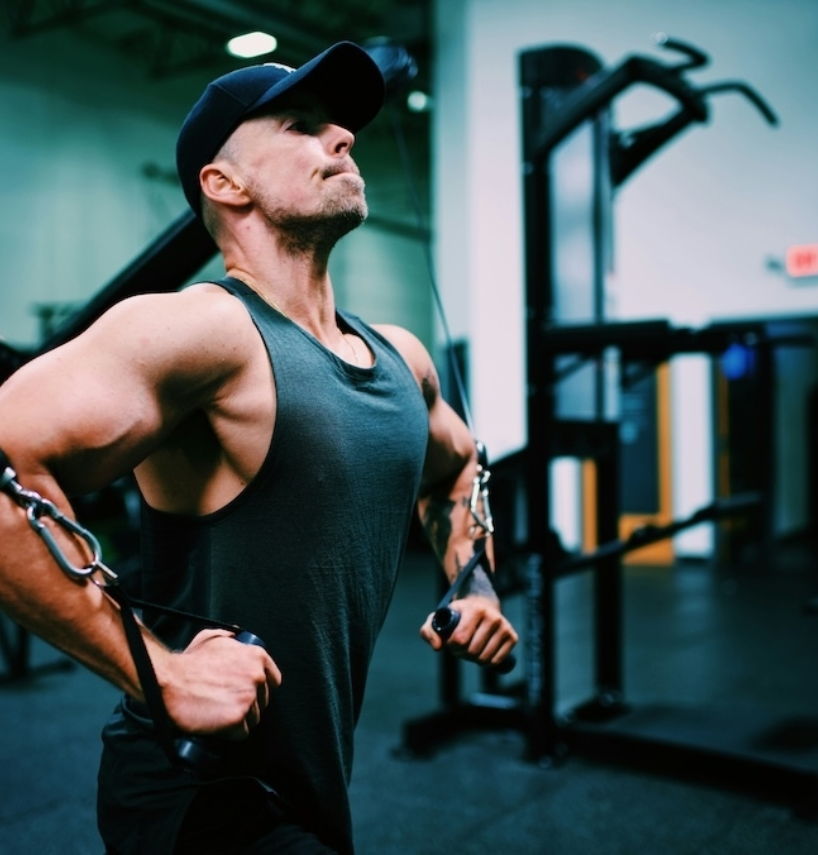

Understanding why your chest growth has stalled
Before you start piling on more sets or chasing a new bench press max, you have to diagnose the real issue. Many lifters think "more is better," but if your current approach isn't working, doing more of it won't help. A stubborn chest isn’t really stubborn—it just needs the right kind of stimulus.
Your progress has likely stalled due to one of three main culprits: improper form, incorrect training volume, or poor exercise selection. Identifying which one is holding you back is the first step toward building the stronger, more developed chest you're working for.
The most common growth killers
Most chest plateaus trace back to a few simple training mistakes. These aren't complex biomechanical riddles; they're small errors that add up over time, robbing your pecs of the tension required for hypertrophy.
Built for progress
Take the guesswork out of training
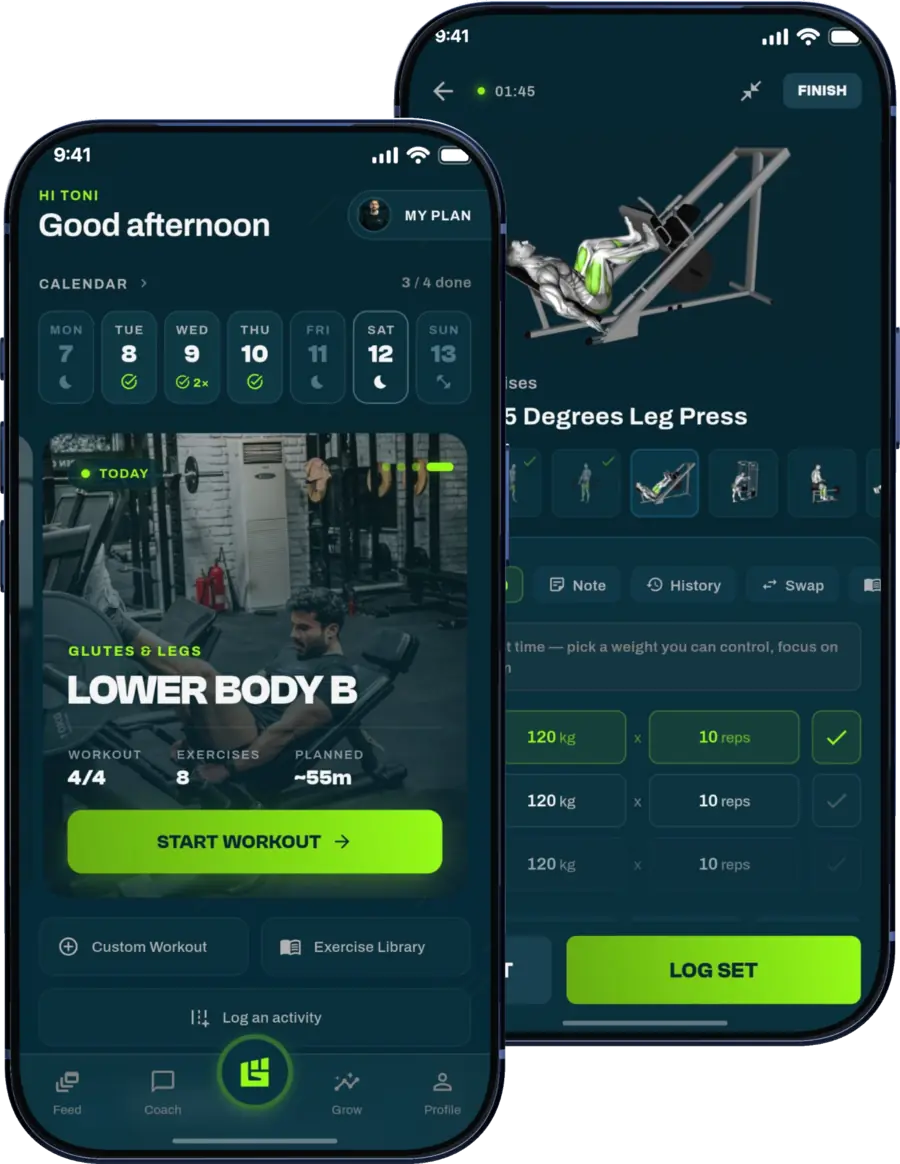
Get a personalized workout plan built around your goal, equipment and schedule. Train smarter, track every rep and keep moving forward, one workout at a time.






The primary issues almost always include:
- Dominant helper muscles: Your shoulders and triceps are supposed to assist in pressing movements. But if your form is even slightly off, they can completely take over, leaving your chest understimulated.
- Insufficient volume: Your chest might simply need more work. There’s a direct link between weekly set volume and muscle growth, and many people aren't doing enough to trigger a response.
- Poor exercise choice: Relying only on the flat barbell bench press is a classic mistake. This can neglect entire regions of your chest, especially the upper fibers, leading to imbalanced development.
This decision tree can help you quickly pinpoint whether your form, volume, or exercise selection is the weak link in your training.

As you can see, a chest that isn't growing is rarely a single-issue problem. It's something you can systematically diagnose by looking at your technique, how much you're training, and the exercises you're choosing.
Conducting your self-assessment
To start fixing things, you need to be honest about your current routine. Don't just assume you're doing everything right. Ask yourself some tough questions.
For example, when you bench press, where do you really feel it? If the burn is mostly in your front delts or triceps, that’s a huge red flag. It’s a clear sign that tension is going to the wrong places.
Key Takeaway: If you can't feel your chest working during your workouts, it's not growing. The mind-muscle connection isn't just a bodybuilding cliché; it's a real-time indicator of whether you're effectively targeting your pecs.
Run through this quick checklist during your next chest workout:
- Mind-muscle connection: Can you actually squeeze your pecs at the top of a press or fly, or are you just moving the weight?
- Range of motion: Are you using a full range of motion, getting a deep stretch at the bottom of the rep?
- Soreness: Where are you sore the next day? If your shoulders are screaming but your chest feels fine, you have your answer.
- Progressive overload: Are you consistently trying to add a little more weight or do an extra rep, and are you tracking it?
Answering these questions will give you the clues you need to find your specific limiter. Once you know the "why," you can finally apply the right solutions and start building the chest you’ve been working for.
If your chest growth has ground to a halt, it's almost always because you’re not giving the muscle a strong enough reason to get bigger. Muscle growth—or hypertrophy—is a direct response to stress. To build a bigger chest, you have to apply the right kind of stress, and that comes down to two things: volume and intensity.
It's time to move past the old "3 sets of 10" advice. That cookie-cutter approach doesn't work long-term because it ignores how muscles actually adapt. We need to create a powerful and consistent signal for growth, making sure every set you do is pushing the needle forward.
Dialing in your training volume
Training volume is the total work you do, usually measured in sets per muscle group per week. This is, without a doubt, the most important dial to turn when your chest has stopped growing. Your form can be perfect and your diet on point, but if your volume is too low, your pecs simply won't get the memo to grow.
This is a massive issue for many lifters. Up to 70% of intermediates report hitting a wall with their chest development after their first year of solid training. The science usually points to one main culprit: not enough weekly sets. Research shows that for chest growth, you need somewhere between 8 and 32 sets per week, but the sweet spot for breaking through a plateau is often around 15-18 sets. Dip below 10 sets, and you’re barely stimulating growth. Push past 20 without excellent recovery, and you’re just digging a hole for yourself. For a great breakdown of these numbers, check out this video about training volume for muscle growth on YouTube.
So, what does this look like in practice? Let's say your current chest day is:
- Barbell Bench Press: 3 sets
- Incline Dumbbell Press: 3 sets
- Cable Flyes: 3 sets
That’s only 9 total sets for the week. You're leaving a lot of potential growth on the table.
How to structure your volume for better gains
Just piling more sets onto one workout isn’t the smartest move. A much better strategy is to increase your training frequency. Splitting your weekly sets across two or even three sessions lets you bring more energy and focus to each workout, and you get to trigger muscle protein synthesis more often.
Instead of a single, brutal 18-set chest day that leaves you sore for a week, try this approach:
- Workout A (Monday):
- Incline Barbell Press: 4 sets
- Flat Dumbbell Press: 3 sets
- Dips (chest-focused): 2 sets
- Total: 9 sets
- Workout B (Thursday):
- Flat Barbell Press: 4 sets
- Incline Dumbbell Fly: 3 sets
- Decline Machine Press: 2 sets
- Total: 9 sets
This keeps you in that sweet spot of 18 sets per week but ensures you’re fresh enough to lift with good form and high intensity every time you train your chest.
Don't forget about intensity
If volume is king, then intensity is queen. Intensity is just a way of saying how hard you’re working, and we measure it by how close you get to failure. If you finish a set feeling like you could have cranked out five more reps, you’re not training hard enough to signal real growth.
To actually challenge your muscles, you have to push most of your sets near the point of muscular failure—that moment where you can't do another rep with good form.
The last few reps of a set are where the magic happens. These are the "effective reps" that force your body to recruit the most muscle fibers and create the strongest stimulus for growth.
For most of your chest sets, aim to finish with just 1-2 Reps in Reserve (RIR). This means you should feel like you only had one or two more good reps left in the tank. This level of effort guarantees you’re creating the mechanical tension your pecs need to adapt. You don't need to go to absolute failure on every set—that's a quick way to burn out—but you absolutely have to get close.
Building your ultimate chest exercise toolkit
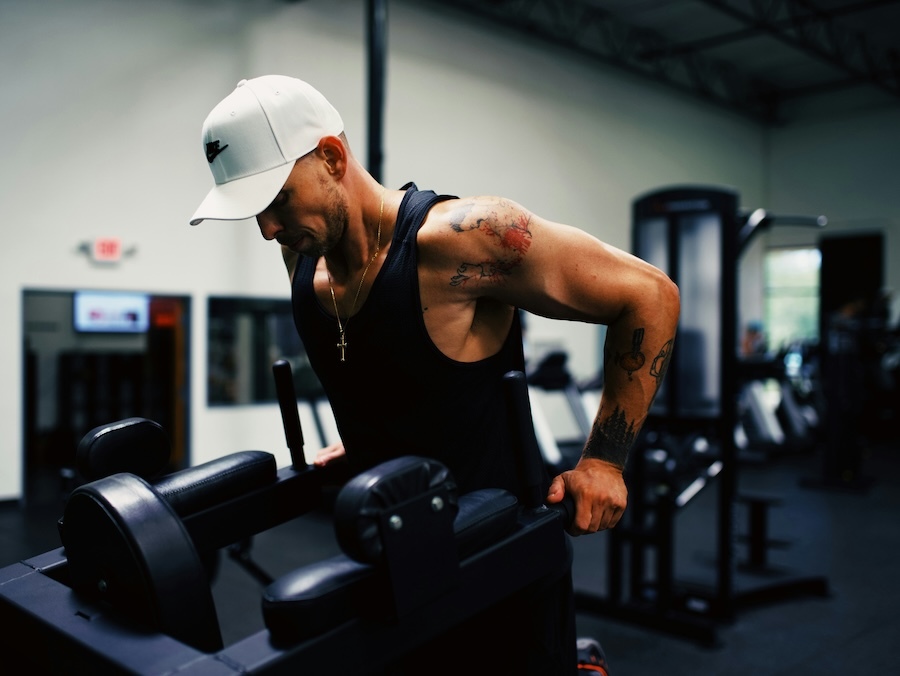
If your chest growth has hit a wall, there’s a good chance your exercise selection is to blame. It’s a common trap: sticking to the same flat barbell bench, incline press, and flyes week after week. While those are solid movements, a truly impressive chest is built with a wider variety of tools.
To kickstart new growth, you need to think like a carpenter building a house. You wouldn't use just a hammer. You need exercises that hit your pecs from different angles, use different resistance profiles, and serve different purposes—from building raw strength to sculpting specific areas.
The foundation: heavy compound lifts
Compound lifts are the bedrock of any serious chest routine. These are your heavy hitters, the movements that recruit the most muscle and let you move the most weight. This creates powerful mechanical tension, which is one of the most effective signals for your body to build new muscle.
The barbell bench press is the go-to for a reason. Research backs this up. An ACE-sponsored study in 2012 measured muscle activation across several popular chest exercises. The barbell bench press came out on top, showing 100% mean EMG activation in the pectoralis major. For comparison, the pec deck hit 98%, cable crossovers hit 93%, and the seated chest press machine managed 79%. The takeaway is clear: heavy compound lifts are non-negotiable for maximizing muscle fiber recruitment.
Your chest program should be built around these foundational presses:
- Barbell Bench Press (Flat & Incline): The flat press is your bread and butter for overall chest mass and strength. The incline press is essential for targeting the often-stubborn upper chest fibers.
- Dips (Chest-Focused): When you lean your torso slightly forward, dips become an incredible movement for carving out the lower pecs and creating that sharp, defined line.
A common mistake is thinking you can build a great chest with only machines or light weights. Heavy, multi-joint presses should always form the core of your program if growth is the goal.
The refinement: dumbbells for hypertrophy
While barbells are unmatched for lifting the heaviest possible weight, dumbbells are arguably superior for pure muscle building (hypertrophy). Because each arm has to work on its own, they expose and correct strength imbalances you never knew you had.
More importantly, dumbbells give you a much greater range of motion. You can get a deeper stretch at the bottom and a more intense squeeze at the top—something a fixed barbell simply can’t offer.
- Dumbbell Press (Flat, Incline, Decline): These are perfect as your main accessory lift after your heavy barbell work. Focus on a controlled tempo and really feel the muscle working through the stretch.
- Dumbbell Flyes: This is a classic isolation move for stretching the pec fibers under load. Just be smart about the weight; going too heavy is a fast track to a shoulder injury.
Chest exercise activation and purpose
| Exercise | Primary Target Area | Muscle Activation (EMG %) | Best For |
|---|---|---|---|
| Barbell Bench Press | Mid Chest, Overall Mass | 100% | Building foundational strength and size. |
| Incline Dumbbell Press | Upper Chest | ~90% (angle-dependent) | Targeting the upper pecs for a fuller look. |
| Chest Dips | Lower Chest | ~85-90% | Developing the lower chest line. |
| Pec Deck Fly | Mid/Inner Chest | 98% | High-tension isolation and peak contraction. |
| Cable Crossover | Varies with Angle | 93% | Constant tension and targeting specific fibers. |
This data highlights how different exercises, while all effective, serve unique roles. A good program will strategically combine them.
The finishers: isolation work for detail
Finally, we have isolation exercises. Think of these as the fine-tuning tools that bring out the detail and shape of your chest. This is where you can chase the pump, drive nutrient-rich blood into the muscle, and really hone your mind-muscle connection.
Cables are fantastic for this. Unlike free weights, where tension can drop off at the top or bottom of a rep, cables provide constant tension through the entire movement. There are no dead spots.
Here are the finishers you need in your toolkit:
- Cable Crossovers (High-to-Low & Low-to-High): Pulling from high-to-low is phenomenal for the lower pecs, while the low-to-high variation directly targets the upper chest.
- Pec Deck Machine: This locks you into a stable, guided path, allowing you to focus 100% on squeezing your chest without worrying about balance.
By combining these three categories—heavy compounds, dumbbell accessories, and targeted isolation—you create a well-rounded plan that leaves no stone unturned. This is how you break through a plateau and finally start building the chest you're after.
Mastering form for maximum chest engagement
You can have the perfect program on paper, but if your form is sloppy, you're just throwing away potential gains. I see it all the time: lifters complain their chest isn't growing, but when you watch them press, it's all shoulders and triceps.
The issue isn't a lack of effort; it's a lack of precision. When your pecs don't do the work, they don't get the signal to grow. Mastering your form isn't about ego-lifting—it's about making sure the tension goes exactly where you want it.
Creating a stable foundation for pressing
Your success is determined before you even move the weight. A stable base is non-negotiable for any pressing movement, and it all starts with your shoulder blades.
The single most important cue is scapular retraction and depression. You need to actively pull your shoulder blades together (retraction) and then pull them down toward your back pockets (depression). A great mental image is trying to pinch a pencil between your shoulder blades and hold it there for the entire set.
This simple setup does two critical things:
- It locks your shoulder joint into a safe, stable position, dramatically reducing injury risk.
- It forces your chest to take the lead instead of letting your front delts dominate the lift.
With your shoulders set, create a slight arch in your upper back. Your butt, shoulder blades, and head should stay pinned to the bench, but a small gap under your lower back is ideal. This isn't an exaggerated powerlifting arch; it's a stable platform that helps you press more safely and effectively.
The perfect press: a breakdown
Let’s walk through these principles with a dumbbell press. This move is perfect for learning proper engagement because it offers a greater range of motion and quickly exposes any muscle imbalances.
- Set your base: Lie back on the bench, plant your feet firmly on the floor, and lock your shoulder blades down and back.
- Control the eccentric: Lower the dumbbells slowly. This lowering phase, or eccentric, is where much of the muscle damage that leads to growth happens. Aim for a 3-second count on the way down.
- Find your elbow position: Keep your elbows tucked at roughly a 45 to 60-degree angle from your torso. Flaring them out to 90 degrees puts a ton of stress on the shoulder joint and takes the focus off your chest.
- Own the stretch: Lower the weight until you feel a deep stretch across your pecs, with the dumbbell handles about level with your chest. Don't bounce out of the bottom. Pause for a split second to maintain complete control.
- Drive the contraction: Drive the weight up powerfully. But here’s the key: don't just push the dumbbells. Think about squeezing your biceps together as if you're trying to make them touch. This mental cue guarantees your pecs are driving the movement.
Pro Tip: Stop just short of clanking the dumbbells together at the top. The moment they touch, you lose all tension in your chest. Keeping them slightly apart forces the muscle to stay engaged through the entire set.
Developing the mind-muscle connection
If you're still feeling your presses more in your shoulders, you need to develop your mind-muscle connection. This is your conscious ability to feel the target muscle contracting, and it's a common roadblock when a chest is not growing.
Try this simple drill before your next chest day:
- Stand and hold one arm out in front of you.
- Place the fingers of your other hand on your pec.
- Slowly bring your outstretched arm across your body and feel the pec muscle contract and harden under your fingers.
This tactile feedback helps your brain build the neural pathways to "find" your chest during a heavy lift. Apply this during your warm-up sets by using a very light weight and performing your reps slowly, focusing entirely on that same squeezing sensation. This is how you make every rep count.
Alright, theory is one thing, but putting it into practice is where real growth happens. It's time to build your roadmap. Below are two sample workout programs designed to kickstart a stalled chest.
One routine is for anyone on a tight schedule, hitting the chest twice a week. The other is a more advanced plan for lifters who can dedicate more time and want to maximize hypertrophy. Think of these as starting points—templates you can and should adjust based on how your body responds.
Your blueprint for building a bigger chest
Sample chest workout for busy schedules (2 days/week)
This program is all about efficiency. We're splitting your weekly volume into two different workouts, letting you hit the chest hard while it's fresh and giving it plenty of time to recover and grow. The goal is to rack up 16 total sets for the chest each week, a sweet spot for reigniting progress.
Workout A: strength & upper chest focus (e.g., Monday)
- Incline Barbell Press: 4 sets of 6-8 reps. This is your main strength lift. Your number one goal here is adding weight to the bar over time.
- Flat Dumbbell Press: 3 sets of 8-12 reps. This hits the mid-chest, focusing on getting a deep stretch at the bottom and a powerful squeeze at the top.
- High-to-Low Cable Crossover: 2 sets of 12-15 reps. Use this as a finisher to isolate the lower pec fibers and get a great pump.
- Rest: 90-120 seconds between sets.
Workout B: hypertrophy & full pec focus (e.g., Thursday)
- Flat Barbell Press: 4 sets of 8-10 reps. We're shifting to a slightly higher rep range to chase muscle size more than pure strength.
- Incline Dumbbell Fly: 3 sets of 10-15 reps. Emphasize a slow, controlled negative on these to really stretch the upper pecs.
- Chest-Focused Dips (Assisted or Weighted): 2 sets to near failure. Lean your torso forward to make sure the tension is on your chest, not your triceps.
- Rest: 60-90 seconds between sets.
Advanced chest workout for maximum growth (3-4 days/week)
If you're really looking to maximize chest growth, increasing your training frequency can deliver serious results. This approach uses higher weekly volume and more exercise variation to hit every muscle fiber from every possible angle. It's demanding, but it’s a powerful stimulus for a stubborn chest. For those exploring every option to break through plateaus, a look into the best peptides for muscle growth can provide some additional scientific insights.
You can easily plug this advanced plan into a Push/Pull/Legs or an upper/lower split. The key is hitting the chest often without trashing your ability to recover.
Evidence-based guidelines suggest aiming for 10-20 sets weekly, with 3-4 chest exercises per workout. A 2021 meta-regression showed that the benefits start to diminish after about 10-12 hard sets in a single session.
Example Advanced Split:
- Push Day 1 (Strength Focus):
- Flat Barbell Bench Press: 4 sets of 5-8 reps
- Incline Dumbbell Press: 3 sets of 8-12 reps
- Decline Machine Press: 3 sets of 10-15 reps
- Push Day 2 (Hypertrophy Focus):
- Incline Barbell Press: 4 sets of 8-12 reps
- Flat Dumbbell Flyes: 3 sets of 12-15 reps
- Cable Crossovers: 3 sets of 15-20 reps
Customizing your chest growth blueprint
No program works forever. The real secret to long-term gains is learning to tweak these templates to fit your own body. If creating a custom plan from scratch feels like a headache, the AI workout builder on https://grabgains.com/ can automate the entire process, adjusting your training based on your performance to keep you progressing.
Here’s how to start making these plans your own:
- Exercise swaps: Don't have a decline bench? Swap in chest-focused dips. No cable machine? Dumbbell flyes will do the trick. The movement pattern is what matters, not the specific piece of equipment.
- Adjusting volume: Feeling strong and recovering well? Try adding one set to your main compound lift. If you're constantly sore and dragging, pull one set from an isolation move. Listen to your body.
- Focusing on weak points: If your upper chest is lagging behind, make an incline press your first exercise on both days. If your chest feels flat and lacks fullness, prioritize flyes and crossovers to maximize the stretch and squeeze.
FAQ: common questions about chest growth
Even the best-laid plans run into questions. When you're staring down a chest that just won't grow, it’s easy to get lost in the details. Here are some quick, no-nonsense answers to the most common questions.
How long does it realistically take to see chest growth?
Patience is a must, but you should see real signs of progress in a reasonable timeframe. If you're a true beginner just starting structured training, you can often see noticeable changes in chest size and fullness within 8-12 weeks.
For intermediate lifters trying to crack a plateau, the feedback loop is much faster. Once you fix your form, volume, and exercise selection, you should start seeing and feeling a difference in about 4-6 weeks. Just remember, strength gains almost always show up before size gains, so keep a close eye on your logbook.
Should I train my chest every day to make it grow faster?
Absolutely not. This is one of the fastest ways to kill your progress. Your muscles don't grow in the gym; they grow when you're resting and recovering. Hitting them every day just digs a deeper and deeper hole.
Training your chest daily sabotages the repair process, leading to fatigue, stalled progress, and a much higher risk of shoulder injuries. Stick to training your chest 2-3 times per week, and make sure you have at least 48 hours of rest between sessions. This gives your body the time it needs to actually build new muscle.
More isn't better—smarter is better. Two high-quality chest sessions a week will always beat seven half-hearted, fatigued ones.
Are push-ups enough to build a big chest?
Push-ups are a fantastic bodyweight exercise, but on their own, they aren't enough to build a truly massive or well-rounded chest. The key to long-term muscle growth is progressive overload—the simple act of making the exercise harder over time.
While you can make push-ups more challenging with weight vests or by elevating your feet, it gets clunky trying to add small, consistent amounts of weight. For building maximum size, you need weighted exercises like the bench press, dumbbell press, and flyes. They provide the high levels of mechanical tension required to keep hypertrophy going for years.
Is it better to use barbells or dumbbells for chest growth?
The best programs use both. Each tool has a unique job, and a smart routine takes advantage of what each one does best.
- Barbells: Are unbeatable for building raw strength and moving the heaviest possible weight. They are your go-to for creating a powerful strength foundation.
- Dumbbells: Force each side to work independently, which is great for fixing strength imbalances. They also allow a greater range of motion for a deeper stretch and a stronger squeeze—perfect for hypertrophy.
A great strategy is to start your workout with a heavy barbell press, then move on to dumbbell presses or flyes to focus on muscle engagement and getting a good pump.
Stop guessing and start growing. GrabGains takes the guesswork out of your training by building a truly adaptive workout plan that evolves with you. Let our AI workout builder design the perfect chest routine to break your plateau and track your progress automatically. Pre-register today for your pocket personal trainer.
Get inspired and motivated