How to break through any gym plateau and reignite your progress
Feeling stuck? Learn why you hit a gym plateau and discover evidence-based strategies to break through, build more muscle, and get your progress back on track. Been staring at the same numbers on the bar for weeks? That frustrating feeling when your progress grinds to a halt is what we call a gym plateau. It’s not a sign you’re failing—it’s your body telling you it’s ready for a new challenge.


What is a gym plateau and why does it happen

Hitting a training plateau happens to almost everyone who lifts consistently. It's that disheartening moment when the exciting progress you first made—getting stronger, building muscle, or dropping weight—just seems to stop. You're still putting in the work, but the numbers on the bar aren't budging and your body isn't changing.
Think of it like this: your body has gotten too good at your current routine. When you first started, the new stress forced your muscles and nervous system to adapt and grow. But over time, your body becomes incredibly efficient at doing the same exercises with the same weights.
It has mastered the challenge, and now it’s bored.
Built for progress
Take the guesswork out of training
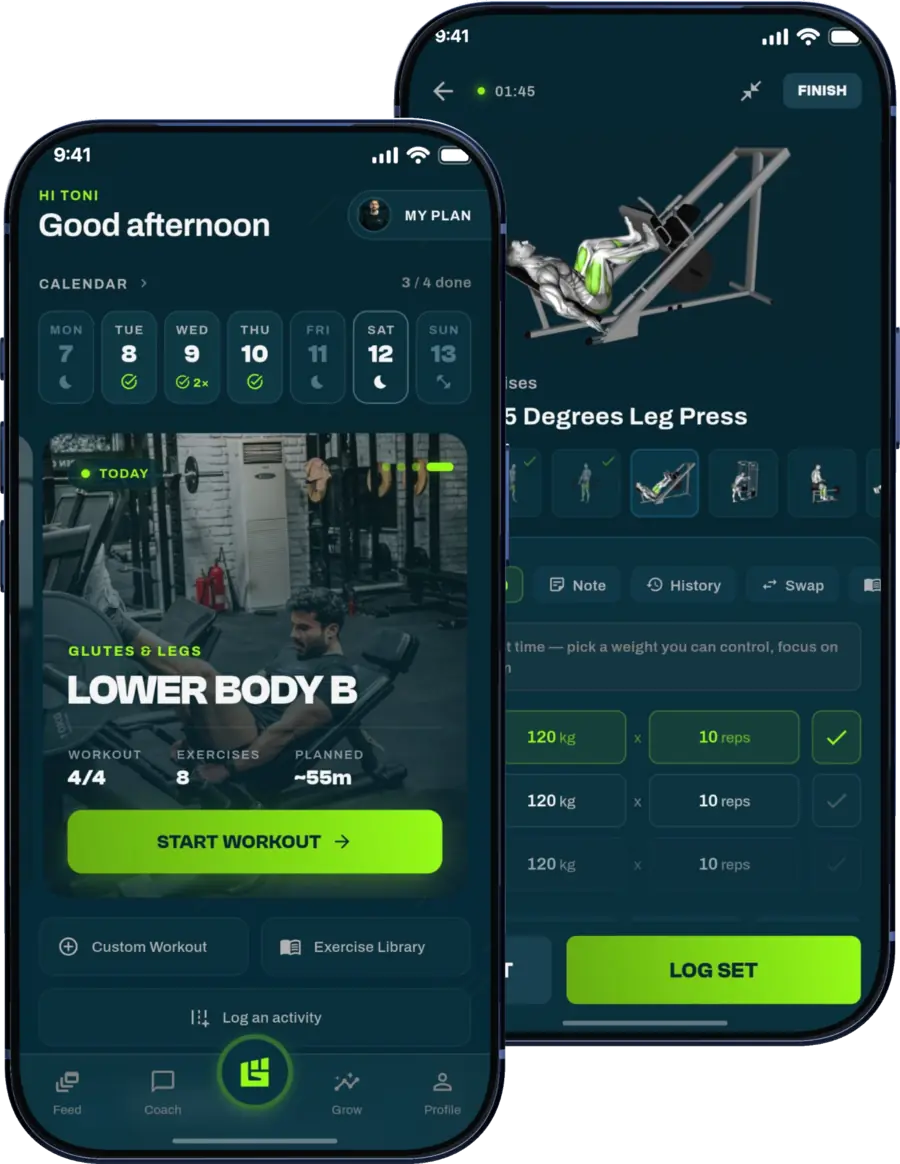
Get a personalized workout plan built around your goal, equipment and schedule. Train smarter, track every rep and keep moving forward, one workout at a time.






A plateau isn't a sign that your training is ineffective; it's proof that it was effective. Your body has successfully adapted to the stress you've been placing on it and is now waiting for a new signal to continue growing.
The frustration is real, and you’re not alone
The frustration of hitting a wall is a huge reason why so many people fall off. In fact, studies show that around 50% of new gym members quit within the first six months, often because their initial results start to fade. You can find a deeper dive into this trend in this insightful breakdown of gym membership statistics on gymdesk.com.
The key is to see a plateau not as a dead end, but as a crossroads. It’s a natural part of the process and a clear signal that it's time to change your approach. Breaking through doesn’t mean you have to scrap your entire program—it just means you need to be strategic.
Before you try to fix the problem, though, you need to be sure you actually have one. A few bad workouts don't mean you've plateaued. A true plateau is a prolonged stall—think 3-4 weeks or more—where you see no measurable progress despite consistent effort.
Quick plateau diagnosis checklist
Use this checklist to quickly determine if you are experiencing a training plateau by looking for these common signs.
| Symptom | What It Looks Like | Is This Me? |
|---|---|---|
| Stagnant Lifts | The weight on your key exercises hasn't gone up, and you can't add any more reps or sets. Your logbook looks the same week after week. | |
| Persistent Fatigue | You feel drained, unmotivated to train, and generally tired, even on rest days. Your workouts feel more like a chore than a challenge. | |
| Nagging Aches | Minor joint soreness or muscle aches are becoming more frequent and aren't going away with your usual recovery. | |
| No Body Changes | Your body measurements, scale weight, and how you look in the mirror have all been the same for over a month. | |
| Low Motivation | You've lost that drive you had when you first started. The idea of going to the gym feels exhausting rather than exciting. |
If you checked off a few of these boxes, don't sweat it. This is a fixable problem. The next sections will walk you through exactly how to diagnose the cause of your stall and give you the strategies you need to smash through it.
The four hidden culprits behind stalled progress
A plateau almost never happens for just one reason. It's usually a perfect storm of a few subtle issues that have been building up for weeks, or even months, until your progress finally grinds to a halt. Pinpointing these culprits is the first step to breaking through.
Think of it like this: your body is an incredibly smart and efficient machine. It wants to handle whatever you throw at it with the least amount of effort possible. If you want it to change, you have to give it a compelling reason. Let’s look at the four main areas where things tend to go wrong.
1. Your workouts aren't getting harder
Your body adapts. That's its whole job. When you first start lifting, almost any new stress makes you stronger—that's the magic of "newbie gains." But once your body gets used to a certain workload, it has no reason to keep adapting.
This is where progressive overload comes in. It’s the simple rule that your workouts must get harder over time. If they don’t, your progress will stop. Period.
Showing up and going through the motions isn't a strategy for growth; it's a strategy for maintenance. If you’re not actively challenging your body to do more than it’s done before, it will happily stay right where it is.
This is what a lack of progressive overload looks like in the real world:
- Same reps, same sets, same weight: You’ve been benching 135 pounds for 3 sets of 10 every Monday for the last two months. Your body mastered that challenge weeks ago.
- Avoiding heavier weights: You stick with weights that feel comfortable instead of pushing into a range that feels genuinely difficult.
- Sticking to the exact same exercises: You never swap your barbell bench for a dumbbell press, or a leg press for a front squat. Your body gets used to the specific pattern and stops getting a new stimulus.
When your workouts become this predictable, you’re basically telling your body, "We're good. No need to get any stronger."
2. You're not eating enough to grow
You can have the best training plan on the planet, but without the right fuel, your muscles simply can't rebuild and grow. Training is the signal that breaks the muscle down; nutrition provides the raw materials to build it back up bigger and stronger.
Trying to build muscle without enough calories and protein is like hiring a construction crew to build a house but not giving them any bricks or lumber. It's just not going to happen.
Many people, especially those who are scared of gaining fat while bulking, severely underestimate how much energy it takes to build new tissue. A small, consistent calorie surplus is almost always required.
And protein is non-negotiable. The science is clear: for building muscle, an intake of 1.6 to 2.2 grams of protein per kilogram of body weight is the sweet spot. If you’re not hitting that, you’re starving your muscles of what they need to repair themselves.
3. Your recovery can't keep up
Muscle isn't built in the gym—it's built while you rest. The gym is where you create the stimulus for growth, but the actual repair and adaptation happen when you’re recovering. Skimp on recovery, and you’re not just stalling your gains; you’re setting yourself up for burnout and injury.
The two biggest recovery-killers are a lack of sleep and too much stress.
- Sleep: Your body releases a significant amount of human growth hormone (HGH) during deep sleep, which is critical for repairing muscle. Consistently getting less than 7-9 hours of quality sleep a night severely handicaps this process.
- Stress: Whether it’s from your job, your personal life, or even from training too hard, chronic stress jacks up your cortisol levels. High cortisol is catabolic, meaning it can actively break down muscle tissue and get in the way of growth.
If you’re always tired, perpetually sore, and feel zero motivation to train, that's a huge red flag. Your body is stuck in a state of breakdown and never gets a chance to build itself back up.
4. Your mindset and motivation are fading
This is the one most people ignore. Your physical output is directly linked to your mental state. If you’re bored, unfocused, or just mentally checked out, your performance in the gym will tank.
When your routine feels stale, it's easy to slip into autopilot. You’re still putting in the time, but are you really putting in the effort? Are you fighting for that last rep, or are you just counting to ten?
This mental fatigue causes a real, measurable drop in training intensity. The neurological drive you need to lift heavy and push past discomfort fades, and your workouts lose their punch. This kicks off a nasty cycle: poor workouts lead to poor results, which kills your motivation and leads to even worse workouts. To break a plateau, you need more than a physical shift—you need a renewed sense of focus and purpose.
Confirming your plateau with actionable data
Feeling stuck is one thing; knowing you're stuck is another. A few bad workouts are just part of the process, but when your progress grinds to a halt for weeks, it’s time to stop guessing and start measuring.
The only way to know for sure if you've hit a true plateau is to look at the data. Tracking a few key numbers separates a temporary slump from a real performance stall, giving you the facts you need to make smart changes instead of just switching things up randomly.
This flowchart breaks down the simple process for confirming if you’ve actually plateaued.

As you can see, the path is straightforward. If you feel stalled, start tracking. If you see a negative pattern over a few weeks, you can be confident you’ve found a plateau.
Key metrics to start tracking
To get a clear picture, you just need to track a few high-impact numbers that tell you exactly what’s happening with your performance. Don’t overcomplicate it.
First, you need a reliable training log. This can be anything from a simple notebook to a spreadsheet or a dedicated fitness app. The tool itself isn’t as important as using it consistently every single session. If you really want to dig in, mastering data visualization techniques can help you turn your raw numbers into charts that make progress—or a lack of it—impossible to ignore.
Here are the essential data points to get started with:
- Total Training Volume: This is the master metric for progress. For any given exercise, you calculate it by multiplying sets x reps x weight. If this number isn't trending up over several weeks, you’re no longer applying progressive overload.
- Estimated One-Rep Max (e1RM): You don’t have to actually max out to track your strength. Use an online calculator or an app to estimate your 1RM from a challenging set (like 8 reps with 100 lbs). A flat or declining e1RM is a major red flag for a gym plateau.
- Body Measurements and Photos: The scale doesn't tell the whole story. A simple tape measure for your waist, hips, chest, and arms can reveal changes in body composition. Pair this with weekly or bi-weekly photos to see the visual changes your logbook numbers might not capture.
Interpreting your data
After 3-4 weeks of consistent tracking, the patterns will become clear. A real plateau isn’t just one bad day in the gym; it’s a trend line that has gone completely flat or even started to dip.
Look for a consistent stall in your total training volume or e1RM on your main compound lifts. That’s your signal.
Data Doesn't Lie If your logbook shows the same sets, reps, and weight on your primary lifts for a month straight, you have concrete proof. It’s no longer a feeling—it’s a fact. You’ve officially identified the plateau, and now you can start to break it down.
This experience is incredibly common. While 76% of people want to improve their fitness, less than half exercise regularly, and plateaus are a big reason why. A stall often hits after just 8-16 weeks on the same routine, potentially cutting strength and muscle gains by 30-50%. For endurance athletes, this can manifest as a halt in VO2 max improvements.
Now that you have the data, you’re no longer frustrated and guessing. You have a clear problem to solve.
Strategic training methods to shatter any plateau

Alright, you've done the tracking and confirmed it: your progress has hit a wall. Now it's time to get strategic. Smashing through a gym plateau isn't about mindlessly training harder or trying random new exercises. It’s about training smarter.
Your body has adapted to your routine. It's gotten comfortable. To get it growing again, you need to give it a new, powerful reason to change.
Think of your training program like a conversation with your muscles. If you keep saying the same thing, they eventually stop listening. To get their attention, you have to introduce new words and change up your sentence structure. This section is your toolbox for doing just that.
Go beyond adding more weight
Progressive overload is the golden rule, but it’s so much more than just slapping another plate on the bar. When adding weight stops working, you have to get creative and manipulate other variables to increase the challenge.
These methods work by increasing time under tension, creating more metabolic stress, and forcing your muscle fibers to work in unfamiliar ways—all powerful signals for new growth.
Here are a few of my favorite ways to do it:
- Tempo Training: Instead of just lifting and lowering, control the speed of every single rep. Try a 3-1-1 tempo on your next set of squats: take a full 3 seconds to lower down, pause for 1 second at the very bottom, and then explode up in 1 second. This small tweak makes the same weight feel dramatically heavier.
- Paused Reps: Add a dead stop at the hardest part of the lift, like an inch off your chest on a bench press or in the bottom of a squat. This kills all momentum and forces your muscles to generate raw strength to get the weight moving again, quickly exposing and fixing weak points.
- Dropsets: On your last set of an exercise, immediately strip 20-30% of the weight off and crank out as many more reps as you can. This technique pushes your muscles way past their normal failure point, creating a ton of metabolic stress that can shock them into growth.
Structure your training with periodization
Doing the same style of training for months on end is the fastest way to hit a plateau. The answer is periodization—the art of organizing your training into specific blocks or cycles, each with a different focus.
This approach keeps your body guessing and prevents it from ever fully adapting to one type of stimulus. Instead of trying to build size, strength, and endurance all at once (and failing), you dedicate time to improving one quality at a time. If you really want to dig into stalled progress, check out this guide on the real fix for your epic strength plateau.
Periodization is like a planned road trip. Instead of driving aimlessly, you have a destination (your long-term goal) and a series of planned stops (training blocks) along the way. This ensures you're always making purposeful progress.
A simple, effective model might look like this:
- Hypertrophy Block (4-6 weeks): Focus on building muscle with moderate weight for higher reps (8-15 per set).
- Strength Block (4-6 weeks): Shift gears to heavy weight for low reps (3-6 per set) to maximize raw strength.
- Deload Week (1 week): Pull back on intensity and volume to let your body fully recover and absorb the training.
This cyclical approach makes long-term, continuous progress far more predictable.
Embrace the power of a strategic deload
Sometimes the best way to move forward is to take a planned step back. A deload is a scheduled week where you intentionally reduce your training volume and intensity. This isn't a sign of weakness; it's a smart, strategic tool for peak performance.
Week after week of hard training builds up fatigue in your muscles, joints, and central nervous system. A deload gives all of that accumulated stress a chance to disappear, allowing your body to fully repair itself.
Most people come back from a proper deload feeling stronger, more motivated, and ready to smash their old records. It’s the reset button that makes all future progress possible.
Use exercise variation wisely
Never underestimate the power of a simple exercise swap. If you’ve been hammering barbell back squats for six months, your body is now incredibly efficient at that exact movement. Swapping it for a new but similar exercise can provide a surprisingly potent stimulus for growth.
But this isn't about random "muscle confusion." The goal is strategic variation.
- Swap a barbell bench press for a dumbbell bench press to fire up more stabilizer muscles.
- Change from a conventional deadlift to a Romanian deadlift to shift the focus onto your hamstrings and glutes.
- Switch from lat pulldowns to weighted pull-ups to increase the overall difficulty and nervous system demand.
These small shifts in movement patterns force your body to learn a new skill, which is exactly what you need to kickstart adaptation and break through that frustrating gym plateau.
To make it even clearer, let's look at how you can manipulate different variables in your programming. This table breaks down some of the most effective adjustments you can make to reignite progress.
Plateau-busting programming adjustments
| Technique | How It Works | Best For |
|---|---|---|
| Tempo Training | Increases time under tension and improves mind-muscle connection by controlling rep speed. | Overcoming strength plateaus without adding weight; improving lifting technique. |
| Paused Reps | Eliminates momentum and strengthens weak points in the range of motion. | Breaking through sticking points in major lifts like the bench press or squat. |
| Dropsets | Pushes muscles beyond their normal failure point to create massive metabolic stress. | Breaking hypertrophy (muscle size) plateaus, especially with isolation exercises. |
| Exercise Variation | Introduces a novel stimulus by changing movement patterns and muscle recruitment. | When a specific lift has stalled for weeks, or for preventing mental burnout. |
| Periodization | Organizes training into focused blocks (e.g., strength, hypertrophy) to prevent adaptation. | Long-term, sustainable progress for intermediate to advanced lifters. |
| Deloads | Allows the body to fully recover from accumulated fatigue, leading to supercompensation. | When you feel chronically tired, unmotivated, or when strength starts to decline. |
Choosing the right technique depends on what kind of plateau you're facing. If a specific lift is stuck, paused reps might be the answer. If you feel tired and weak overall, a deload is probably in order. Use these tools strategically, not randomly, and you'll be back on the path to progress.
Fueling your body for renewed growth
Your work in the gym only sets the stage for growth. The real magic happens during the other 23 hours of the day—when you recover, repair, and actually build new muscle. If your training is solid but your lifts are stuck, it’s time to look at your nutrition and recovery.
Think of your body like a high-performance construction project. Workouts are the blueprint, telling your body where to build. But without raw materials (food), a dedicated cleanup crew (sleep), and a safe job site (stress management), the whole operation grinds to a halt. A stubborn gym plateau is often a sign that one of these crews isn't showing up.
Your guide to growth-focused nutrition
You can't build a house out of thin air, and you can't build muscle without enough calories and protein. It's that simple. Many lifters, worried about gaining fat, chronically undereat and starve their bodies of the resources needed to grow. Fixing this is non-negotiable.
To kickstart growth, you need a small but steady caloric surplus. This just means eating a bit more than you burn. A great starting point is an extra 250-500 calories over your daily maintenance. This surplus gives your body the energy it needs for repair and growth without packing on a ton of unwanted fat.
Protein is just as critical—it’s the literal building block for muscle. Research consistently points to one clear guideline for anyone serious about muscle growth:
- Aim for 1.6 to 2.2 grams of protein per kilogram of body weight (that’s about 0.7 to 1.0 grams per pound).
For a 180-pound (82kg) person, this works out to roughly 131 to 180 grams of protein a day. Hitting this number gives your body the amino acids required to patch up the muscle damage from training and come back stronger.
The non-negotiable role of sleep
If food provides the bricks, sleep is the crew that works overnight to lay them. Your body handles the vast majority of its repair work and hormone production while you're in deep sleep. Skimp on sleep, and you’re directly sabotaging your gains.
During deep sleep, your body ramps up its production of human growth hormone (HGH), a crucial player in muscle repair. Consistently getting less than 7-9 hours of quality sleep a night robs you of this critical anabolic window.
A lack of sleep is like sending your construction crew home halfway through their shift. Every single night. Sooner or later, the project falls hopelessly behind schedule. Just one week of poor sleep can crush your testosterone levels and spike muscle-wasting hormones, making a plateau almost unavoidable.
Managing your body's stress load
Finally, you have to account for your total stress. Stress isn't just in your head; it triggers a powerful physical response. Whether it’s from your job, your personal life, or even from training too hard, chronic stress floods your system with cortisol.
High cortisol is the enemy of progress. It's catabolic, meaning it can literally break down muscle tissue for fuel. It also blocks your body's ability to recover by keeping you stuck in a "fight or flight" state, the polar opposite of the "rest and digest" mode needed for growth.
To get stress under control, try adding a few of these to your routine:
- Mindfulness or Meditation: Even 10-15 minutes a day can help lower cortisol and quiet your nervous system.
- Light Activity on Rest Days: A simple walk, some light stretching, or foam rolling can boost blood flow and recovery without adding more stress.
- Strategic Deloads: As we covered earlier, planned deload weeks are essential for letting both your body and mind recover from built-up training fatigue.
When you fuel your body correctly, make sleep a priority, and manage your stress, you create an internal environment that’s primed for growth. This is the missing piece of the puzzle that turns hard work into real, measurable progress and shatters a frustrating gym plateau.
Letting an app do the thinking: putting your progress on autopilot
Trying to manage all the moving parts of breaking a gym plateau—periodization, progressive overload, nutrition, and recovery—can feel like a full-time job. It's easy to get lost in the details and second-guess whether you're making the right calls. This is where smart fitness tech can step in and take over.
Instead of playing a constant guessing game, you can use a platform that acts like a coach in your pocket. These systems handle the mental heavy lifting of program design, so you can pour all your energy into the physical work.
How smart programming simplifies plateau-busting
Imagine a system that tracks every rep you lift, learns how your body is responding, and automatically adjusts your next workout to keep you challenged. That’s exactly what a well-designed fitness app does. It automates the tough decisions that even seasoned lifters can struggle with.
The technology analyzes your performance data in real-time, making sure you’re always getting the right stimulus for growth. The result is a seamless training experience where progress is practically built-in.
A smart fitness coach is like a GPS for your training. If you hit a roadblock—a plateau—it doesn't just tell you you're stuck. It automatically recalculates the route to get you moving toward your goal again.
Smart adjustments, made for you
Manually planning deloads, swapping out stale exercises, and figuring out volume changes can be a headache. An intelligent system like GrabGains handles these tasks for you based on the data you log, taking the guesswork and emotion out of your programming.
Here’s how an adaptive workout builder can automatically break you through a plateau:
- Intelligent Progressive Overload: When you consistently hit your rep targets, the system automatically bumps up the weight or reps for your next session. If you start to struggle, it might dial back the load or suggest a different approach to keep you progressing.
- Automated Deloads: The system can spot signs of fatigue by tracking your performance over time. It will then automatically schedule a deload week—reducing your intensity to help you recover—often before you even feel burned out.
- Strategic Exercise Swaps: If your progress on a lift has stalled for a few weeks, the app can suggest a new, similar exercise. This gives your muscles a fresh stimulus to adapt to, breaking the monotony that led to the plateau in the first place.
By putting your progress on autopilot, these platforms remove the biggest obstacles to consistent gains: analysis paralysis and sloppy programming. You can walk into the gym confident that your workout is perfectly tuned to push you past your limits and keep you on track.
Your questions about gym plateaus answered
We’ve dug into the science of why progress stalls and the strategies to get things moving again. Now, let’s tackle the common questions that pop up when you hit a wall. Here are some straight, practical answers to help you break through your own training roadblocks.
How long does a typical gym plateau last?
A true gym plateau can stick around for a few weeks or even several months if you don’t do anything about it. How long it lasts really just depends on how quickly you recognize what’s happening, figure out the cause, and make a smart change.
If you keep grinding away with the same routine, you'll stay stuck. But with the right tweak to your training, nutrition, or recovery, you can often see the numbers start moving again in as little as 1-2 weeks.
Should I take a complete break from the gym?
Probably not a complete break. A much better tool for smashing a plateau is a strategic "deload" week. This just means you intentionally scale back your training volume or intensity to give your body and nervous system a real chance to recover and adapt.
An extended break from the gym is usually only necessary if you’re dealing with an injury or showing signs of serious burnout. For most plateaus, a deload is the smarter move.
Can I break a plateau without changing my diet?
You can try, but it makes things a whole lot harder. If your goal is to build muscle but you aren't eating enough protein or you're stuck in a calorie deficit, your body simply doesn't have the fuel it needs to grow.
Think of it like this: your workouts send the signal to build muscle, but your food provides the bricks and mortar. If the supply truck never shows up, construction can't start. Getting your nutrition right works hand-in-hand with your training to kickstart progress again.
How often should I change my workout routine?
You shouldn't be changing it all the time. The whole "muscle confusion" idea is mostly a myth—consistency is what really drives progress. Instead of making random changes, stick to a structured program and focus on progressive overload for 4 to 8 weeks.
Once you finish a training cycle, that's the time to make a strategic change. This might look like:
- Swapping a few exercises for similar ones (e.g., Barbell Bench Press to Dumbbell Bench Press).
- Changing your rep ranges to focus on a new goal (e.g., shifting from size to strength).
- Starting a new periodized block that targets a different quality.
This approach gives your body enough time to master the movements and get stronger, while also introducing a new challenge right when it's needed most—heading off plateaus before they even start.
Stop guessing and start gaining. With GrabGains, our adaptive platform takes care of all the complex programming, automatically adjusting your workouts to ensure you're always making progress. Let our smart system handle the deloads, exercise swaps, and progressive overload so you can focus on lifting.
Download GrabGains on iOS or Android today and get a personal trainer in your pocket. Get the app now and break through your limits.
Get inspired and motivated