How to start strength training: a beginner's guide
Discover how to start strength training with a beginner-friendly plan, essential exercises, and a simple starter program to boost confidence and results. Getting started with strength training is less complicated than most people think. It boils down to a few simple principles: mastering basic movements, training two or three times a week, and slowly making your workouts more challenging over time. The journey doesn't start with throwing heavy weights around. It begins with a commitment to consistent, well-executed repetitions.


Why strength training is for everyone
Forget the outdated image of bodybuilders grunting in a dark gym. Modern strength training is an empowering and accessible practice for people of all ages, fitness levels, and goals. The focus has shifted from chasing a certain aesthetic to building a stronger, more capable body for everyday life. The real goal is to feel more capable—whether that means carrying groceries in one trip, keeping up with your kids, or simply having more energy at the end of the day.

Built for progress
Take the guesswork out of training
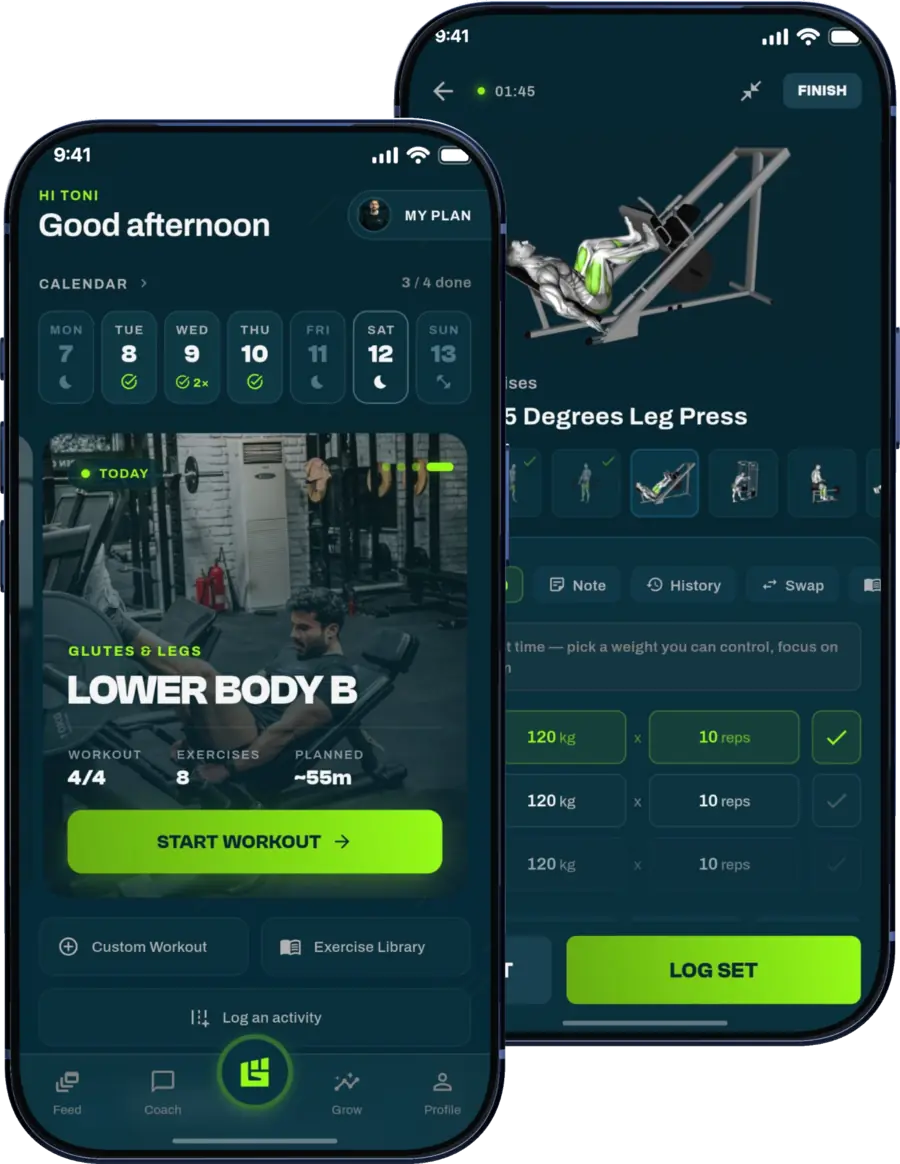
Get a personalized workout plan built around your goal, equipment and schedule. Train smarter, track every rep and keep moving forward, one workout at a time.






This shift in focus has made strength training more popular than ever, making it a perfect time for beginners to start. Garmin's 2025 Data Report revealed a massive spike in strength activities worldwide, aligning with the ACSM ranking traditional strength training as the #5 out of 45 top fitness trends for 2025. It's praised for boosting both physical and mental health across all age groups. Gen Z and Millennials are leading this movement, with more women and young people getting involved, fueling the $90 billion global fitness market.
the real-world benefits of getting stronger
The perks of lifting weights go far beyond building muscle. They create a positive ripple effect that you'll feel in nearly every aspect of your life.
Here’s a taste of what you can expect:
- A Fired-Up Metabolism: The more lean muscle you build, the higher your resting metabolic rate climbs. This means your body burns more calories all day long, even when you're resting.
- Denser, Stronger Bones: Resistance training puts productive stress on your bones, signaling them to become stronger and denser. It’s one of the best defenses against osteoporosis, especially as you age.
- A Clearer Head: Many people find that lifting is an incredible stress reliever. It has been shown to reduce symptoms of anxiety and depression while providing a significant boost to mood and self-confidence.
- Everyday Life Gets Easier: The movements you practice in your workouts—like squatting and lifting—translate directly to real-world tasks. This is the core of what is functional strength training, making things like lifting boxes or playing with your dog feel easier and safer.
The most rewarding part of strength training isn’t just adding another plate to the bar. It's the moment you realize a task that used to feel hard is now effortless. That’s when you truly feel your progress.
Ultimately, learning how to start strength training is one of the best investments you can make in your long-term health. It’s a journey that builds more than just a strong body—it builds mental toughness and a deep sense of your own capability.
Setting your foundation before you lift
Jumping straight into lifting without a clear plan is like starting a road trip without a map. A little preparation saves a ton of frustration later on. Before you touch a weight, let’s dial in the basics that will set you up for long-term success.
First, you need to define your "why." What is driving you to start strength training? Vague goals like "get in shape" are easy to abandon because they lack a clear target. Get specific and connect your goal to a real-life outcome you care about.
This clarity is your anchor. When motivation dips—and it will—your "why" is what keeps you showing up.
Define your personal mission
Your goals should be measurable and, more importantly, meaningful to you. Think less about the number on the scale and more about what you want to be able to do. This shifts the focus from a chore to a rewarding challenge.
Need some inspiration? Here’s what a good goal looks like:
- Performance-Based Goal: "I want to do one unassisted pull-up in the next six months." This is specific, time-bound, and gives you a clear target.
- Functional Strength Goal: "I want to carry all my groceries from the car in one trip without back pain." This goal connects directly to improving your daily life.
- Consistency Goal: "I will complete three full-body strength workouts every week for the next 12 weeks." This one is all about building the habit, which is the most critical part for any beginner.
Write your goal down. Put it on a sticky note on your monitor or make it your phone's lock screen. This simple act makes it real and holds you accountable.
Perform a simple self-assessment
Before starting any program, you need a baseline. This isn’t about judgment; it’s about collecting data so you can see how far you’ve come. A simple at-home assessment can tell you everything you need to know about your starting strength, endurance, and mobility.
You don't need any fancy equipment. Just find some space and try these:
- Max Push-Ups: See how many push-ups you can do with good form. If you can't do them on the floor, use your knees or an elevated surface like a countertop. This is a great test of upper-body pushing strength.
- Bodyweight Squats in 60 Seconds: How many full-depth squats can you perform in one minute? This gives you a read on your lower-body endurance.
- Plank Hold: Hold a standard plank for as long as you can while keeping a straight line from your head to your heels. This is a pure indicator of core strength.
Key Takeaway: Write down your numbers from this self-assessment. In 6 to 12 weeks, do it again. Seeing those numbers improve is one of the most powerful motivators you'll experience.
Choose your training environment
The final piece of the puzzle is deciding where you’ll train. The "best" place is simply the one you'll show up to consistently. Commercial gyms and home setups both have their pros and cons.
Commercial Gym Pros & Cons:
| Pros | Cons |
|---|---|
| Huge variety of equipment | Monthly membership fees |
| Access to heavier weights as you progress | Can be crowded and intimidating |
| Motivating atmosphere (for some) | Requires travel and commute time |
Home Gym Pros & Cons:
| Pros | Cons |
|---|---|
| Unbeatable convenience and privacy | Requires an upfront investment in gear |
| No travel time or waiting for machines | Limited variety and weight options |
| Total control over your environment | Can be isolating; requires more self-motivation |
There’s no right answer here. If you feed off the energy of others and want access to every tool imaginable, a gym membership is a solid investment. If you value convenience and prefer to work out in private, a simple home setup with adjustable dumbbells or resistance bands is a fantastic and effective choice.
The goal is to remove as many barriers as possible between you and your workout.
Mastering the core exercises for real strength
This is where the real work begins. We will focus on the handful of exercises that deliver the most benefit. Forget spending hours on isolated machine movements; the focus is on compound lifts.
These exercises are your secret weapons. They work multiple muscle groups and joints at the same time, which means you build functional, real-world strength far more efficiently. Think of them as the foundational patterns of human movement. Getting good at these won't just make you stronger in the gym—it will make you better at life.
Let's break down each one, focusing on proper form, common mistakes, and how you can get started today, no matter your fitness level.
The squat: king of lower body exercises
The squat is a movement you already do every day when you sit down and stand up. It’s the ultimate way to build powerful legs, strong glutes, and a rock-solid core. Good form is non-negotiable for both safety and results.
Your goal is to sit back as if aiming for a low chair. Keep your chest up, maintain a straight back, and brace your core. Drive through your heels to stand back up, squeezing your glutes at the top. A common mistake is letting your knees collapse inward. To fix this, actively think about pushing your knees out over your feet.
- Beginner Variation: Start with bodyweight squats. Do not add weight until you can consistently get your thighs at least parallel to the floor with perfect form.
- Next Step: Once you’ve mastered the bodyweight version, use a dumbbell or kettlebell for goblet squats. Holding the weight in front of your chest acts as a counterbalance, making it easier to keep your chest up and squat deep.
The deadlift: for total body strength
If the squat is the king, the deadlift is the entire kingdom. No other exercise recruits more muscle at once. It’s the primal act of picking heavy objects off the floor, and it builds incredible strength through your back, glutes, hamstrings, and grip.
The secret to a safe deadlift is a flat, neutral spine. The movement is a hip hinge, not a squat. Push your hips back, keeping the weight close to your body. Think of it as pushing the floor away with your legs instead of pulling the weight up with your back.
Crucial Tip: Never round your lower back. This is the fastest way to get injured. If you can't keep your back straight, the weight is too heavy, or you need more practice with the hip hinge.
For anyone new to this, learning the hinge pattern is the top priority.
- Beginner Variation: Start with Romanian Deadlifts (RDLs) using a kettlebell or a pair of dumbbells. This variation keeps the weight off the floor, allowing you to perfect the hinge motion without the added complexity of a full deadlift.
- Focus Point: You should feel a deep stretch in your hamstrings on the way down. Then, drive your hips forward with power to stand back up.
The bench press and overhead press: upper body pushing power
These two movements are cornerstones for building upper-body pushing strength. The Bench Press develops your chest, shoulders, and triceps by pushing horizontally. The Overhead Press builds powerful shoulders and core stability by pushing vertically.
When you bench, pull your shoulder blades back and down to create a stable platform. Lower the bar with control until it lightly touches your chest, then press it back up powerfully. A common mistake is flaring your elbows out wide; instead, keep them tucked at a 45-75 degree angle to protect your shoulders.
For the Overhead Press, stand tall and squeeze your glutes and core tight. This protects your lower back. Press the weight straight overhead until your arms are fully locked out, letting your head come forward slightly at the top so it is aligned with your arms.
- Beginner Variation: Start with dumbbell presses for both movements. Using dumbbells forces each side to work independently, which is excellent for fixing muscle imbalances and building stability.
- Alternative: Don't underestimate push-ups. They're a phenomenal bodyweight exercise that builds the same muscles as the bench press and can be made progressively harder.
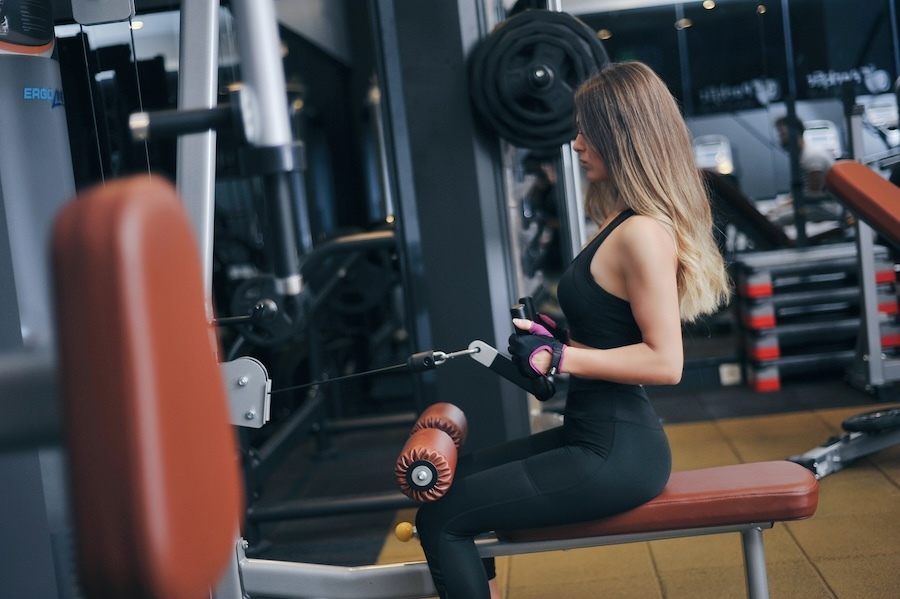
The row: for a strong and healthy back
To balance out all that pressing, you must incorporate pulling movements. Rows are essential for building a strong upper back, which improves posture and helps prevent shoulder problems.
Whether you’re using a barbell, a dumbbell, or a machine, the core mechanics are the same. Hinge forward with a flat back and pull the weight toward your torso. The key is to drive your elbows back and imagine squeezing a pencil between your shoulder blades at the top of the movement.
- Beginner Variation: The single-arm dumbbell row is perfect for beginners. By placing one hand and knee on a bench, you create a stable base that lets you focus 100% on the pulling motion.
- Pro Tip: Instead of just pulling with your arm, imagine a rope is tied to your elbow and someone is pulling it straight up to the ceiling. This mental cue helps ensure your back muscles are doing the work, not just your biceps.
Your first six-week strength training program
It’s time to turn theory into action. When you're just learning how to start strength training, a structured plan is your best friend—it builds consistency and delivers results. This six-week program is designed to give you a solid foundation by focusing on the big compound movements.
Forget the myth that you need to spend hours in the gym. The modern approach is about smart, efficient training. A full report from Tonal, analyzing data from over 175,000 members, found that more than half of users prefer workouts lasting just 31 to 45 minutes. A whopping 90% of them reported building more strength in less time.
This has been a game-changer for people with busy schedules, with 70% now managing to train three to five times per week. It proves that a focused plan beats a longer, unstructured one every time.
How your workouts will be structured
For the next six weeks, you’ll train three times per week on non-consecutive days. A classic Monday, Wednesday, and Friday schedule works well because it gives your body a full day of rest between sessions to recover and grow stronger.
Each workout is a full-body routine. This is the best approach for beginners because you train each muscle group more frequently, which speeds up both strength gains and motor learning. You'll practice the core movements often, helping your brain and muscles connect much faster.
the a/b workout split explained
To keep things interesting and ensure balanced development, we’ll use a simple A/B split. This means you have two different full-body workouts—Workout A and Workout B—that you’ll alternate between on your training days.
Your weekly schedule will look like this:
- Week 1: A, B, A
- Week 2: B, A, B
- Week 3: A, B, A
- And so on...
This rotation ensures that every muscle gets equal attention over time. It also adds enough variety to prevent your body from hitting a plateau, which is crucial for making consistent progress.
Your six-week workout plan
Here are the exact routines for Workout A and Workout B. The number one rule is to focus on perfect form. Start with a weight that feels challenging but allows you to complete all your reps without your form breaking down.
The table below lays out a sample weekly schedule. Remember, you'll alternate between Workout A and Workout B on your training days.
Sample 3-Day Beginner Full-Body Workout Split
| Workout Day | Exercise 1 (Sets x Reps) | Exercise 2 (Sets x Reps) | Exercise 3 (Sets x Reps) | Exercise 4 (Sets x Reps) |
|---|---|---|---|---|
| Day 1 (Workout A) | Goblet Squats (3 x 8-12) | Push-Ups (3 x To Failure) | Dumbbell Rows (3 x 8-12 per arm) | Plank (3 x 30-60s hold) |
| Day 2 (Workout B) | Dumbbell RDLs (3 x 10-15) | Dumbbell Overhead Press (3 x 8-12) | Bodyweight Lunges (3 x 10-12 per leg) | Knee Raises (3 x 10-15) |
| Day 3 (Workout A) | Goblet Squats (3 x 8-12) | Push-Ups (3 x To Failure) | Dumbbell Rows (3 x 8-12 per arm) | Plank (3 x 30-60s hold) |
Aim to rest for 60-90 seconds between each set. This is the sweet spot—enough time to recover your strength but short enough to keep the intensity high and stimulate growth.
The secret sauce: progressive overload
Your body is an amazing adaptation machine. If you do the same thing repeatedly, it gets comfortable and stops changing. To keep getting stronger, you need to apply the principle of progressive overload.
Progressive overload simply means gradually increasing the demands you place on your body over time. It is the single most important factor for long-term progress. Your goal each week should be to do a little more than you did last time.
This doesn't always mean lifting heavier weights. For a deeper dive, check out our complete guide on progressive overload training.
Here are a few simple ways to apply progressive overload in this six-week plan:
- Add More Reps: If you did 3 sets of 8 reps on Goblet Squats last week, aim for 3 sets of 9 or 10 reps this week with the same weight.
- Add More Weight: Once you can comfortably hit 12 reps for all three sets of an exercise, it's time to increase the weight slightly in your next session. Drop back to 8 reps with the new weight and build up again.
- Reduce Rest Time: If you were resting 90 seconds between sets, try cutting it to 75 seconds. This forces your body to become more efficient at recovering.
Track every workout. A simple notebook or a dedicated app will do. Write down the exercises, weight, sets, and reps you complete. This data is your roadmap—it tells you exactly what to do next to keep moving forward.
Fueling your body for growth and recovery
What you do in the gym is only half the story. The real progress happens in the hours outside the gym. The food you eat and the rest you get are the pillars that turn hard work into real strength and muscle.
Think of it this way: your workouts create the blueprint for a house. Nutrition and recovery provide the materials to build it. Without them, you’re just left with a plan. Let's break down how to fuel your body and recover intelligently to keep getting stronger.
The building blocks of nutrition
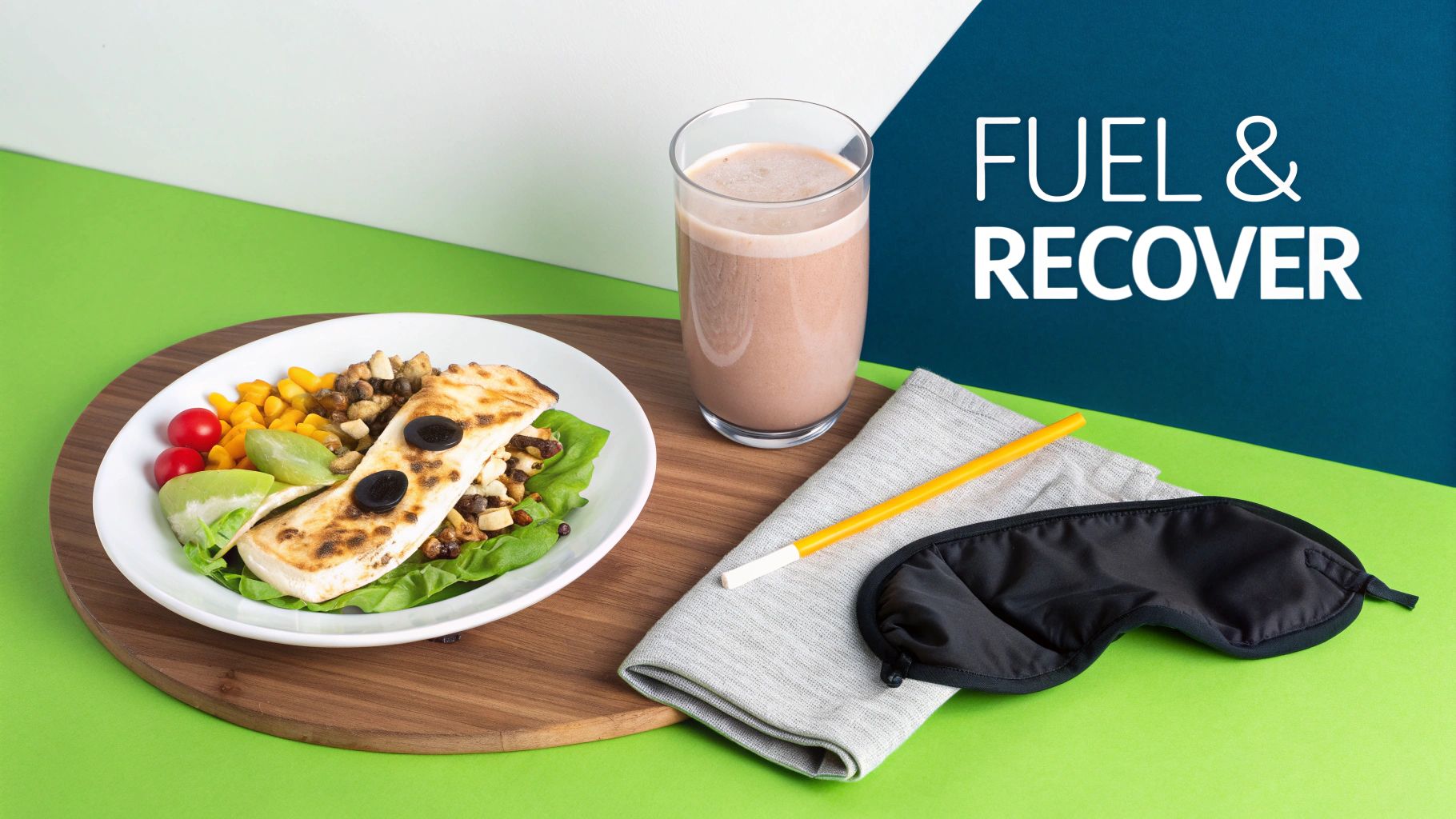
You don't need to dive into complex nutritional science. Focusing on the three main macronutrients—protein, carbs, and fats—is more than enough to support your training.
Here’s what you need to know:
- Protein is for repair. Lifting weights creates tiny micro-tears in your muscle fibers. Protein provides the amino acids needed to repair them and build them back stronger. Include a good source like chicken, fish, eggs, tofu, or Greek yogurt in every meal.
- Carbohydrates are for energy. Carbs are your body's primary fuel source, giving you the power to push through workouts. Oats, brown rice, potatoes, and fruit are excellent choices for keeping your energy stores full.
- Fats are for function. Healthy fats from sources like avocados, nuts, seeds, and olive oil are crucial for hormone production and overall health.
Don't overcomplicate it. Focus on building balanced meals. A simple rule of thumb is to fill your plate with a source of lean protein, a complex carbohydrate, and a generous portion of vegetables.
Timing your meals for better performance
While what you eat is most important, when you eat can provide a boost. Planning around your workouts can make a real difference in your energy levels and recovery speed.
Before Your Workout
Try to eat a meal that’s rich in carbohydrates with some protein about 1-3 hours before you train. This ensures your muscles have fuel ready to go. A bowl of oatmeal with berries or a banana with peanut butter are great options.
After Your Workout
The goal now is to replenish your energy and kickstart muscle repair. Consume a meal with both protein and carbs within 1-2 hours of finishing your session. A protein shake with fruit or a full meal like grilled chicken with sweet potatoes works well. For more in-depth tips, check out our guide on how to build muscle fast.
The power of smart recovery
Your muscles don't get bigger while you're lifting; they grow while you're resting. Ignoring recovery is the fastest way to hit a plateau, burn out, or get injured. It's a non-negotiable part of any solid strength training plan.
Prioritizing recovery is a key fitness trend for 2025. Smart recovery is no longer an afterthought; it’s the bedrock of sustained progress.
Here are a few simple but effective recovery strategies:
- Prioritize Sleep: Aim for 7-9 hours of quality sleep per night. This is when your body does most of its repair work and releases growth hormone.
- Active Recovery: On rest days, avoid being completely sedentary. Light activity like walking, stretching, or foam rolling promotes blood flow to your muscles, which can help ease soreness and speed up recovery.
- Listen to Your Body: Some days you'll feel great, and other days you'll feel wiped out. Learn the difference between being lazy and being genuinely fatigued. Pushing through deep soreness or pain is an invitation for injury.
Common questions about starting strength training
Stepping into the weight room for the first time brings up many questions. That's completely normal. Getting clear, straightforward answers is the best way to build confidence and start correctly.
Let's address some of the biggest uncertainties for beginners.
How much weight should i start with?
This is the most common question, and the answer is simple: start lighter than you think you need to.
Your initial goal isn’t to lift the heaviest weight possible; it’s to master the movement. The first few weeks are for practice—building a solid foundation of good form that will serve you for years.
Pick a weight that lets you complete 8-12 repetitions with clean technique. The last couple of reps should feel challenging but not so difficult that your form breaks down. If you struggle to hit eight reps, the weight is too heavy. If you can easily perform more than twelve, it's time to increase the weight slightly.
The weight is just a tool. The quality of your movement is what builds muscle and prevents injury. Get the form right first, and the strength will follow.
How often should a beginner do strength training?
When you’re just starting, more is not better. Your body needs time to adapt to the new stress.
For most beginners, training two to three times per week on non-consecutive days is ideal. This schedule provides enough stimulus for your muscles to grow stronger while allowing sufficient time for repair and recovery. A Monday, Wednesday, Friday full-body routine is a classic for a reason—it works.
Remember, the goal is to build a sustainable habit. Showing up consistently three times a week for months will yield far better results than going all-out for five days and then burning out.
Will strength training make me look bulky?
Let's clear this one up for good: no. This is one of the most persistent myths in fitness.
Gaining the amount of muscle mass that creates a "bulky" appearance is incredibly difficult. It requires years of intense, high-volume training combined with a specific diet where you consistently consume more calories than you burn. It does not happen by accident.
For most people, especially women, strength training creates the opposite effect. It builds lean muscle, which is denser and takes up less space than fat. This process boosts your metabolism, helps you burn fat, and leads to a stronger, more toned, and defined physique.
What is the difference between strength training and weightlifting?
People often use these terms interchangeably, but they are not the same. Think of it like the difference between "driving" and "NASCAR racing."
- Strength Training: This is a broad term for using any kind of resistance to get stronger. That resistance could be dumbbells, barbells, kettlebells, resistance bands, machines, or your own body weight. If you're doing squats, push-ups, or rows, you are strength training.
- Weightlifting: This term typically refers to the specific competitive sports of Olympic Weightlifting (the snatch and the clean and jerk) or Powerlifting (the squat, bench press, and deadlift). These athletes train to lift the maximum possible weight in those specific lifts.
As a beginner, you're doing strength training. You are using weights as a tool to get stronger and build muscle, not competing in a specific sport.
Ready to stop guessing and start progressing? GrabGains takes the confusion out of strength training with AI-powered workout plans that adapt to your performance. Get personalized routines, track your progress with visual analytics, and master your form with over 350+ video demonstrations. Pre-register today for the app and be the first to experience your pocket personal trainer.
Get inspired and motivated