Why you are not losing fat and how to finally fix it
Struggling with not losing fat despite diet and exercise? Uncover the hidden reasons and get an actionable plan to break your plateau and see real results. When you're grinding away in the gym and dialing in your diet, but the scale just won't cooperate, it feels like you're spinning your wheels. The good news? It's almost never because your body is "broken" or you lack willpower. The problem usually hides in the details.
The most common culprits I see are small tracking errors, not eating enough protein, and workouts that have become too comfortable for your body. Let's dig into the real reasons you might be stuck.


The real reasons you are not losing fat

It’s the most common plateau in fitness: you’re eating clean, exercising consistently, but nothing seems to be changing. This standstill can make you question if all the effort is even worth it.
But here’s the thing: the issue is almost always a mismatch between what you think you're doing and what's actually happening. Tiny, seemingly harmless habits can easily wipe out the calorie deficit you need for fat loss.
Hidden calories and tracking inaccuracies
One of the biggest blockers is what I call ‘calorie creep.’ It’s the sneaky stuff you don't track that adds up fast. That splash of creamer in your morning coffee, the handful of almonds you grab between meetings, or the olive oil you use to cook dinner—they all count.
Built for progress
Take the guesswork out of training
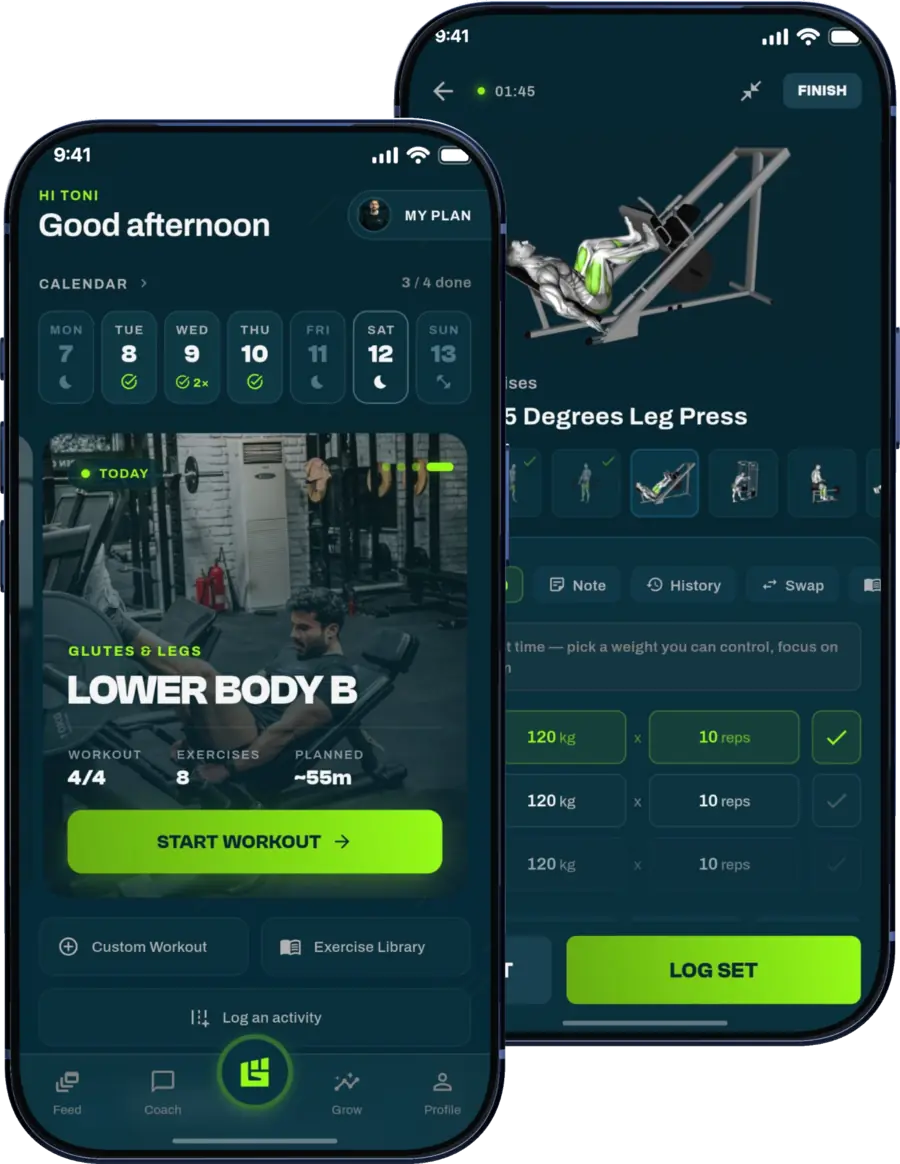
Get a personalized workout plan built around your goal, equipment and schedule. Train smarter, track every rep and keep moving forward, one workout at a time.






These little extras can easily add 200-300 calories to your day, completely erasing your deficit without you even realizing it. A food scale is your best friend here. Ditching measuring cups for a scale is a game-changer for getting your numbers right.
The problem with “going through the motions”
Just showing up to the gym isn't enough. Your body is smart and adapts quickly. If you do the same workouts with the same weights and reps week after week, you're not giving it any reason to change.
This is where progressive overload comes in. You have to consistently make your workouts harder—by adding a little more weight, doing one more rep, or shortening your rest time. This forces your muscles to adapt and grow, which in turn helps boost your metabolism.
Why protein and non-scale wins matter
Another classic mistake is cutting calories so low that you neglect protein. Getting enough protein is non-negotiable for a few key reasons:
- It keeps you full. Protein is incredibly satiating, which helps crush cravings and stops you from snacking on junk.
- It protects your muscle. In a calorie deficit, your body might burn muscle for energy. Protein helps you hold onto it.
- It gives your metabolism a slight bump. Your body uses more energy to digest protein than it does for carbs or fats.
If you're looking for more reasons why progress might have stalled, this guide on Why Am I Not Losing Weight? offers some great insights that go beyond just diet and exercise.
Key Takeaway: Real fat loss comes down to precision. It demands an actual energy deficit, which means you need accurate tracking, enough protein to manage hunger and keep muscle, and workouts that constantly challenge your body to adapt.
Finally, you have to look beyond the scale. That number is just one piece of data, and it lies all the time. Water retention, your last meal, and even stress can make it swing wildly.
Instead, focus on the "non-scale victories." Are your clothes fitting better? Do you feel stronger during your workouts? Is your waist measurement going down? These are the true signs that you're losing fat and making real progress.
Common fat loss blockers diagnostic checklist
This simple checklist can help you pinpoint exactly where things might be going wrong. Run through these common symptoms to diagnose what's holding you back.
| Potential Blocker | Symptom or Sign | Quick Fix to Consider |
|---|---|---|
| Calorie Creep | You "eat clean" but don't weigh your food, especially oils, nuts, and dressings. | Use a food scale for one week to track everything. |
| Low Protein Intake | You feel hungry or have cravings shortly after meals. | Add a protein source (e.g., chicken, Greek yogurt, whey) to every meal. |
| Stagnant Workouts | Your weights, reps, and sets haven't changed in over a month. | Increase the weight by 5%, or aim for 1-2 more reps on your main lifts. |
| Poor Sleep | You get less than 7 hours of sleep and feel tired or stressed. | Set a consistent bedtime and turn off screens an hour before. |
| Ignoring Liquid Calories | You drink lattes, juice, or regular soda daily without tracking them. | Switch to black coffee, tea, or water. Track any calorie-containing drinks. |
| Inconsistent Tracking | You track diligently on weekdays but get loose on weekends. | Pre-plan one or two "treat" meals for the weekend and track them. |
| High Stress Levels | You feel constantly overwhelmed, which can raise cortisol and increase cravings. | Schedule 10-15 minutes of daily mindfulness, like a walk or meditation. |
By taking an honest look at your habits with this checklist, you can move from feeling stuck to making targeted adjustments that get the scale—and your measurements—moving in the right direction again.
Pinpointing your plateau: the four key culprits
If you're putting in the work but the scale isn't budging, it’s time to play detective. A fat loss plateau usually isn't about a lack of effort—it's about a mismatch in your strategy.
More often than not, the fix is a small, targeted adjustment, not a complete overhaul of your entire plan. Let’s investigate the four most common culprits that bring fat loss to a grinding halt.
Are you measuring progress correctly?
Relying only on the bathroom scale is one of the quickest ways to kill your motivation. Your body weight can swing by several pounds from one day to the next thanks to water retention, hormones, or what you ate last night. These daily fluctuations easily hide real fat loss.
Instead of obsessing over that one number, you need a broader view. True progress is about changing your body composition—losing fat while holding onto muscle.
Here are better ways to track your success:
- Progress Photos: Snap photos from the front, side, and back every 2-4 weeks. Use the same lighting and pose. You'll be surprised how much visual change happens even when the scale is stubborn.
- Body Measurements: Once a month, grab a soft tape measure and record your waist, hips, chest, and thighs. A smaller waist is a clear sign of fat loss, regardless of what your total weight is doing.
- How Your Clothes Fit: Are your jeans getting looser? Does that shirt fit better across your shoulders? This is tangible, real-world proof that your body is changing for the better.
Uncovering calorie creep and macro mistakes
"But I eat clean!" It's a common and frustrating thought, but even "clean" foods have calories. This is where 'calorie creep' becomes a huge problem when you're not losing fat.
Those small, untracked extras can completely wipe out your calorie deficit. A splash of creamer in your coffee, a tablespoon of olive oil in the pan, a handful of nuts—these can easily add 200-400 calories you never accounted for. The only way to be sure is to track everything with precision, even if it's just for a week or two.
A study of people who successfully lost weight and kept it off found that nearly 75% of them reported regularly weighing themselves and tracking their food intake. It's not about obsession; it's about awareness.
This simple decision tree can help you figure out where you might be going wrong, from tracking accuracy to protein intake.

The main takeaway here is that solving a plateau often starts with the simple stuff: making sure your tracking is on point and your diet actually supports your goals.
Not getting enough protein is another classic mistake. It's the most satiating macronutrient, which means it keeps you full and crushes cravings. It also helps you preserve muscle mass in a deficit, which is critical for keeping your metabolism running high.
Is your training lacking intensity?
Just showing up to the gym and going through the motions isn't enough. Your body is smart; it adapts to whatever you throw at it. If your workouts aren't challenging it anymore, it has no reason to change. This is the whole point of progressive overload.
If you've been lifting the same weight for the same reps for months on end, you've hit a training plateau. To build—or even just maintain—muscle while you're eating in a deficit, you have to consistently give your body a reason to adapt.
This doesn't always mean just lifting heavier. You can apply progressive overload by:
- Adding one more rep to your sets.
- Increasing the weight, even by a tiny amount.
- Shortening your rest periods between sets.
- Improving your form and control on every single lift.
The goal is to send a clear signal to your body: "we need to keep this muscle," which in turn helps you burn more fat.
The hidden impact of lifestyle and recovery
Finally, what you do outside the gym is just as important as what you do inside it. Chronic stress and poor sleep are the silent killers of fat loss.
When you're constantly stressed or sleep-deprived, your body pumps out more cortisol, the primary stress hormone. High cortisol levels can ramp up your appetite, make you crave junk food, and even tell your body to store more fat, especially around your stomach.
Aiming for 7-8 hours of quality sleep every night is non-negotiable. It helps regulate your hunger hormones, lowers cortisol, and gives your body the downtime it needs to recover from training. Once you've figured out what's behind your stalled progress, you can explore proven strategies to overcome a weight loss plateau and get things moving again.
Building a nutrition plan that actually works
Alright, you’ve figured out what might be holding you back. Now it’s time to build a nutrition plan that actually moves the needle. This isn’t about eating bland, boring food or starving yourself—it’s about being precise and consistent. The goal is simple: create a sustainable calorie deficit while giving your body what it needs to perform.
Guesswork is the enemy of fat loss. The bedrock of any solid plan is knowing your numbers, and that starts with your maintenance calories—how much you need to eat just to stay the same weight.
Once you know that number, you can create a moderate deficit. We're looking for a reduction of 300-500 calories a day. This is the sweet spot. It's enough to trigger fat loss but not so aggressive that it tanks your energy, leaves you starving, or sacrifices hard-earned muscle.
Setting your calorie and protein targets
To get your bearings, you can use an online TDEE (Total Daily Energy Expenditure) calculator. The GrabGains app simplifies this with its built-in macro calculator, giving you a solid estimate based on your stats and activity level. Just remember, this is your starting line, not the finish. You'll likely need to tweak it after a few weeks.
With your calorie goal locked in, your next—and arguably most important—job is protein. When you’re cutting calories, getting enough protein is non-negotiable. It’s what helps you hold onto lean muscle (which keeps your metabolism fired up) and it’s incredibly satiating, making hunger much easier to manage.
A simple, effective rule of thumb is to shoot for 0.8 to 1.0 grams of protein per pound of your target body weight. So, if you're aiming for 180 pounds, that’s 144 to 180 grams of protein every day.
That might sound like a lot, but it’s completely manageable if you make protein the centerpiece of every meal. Spreading your intake out also helps keep you feeling full and energized all day long.
Here's how to make it happen without overthinking it:
- Prioritize lean sources: Think chicken breast, turkey, fish, lean beef, eggs, and Greek yogurt.
- Use protein powder strategically: One scoop of whey or a plant-based blend in a smoothie is a painless way to add 20-30 grams of protein.
- Don't overlook plant-based options: Lentils, beans, tofu, and edamame are fantastic sources that also pack a ton of fiber.
When you nail down your calories and protein, you’ve created a framework that makes every food choice simpler. No more guesswork.
A sample day of eating for a busy professional
Hitting your numbers doesn’t mean you have to live in the kitchen. Here’s a realistic plan for a busy professional that lands around 2,000 calories and 160 grams of protein, focusing on meals that are quick and easy.
Breakfast (7:00 AM) - High-Protein Smoothie
- What: 1 scoop vanilla whey protein, 1 cup unsweetened almond milk, 1/2 cup frozen berries, 1 tablespoon chia seeds.
- Why: It’s fast, easy to digest, and kicks off your day with a solid protein hit that will keep you full until lunch.
Lunch (12:30 PM) - Big Batch Chicken Salad
- What: 6 oz pre-cooked chicken breast (shredded), mixed with Greek yogurt instead of mayo, celery, and onions. Serve it with a few whole-grain crackers.
- Why: Make a big container of this on Sunday and you have lunches for days. It’s a high-protein, satisfying meal that requires zero cooking during the week.
Snack (4:00 PM) - Simple and Smart
- What: 1 cup of plain Greek yogurt with a handful of almonds.
- Why: This is the perfect snack to kill afternoon hunger pangs. The yogurt delivers slow-digesting casein protein while the almonds provide healthy fats and fiber, bridging the gap to dinner.
Dinner (7:30 PM) - Quick Salmon and Veggies
- What: 6 oz salmon fillet (air-fried or baked), 1 cup roasted broccoli, and a small sweet potato.
- Why: This entire meal is packed with nutrients and comes together in under 20 minutes. You get high-quality protein and omega-3s from the salmon, plus essential micronutrients and fiber from the veggies.
This sample day shows that fueling your body correctly doesn't have to be a chore. It’s all about a little bit of planning and building your meals around protein. Using a tool like the GrabGains food logger can help you track these meals effortlessly, ensuring you stay on target and turning what feels like a complex task into a simple daily habit.
Revamping your workouts for maximum fat burn
If your nutrition is dialed in but the fat isn't coming off, it’s time to take a hard look at your training. Simply going through the motions and breaking a sweat isn’t enough to force your body to change.
Your body is an adaptation machine. That workout that left you breathless a month ago is now just business as usual. Once your body masters a routine, it gets incredibly efficient, burning fewer calories and seeing no reason to hold onto metabolism-boosting muscle. It's time to stop exercising and start training.
The power of progressive overload
The single most important driver of change is progressive overload. All it means is that you have to consistently challenge your body by making your workouts harder over time. If you lift the same weight for the same reps, week after week, your body has zero incentive to adapt.
This doesn't always mean piling on more weight, though that's a fantastic way to do it. Here are a few practical ways to apply progressive overload:
- Add Reps: If you hit 8 reps last week, fight for 9 this week.
- Add Sets: Instead of 3 sets of an exercise, push for 4.
- Increase Weight: Even adding just 2.5-5 pounds to your main lifts sends a powerful signal.
- Reduce Rest: Cut your rest periods by 15 seconds to increase the workout's intensity and density.
Key Insight: Real progress isn't about feeling destroyed after every workout. It's about giving your muscles a clear reason to get stronger to handle new demands. This is what protects your metabolic rate when you're in a calorie deficit.
By systematically pushing your limits, you force your body to burn more energy and, crucially, preserve muscle tissue. That’s the secret to getting leaner, not just lighter.
Building your week for fat loss
An effective fat loss plan is built on a foundation of resistance training, with conditioning used as a tool to support it. Lifting weights builds and maintains muscle, and more muscle means a higher resting metabolism. You'll burn more calories just sitting at your desk.
For busy professionals, efficiency is the name of the game. You don't need to live in the gym. The best use of your time is focusing on big, compound movements that hit multiple muscle groups at once—think squats, deadlifts, overhead presses, and rows. If you want a plan that handles this for you, an AI workout builder can create an adaptive routine that fits your schedule and goals.
High-efficiency training strategies
To get the most burn from every minute, you can structure your workouts to keep your heart rate elevated and intensity high. This turns a standard strength session into a potent calorie-burning engine.
- Supersets: This is where you pair two exercises back-to-back with no rest. A classic example is a chest press (push) immediately followed by a bent-over row (pull). One muscle group rests while the other works, saving you time and getting more done.
- Circuits: Perform a sequence of 3-5 exercises in a row with almost no rest between them. For example, you could move from goblet squats to push-ups, then to dumbbell rows, and finish with a plank. Take a 60-90 second break, then repeat. This is an incredible way to boost conditioning and torch calories in a short amount of time.
Here’s a sample weekly split that effectively balances strength work with conditioning:
| Day | Focus | Example Workout |
|---|---|---|
| Monday | Upper Body Strength | Bench Press, Dumbbell Rows, Overhead Press, Bicep Curls |
| Tuesday | Lower Body Strength | Barbell Squats, Romanian Deadlifts, Lunges, Calf Raises |
| Wednesday | Active Recovery | 30-minute brisk walk or light stretching |
| Thursday | Upper Body Hypertrophy | Incline Dumbbell Press, Lat Pulldowns, Lateral Raises, Triceps Pushdowns |
| Friday | Lower Body Hypertrophy | Leg Press, Hamstring Curls, Goblet Squats |
| Saturday | Full Body Conditioning | Circuit of: Kettlebell Swings, Battle Ropes, and Sled Pushes |
| Sunday | Rest | Complete rest and recovery |
This kind of structure ensures you hit every muscle group with the right intensity while still allowing enough time for your body to recover, adapt, and ultimately, become a more efficient fat-burning machine.
The lifestyle levers that accelerate fat loss
Your nutrition and training can be spot on, but if your lifestyle is working against you, fat loss will feel like an uphill battle. What happens outside the gym—your stress, your sleep, and your underlying health—plays a massive role in your body's ability to burn fat.
These aren't minor details. Think of them as powerful levers that can either accelerate your progress or bring it to a grinding halt.
Imagine your body is a high-performance engine. Diet is the fuel and workouts are the throttle. But chronic stress and poor sleep are like sludge in the engine oil. No matter how hard you hit the gas, everything sputters.
Taming the stress hormone cortisol
Chronic stress is a quiet saboteur of fat loss. When you’re constantly under pressure from work, family, or just life, your body pumps out cortisol, the main stress hormone. While you need it in small doses, constantly high levels can wreck your goals.
Elevated cortisol does a few things that are terrible for fat loss:
- It cranks up your appetite, especially for high-fat, high-sugar “comfort” foods. This is a primal response to a perceived crisis.
- It encourages your body to store fat, particularly visceral fat around your abdomen—the dangerous kind that surrounds your organs.
- It can even break down muscle tissue for energy, which tanks your metabolism over time.
Managing stress isn't about getting rid of it. That’s impossible. It's about building resilience and having tools to bring your cortisol levels back to baseline. Simple habits like a 15-minute daily walk, mindfulness meditation, or even just five minutes of deep breathing can make a huge difference.
The non-negotiable role of sleep
If you're serious about losing fat, you have to get serious about sleep. Anything less than 7-8 hours of quality sleep per night is one of the fastest ways to stall your progress. It directly messes with the hormones that control your hunger.
When you're sleep-deprived, your body makes more ghrelin (the "I'm hungry" hormone) and less leptin (the "I'm full" hormone). This hormonal one-two punch leaves you feeling hungrier, less satisfied by your meals, and fighting off cravings all day. Sticking to a calorie deficit becomes nearly impossible.
A single night of poor sleep can throw your hunger hormones out of whack and ramp up cravings for junk food the next day. Prioritizing sleep is one of the most effective fat loss tools you have.
To fix your sleep, build a solid wind-down routine. Shut off screens an hour before bed, keep your room cool and dark, and try to go to sleep and wake up at the same time every day—even on weekends. This consistency locks in your body's internal clock.
When to see a doctor
So you’ve dialed in your nutrition, you're training hard, you're managing stress, and you’re sleeping well… but the scale still isn’t moving. It might be time to look under the hood.
Sometimes, an underlying medical issue can make fat loss incredibly difficult, no matter how perfect your plan is.
Persistent fatigue, unexplained weight gain, hair loss, or feeling cold all the time are red flags. Don't ignore them. These could be symptoms of a condition that's actively sabotaging your efforts.
Don’t hesitate to book an appointment with your doctor to rule out potential problems. You may need to advocate for yourself and ask for specific tests if you suspect something is off.
Here are a few key blood tests worth discussing:
- Full Thyroid Panel (TSH, Free T3, Free T4): An underactive thyroid (hypothyroidism) can slam the brakes on your metabolism.
- Fasting Insulin and Glucose: This helps identify insulin resistance, a condition where your body is primed to store fat.
- Hormone Panel (Testosterone, Estrogen): Imbalances in both men and women can make fat loss feel impossible.
Taking control of these lifestyle factors allows you to work with your body, not against it. By managing stress, prioritizing sleep, and investigating potential medical issues, you create an internal environment where fat loss can finally happen.
Frequently asked questions about fat loss plateaus
Once you start seeing the scale move, a new set of questions always pops up. It's one thing to start a fat loss phase, but it's another thing entirely to navigate it successfully and make it last.
Let's dig into the details that separate a quick fix from a genuine transformation. Getting these right is what builds confidence and keeps you from hitting those frustrating walls.
How long should I stay in a calorie deficit?
This is a big one, and the answer is definitely not "forever." Staying in a calorie deficit for too long is a recipe for burnout. Your body is smart—it adapts to the lower intake by slowing your metabolism, which makes losing more fat a whole lot harder.
For most people, a dedicated fat loss phase should run somewhere between 8 to 16 weeks. That’s the sweet spot: long enough to get significant results, but short enough to sidestep serious metabolic slowdown and mental fatigue.
After that, it's time for a diet break. This isn't a cheat week; it's a strategic move where you bring your calories back up to maintenance for 1-2 weeks. This is incredibly powerful. A diet break helps:
- Fire up your metabolism: It signals to your body that food is available again, which can help re-normalize fat-loss hormones like leptin.
- Hit the reset button mentally: Grinding for months is tough. A short break from dieting can make all the difference for sticking with it long-term.
- Fuel better workouts: More calories mean more energy. You’ll often find you can push harder in the gym and even hit new PRs.
Think of diet breaks as a pit stop in a long race. They’re not a setback; they’re a tool to help you finish stronger.
Can I build muscle while losing fat?
The short answer is yes, it's possible. This process, called body recomposition, is the holy grail for many, but how easy it is really comes down to your training history.
If you’re a beginner, you’re in luck. When you first start lifting with good form and intensity, your body is primed for change. That new stimulus, combined with plenty of protein and a small deficit, can absolutely lead to building muscle and dropping fat at the same time.
For experienced lifters, however, it's a different story. Their bodies are already adapted to training, making it much harder to do both simultaneously. For them, the main goal during a cut should be muscle preservation. The focus shifts to making sure the weight coming off is fat, not the muscle you’ve worked so hard to build.
Key Takeaway: Whether you're a beginner or a veteran, the core principles are the same. A high-protein diet and a challenging, consistent resistance training program are non-negotiable for changing your body composition.
What is more important for fat loss: diet or exercise?
This classic debate is based on a false premise. You need both. They aren't competing against each other; they're partners working on the same team.
Here’s a simple way to look at it:
- Diet creates the calorie deficit. You can't out-train a bad diet—period. It is far, far easier to skip a 500-calorie snack than it is to burn 500 calories on a treadmill. Nutrition is what makes the number on the scale go down.
- Exercise determines the quality of your weight loss. While your diet controls how much weight you lose, your training—especially lifting weights—dictates what that weight is made of. It tells your body to burn fat for fuel while holding onto precious muscle.
Without a solid nutrition plan, your workouts are just spinning your wheels. And without exercise, a calorie deficit will strip away muscle right along with the fat, tanking your metabolism and leaving you with that "skinny fat" look. You need both to build a lean, strong, and capable physique.
Ready to stop guessing and start training with a plan that adapts to you? GrabGains uses AI to build personalized workout routines that ensure you're always making progress. With our extensive exercise library and smart analytics, you can finally build a body that's as strong as it looks. Pre-register now to be the first to get access.
Get inspired and motivated