Mastering training periodization for consistent gains and peak performance
Explore training periodization to break plateaus and boost gains. Learn a simple framework for structured, long-term progress and real results. Training periodization isn’t just a fancy term—it’s the blueprint for your fitness goals. It’s the difference between just exercising and training with purpose, giving you a structured plan that organizes workouts into smart, logical phases.
By strategically changing up your training intensity and volume, you can maximize progress, break through plateaus, and build consistent, long-term results.


What is training periodization and why does it matter?
Think about building a house. You wouldn’t just start stacking bricks randomly and hope for the best. You’d follow a detailed blueprint. Training without a plan works the same way—it’s chaotic, inefficient, and almost always leads to a dead end.
Training periodization is that architectural blueprint for your fitness. It’s a logical, systematic way of sequencing your workouts to hit peak performance at exactly the right time. Instead of doing the same thing every week or randomly picking exercises, periodization gives your training a clear, intentional structure.
The whole point is to manipulate key training variables—like volume (how much you lift) and intensity (how heavy you lift)—over specific timeframes. This introduces a new challenge right when your body starts to get comfortable, forcing it to adapt by getting stronger, bigger, or faster.
Built for progress
Take the guesswork out of training
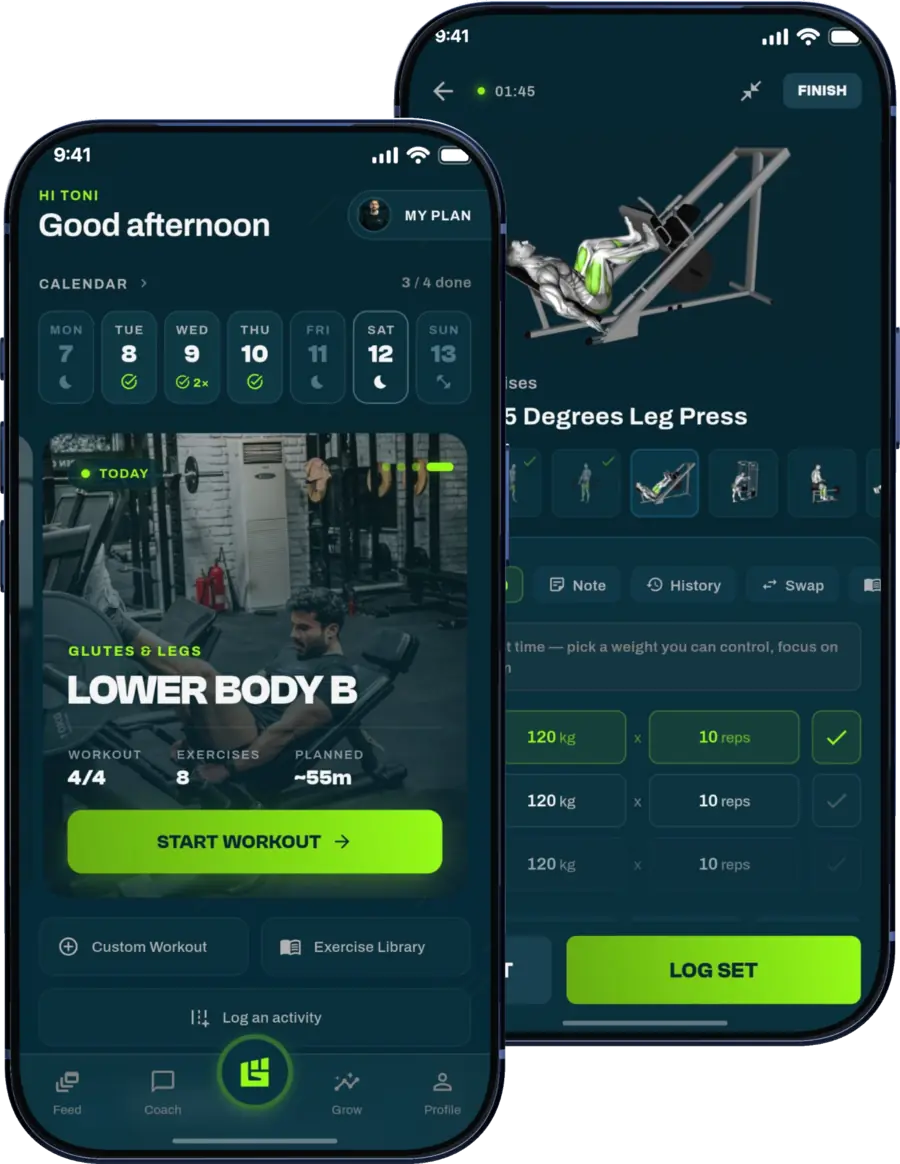
Get a personalized workout plan built around your goal, equipment and schedule. Train smarter, track every rep and keep moving forward, one workout at a time.






The core building blocks of periodization
At its core, periodization is about breaking a massive goal down into smaller, more manageable chunks. It’s like planning a year-long project: you have your final deadline, a few major milestones along the way, and the daily tasks you need to complete to get there.
In the world of strength and fitness, we call these cycles:
- Macrocycle: This is the big picture—your long-term plan, usually lasting several months to a year. Your overarching goal, like prepping for a powerlifting meet or gaining 10 pounds of muscle, lives here.
- Mesocycle: These are the specific training blocks inside your macrocycle, each lasting a few weeks to a few months. Every mesocycle has a single, clear focus, like building muscular endurance, maxing out your strength, or developing explosive power.
- Microcycle: This is your weekly training plan. Each microcycle is made up of the daily workouts designed to move you closer to the goal of the current mesocycle.
By organizing your training into these cycles, you guarantee that every single workout has a purpose. This systematic approach is what separates simply exercising from actually training for a specific outcome.
Preventing plateaus and managing fatigue
One of the biggest wins from using periodization is how it helps you manage fatigue and sidestep overtraining. Going all-out, all the time is a fast track to burnout and injury. It just doesn't work long-term.
A periodized plan smartly weaves in phases of lower intensity or even active rest. This gives your body the downtime it needs to recover, repair, and come back stronger.
This planned variation is also your best weapon against plateaus. Do the same routine for too long, and your body gets so efficient at it that it stops adapting. Periodization keeps your body guessing by constantly changing the stimulus. A block of high-rep, lower-weight training might be followed by a block of low-rep, heavy lifting. This forces new adaptations and keeps the progress coming.
Ultimately, it's the most reliable way to apply the principle of progressive overload for lasting success.
Exploring the roots of modern training strategy
The smart, structured training plans that power today’s top athletes and advanced fitness apps weren’t just invented overnight. Their history is a fascinating mix of scientific theory and Cold War ambition, tracing back to the Soviet Union in the mid-20th century.
After the 1956 Olympic Games, Soviet coaches went on a mission to create a more reliable system for athletic dominance. They drew inspiration from two major ideas of the time: the highly organized, long-term Soviet 5-year economic plans and a scientific concept called General Adaptation Syndrome (GAS).
Proposed by endocrinologist Hans Selye, this theory outlined how the body responds to any stress in three distinct stages: alarm, resistance, and exhaustion. The coaches realized this was a perfect match for athletic training. If they could strategically apply and remove stress (workouts), they could guide the adaptation process and steer clear of the performance-crushing exhaustion stage.
From scientific theory to a training blueprint
This combination of long-range planning and stress management theory led Soviet coaches to map out multi-year "blueprints" for their Olympic athletes. These weren't just lists of exercises; they were detailed roadmaps that planned everything from four-year Olympic cycles down to a single day’s session.
It was a Russian sports scientist, Leo Matveyev, who officially systemized these concepts in the 1960s. He developed the first widely adopted model of training periodization, giving it the clear structure we still use today.
Matveyev's model broke down an annual plan (a macrocycle) into three distinct phases, each with a specific goal designed to systematically build an athlete toward their peak performance.
This methodical approach was a game-changer. It gave Soviet-bloc athletes a major competitive advantage, ensuring they showed up to competitions stronger, faster, and far less fatigued than rivals who followed less structured programs.
The three foundational phases
Matveyev’s classic model is the foundation for almost every modern periodization strategy. He organized the training year into logical blocks that managed an athlete’s readiness for competition.
- Preparation Phase: This is the longest phase, dedicated to building a wide base of general fitness. Volume is high and intensity is lower, getting the body ready for the more demanding work ahead.
- Competition Phase: Here, the focus narrows to sport-specific skills and achieving peak performance. Training volume drops while intensity and technical work ramp up, sharpening the athlete for their key events.
- Transition Phase: Think of this as an active recovery period after the main season. The goal is to let the body and mind rest, heal, and prevent burnout before the next big training cycle kicks off.
This cyclical approach was a major shift because it recognized that athletes simply can’t stay in peak condition all year long. Decades of research have since confirmed how well it works. In fact, meta-analyses show that periodized training can be 20-30% more effective for strength gains in athletes and powerlifters compared to non-periodized plans. You can dive deeper into the history and theory of periodization to see its scientific validation over time.
The evolution into modern fitness
While these original models were designed for elite athletes focused on a single sport, their core principles are universal. The basic idea of managing stress, planning for progress, and making time for recovery is the engine behind any effective, long-term fitness plan.
Today, those foundational ideas have been adapted and refined into the sophisticated strategies used by lifters and athletes at every level. From simple linear plans perfect for a beginner to the complex undulating and block models used by professionals, the DNA of Matveyev's original work is still there.
This is exactly how modern tools like the GrabGains app work. They take these time-tested principles of training periodization and apply them to your personal goals, creating a smart, effective plan that grows and changes with you.

Comparing linear and undulating periodization models
Once you've mapped out your long-term goals, the real question becomes: how do you structure your training week-to-week to get there? Most modern training plans branch off from two core strategies: Linear Periodization and Undulating Periodization.
Think of it as planning a road trip. The linear model is like taking the direct highway—predictable and efficient. The undulating model is more like a scenic backroad, with twists and turns that challenge you in different ways. Both will get you to your destination, but the journey itself feels very different.
Linear periodization: the straight and steady path
Linear Periodization (LP) is the classic approach. Imagine climbing a mountain on a well-marked trail that gets steadily steeper. You methodically increase the difficulty, moving from a wider base of general fitness toward a sharp peak of specific performance.
This is the 'original' form of training periodization, first popularized by sports scientist Leo Matveyev back in the 1960s. It works by systematically increasing intensity (how heavy you lift) while decreasing volume (how many sets and reps you do) over several weeks or months. A strength-focused block, for instance, would start with higher-rep, moderate-weight work and gradually shift to low-rep, heavy lifting.
And it works. Studies have shown that a linear plan can increase strength by 28.4% in trained athletes over 12 weeks, far outpacing the 14.4% gains from non-periodized training. The different phases also stimulate muscle growth more effectively, leading to 6-10% greater hypertrophy by targeting different muscle fiber types. You can see how these original concepts have evolved by exploring their modern applications in new training horizons.
Linear Periodization in Action: A 12-week strength plan might look like this:
- Weeks 1-4 (Hypertrophy): 3 sets of 10-12 reps at 65-75% of your 1-rep max (1RM).
- Weeks 5-8 (Strength): 4 sets of 4-6 reps at 80-88% of your 1RM.
- Weeks 9-12 (Peaking): 5 sets of 1-3 reps at 90-95% of your 1RM.
Because of its straightforward, predictable structure, Linear Periodization is an excellent choice for beginners building a solid foundation or for anyone preparing for a single, specific event like a powerlifting competition.
Undulating periodization: navigating varied terrain
If linear is the highway, Undulating Periodization (UP) is the winding country road that keeps things interesting. Instead of focusing on one quality for months, you change the training stimulus much more frequently—either from one week to the next (Weekly Undulating Periodization or WUP) or even from one workout to the next (Daily Undulating Periodization or DUP).
This approach allows you to train multiple things at once, like strength, size, and power, all within the same training week. It keeps your body guessing and prevents any single fitness quality from taking a nosedive while you focus on another—a common critique of the classic linear model.
For example, here’s how a DUP week might look for someone focused on improving their squat:
- Monday (Hypertrophy): 4 sets of 8-10 reps to build muscle.
- Wednesday (Power): 6 sets of 3 reps, focusing on explosive, speedy movement.
- Friday (Strength): 3 sets of 5 reps with a heavy load to build raw force.
The biggest benefit here is flexibility. If you show up to the gym feeling beat down, you can adjust a single session without derailing an entire multi-week block. This frequent variation also keeps training from feeling stale and is incredibly effective for smashing through stubborn plateaus. It’s a great fit for intermediate and advanced lifters who need to maintain well-rounded fitness or for anyone who gets bored easily.
Linear periodization vs undulating periodization
To help you decide which path is right for you, here’s a direct comparison of the two models. Each has its place, and the "best" one depends entirely on your goals, experience, and even your personality.
| Feature | Linear Periodization (LP) | Undulating Periodization (DUP/WUP) |
|---|---|---|
| Core Structure | Progresses from high volume/low intensity to low volume/high intensity in distinct blocks. | Varies volume and intensity more frequently (daily or weekly). |
| Focus | One primary goal per block (e.g., hypertrophy, then strength, then power). | Multiple goals trained concurrently within the same week. |
| Best For | Beginners, athletes with a single peak event (e.g., a meet), building a foundational base. | Intermediate/advanced lifters, team sport athletes, those who get bored easily or need flexibility. |
| Pros | Simple to plan, predictable, great for peaking, very effective for novice gains. | Highly flexible, prevents detraining of other skills, mentally engaging, good for breaking plateaus. |
| Cons | Can be rigid, may lead to detraining of un-trained qualities, can get monotonous. | More complex to program, can be harder to manage fatigue if not planned well. |
Ultimately, there's no magic formula. Linear periodization provides a clear, proven path for building a strong foundation and peaking for a specific goal. Undulating periodization offers a more dynamic, adaptable approach that keeps you well-rounded and engaged. The best long-term plans often borrow elements from both, using a linear structure for the overall year but incorporating undulating principles within each block.
The evolution to block periodization
Linear and undulating plans are solid, but they were built for a world with one big competition a year. What happens when you’re an athlete with a packed schedule, or just a serious lifter who wants to be strong all the time? The old models can start to feel clunky.
This is where Block Periodization comes in. It’s a more modern approach developed for athletes who need to hit peak performance multiple times a year. Instead of trying to slowly improve everything at once, you break your training into highly focused 2-4 week "blocks." Each block is dedicated to developing just one specific physical quality.
Think of it like this: you wouldn't try to build a car’s engine, electronics, and body all at the same time. You’d complete one system before starting the next. Block periodization does the same for your body, preventing the mixed signals that happen when you try to build size, strength, and power all in the same week.
The pioneers and the principle
The idea of structured training plans isn’t new. Romanian coach Tudor Bompa was laying the groundwork back in 1961. But it was in the 1980s that block periodization really took shape as a solution to the limits of traditional models.
Instead of spreading work across 9-11 different goals in a year, this new method used 3-4 concentrated blocks of high-volume, specific training. Research from scientists like Vladimir Issurin showed it worked. Elite throwers and swimmers using block methods saw power outputs jump by 15-25%. For anyone from bodybuilders to HYROX competitors, that means more efficient, targeted gains. You can learn more about the development of periodized training and its roots.
The real magic is in how you sequence the blocks. You don't just train random qualities. Each block builds on the adaptations created in the one before it.
The three core block types
A typical block plan is built from three distinct types of mesocycles, each with one job. They’re arranged in a specific order to create a cumulative effect, where the progress from one block feeds directly into the next.
- Accumulation Block: This is your foundation. Lasting 2-4 weeks, the goal is to build general qualities like muscle endurance and a solid strength base. Volume is high, but intensity is kept in check. Think of it as gathering the raw materials you’ll need for more specialized work later.
- Transmutation Block: Here’s where you convert that general potential into something more specific, like maximal strength or anaerobic power. Volume drops, but intensity and specificity shoot up. You’re taking the raw materials and starting to shape them.
- Realization Block: This is the final step, designed for peak performance. The focus shifts entirely to explosive power, speed, and recovery. Training is extremely specific to your goal, with very low volume and maximal intensity. This allows fatigue to drop off completely, letting your performance shine through.
By dedicating each block to a single, highly-concentrated stimulus, you can achieve a greater adaptive response for that specific quality. This is far more efficient than the "little bit of everything" approach, especially for advanced trainees.
A powerlifter, for example, might use an accumulation block to build muscle mass. Next, a transmutation block would turn that new muscle into raw strength with heavy lifting. Finally, a realization block would involve practicing maximal lifts with perfect technique right before a meet. This step-by-step process ensures you show up ready to perform, not weighed down by lingering fatigue from a less focused plan.
How to build your own periodized training plan
Alright, let's turn all this theory into actual gains. This is where you go from just reading about training structure to actually building one that works for you. It’s less complicated than it sounds.
Think of it like planning a road trip. You start with your final destination (your big goal), then map out the major states you'll drive through (your training phases), and finally, plan the day-to-day route (your weekly workouts).
Step 1: Set your long-term goal (the macrocycle)
Every good plan starts with a clear destination. Your macrocycle is just that: the single, big-picture goal you want to hit over the next few months or even a full year.
This goal needs to be specific. "Get stronger" is too vague to be useful. Instead, aim for something concrete like, "Add 50 pounds to my squat in 20 weeks" or "Gain 10 pounds of muscle before summer." A clear target gives your entire plan direction and purpose.
Step 2: Break it down into mesocycles
Once you know your destination, you can map out the major legs of the journey. These are your mesocycles: focused training blocks, usually lasting 4-8 weeks, each designed to build a specific quality that moves you closer to your main goal.
For example, if your macrocycle is focused on strength, you could break it down into three distinct phases:
- Phase 1: Hypertrophy (Weeks 1-4): Build the foundation. The focus here is on adding muscle mass with higher training volume and moderate intensity.
- Phase 2: Strength (Weeks 5-8): Convert that new muscle into force. You'll shift to heavier weights and lower reps to build raw strength.
- Phase 3: Peaking (Weeks 9-12): Sharpen your performance. Volume drops way down while intensity ramps up to near-maximal levels, letting you shed fatigue and display your true strength.
A smart plan also looks beyond just lifting. It’s crucial to include work that keeps you healthy and on the field, like specific exercises to prevent ACL injuries in female athletes. Longevity is just as important as performance.
The real magic is in the logical flow. Each mesocycle should set you up perfectly for the next, creating a snowball effect that culminates in your best-ever performance.
Step 3: Plan your weekly microcycles
Now it’s time to get into the details. Your microcycles are your weekly training schedules. This is where you decide exactly which exercises you’ll do, for how many sets and reps, and with how much rest.
Your microcycle plan flows directly from the goal of your current mesocycle. If you’re in a hypertrophy phase, your weekly workouts will be built around higher rep ranges (8-12 reps). If you’re in a strength phase, that shifts to heavy, low-rep sets (2-6 reps).
This diagram shows how different training blocks build on each other, moving from a general base to peak readiness.

The flow is simple: start with the Accumulation phase to build a broad fitness base, move into the Transmutation phase to make those gains more specific to your sport, and finish with the Realization phase to hit peak performance.
A sample 12-week linear strength plan
To show you exactly how this works, here’s a simple 12-week strength plan built on a linear model. Notice how the volume slowly decreases while the intensity steadily climbs, guiding you toward a new 1-rep max.
Sample 12-Week Linear Strength Mesocycle
| Phase (4 Weeks) | Focus | Volume (Sets x Reps) | Intensity (% of 1RM) |
|---|---|---|---|
| Phase 1 | Hypertrophy & Endurance | 3-4 x 8-12 | 65-75% |
| Phase 2 | Basic Strength | 4-5 x 4-6 | 80-88% |
| Phase 3 | Maximal Strength (Peak) | 5-6 x 1-3 | 90-95%+ |
This structure is effective because it’s logical. First, you build the muscle. Then, you teach that muscle to handle heavy loads. Finally, you taper off fatigue to express your maximal strength right when it counts. By following a clear, progressive plan, you can finally stop guessing and start training with intention.
Let AI handle your periodization planning

Let’s be honest: building a proper periodized training plan from scratch is a massive undertaking. It takes a solid grasp of exercise science, constant tracking, and the time to crunch numbers and make endless adjustments. For most people, it feels less like a path to getting stronger and more like a second job.
This is where smart technology comes in. Instead of fighting with spreadsheets and trying to decipher complex training theories, you can have an intelligent system do the heavy lifting for you. The GrabGains platform is designed to be your digital coach, taking all the guesswork out of training periodization.
Smart, dynamic adjustments
An AI-driven plan isn’t static—it's a living program that adapts to how you actually perform in the gym. Let's say you have a great week and crush your rep targets. The system sees this and intelligently bumps up your weights for the next session to make sure you keep progressing.
On the other hand, life gets in the way. If you miss a workout or just feel off and struggle through a session, the system adjusts automatically. It might reschedule your week or slightly lower the intensity to help you recover, keeping you on track without running you into the ground.
By constantly analyzing your performance, an AI workout builder like the one at GrabGains makes sure your program is always optimized for you. It takes emotion and guesswork out of the equation, making decisions based on hard data.
Proven training models, built for you
You don’t have to waste time deciding between linear, undulating, or block periodization. The system chooses the right model for you based on your goals, training history, and experience level.
- For Beginners: It might build a classic linear plan to create a solid foundation of strength and muscle.
- For Advanced Lifters: It could use a daily undulating model to keep your body guessing and help you smash through stubborn plateaus.
- For Competition Prep: The platform can even structure a block periodization cycle, sharpening specific qualities like power right before your event.
This process makes elite-level training strategy simple and accessible to everyone. With features like automatic 1-rep max (1RM) calculations and clear progress tracking, you get all the tools you need to train with purpose. It's the smartest way to make sure every single workout is a productive step toward your ultimate fitness goal.
Common questions about training periodization
Once you start moving from just exercising to actually training with a plan, a lot of questions come up. The world of training periodization can seem complicated at first, but the core ideas are actually pretty simple. Let's clear up a few of the most common ones.
How often should I change my workout program?
A lot of lifters believe progress comes from constantly swapping exercises to “confuse the muscles.” This is a huge misunderstanding. Smart training isn't about random changes; it's about purposeful progression inside a structure.
You should stick with a program for the entire length of a mesocycle, which is usually 4 to 8 weeks. This gives your body enough time to actually adapt and get stronger at the movements you’re practicing. Changing things too often just robs you of the chance to master exercises and apply progressive overload—the real engine of long-term gains.
The goal isn't muscle confusion; it's muscle adaptation. A good periodized plan already has variation built-in, but it’s a strategic shift from one phase to the next, not a chaotic weekly overhaul.
Is periodization only for elite athletes?
Absolutely not. While periodization got its start in elite sports, the principles are incredibly valuable for beginners. In fact, it might be even more important for someone just starting their journey.
For a new lifter, periodization creates a safe, logical path forward. It helps you build a strong foundation by starting with lighter weights and higher reps to lock in good technique, then gradually moves you toward heavier loads. This systematic approach helps you:
- Build Good Habits: It teaches the discipline of following a plan.
- Ensure Proper Form: It gives you time to master movements before you add serious weight.
- Reduces Injury Risk: It prevents the classic mistake of trying to lift too heavy, too soon.
A beginner who follows a periodized plan will make far more consistent, sustainable progress than someone who just wings it every time they hit the gym.
Can periodization help with body recomposition?
Yes, a periodized approach is perfect for body recomposition—the goal of building muscle and losing fat at the same time. It works because it lets you strategically match your training phases with your nutrition.
For example, you could line up a high-volume hypertrophy block with a small calorie surplus to maximize muscle growth. After that, you could shift into a strength block while eating at maintenance or in a slight deficit. This helps you shed fat while holding onto that new, hard-earned muscle. This cycle is much more effective than trying to do everything at once.
What if I miss a week of training?
Life happens. You might get sick, go on vacation, or just get slammed at work and miss a whole week of training. With a rigid, old-school plan, this can feel like a total disaster.
But a smart, periodized approach is built to adapt. The best thing to do is not to cram two weeks of training into one. Instead, you can either repeat the week you missed or, if you feel recovered, just pick up where you left off. The key is to get back on track without piling on a ton of extra stress. This is where modern tools can make a huge difference by automatically adjusting your schedule for you.
Don't let the hassle of manual planning stop you from reaching your goals. The GrabGains AI platform takes these powerful principles and builds a personalized, adaptive training plan just for you. It handles all the adjustments, so all you have to do is focus on your workout. Pre-register today to be the first to train smarter.
Get inspired and motivated