Chin-Ups vs Pull-Ups: Does Grip Really Matter?
Chin-up or pull-up? The only visible difference is how you grip the bar — palms facing you or facing away. But that small change shifts which muscles do the heavy lifting. Here's what you need to know.
Veröffentlicht: 2026-03-09
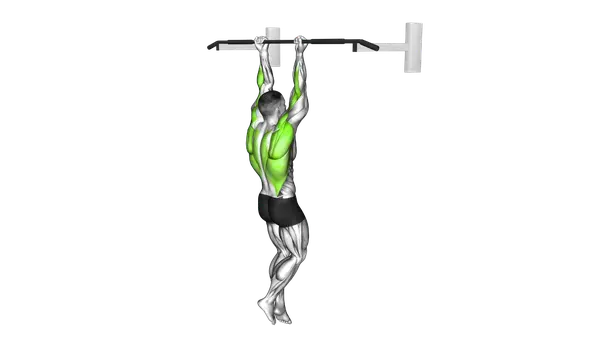
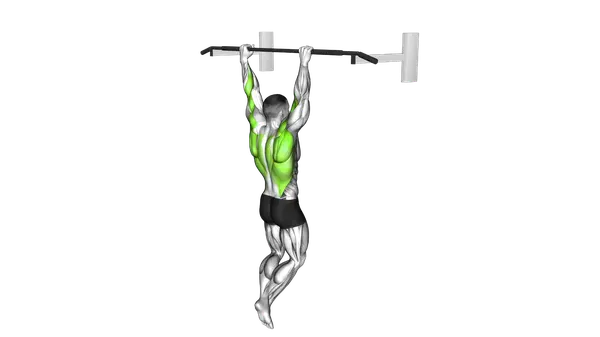
The grip changes the muscles
Pull-ups use an overhand grip (palms away). This puts your biceps in a weaker position, which means your lats have to do more of the pulling [1]. It's harder, and it's a slightly better lat exercise.
Chin-ups use an underhand grip (palms toward you). This puts your biceps in a stronger position, so they contribute more to the movement. You'll likely be able to do more chin-ups than pull-ups, and your biceps will feel it the next day.
Which is easier?
Most people find chin-ups easier. Your biceps are in a mechanically stronger position to help pull your body up, which means your lats get assistance. If you're working toward your first pull-up, chin-ups are a great stepping stone.
This doesn't make chin-ups less effective — it just means you can typically do more reps or add more weight, which can actually lead to more total muscle stimulus.
Shoulder comfort
This varies from person to person, but many people find chin-ups more comfortable on their shoulders. The underhand grip naturally puts your shoulders in a slightly more externally rotated position, which tends to feel better.
Pull-ups with a wide overhand grip can stress the shoulder joint, especially if you lack mobility. If wide pull-ups bother your shoulders, try a narrower grip or switch to chin-ups.
Which builds a wider back?
Contrary to gym lore, both build your lats effectively. The idea that pull-ups build a "wider" back while chin-ups build a "thicker" back is largely a myth. EMG studies show similar lat activation in both movements.
The real difference is bicep involvement. If you want more bicep work with your back training, chin-ups deliver. If you want to minimize bicep involvement and maximize lat focus, pull-ups have a slight edge.
Das Fazit
Do both. Alternate between chin-ups and pull-ups across your training week or between training cycles. If you can only pick one, chin-ups are slightly more practical — you can do more reps, they're easier on most people's shoulders, and they build your biceps too. But if back width is your primary goal, make sure pull-ups are in the rotation.
Was ist dein Fitnessziel?
Wähle eines aus und die App baut dein Programm darum herum, um deine Ausrüstung und um die Tage, an denen du trainieren kannst.
Auf einen Blick
Chin-Up
Pull Up
Häufige Fragen
What about neutral grip pull-ups?
Neutral grip (palms facing each other) is often the most comfortable option. It splits the difference between chin-ups and pull-ups in terms of muscle activation and is great if either standard grip bothers your shoulders or elbows.
Should I go all the way down on each rep?
Yes. Full range of motion — hanging with straight arms at the bottom, chin over the bar at the top — builds the most muscle and strength. Partial reps with heavier weight or more reps are less effective.
Wissenschaftliche Quellen
[1] Electromyographic analysis of muscle activation during pull-up variations.
Dickie JA, Faulkner JA, Barnes MJ et al. · Journal of electromyography and kinesiology : official journal of the International Society of Electrophysiological Kinesiology (2017)
Alizadeh S, Edwards PF, Lockyer EJ et al. · Journal of sports science & medicine (2024)
McGill SM, Cannon J, Andersen JT · Journal of electromyography and kinesiology : official journal of the International Society of Electrophysiological Kinesiology (2014)
Die Quellen sind begutachtete wissenschaftliche Publikationen von PubMed.