

Back
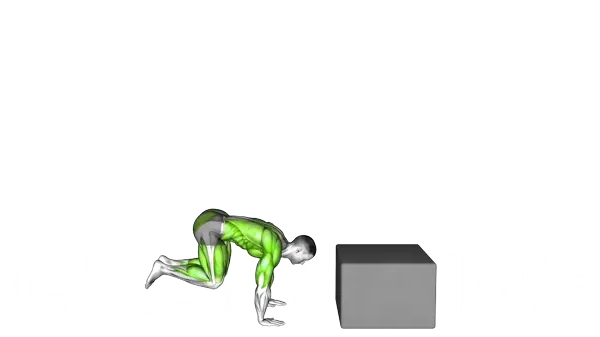
Burpee Box Jump
Add to Workout

Burpee Box Jump

Build

How to Perform

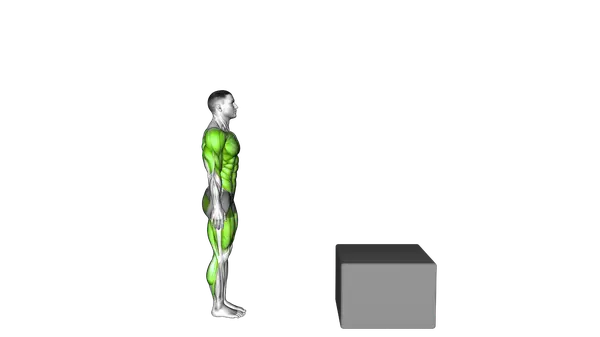
  1. Start in a standing position facing the box with feet hip-width apart and arms relaxed at your sides, maintaining a neutral spine.
  2. Bend at the knees and hips to place your hands flat on the floor shoulder-width apart, keeping your weight evenly distributed between your hands and the balls of your feet.
  3. Kick your feet back into a plank position with your body forming a straight line from head to heels, engaging your core and keeping your shoulders stacked over your wrists.
  4. Lower your chest to the floor in a controlled push-up, inhaling as you descend while maintaining a rigid torso and preventing your hips from sagging.
  5. Push through your palms to raise your body back to the plank position, exhaling forcefully as you press up.
  6. Jump your feet forward to land just behind your hands, landing softly with your knees bent and weight in your heels.
  7. From the crouched position, immediately extend your hips and knees while swinging your arms upward to generate momentum, exhaling powerfully as you jump onto the box.
  8. Land softly on the box with both feet completely on the surface, knees slightly bent to absorb impact, then step or jump back down to your starting position.

Important information

  • Scale the exercise by adjusting box height based on your jumping ability—beginners should start with a lower box (12-18 inches).
  • Keep your core engaged throughout the entire movement to protect your lower back, especially during the plank and push-up portions.
  • Always land softly with your knees tracking in line with your toes to prevent knee strain.
  • Maintain a consistent breathing pattern—exhale during exertion (jumping, pushing up) and inhale during eccentric phases (lowering down).

Exercise Details

Primary Muscles

Quads Glutes Abs Cardio

Muscle Groups

Leg exercises Glute exercises Ab exercises

Mechanic

Compound

Risk Areas

Quads Glutes Abs

Built for progress

Take the guesswork out of training

Create personalized AI-powered workout plans that evolve with you. Train smarter, track every rep and keep moving forward, one workout at a time.

Be among the first to join!
GrabGains workout plans

The burpee box jump is a dynamic, compound movement that seamlessly combines the intense full-body conditioning of a traditional burpee with the explosive power of a box jump. This intermediate-level exercise delivers an impressive bang for your buck, simultaneously targeting your quads, glutes, abs, and providing an exceptional cardiovascular challenge in one fluid sequence. Popular in both HIIT and CrossFit training methodologies, this movement elevates your heart rate rapidly while building functional strength and power. The integration of the burpee's pushing and pulling components with the box jump's plyometric demand creates a perfect storm for improving muscular endurance and cardiovascular capacity. 

This combination makes it particularly effective for athletes looking to develop power endurance: the ability to sustain explosive movements over time. What makes the burpee box jump particularly valuable is its efficiency in training multiple energy systems simultaneously. The anaerobic power required for the jump portion complements the aerobic demand of performing multiple repetitions, creating a metabolic conditioning effect that continues well after your workout ends. 

Many fitness enthusiasts appreciate how this exercise develops practical, real-world fitness that translates to improved performance in various sports and daily activities. While challenging, the beauty of the burpee box jump lies in its scalability. The exercise can be adapted to various fitness levels by adjusting box height, modifying the burpee portion, or adjusting work-to-rest ratios. This versatility makes it a staple in progressive training programs, allowing athletes to continuously challenge themselves as their fitness improves. 

When incorporated intelligently into a balanced training regimen, the burpee box jump serves as an excellent tool for breaking through plateaus, improving body composition, and developing the kind of conditioning that supports both athletic performance and overall health. The mental toughness developed through pushing through sets of this demanding exercise is just as valuable as the physical benefits it provides.

FAQ - Burpee Box Jump

What muscles does the burpee box jump target?

The burpee box jump is a full-body movement that primarily targets your quadriceps, glutes, and core, while also engaging your shoulders, chest, and hamstrings. The burpee portion activates your pushing muscles while the box jump recruits fast-twitch muscle fibers for explosive power development.

How can I modify the burpee box jump for different fitness levels?

Beginners can start with a lower box height (12-18 inches) and step up instead of jumping, or perform the movements separately. Intermediate athletes can use a standard box height (20-24 inches), while advanced individuals can increase box height (24+ inches) or add a weighted vest for greater challenge.

What are the most common form mistakes to avoid?

The most common mistakes include rounding your lower back, rotating your hips instead of keeping them square, rushing through the movement, and not hinging properly at the hips. Focus on maintaining a neutral spine, moving with control, and keeping your standing knee slightly soft rather than locked.

How often should I include burpee box jumps in my workout routine?

Due to its high-intensity nature, limit burpee box jumps to 2-3 times weekly with at least 48 hours between sessions to allow for recovery. They work best as part of a HIIT circuit or as a metabolic finisher, typically performing 3-5 sets of 5-10 repetitions with adequate rest between sets.

Are burpee box jumps safe for people with knee issues?

This exercise places significant stress on the knees and is generally not recommended for those with existing knee injuries or severe joint pain. If you have mild knee concerns, consider lower-impact modifications like step-ups instead of jumps, or consult with a physical therapist before attempting this movement.

Alternative Exercises

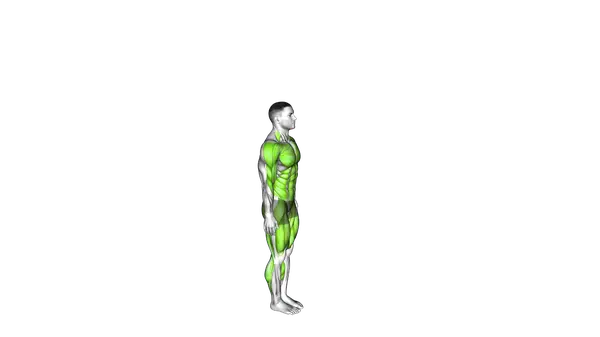
Burpee

Burpee

The burpee stands as one of fitness's most celebrated and simultaneously dreaded movements. This compound exercise has earned its reputation as a high-intensity staple that delivers comprehensive benefits in minimal time. Originally developed in the 1930s by physiologist Royal H. Burpee as a fitness test, this movement has evolved to become a cornerstone in modern workout programs across various fitness disciplines. While beginners can attempt modified versions, the traditional burpee requires a moderate fitness foundation. The exercise demands coordination between multiple movement patterns and sufficient strength to transition smoothly between positions. Intermediate exercisers will find burpees challenging yet achievable, making them perfect for progressive overload as fitness improves. The burpee excels at activating multiple muscle groups simultaneously. Your core muscles (rectus abdominis, obliques, and transverse abdominis) work continuously to stabilize your body throughout the movement. The quadriceps power your jump and assist in the stand-up portion, while your glutes activate strongly during the explosive component. Beyond muscle engagement, your cardiovascular system works overtime, elevating heart rate quickly and efficiently. Burpees feature prominently in High-Intensity Interval Training (HIIT) protocols, where they deliver maximum metabolic impact in short time frames. Their versatility makes them ideal for Tabata intervals, EMOM (Every Minute On the Minute) challenges, and AMRAP (As Many Rounds As Possible) formats. In CrossFit, burpees appear regularly in benchmark workouts and the CrossFit Games, testing athletes' power endurance and mental fortitude. Few exercises match the burpee's efficiency for cardiovascular development. Regular incorporation improves VO2 max, cardiac output, and overall endurance capacity. The full-body nature of the movement creates a significant oxygen demand, training your body to utilize oxygen more efficiently during exercise. This translates to improved stamina across other athletic pursuits and daily activities.

Endurance
Cardio
HIIT
Crossfit
Bodyweight exercises
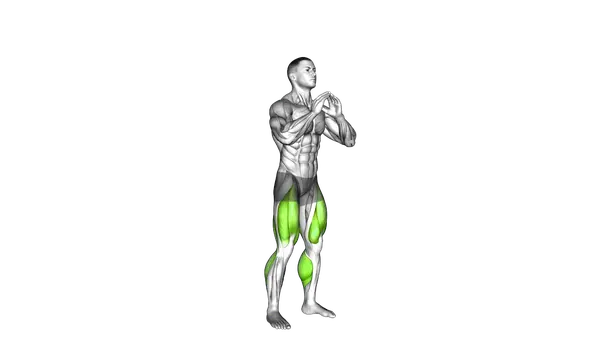
Jump Squat

Jump Squat

The jump squat stands as a dynamic powerhouse in any fitness routine, merging the strength-building benefits of traditional squats with explosive plyometric movement. This intermediate-level exercise simultaneously targets multiple lower body muscle groups, primarily engaging the quadriceps, glutes, and calves through a combination of controlled descent and explosive ascent. Popular in both HIIT and CrossFit programming, jump squats serve as an excellent metabolic conditioning tool that elevates your heart rate quickly while building functional power. The beauty of this exercise lies in its versatility—it can be incorporated into circuit training, used as a finisher, or programmed within complex training protocols that pair strength movements with plyometrics. The exercise's high-intensity nature makes it particularly effective for developing muscular endurance and cardiovascular capacity. As you progress through multiple repetitions, you'll notice the dual challenge of maintaining proper form while fighting through the burning sensation in your legs—a hallmark sign that you're building muscular endurance. Meanwhile, your cardiovascular system works overtime to supply oxygen to your working muscles, creating that beneficial cardio training effect. Research has demonstrated that incorporating plyometric exercises like jump squats into your routine can improve power output, vertical jump height, and even running economy. The neuromuscular adaptations that occur when regularly performing jump squats translate well to athletic performance across various sports and activities. For those tracking fitness metrics, jump squats typically burn more calories than their static counterparts due to the increased energy demand of propelling your body weight against gravity. This makes them an efficient choice for those with limited workout time who want to maximize their results. While challenging, the reward of mastering jump squats extends beyond aesthetic benefits—you'll develop real-world power that translates to improved performance in daily activities, recreational sports, and other fitness pursuits.

Endurance
Cardio
HIIT
Crossfit
Bodyweight exercises
Burpee Broad Jump

Burpee Broad Jump

The Burpee Broad Jump stands as a formidable total-body movement that combines explosive power, cardiovascular endurance, and muscular strength into one comprehensive exercise. This intermediate-level movement has gained tremendous popularity in both HIIT and CrossFit training circles for its efficiency in targeting multiple muscle groups simultaneously while elevating your heart rate. When performing this dynamic exercise, you'll engage your pecs during the push-up portion, creating that chest-building tension that helps develop upper body strength. Your quads and glutes activate powerfully during both the squat component and especially during the explosive jump phase, where they generate the forward propulsion needed for distance. Throughout the entire movement, your core muscles remain engaged, with your abs working overtime to maintain proper form and body alignment. What makes this exercise particularly valuable is its dual nature of building endurance while delivering serious cardio benefits. The rapid transitions between movements create an oxygen demand that challenges your cardiovascular system, making it an excellent choice for those looking to improve conditioning while burning significant calories. This exercise efficiently combines strength and cardio elements, eliminating the need to separate these training components. The beauty of the Burpee Broad Jump lies in its adaptability across fitness levels. While categorized as intermediate, it can be modified or intensified based on your specific goals and capabilities. Many athletes incorporate this movement into their training to develop power, explosiveness, and stamina—all qualities that transfer well to various sports and daily activities. For those seeking efficiency in their workouts, this exercise delivers exceptional bang for your buck, recruiting major muscle groups while simultaneously challenging your cardiovascular system. Its inclusion in HIIT and CrossFit programs speaks to its effectiveness as a metabolic conditioning tool that pushes physical boundaries and builds mental toughness alongside physical strength.

Endurance
Cardio
Hyrox
HIIT
+1
Bodyweight exercises
Bodyweight Full Squat With Overhead Press

Bodyweight Full Squat With Overhead Press

The Bodyweight Full Squat With Overhead Press combines lower body power with upper body pushing strength in one fluid movement, creating an efficient full-body exercise that elevates your heart rate while building functional strength. This intermediate-level compound movement simultaneously targets your quadriceps, glutes, and front deltoids, making it perfect for those looking to maximize their workout efficiency. This versatile exercise fits seamlessly into various training methodologies including HIIT circuits, bodybuilding routines, and CrossFit workouts. The dynamic nature of combining a squat with an overhead press creates a cardiovascular demand that burns calories while developing both strength and muscular endurance throughout your entire body. What makes this movement particularly valuable is how it mimics everyday functional patterns: the kind of integrated movement you might use when lifting objects from the ground and placing them on a high shelf. By training these movement patterns together, you're enhancing your body's natural coordination systems while developing practical strength that translates to daily activities. The full squat component engages your entire lower body kinetic chain, activating the quadriceps as primary movers while recruiting the glutes, hamstrings, and core stabilizers. Meanwhile, the overhead press portion develops shoulder strength and stability, particularly in the anterior deltoids, while engaging your triceps and upper back muscles as synergists. For those focused on metabolic conditioning, this exercise delivers impressive results by recruiting large muscle groups simultaneously, significantly elevating oxygen consumption and caloric expenditure. The compound nature makes it particularly effective for those with limited workout time who need maximum benefits from minimal exercises. Regular incorporation of the Bodyweight Full Squat With Overhead Press can lead to improved posture, enhanced core strength, better overhead mobility, and increased lower body power—all critical components for athletic performance and daily function. Whether you're focused on building strength, enhancing endurance, or improving overall fitness, this exercise delivers comprehensive benefits in a single, efficient movement.

Strength
Endurance
HIIT
Bodybuilding
+1
Bodyweight exercises