All Exercises

Exercises to build balanced strength, control and chest development

Chest exercises with dumbbell

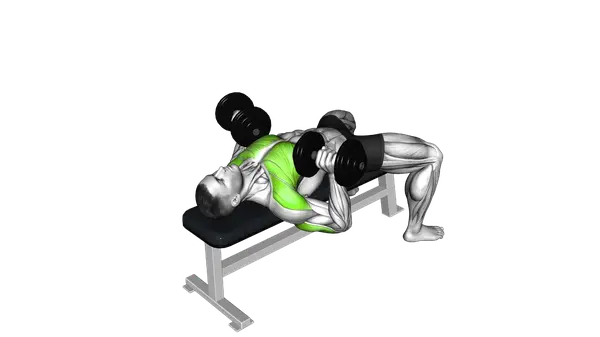
Dumbbell chest exercises offer a wider range of motion and greater unilateral control than most barbell movements. This makes them highly effective for building balanced muscle development, improving stability, and reducing strength imbalances between sides. Dumbbells also allow you to train multiple chest angles with precision, supporting both hypertrophy and functional upper-body strength. Below you’ll find essential dumbbell variations that target the chest from different positions and loading patterns.
Read more
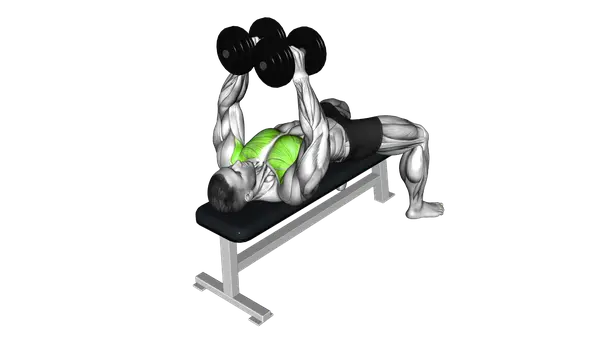
Dumbbell Chest Press

Dumbbell Chest Press

The Dumbbell Chest Press stands as a cornerstone movement in any serious strength training regimen, offering remarkable versatility for intermediate lifters looking to develop their upper body. This fundamental exercise primarily targets the pectoral muscles while engaging the triceps and anterior deltoids as crucial secondary movers, creating a comprehensive push pattern that builds balanced strength across the chest and shoulders. Unlike its barbell counterpart, the dumbbell variation introduces an element of stabilization that challenges your muscles in new ways. Each arm works independently, preventing your dominant side from compensating for weaknesses and promoting symmetrical development across your chest. This independent movement pattern also allows for a greater range of motion, enabling deeper stretches at the bottom position and more complete contractions at the top. For bodybuilders, the Dumbbell Chest Press serves as an exceptional hypertrophy tool, effectively isolating the pectoral muscles through various angles by simply adjusting bench positions. The exercise creates significant time under tension, particularly at the stretched position where muscle damage: a key driver of growth, occurs most intensively. The natural arc of the dumbbells also follows the fibers of your pecs more naturally than a straight bar path. Powerlifters incorporate this movement as an accessory to enhance bench press performance. The independent arm action helps identify and correct imbalances that might limit progress on maximal lifts. Additionally, the increased stabilization demands strengthen the smaller supporting muscles that contribute to overall pressing power. From a strength perspective, the Dumbbell Chest Press excels at building functional pushing power that transfers to athletic performance and daily activities. Progressive overload is straightforward: as you master form with lighter weights, gradually increasing the load creates the necessary stimulus for continued strength adaptations. This exercise responds particularly well to various rep ranges, from heavy sets of 4-6 for pure strength to moderate sets of 8-12 for a blend of strength and muscle development.

Strength
Bodybuilding
Powerlifting
Dumbbell
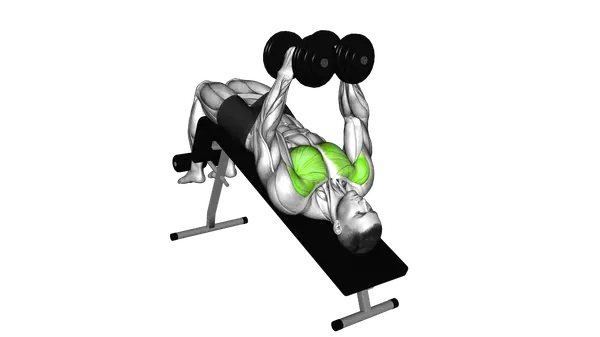
Dumbbell Decline Fly

Dumbbell Decline Fly

The Dumbbell Decline Fly is a targeted chest exercise that places unique emphasis on the lower portion of the pectoral muscles. Unlike flat bench variations, the decline position shifts the stress to the lower chest fibers, creating comprehensive development across the entire pectoral region. This isolation movement requires controlled movement patterns and proper stabilization to maximize effectiveness. While not as technically demanding as advanced chest movements, the Dumbbell Decline Fly sits firmly in the intermediate category. It requires a baseline of chest strength and proper body awareness to execute effectively. The decline position introduces an element of complexity that beginners might find challenging, particularly in maintaining proper shoulder positioning and preventing the dumbbells from drifting too far forward. The star of this exercise is undoubtedly the pectoralis major, with particular emphasis on the lower sternal portion. The wide arc motion creates significant tension across the chest fibers, especially at the stretched position. While the anterior deltoids and serratus anterior act as secondary supporters, the pecs handle the majority of the workload during proper execution. Bodybuilders prize the Dumbbell Decline Fly for its ability to create detailed chest separation and lower pec development. The exercise allows for intense focus on muscle contraction and stretch, key components for hypertrophy. When incorporated into higher-rep schemes (8-15 repetitions), it serves as an excellent finishing movement to fully exhaust the chest after compound pressing exercises. Though primarily known for muscle development, consistent performance of Decline Flys contributes significantly to functional pressing strength. The exercise builds stabilizing strength through the chest, shoulders, and supporting musculature. This translational benefit carries over to improved performance in compound movements like bench press variations and pushups, creating a more balanced and powerful upper body.

Strength
Bodybuilding
Dumbbell
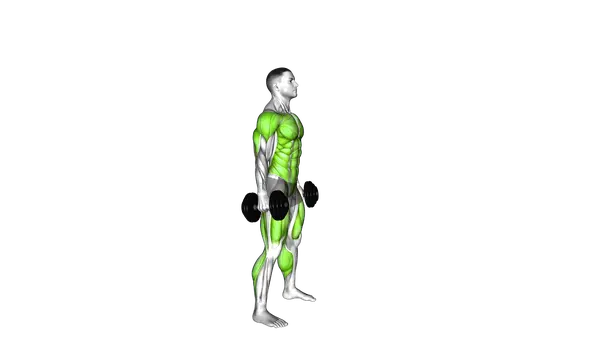
Dumbbell Devils Press

Dumbbell Devils Press

The Dumbbell Devil's Press is a formidable full-body exercise that has gained immense popularity in HIIT and CrossFit communities. This intermediate-level movement combines the explosive power of a burpee with the strength demands of a dumbbell snatch, creating a challenging compound exercise that delivers serious results. When you tackle the Devil's Press, you're engaging multiple major muscle groups simultaneously. Your pecs, triceps, and front delts work together through the pushing components, while your lats activate powerfully during the pulling phase. What many exercisers appreciate is the significant lower body engagement, particularly in the glutes, which fire throughout the movement to generate force and stability. The beauty of the Devil's Press lies in its versatility as a training tool. For strength development, it challenges your body to move external resistance through a full range of motion while maintaining proper form. As an endurance builder, few exercises compare to its ability to sustain muscle tension across different movement patterns. The cardiovascular demands are equally impressive, elevating your heart rate quickly and keeping it elevated throughout your working sets. Exercise scientists particularly value the Devil's Press for its metabolic efficiency. The combination of ground-to-overhead movement patterns with dumbbells creates significant oxygen demand, making it an excellent choice for improving cardiovascular conditioning while simultaneously building functional strength. This dual-purpose nature makes it a time-efficient option for those with busy schedules. Whether programmed as part of a challenging HIIT circuit or incorporated into a CrossFit WOD, the Devil's Press demands respect for its intensity. Many fitness enthusiasts find it particularly effective when placed toward the beginning of a workout when energy levels are highest, or strategically positioned as a finisher to empty the tank completely. Either way, this exercise delivers an impressive stimulus-to-fatigue ratio that makes it worth incorporating into your training arsenal.

Strength
Endurance
Cardio
HIIT
Crossfit
Dumbbell
Dumbbell Fly

Dumbbell Fly

The dumbbell fly stands as a cornerstone chest isolation movement in bodybuilding and strength training programs for intermediate lifters seeking to sculpt defined pectorals. This elegant exercise targets the pectoral muscles with remarkable precision, allowing for a deep stretch and concentrated contraction that basic pressing movements simply can't replicate. Unlike compound chest exercises that heavily recruit the triceps and shoulders, the dumbbell fly places primary tension directly on the pecs throughout the entire range of motion. This isolation effect makes it particularly valuable for bodybuilders who need to address muscular symmetry and achieve that coveted chest sweep extending from sternum to armpit. For intermediate trainees who have established foundational strength, the dumbbell fly serves as an excellent secondary movement after heavier pressing. The exercise excels at creating metabolic stress and mechanical tension—two crucial factors for hypertrophy—without the joint stress associated with maximum loads. This makes it sustainable for long-term strength development while still delivering substantial muscle-building stimulus. From a strength perspective, the dumbbell fly helps develop stabilizing muscles throughout the chest, shoulders, and core that contribute to overall pressing power. Strong, well-developed pectoral muscles built through flies can translate to improved performance on bench press variations once you return to those heavier compound movements. Many bodybuilding legends have relied on dumbbell flies to create that dramatic chest development seen on competition stages. The exercise creates that distinctive line separating the upper and lower pectoral regions while enhancing the overall chest thickness that's immediately noticeable in both athletic and aesthetic contexts. For optimal results, intermediate lifters should integrate dumbbell flies strategically within their training split, typically performing them after heavier pressing work when the pectorals are sufficiently warmed up but not fully fatigued. This approach maximizes both safety and muscle fiber recruitment for consistent chest development over time.

Strength
Bodybuilding
Dumbbell
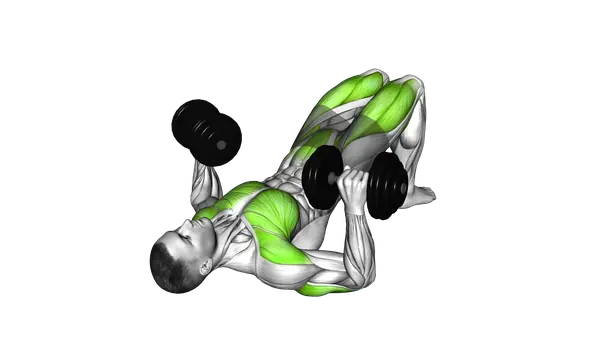
Dumbbell Glute Bridge Chest Press

Dumbbell Glute Bridge Chest Press

The Dumbbell Glute Bridge Chest Press stands as a remarkable compound movement that ingeniously combines lower and upper body training into one fluid exercise. This intermediate-level movement simultaneously targets two powerhouse muscle groups – the glutes and pecs – creating an efficient training solution for those looking to maximize their gym time. By merging a glute bridge with a chest press, this exercise elevates your traditional pressing movement into a comprehensive strength builder. The unstable position created by the glute bridge engages your core stabilizers while adding an additional challenge to the chest press component, making it particularly valuable for bodybuilding enthusiasts seeking muscle development with functional application. What makes this exercise especially versatile is its adaptability to different training modalities. When incorporated into a bodybuilding routine, the movement can be performed with heavier weights and moderate repetitions to stimulate muscle growth across multiple areas. Alternatively, when integrated into HIIT workouts, lighter weights with higher repetitions transform it into a metabolic powerhouse that drives heart rate up while building strength. The beauty of this exercise lies in its efficiency. As you drive through your heels and extend your hips skyward, you're activating the entire posterior chain while simultaneously challenging your chest, shoulders, and triceps during the pressing motion. This coordination between upper and lower body enhances neuromuscular connection – a crucial element for developing functional strength that translates to everyday activities and athletic performance. For intermediate fitness enthusiasts, this movement represents an excellent progression from basic isolation exercises, teaching the body to function as an integrated unit rather than separate parts. The stabilization demands also make it valuable for improving posture and core engagement, addressing the imbalances that often develop from sedentary lifestyles or repetitive movement patterns.

Strength
Bodybuilding
HIIT
Dumbbell

Built for Progress

Take the Guesswork
Out of Training

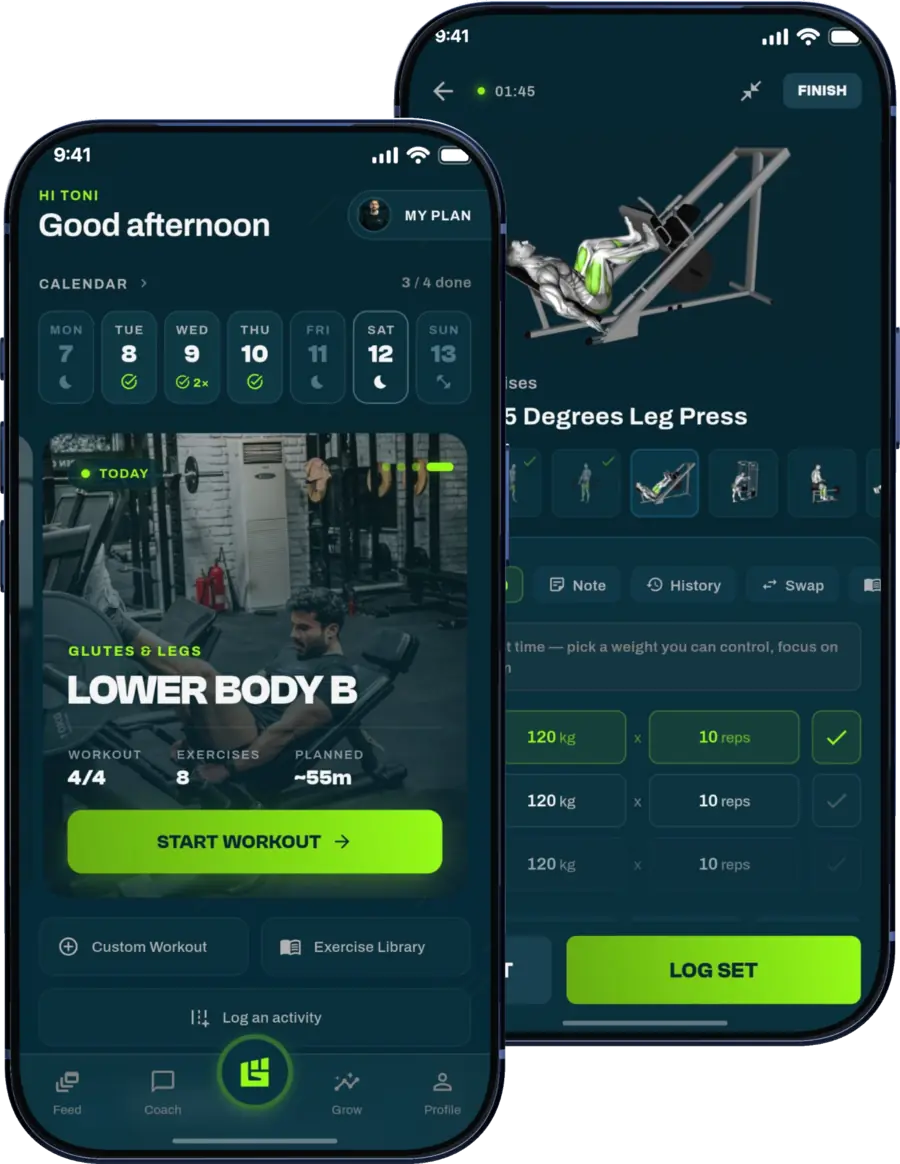
Create personalized AI-powered workout plans that evolve with you. Train smarter, track every rep and keep moving forward.
Dumbbell Incline Chest Press

Dumbbell Incline Chest Press

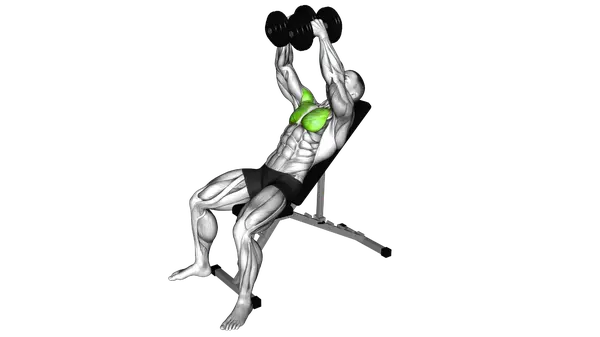
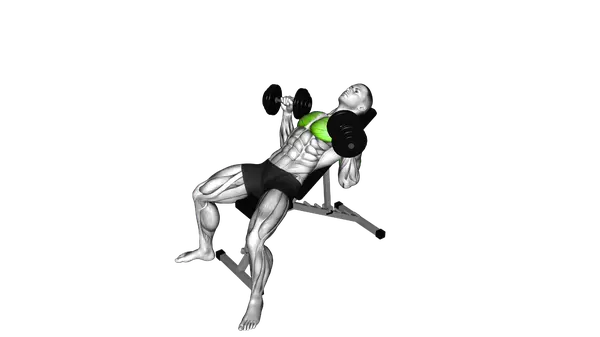
The Dumbbell Incline Chest Press stands as a cornerstone movement for anyone looking to develop impressive upper chest definition and strength. This intermediate-level exercise primarily targets the upper portion of the pectoralis major (pecs), while significantly engaging the anterior deltoids (front delts) and triceps as secondary muscle groups. Favored by bodybuilders for decades, the incline variation creates that coveted full chest development that flat pressing alone simply cannot achieve. The beauty of using dumbbells rather than a barbell lies in the freedom of movement they provide, allowing for a more natural range of motion that matches your unique shoulder structure and can potentially reduce joint stress. For strength enthusiasts, the Dumbbell Incline Press offers substantial benefits beyond aesthetic appeal. The unilateral nature of the exercise exposes and addresses strength imbalances between your left and right sides, which can significantly improve your overall pressing performance across other movements. Additionally, the stabilization demands placed on your shoulder complex contribute to more functional strength that translates to everyday activities. From a bodybuilding perspective, the incline angle shifts emphasis to the upper chest fibers, creating that shelf-like appearance where the chest meets the shoulders: a hallmark of a well-developed physique. This targeted approach helps create the complete chest development necessary for competitive bodybuilding or simply achieving a balanced, aesthetic upper body. When incorporated into a comprehensive chest routine, this movement serves as an ideal complement to flat and decline variations, ensuring complete pectoral development. The exercise responds particularly well to both higher-rep approaches for hypertrophy (8-12 reps) and lower-rep schemes for raw strength (4-6 reps), making it incredibly versatile within various training protocols. Whether your goals lean toward competitive bodybuilding or pure strength development, the Dumbbell Incline Chest Press delivers impressive results when performed consistently with proper form and appropriate loading parameters.

Strength
Bodybuilding
Dumbbell
Dumbbell Pullover

Dumbbell Pullover

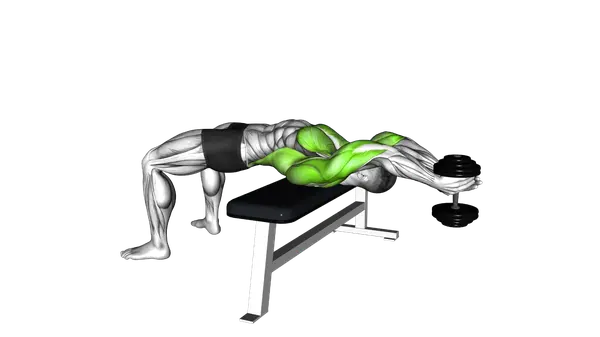
The Dumbbell Pullover stands as a classic resistance exercise that elegantly bridges the gap between upper body pushing and pulling movements. This intermediate-level movement uniquely targets multiple major muscle groups simultaneously, with primary emphasis on the pectorals (chest) and latissimus dorsi (lats), while also engaging the serratus anterior and portions of the triceps as supporting muscles. Originally popularized in the golden era of bodybuilding, the Dumbbell Pullover has maintained its relevance in modern fitness routines for good reason. It offers the distinct advantage of training both the chest and back regions in a single fluid motion, making it an efficient addition to any well-designed bodybuilding program. The exercise's arc-like movement pattern creates a powerful stretch through the ribcage, potentially enhancing thoracic mobility and respiratory capacity over time. For strength enthusiasts, the Dumbbell Pullover provides a unique stimulus that complements traditional pressing and pulling movements. The exercise challenges stability throughout the shoulder complex while promoting strength development across multiple planes of motion. When programmed appropriately with progressive overload principles, it can contribute meaningfully to upper body power and muscular development. The Dumbbell Pullover also shines as a recovery tool when performed with lighter loads. The controlled stretching component can improve circulation to worked muscles, potentially enhancing recovery between more intensive training sessions. Many athletes incorporate lighter pullover variations as part of their warm-up routines or active recovery days to maintain mobility without excessive fatigue. Whether your goals center on aesthetic bodybuilding, functional strength development, or enhanced recovery, the Dumbbell Pullover deserves consideration in your exercise rotation. Its versatility allows it to be programmed effectively for various training objectives, making it a time-tested movement that continues to deliver results for fitness enthusiasts across experience levels and goals.

Strength
Bodybuilding
Recovery
Dumbbell
Dumbbell Thruster

Dumbbell Thruster

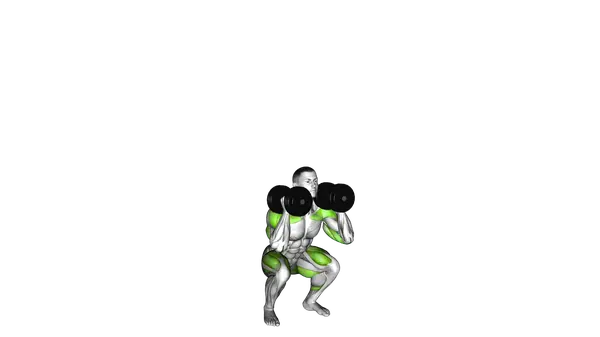
The Dumbbell Thruster combines a front squat and overhead press into one fluid, compound movement that delivers an impressive full-body workout in minimal time. This intermediate-level exercise predominantly targets your quads, pecs, and front deltoids while engaging numerous secondary muscle groups throughout your entire body. Popular in HIIT, CrossFit, and bodybuilding circles, the Dumbbell Thruster has earned its reputation as a metabolic powerhouse. The movement's seamless transition from lower to upper body work creates a cardiovascular demand that can rapidly elevate your heart rate while building both strength and endurance simultaneously. This dual benefit makes it particularly valuable for athletes looking to maximize their training efficiency. What sets the Dumbbell Thruster apart is its remarkable versatility. Whether you're looking to build explosive power, increase muscular endurance, or simply burn calories, this exercise delivers results. The movement pattern also translates directly to everyday functional activities, improving your ability to lift objects from low positions and press them overhead – a practical benefit beyond aesthetic improvements. For those new to thrusters, starting with lighter dumbbells allows you to master the movement pattern before progressing to challenging weights. The exercise's scalability makes it suitable for various fitness levels despite its intermediate classification. Many athletes incorporate thrusters into circuit training or as a standalone movement when seeking an efficient total-body stimulus. The Dumbbell Thruster's effectiveness comes from its compound nature – you're essentially performing two exercises in one motion. This efficiency makes it particularly valuable for time-constrained workouts, allowing you to challenge multiple major muscle groups while developing coordination between your upper and lower body. The cardiovascular demand creates a conditioning effect that continues well after your workout concludes. Whether you're seeking to build functional strength, enhance athletic performance, or simply achieve a more efficient workout, the Dumbbell Thruster deserves consideration in your exercise repertoire. Its ability to simultaneously challenge multiple fitness components – strength, power, endurance, and coordination – makes it a truly exceptional exercise choice.

Strength
Endurance
HIIT
Crossfit
+1
Dumbbell
Incline Dumbbell Fly

Incline Dumbbell Fly

The Incline Dumbbell Fly stands as a cornerstone chest exercise in the arsenal of intermediate-level fitness enthusiasts looking to sculpt defined pecs and strengthen their front deltoids. This movement has earned its reputation in bodybuilding circles for its ability to effectively isolate the chest muscles while creating that aesthetic stretch and contraction that builds noticeable muscle separation. Unlike compound chest movements that engage multiple muscle groups simultaneously, the Incline Dumbbell Fly targets the upper portion of the pectoralis major with remarkable precision, giving you that shelf-like upper chest development that's often difficult to achieve with flat pressing movements alone. The angled position on the incline bench shifts emphasis toward the clavicular head of the pecs while recruiting the anterior deltoids as secondary movers, creating balanced development across the upper body's pushing muscles. For those focused on strength goals, don't underestimate this exercise despite its reputation as primarily a bodybuilding movement. When performed with appropriate resistance and proper form, Incline Dumbbell Flys strengthen crucial stabilizing muscles around the shoulder joint, potentially improving your performance on heavier pressing movements while reducing injury risk. The controlled nature of this exercise allows for developing strength through a full range of motion, particularly at the stretched position where many lifters are weakest. Many bodybuilders incorporate this exercise later in their chest workout after heavier compound movements have fatigued the larger muscle groups. This strategic placement allows for deeper muscle fiber recruitment when the pecs are already partially exhausted. For maximum effectiveness, consider moderate rep ranges of 8-12 repetitions with a weight that challenges you while maintaining proper form throughout the movement. Whether your goals lean more toward competitive bodybuilding aesthetics or functional strength development, the Incline Dumbbell Fly deserves a place in your routine if you're serious about developing a powerful, well-defined upper chest that commands attention.

Strength
Bodybuilding
Dumbbell
Push-Up to Renegade Row

Push-Up to Renegade Row

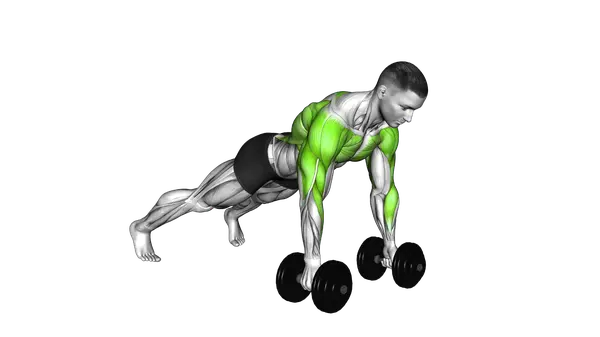
The Push-Up to Renegade Row combines two powerful compound movements, creating an intermediate-level exercise that delivers remarkable bang for your buck in minimal time. This dynamic pairing targets multiple major muscle groups simultaneously, with primary activation in the pectoral muscles, triceps, and anterior deltoids during the push-up phase, then shifting focus to the latissimus dorsi during the row component. What makes this exercise particularly effective is its ability to transition seamlessly between pushing and pulling patterns, creating a comprehensive upper body challenge that also demands significant core stability throughout the entire movement sequence. The stabilizing effects reach beyond just the primary movers, engaging the rotational muscles of the core, rhomboids, and even the lower body as you maintain a rigid plank position. Athletes across various disciplines incorporate this exercise into their regimens for different purposes. HIIT enthusiasts appreciate its cardiovascular demands when performed with pace, while CrossFit athletes value its functional strength carryover to more complex movements. Bodybuilders might employ slower, more controlled variations to maximize time under tension for muscle hypertrophy. From a strength development perspective, the Push-Up to Renegade Row builds balanced upper body power while addressing common weaknesses in core anti-rotation capabilities. This makes it particularly valuable for athletes seeking to improve performance while reducing injury risk. The unilateral component of the row helps identify and correct strength imbalances between sides. Research suggests that multi-planar exercises like this one promote greater neuromuscular coordination than single-plane movements alone, potentially enhancing overall athletic performance. The intensity can be easily modified through weight selection, rep schemes, and tempo manipulation, making it adaptable to various fitness levels despite its intermediate classification. Whether you're looking to build functional strength, enhance muscle definition, or improve athletic performance, the Push-Up to Renegade Row deserves consideration as a time-efficient addition to your training arsenal.

Strength
HIIT
Crossfit
+1
Dumbbell

Why dumbbells enhance muscle growth and stability

Benefits of training chest with dumbbells

Dumbbells allow each arm to move independently, which helps correct strength imbalances and improves overall chest activation. The freedom of movement makes dumbbell training joint-friendly, while the increased range of motion supports strong hypertrophy stimulus. Dumbbells also work well across multiple bench angles, giving you precise control over how you target the upper, mid, or lower chest. 
 

Key advantages:

  • Natural movement path with reduced joint stress
  • Strong unilateral activation for balanced development
  • Greater range of motion to increase muscle tension
  • Easy angle adjustments for targeted chest emphasis
  • Effective for both primary pressing and accessory work

How dumbbells fit into different training structures

When to use dumbbell chest exercises

Dumbbell chest exercises are effective early or mid-session in push days, upper/lower splits, and hypertrophy-focused programs. They pair well with barbell lifts by providing additional range of motion and stability demands. Many lifters perform dumbbell pressing one or two times per week, using moderate loads and controlled movement to maximize muscle tension. Because dumbbells reduce mechanical stress compared to heavy barbell work, they’re also a useful option when managing fatigue or joint sensitivity. 

Essential movements for strength, symmetry and full chest activation

Key dumbbell chest exercises

Below are the five most valuable dumbbell chest exercises on this page. These movements combine range of motion, stability demands, and angle variation to train the chest from multiple positions.

  1. Dumbbell chest press: A foundational strength and hypertrophy movement using a wide, natural range of motion for mid-chest development.
  2. Dumbbell incline chest press: Emphasizes the upper chest and front delts, supporting balanced chest growth and improved pressing strength.
  3. Dumbbell fly: A lengthened-position isolation movement that maximizes stretch and tension across the chest.
  4. Incline dumbbell fly: Targets the upper chest with deeper stretch and controlled arc, ideal for shaping and balanced definition.
  5. Dumbbell pullover: A unique upper-body compound exercise engaging the chest and lats while expanding ribcage mechanics and shoulder range.

Chest exercises with dumbbell overview

Exercise Primary focus Training goal
Dumbbell chest press Mid chest Strength and hypertrophy
Dumbbell incline chest press Upper chest Hypertrophy and balanced development
Dumbbell fly Chest stretch and squeeze Isolation and hypertrophy
Incline dumbbell fly Upper chest Targeted hypertrophy
Dumbbell pullover Chest + lats Upper-body expansion and strength

Placing these movements inside your program

How to integrate dumbbell chest exercises

Dumbbell chest exercises are effective after a primary barbell press or as the main lifts in hypertrophy sessions. Their extended range of motion makes them especially valuable in moderate rep ranges where control and muscle tension are the priority. Pairing pressing variations with fly movements ensures both shortened and lengthened-position training for complete development. Create your personal training program in the app tailored to your goals, fitness level, and schedule.

Frequently asked questions about chest exercises with dumbbell

Can dumbbells replace other chest equipment?

Dumbbells can form the core of a complete chest routine, especially when combining flat and incline variations with fly movements. However, adding barbell or machine work can provide additional load potential, stability, and variation for long-term progress.


How often should I train dumbbell chest exercises?

Most lifters see strong results training dumbbell chest movements one to two times per week. Frequency depends on recovery, program structure, and whether you also use barbells or machines. Dumbbells are generally easier to recover from due to lower joint stress.

How do I get the most out of dumbbell chest training?

Use controlled tempo, full range of motion, and consistent arm paths. Adjust bench angles to target specific regions of the chest, and pair pressing movements with flies for a complete stimulus. Progress steadily through weight, reps, or total weekly volume.

What muscles do dumbbell chest exercises target?

Dumbbell chest work primarily trains the pectoralis major while involving the triceps and front delts. Fly variations emphasize lengthened-position tension in the chest, while incline positions shift emphasis toward the upper fibers. Together, they help develop the chest through multiple movement paths.


How much weight should I start with?

Choose a weight that allows controlled motion through a full range of motion. Many lifters use lighter dumbbells compared to barbell presses because dumbbells require more stability and coordination. Increase weight gradually as technique and control improve.

Built for progress

Take the guesswork out of training

Create personalized AI-powered workout plans that evolve with you. Train smarter, track every rep and keep moving forward, one workout at a time.

Be among the first to join!
GrabGains workout plans

Training categories that pair well with dumbbell chest exercises
Chest related workouts with dumbbell