Elbow Flexor Stretch
The Elbow Flexor Stretch helps loosen the front of the arm by gently lengthening the muscles around the elbow and forearm.

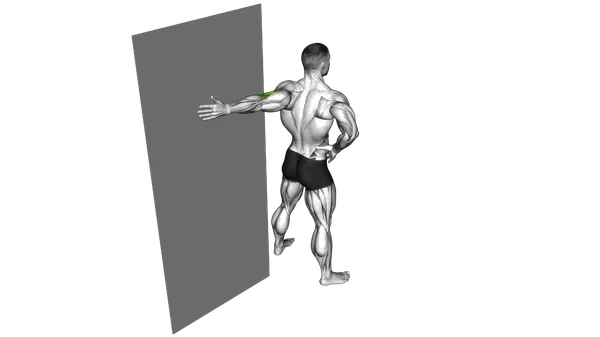
Elbow Flexor Stretch
Muscles Worked: Elbow Flexor Stretch
The elbow flexor stretch mainly lengthens your biceps, which cross both the elbow and shoulder, so they get a stronger stretch when your arm is straight and slightly behind you. Your forearms also get stretched because the muscles that help bend your wrist and elbow are put on tension in this position. This makes it a useful mobility drill for arms, especially after lots of pulling, curling, or gripping work. The elbow flexors are also active contributors during stretch-shortening cycle tasks, highlighting their role in controlling force through elbow motion (Benoit and Dowling, 2006).
Built for progress
Take the guesswork out of training
Get a personalized workout plan built around your goal, equipment and schedule. Train smarter, track every rep and keep moving forward, one workout at a time.






Technique and form
How to perform the Elbow Flexor Stretch
- Stand upright with your feet shoulder-width apart, maintaining a neutral spine position.
- Extend your right arm straight out in front of you at shoulder height with your palm facing up.
- Use your left hand to gently grasp the fingers of your right hand, keeping your right elbow completely straight.
- Slowly pull your right fingers toward your body until you feel a stretch in the front of your right forearm and elbow, exhaling as you increase the stretch.
- Maintain this position for 20-30 seconds while breathing normally, keeping your shoulder relaxed and down away from your ear.
- Release the stretch gradually, inhaling as you return to the starting position.
- Repeat the stretch on your left arm by extending it forward with palm up and using your right hand to pull the fingers.
- Complete 2-3 sets on each arm, maintaining proper posture throughout the exercise.
Important information
- Keep your elbow completely straight throughout the stretch to effectively target the elbow flexor muscles.
- Pull only to the point of mild tension, not pain – you should feel the stretch primarily in the biceps and forearm.
- Maintain proper shoulder positioning by drawing your shoulder blades down and back rather than hunching forward.
- For a deeper stretch, you can slightly rotate your arm inward while maintaining the extended elbow position.
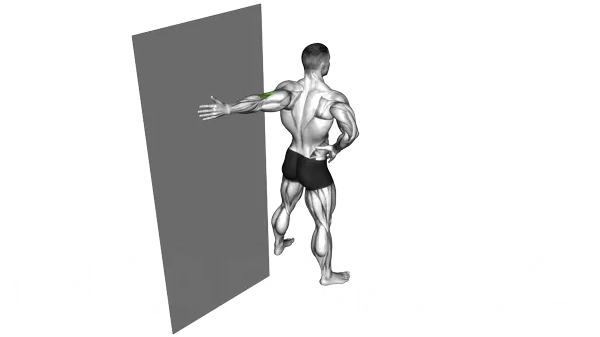
Does the Elbow Flexor Stretch improve flexibility?
Yes. The elbow flexor stretch can help improve flexibility in the front of the upper arm by putting the biceps and nearby forearm tissues under a long, gentle stretch, which matters because the elbow flexors are active during stretch-shortening tasks that involve bending the arm and absorbing force (Benoit and Dowling, 2006). It will not build much muscle, but it can make arm motion feel smoother and less restricted.
- Targets a commonly tight area — If you do lots of curls, rows, chin-ups, or carry heavy weights, the muscles that bend your elbow stay busy. Stretching them can help offset that constant shortened position and make straightening your arm feel easier.
- Works best with the shoulder opened up — Because the biceps also cross the shoulder, this stretch usually feels stronger when the arm is slightly behind the body. That is why it often feels different from simply straightening your elbow in front of you.
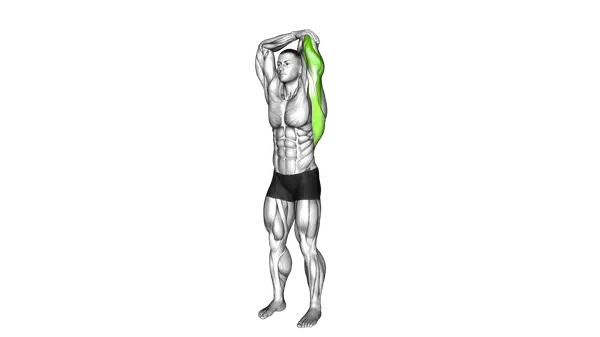
- Useful after pulling sessions — The elbow flexors are active and do mechanical work during fast stretch-and-contract actions, so they can feel loaded even when curls were not the main exercise (Benoit and Dowling, 2006). Pairing this with overhead triceps stretch can make the whole upper arm feel less stiff.
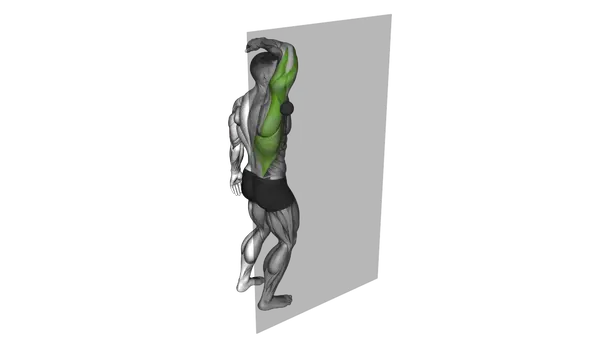
- Good low-fatigue mobility work — This is easy to recover from, so you can use it in a warm-up, between sets of upper-body training, or after your workout. If your shoulders also feel tight, shoulder stretch behind the back can fit well alongside it.
Programming for flexibility
Hold the stretch for 20-45 seconds per side, do 2-4 sets, and rest about 15-30 seconds between holds. Use it 3-7 days per week depending on how stiff your arms feel. A mild to moderate stretch works best; pushing into pain usually makes people tense up and get less out of the hold.
Alternative Exercises
FAQ - Elbow Flexor Stretch
The Elbow Flexor Stretch primarily targets the biceps brachii and the muscles of the forearm (including the brachioradialis and flexor group). This stretch also indirectly affects the brachialis muscle, which lies underneath the biceps.
Extend your arm in front of you with palm facing up, then use your opposite hand to gently pull your fingers back toward your body until you feel a stretch in your forearm and biceps. Keep your elbow straight but not locked, maintain good posture, and hold for 20-30 seconds while breathing normally.
Include this stretch both before workouts (holding for 10-15 seconds) and after training (holding for 20-30 seconds). For maintenance of flexibility, perform the Elbow Flexor Stretch at least 2-3 times per week, but daily stretching is ideal for those with tight forearms or biceps.
While the Elbow Flexor Stretch can help maintain forearm flexibility and potentially reduce muscle tension, it's not a primary treatment for tennis elbow (lateral epicondylitis) or other forms of elbow pain. If you're experiencing persistent elbow pain, consult with a physical therapist or sports medicine physician before using this stretch.
Avoid bouncing or forcing the stretch beyond comfortable tension, as this can trigger the stretch reflex and potentially cause injury. Don't hyperextend your elbow joint, and stop immediately if you feel sharp pain rather than the normal stretching sensation in your muscles.
Workouts with Elbow Flexor Stretch



Scientific References
In vivo assessment of elbow flexor work and activation during stretch-shortening cycle tasks.
Benoit DL, Dowling JJ · Journal of electromyography and kinesiology : official journal of the International Society of Electrophysiological Kinesiology (2006)
Sources are peer-reviewed academic publications from PubMed.
Elbow Flexor Stretch
Thank you for your feedback!
Thank you for your feedback!