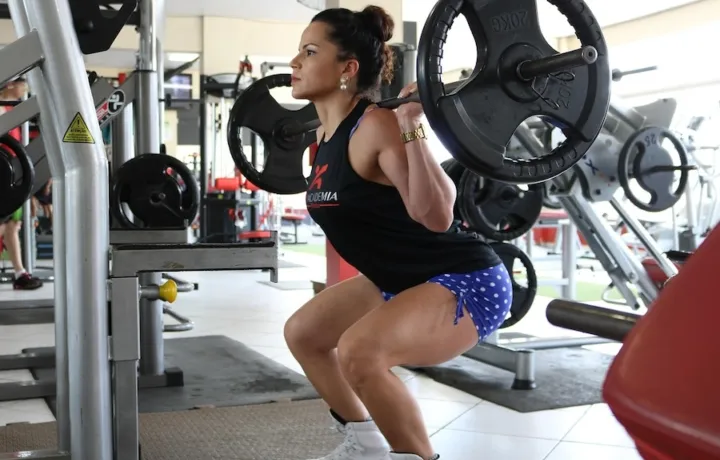
Leg exercises with resistance band
Resistance band leg exercises provide an effective and accessible way to train the lower body using elastic tension rather than external load. Bands increase resistance as they stretch, making them particularly useful for controlled strength development, glute activation, and mobility-focused training. Because resistance bands place less compressive stress on the joints, they are commonly used in rehabilitation, warm-ups, and recovery-oriented strength programs.
Leg training with resistance bands emphasizes movement quality, muscle engagement, and controlled force production, making it suitable for all fitness levels.
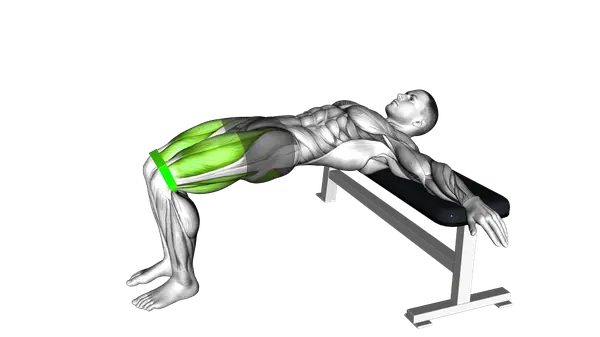
Banded Hip Thrusts
Banded Hip Thrusts are a lower-body strength exercise that builds glute power and tension through band resistance.

Lateral Band Walk
The Lateral Band Walk is a resistance band exercise that strengthens the hips and legs by training controlled side-to-side movement.
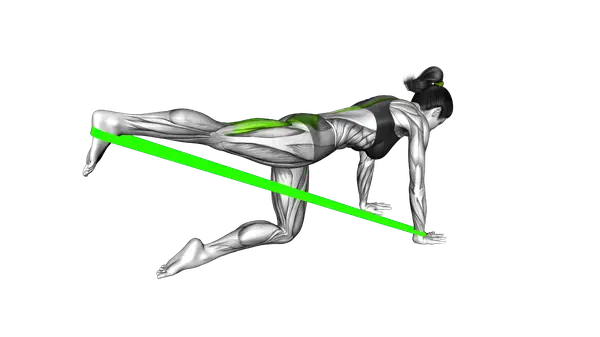
Loop Band Glute Kickback
The Loop Band Glute Kickback is a controlled band exercise that strengthens the glutes by extending one leg back with steady tension.
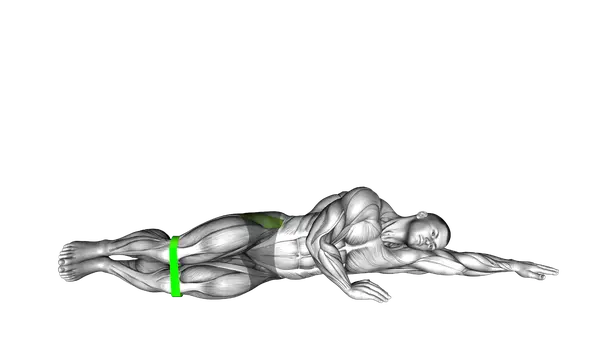
Resistance Band Clam
The Resistance Band Clam is a band-based isolation exercise that targets the glutes to improve hip control and lateral stability.

Resistance Band Glute Bridge
The Resistance Band Glute Bridge is a banded bodyweight exercise that builds glute strength and hip stability.
Built for Progress
Take the Guesswork Out of Training
Get a personalized workout plan built around your goal, equipment and schedule. Train smarter, track every rep and keep moving forward.
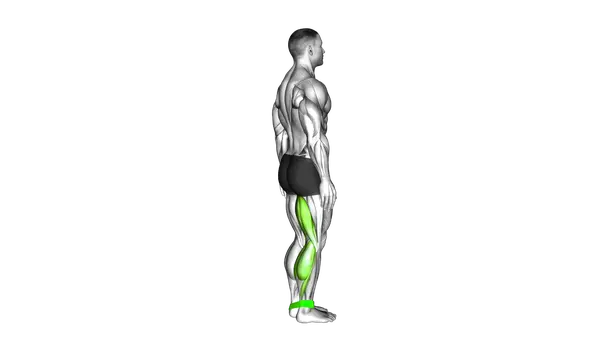
Resistance Band Leg Curl
The Resistance Band Leg Curl is a lower-body exercise that builds hamstring strength using controlled knee flexion and constant tension.
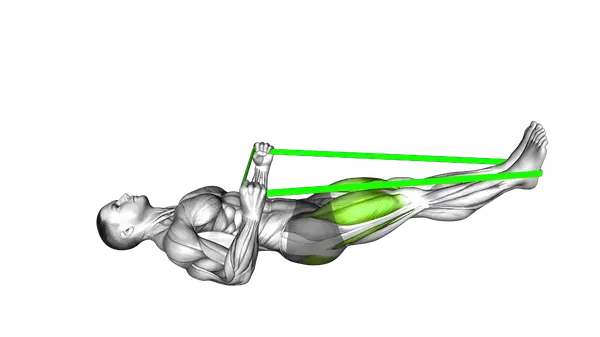
Resistance Band Lying Leg Press
The Resistance Band Lying Leg Press is a band-based lower-body exercise that trains the quads and glutes through controlled leg extension.
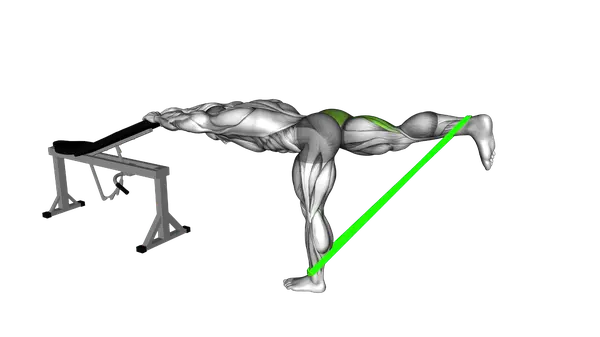
Resistance Band One Leg Kickback (Bent Position)
The Resistance Band One Leg Kickback (Bent Position) isolates the glutes using band resistance to build controlled hip extension and stability.

Resistance Band Romanian Deadlift
The Resistance Band Romanian Deadlift builds controlled hip hinge strength, targeting the glutes and hamstrings while reinforcing lower-body movement.
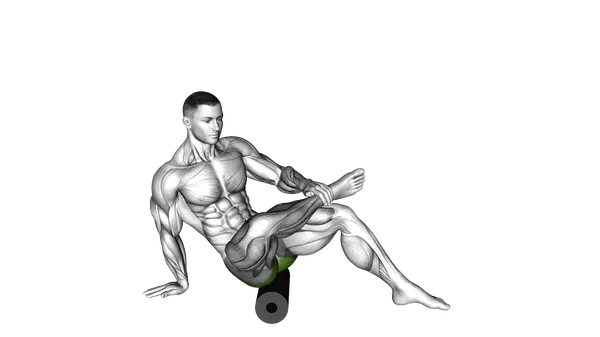
Roll Recumbent Hip External Rotator And Hip Extension
The Roll Recumbent Hip External Rotator and Hip Extension is a low-load mobility exercise that improves hip control and active range of motion.
Progressive tension with minimal joint stress
Why train legs with resistance bands
Resistance bands allow smooth, progressive resistance throughout each movement while supporting joint-friendly mechanics.
Key advantages:
- Progressive resistance through elastic tension
- Reduced joint and spinal loading
- Excellent glute and hip activation
- Ideal for mobility, rehab, and accessory training
- Easy to scale intensity with band selection
Targeted movements for lower-body activation
Core resistance band leg exercises
The following exercises represent the most effective resistance band–based movements for leg training. Together, they focus on glute strength, hip stability, and controlled lower-body activation.
- Banded hip thrusts: A powerful glute-focused movement that reinforces hip extension while maintaining continuous tension.
- Lateral band walk: A fundamental activation exercise targeting the glute medius and hip stabilizers.
- Loop band glute kickback: A controlled isolation movement emphasizing glute engagement and posterior-chain activation.
- Resistance band clam: A mobility-focused exercise that strengthens the hip external rotators and supports joint stability.
- Resistance band glute bridge: A foundational lower-body exercise that targets the glutes and hamstrings with minimal spinal load.
- Resistance band leg curl: A hamstring-focused movement that improves knee flexion strength using elastic resistance.
- Resistance band lying leg press: A controlled pressing movement that simulates lower-body pushing strength without heavy loading.
- Resistance band one-leg kickback (bent position): A unilateral glute exercise that enhances hip control and balance.
- Resistance band Romanian deadlift: A hip-hinge movement that reinforces posterior-chain mechanics with reduced joint stress.
- Roll recumbent hip external rotator and hip extension: A combined mobility and strength exercise targeting the hips through controlled rotational movement.
Exercise overview
| Exercise | Primary focus | Training goal |
|---|---|---|
| Banded hip thrusts | Glutes | Hip extension strength |
| Lateral band walk | Hip stabilizers | Activation & control |
| Loop band glute kickback | Glutes | Isolation & engagement |
| Resistance band clam | Hip rotators | Mobility & stability |
| Resistance band glute bridge | Glutes & hamstrings | Posterior-chain activation |
| Resistance band leg curl | Hamstrings | Knee flexion strength |
| Resistance band lying leg press | Quads & glutes | Controlled pushing strength |
| One-leg kickback (bent) | Glutes | Unilateral control |
| Resistance band Romanian deadlift | Glutes & hamstrings | Hinge mechanics |
| Hip external rotator & extension | Hips | Mobility & coordination |
Supporting strength, mobility and recovery
Programming resistance band leg exercises
Resistance band leg exercises are best used as accessory movements, warm-up activators, or low-impact strength work within a broader training plan. They pair especially well with free-weight leg sessions and are highly effective during deload phases, rehabilitation periods, or mobility-focused training blocks.
Because bands allow controlled resistance with low systemic fatigue, they can be performed frequently while supporting joint health and movement quality. Create your personal training program in the app tailored to your goals, fitness level, and schedule.
Frequently asked questions about resistance band leg exercises
They can typically be trained three to five times per week depending on intensity and volume.
Yes. While they may not replace heavy lifting, bands are very effective for muscle activation, hypertrophy, and controlled strength development.
Bands provide elastic resistance that increases with stretch, whereas cables and free weights rely on constant or gravity-based resistance.
They are best used as a complement to free weights, especially for accessory work, rehab, or mobility-focused sessions.
They primarily train the glutes, hamstrings, and hip stabilizers, with secondary involvement of the quadriceps.