Spiderman Plank
Reviewed by Dylan Maurick, Physiotherapist
The Spiderman Plank is a moving plank variation that improves core control and hip mobility while challenging balance and coordination.
Spiderman Plank
Muscles Worked: Spiderman Plank
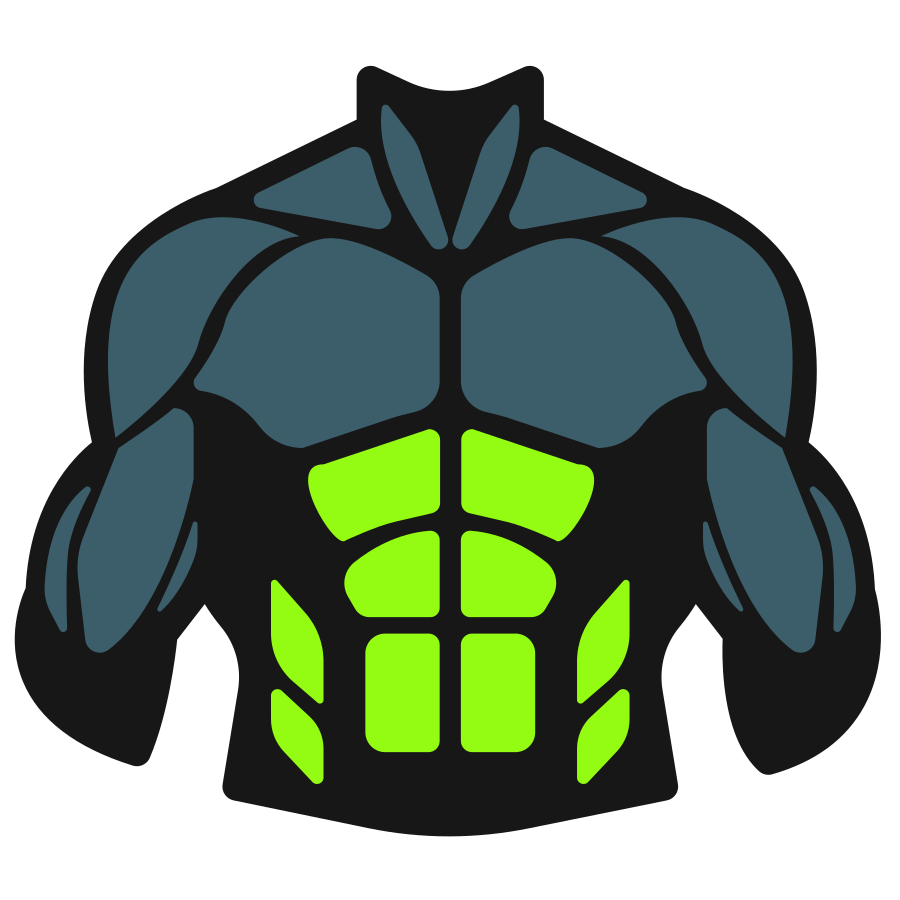
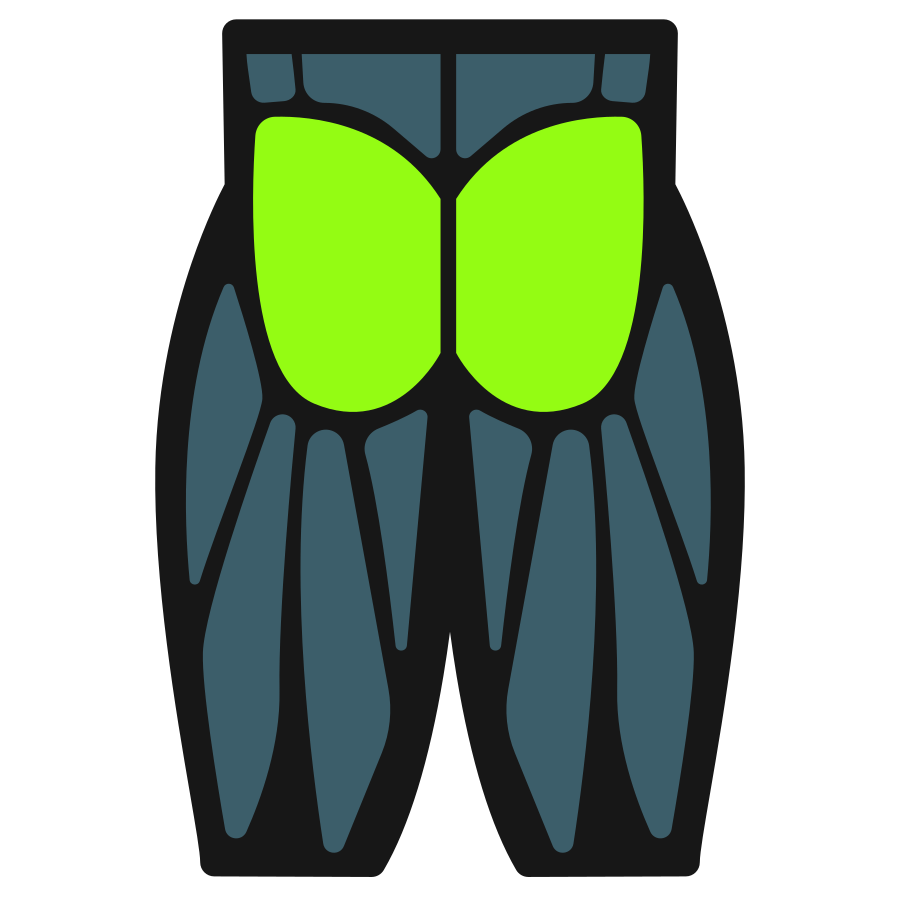
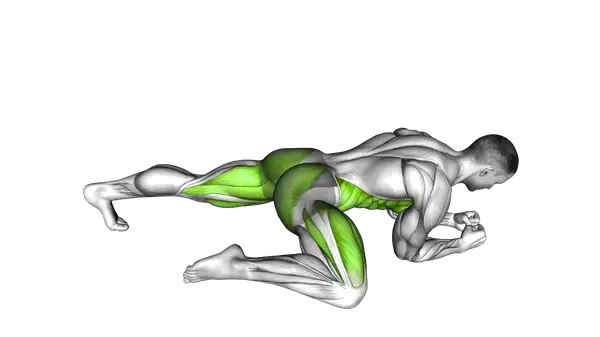
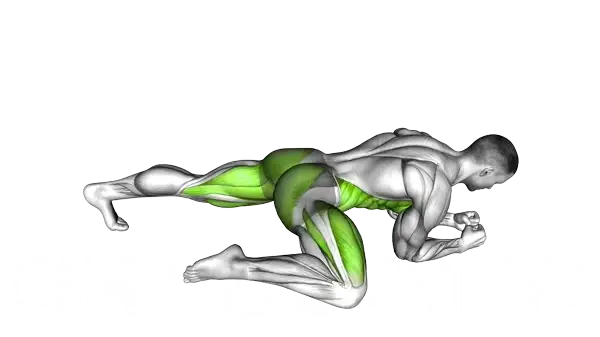
The Spiderman Plank mainly trains your abs and obliques by making them brace hard while one knee moves toward the same-side elbow. That shifting leg action also lights up the hip flexors, which help lift the thigh without letting your torso twist or your lower back sag. Your glutes and shoulders chip in to keep your body steady as your weight shifts side to side. You should feel your midsection working to keep you square, not your lower back taking over; regular strength work like this supports muscle function and control when done consistently.
Built for progress
Take the guesswork out of training
Get a personalized workout plan built around your goal, equipment and schedule. Train smarter, track every rep and keep moving forward, one workout at a time.






Technique and form
How to perform the Spiderman Plank
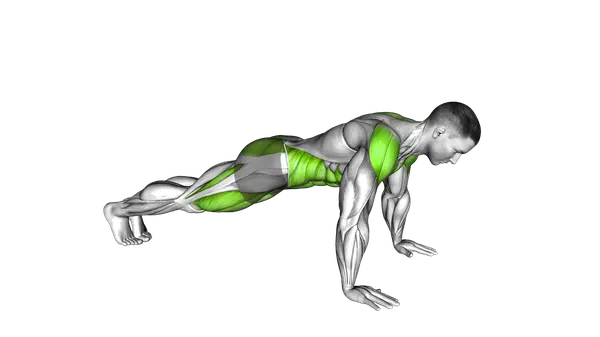
- Start in a high plank position with your hands directly under your shoulders, arms straight, and body in a straight line from head to heels.
- Engage your core muscles by drawing your navel toward your spine and squeezing your glutes to maintain a neutral spine position.
- Breathe steadily as you lift your right foot off the floor and bring your right knee toward your right elbow in a controlled motion.
- Keep your hips as stable as possible during the movement, avoiding rotation or sagging in your lower back.
- Return your right foot to the starting position while maintaining tension in your core muscles and a straight body line.
- Immediately lift your left foot and bring your left knee toward your left elbow using the same controlled motion.
- Throughout the exercise, keep your shoulders stacked over your wrists and distribute your weight evenly through your palms and fingers.
- Continue alternating sides for the prescribed number of repetitions, exhaling as you bring your knee forward and inhaling as you return to the starting position.
Important information
- Keep your hips level throughout the movement don't let them rotate or pike upward when bringing your knee forward.
- Maintain tension in your core the entire time, as if bracing for someone to punch your stomach.
- If you feel strain in your lower back, try widening your foot stance slightly or focus on smaller knee movements until your core strength improves.
- Look at a spot on the floor about 6-12 inches in front of your hands to maintain proper neck alignment.
Does the Spiderman Plank improve flexibility?
Yes. The Spiderman Plank can improve flexibility and usable mobility, mainly through the hips, while also teaching your core to stay tight as one leg moves. That mix matters because strength work done through controlled positions helps improve movement ability, not just strength alone.
- Hip mobility under control — As you bring the knee up and out, you move the hip through a bigger range than a normal plank. That can help you get more comfortable in positions used in lunges, climbing, and deep warm-ups without turning it into a loose, floppy stretch.
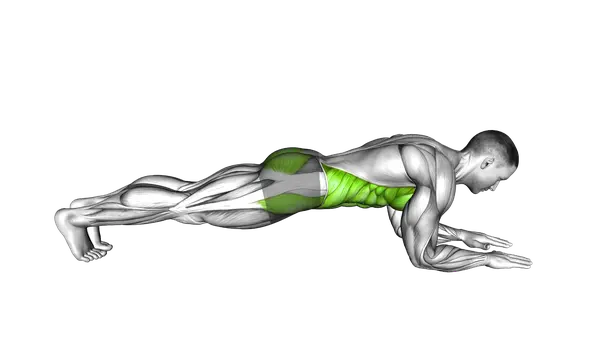
- Core stiffness while the leg moves — The real challenge is keeping your ribs down and hips level while the knee travels forward. That teaches you to move one part of the body without the rest collapsing, which carries over well to exercises like the front-elbow-plank.
- Better side-to-side control — Each rep shifts your weight onto one arm and one foot for a moment. Your obliques have to stop your body from rolling open, which makes this variation more demanding than a basic plank and useful for building control before harder options like the elbow-up-and-down-dynamic-plank.
- Low fatigue, high quality reps — Because the fatigue cost is low, you can focus on smooth reps, clean knee travel, and steady breathing instead of grinding. That usually makes mobility work more useful, since better positions come from control you can repeat, not from rushing through sloppy reps.
Programming for flexibility
Do 2-4 sets of 6-10 reps per side, moving slowly, with 30-45 seconds rest. Use it 2-4 times per week in your warm-up or core block. Pause for 1 second when the knee is closest to the elbow, then return under control. If your hips start twisting or your lower back sags, cut the reps and keep the quality high.
Spiderman Plank Variations
Alternative Exercises
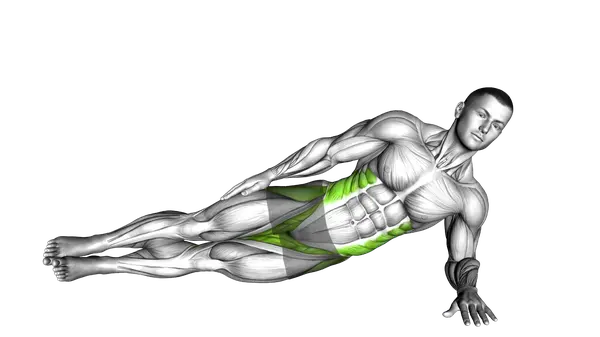
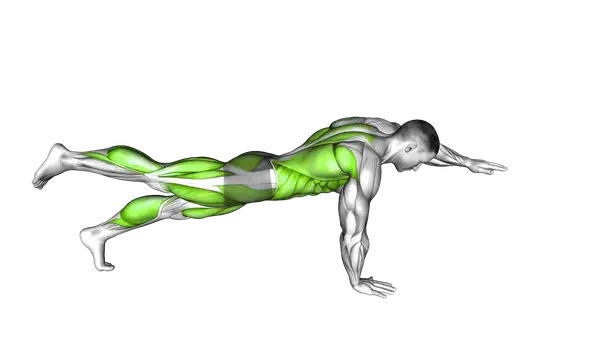
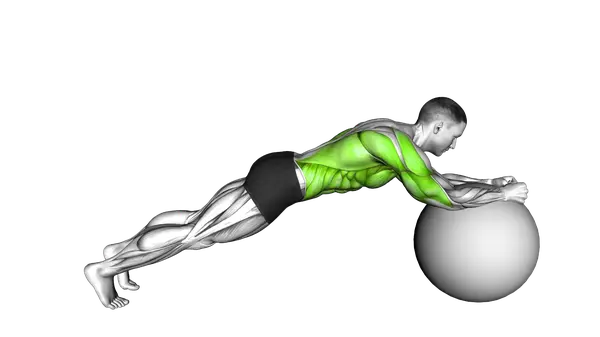
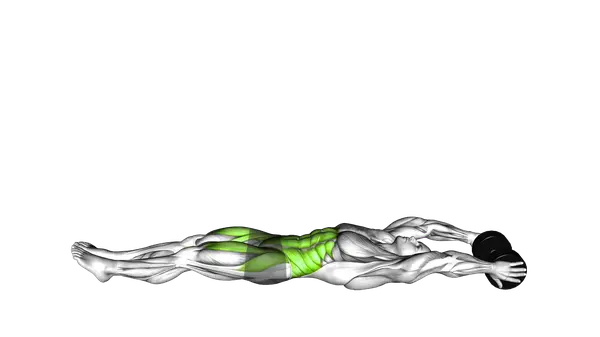
FAQ - Spiderman Plank
The Spiderman Plank primarily targets your core muscles, including the rectus abdominis, transverse abdominis, and obliques. It also engages your shoulders, chest, glutes, and hip flexors, making it a comprehensive compound movement for total-body stability.
Beginners can start with shorter hold times (10-15 seconds) and fewer repetitions. You can also perform the movement from your knees instead of your toes, or simply hold a standard plank until you build sufficient core strength to add the leg movement.
The most common mistakes include dropping the hips, arching the lower back, and rushing the movement. Focus on keeping your body in a straight line from head to heels, moving your leg deliberately rather than quickly, and maintaining neutral spine alignment throughout the exercise.
For optimal results, include Spiderman Planks 2-3 times per week with at least 24 hours of recovery between sessions. Start with 2-3 sets of 6-10 repetitions per side, increasing volume as your core strength and endurance improve.
When performed correctly, Spiderman Planks can strengthen core muscles that support your spine, potentially alleviating some types of lower back pain. However, if you currently have back issues, consult with a healthcare professional before attempting this exercise, and focus on perfecting standard planks first.
Reviewed by

Physiotherapist
Highlights Physiotherapist & Exercise Advisor at GrabGains: Collaborates with the GrabGains team to verify exercise content, ensuring every movement guide is safe, effective, and anatomically accurate. Licensed Physiotherapist: Registered in the Dutch BIG…
Spiderman Plank
Thank you for your feedback!
Thank you for your feedback!