App comparison
Hevy vs Lyfta: Community or Exercise Library?
Hevy and Lyfta are both modern workout trackers with free tiers, and at first glance they look interchangeable. The difference is emphasis: Hevy centers its community and cross-platform support, Lyfta centers its enormous exercise library and free program collection.
Competitor information is based on the vendors' own public websites, last checked July 2026. Spotted something outdated? Let us know via the contact page and we'll correct it.
Hevy
Lyfta
- Platforms
- iOS, Android, Apple Watch, Wear OS, web iOS & Android
- Pricing model
- Freemium: free tier with a paid Hevy Pro subscription Freemium: free programs advertised; premium tier not detailed on the homepage
- Workout generation
- No workout generation — you build or copy routines yourself No workout generation listed — tracking plus pre-made programs
Hevy vs Lyfta
At a Glance
| Feature | Hevy | Lyfta |
|---|---|---|
| Platforms | iOS, Android, Apple Watch, Wear OS, web | iOS & Android |
| Pricing model | Freemium: free tier with a paid Hevy Pro subscription | Freemium: free programs advertised; premium tier not detailed on the homepage |
| Workout generation | No workout generation — you build or copy routines yourself | No workout generation listed — tracking plus pre-made programs |
| Tracking | Workout logging with warmup/drop/failure set types, rest timers, exercise notes | Workout logging and planning |
| Analytics | Exercise charts, personal records, one-rep max calculations | Progress tracking, workout history and trends, body measurements |
| AI features | No AI coach on the consumer app (Hevy Coach is a separate platform for personal trainers) | No AI features listed |
| Social | Follow athletes, like/comment on workouts, share routines | Community features for user connection |
| Programs & routines | Routine planner; routines shared by the community | 7,000+ exercises and hundreds of free programs (their claim) |
| Their own numbers | 15+ million athletes; 4.9★ App Store (305k+ ratings) and Google Play (242k+ ratings) — per hevyapp.com, July 2026 | 5M+ active users, 300M+ lifts tracked — per lyfta.app, July 2026 |
01
Library versus feed
Lyfta advertises 7,000+ exercises and hundreds of free programs — one of the largest libraries in any tracker, useful when you want a demonstration for anything you might encounter in a gym.
Hevy counters with the strongest social layer in the category: following, likes, comments and shared routines, plus Apple Watch, Wear OS and web apps alongside iOS and Android.
02
Which to pick
If you mostly train alone and want a vast library plus ready-made programs at no cost, Lyfta is compelling.
If training with friends — even remotely — keeps you consistent, Hevy's feed and its larger reported user base make it the more social home. On raw logging features, the two are close enough that either will serve.
The Bottom Line
Lyfta for library depth and free programs; Hevy for community and platform breadth. Both are trackers at heart: you still decide what to train. If you would rather answer a few questions and receive a program tuned to your equipment and goal, that is a different category of app.
Built for progress
A third option: GrabGains
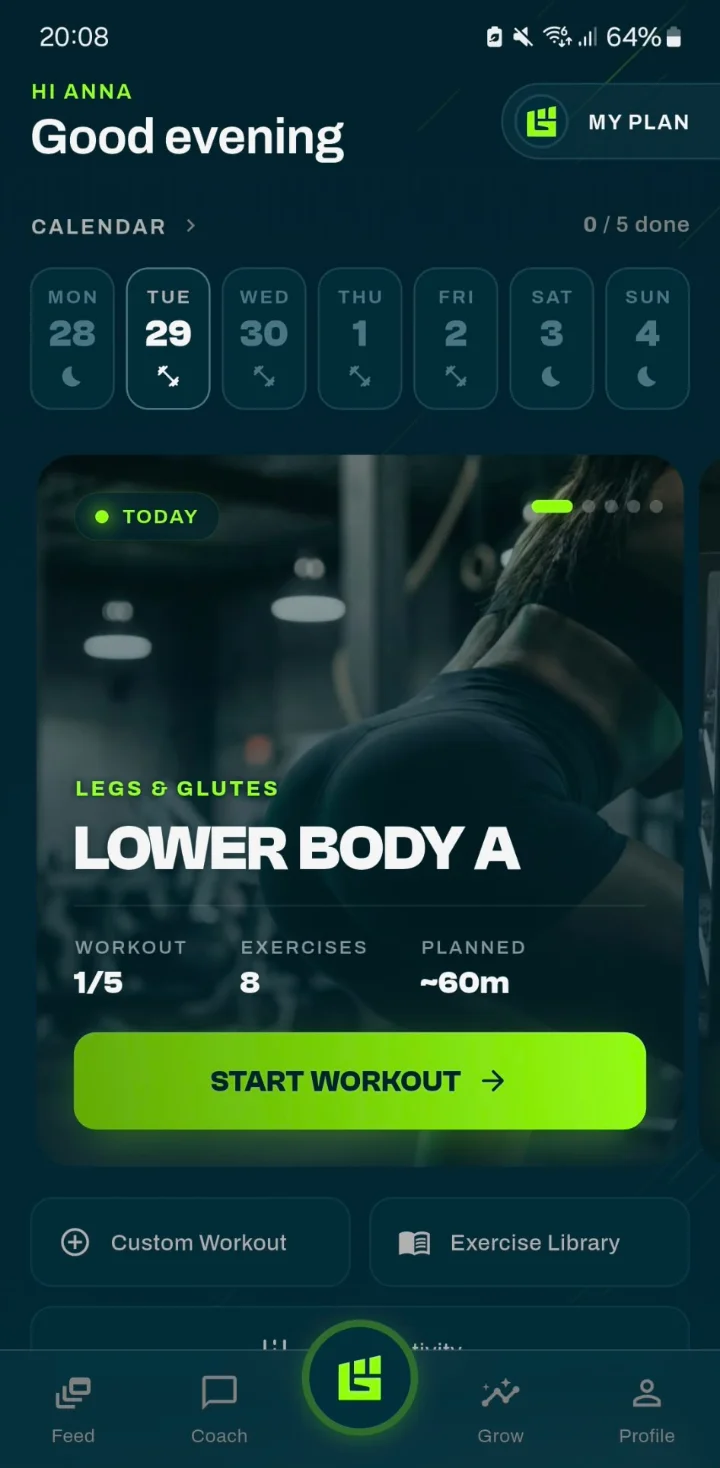
Both apps above assume you already know what to train. GrabGains starts one step earlier: it generates a personalized program from your goal, experience, equipment and schedule — and then tracks it with the essentials both trackers cover. On top of that sits an AI coach that reviews your weeks and answers questions about your own training.
- Personalized program generator (goal, equipment, split, session length)
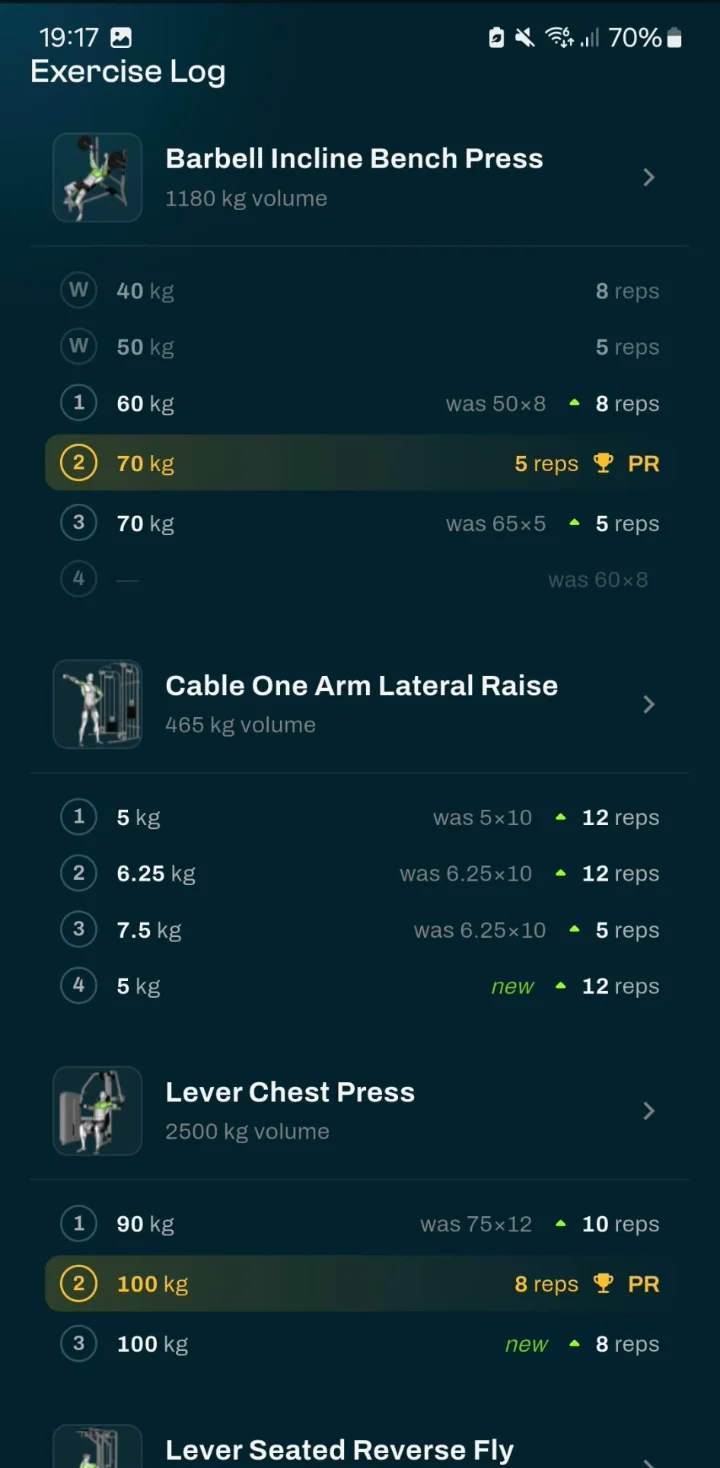
- Full tracking: sets, time, distance and loaded carries, rest timer that keeps running outside the app
- Progress charts, muscle heatmap, estimated 1RM and PR detection
- AI coach chat plus automatic weekly and monthly training reviews
- Social feed, leaderboards, badges and streaks


Good to know
Common Questions
Lyfta advertises hundreds of free programs and a free tier; a premium tier exists but is not detailed on its homepage. Check the current app-store listing for specifics.
Lyfta lists community features, but Hevy's social layer — follows, likes, comments, shared routines and a large active user base — is the more developed of the two.
Lyfta claims 7,000+ exercises, one of the largest libraries in the category. Hevy does not publish a library count on its website but covers all common gym movements with video.
































More App Comparisons
Download the app
Looking for a third option?
GrabGains builds a plan around your goal, equipment and schedule and tracks every set. Free to download on iPhone and Android.