Build your functional fitness workout plan for real-world strength
Create a functional fitness workout plan that builds practical strength and endurance. Get templates, expert tips, and exercises for tangible results. A functional fitness workout plan is simply a training program built around movements you actually use in real life. It’s designed to improve your strength, coordination, and stability for everyday tasks: from hauling groceries up the stairs to competing in a weekend race. The goal is to make you more resilient, capable, and far less prone to injury.
What is functional fitness and why your workout needs it
Functional fitness is training with a purpose that goes way beyond just looking good. Instead of isolating individual muscles like in traditional bodybuilding, it’s all about teaching different muscle groups to work together as a team.
Think about it: you don’t do a single-joint bicep curl to pick up a heavy box. You squat down, hinge at your hips, brace your core, and lift—all in one coordinated, powerful motion.
That’s the core idea behind a functional fitness workout plan. It’s built on the fundamental ways the human body is designed to move:
Built for progress
Take the guesswork out of training
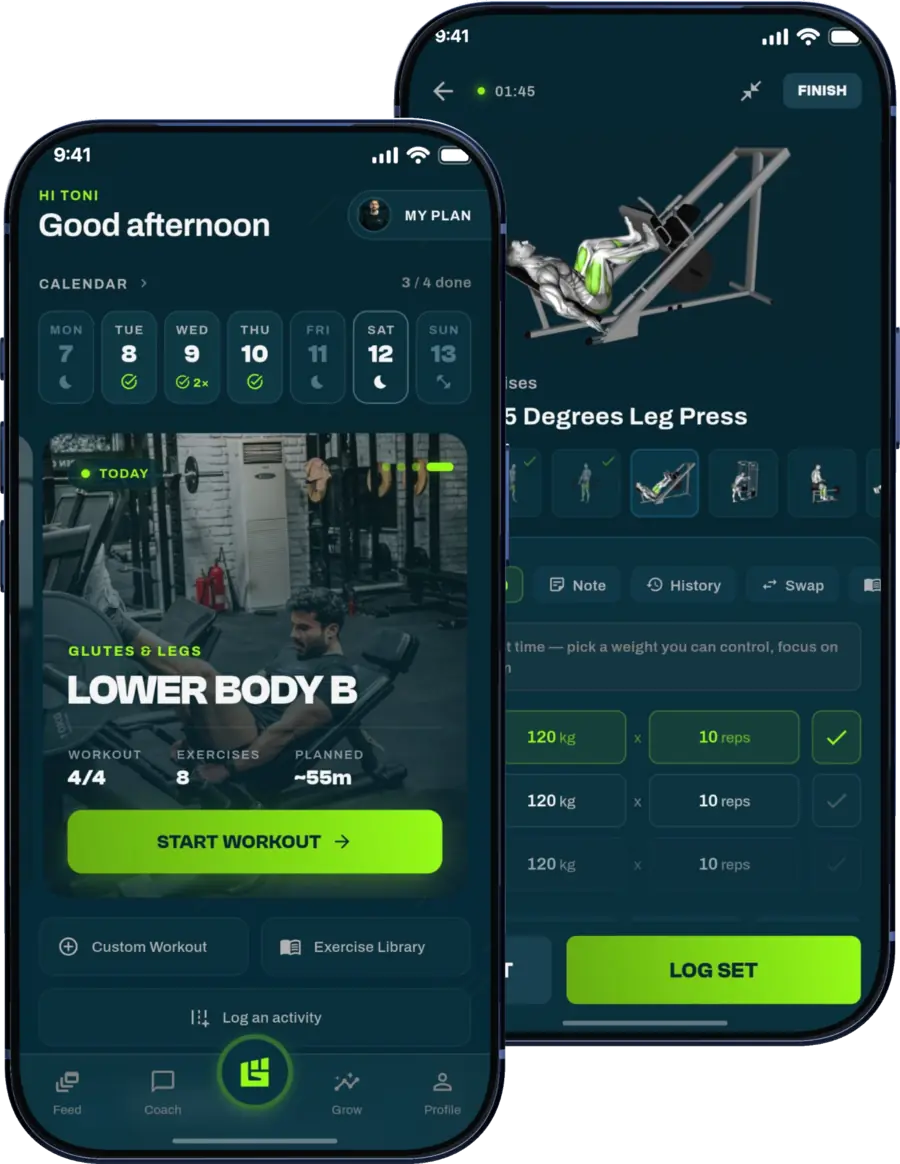
Get a personalized workout plan built around your goal, equipment and schedule. Train smarter, track every rep and keep moving forward, one workout at a time.






- Pushing: Moving something away from your body, like pushing a heavy door or doing a push-up.
- Pulling: Bringing an object toward you, like starting a lawnmower or doing a pull-up.
- Squatting: Lowering your hips from a standing position, a movement you probably do a hundred times a day without even thinking about it.
- Hinging: Bending at your hips while keeping your spine straight, which is essential for safely lifting anything off the floor.
- Carrying: Transporting a heavy load from one place to another, which builds grip strength, core stability, and rock-solid posture.
By training these patterns, you build strength that directly translates to your daily life, making everything feel easier and safer.
The shift from isolated lifts to integrated strength
For decades, the standard gym routine was all about isolation: chest day, back day, leg day. While that’s a solid way to build muscle mass, it can create a body that looks strong but struggles to apply that strength in coordinated, real-world scenarios. Functional training is the bridge that closes that gap.
A well-designed functional plan builds a body that is every bit as capable as it looks. It improves joint stability, enhances mobility, and corrects the muscular imbalances that are a leading cause of injury for both serious athletes and weekend warriors alike.
Here’s a quick look at how the two approaches stack up.
Functional training vs traditional training at a glance
This table breaks down the core differences in philosophy and outcomes between functional fitness and old-school bodybuilding.
| Attribute | Functional Fitness | Traditional Bodybuilding |
|---|---|---|
| Primary Goal | Improve performance in real-world activities and sports. | Maximize muscle size and aesthetic symmetry. |
| Movement Focus | Compound, multi-joint movements (squats, deadlifts, carries). | Isolation, single-joint movements (bicep curls, leg extensions). |
| Real-World Transfer | High. Strength and coordination directly apply to daily life. | Low to moderate. Strength is muscle-specific. |
| Equipment Used | Kettlebells, sandbags, sleds, barbells, bodyweight. | Machines, dumbbells, barbells focused on isolation. |
| Typical Outcome | A capable, resilient, and athletic body. | A muscular, aesthetically developed physique. |
While traditional training has its place, the shift toward functional fitness is about building a body that performs as well as it looks.
This isn’t just a niche trend; it’s a massive movement backed by some serious numbers. The functional fitness equipment market was valued at USD 12.27 billion in 2024 and is projected to skyrocket to USD 129.47 billion by 2030. That kind of growth shows a huge demand for training that delivers practical, noticeable results. You can learn more about the market growth in functional fitness research.
This style of training is especially powerful for busy professionals who need the biggest bang for their buck in the gym, or for athletes training for events like HYROX where raw strength needs to be paired with serious endurance.
Better yet, modern tools are making this training style more accessible than ever. For example, platforms like GrabGains take these complex principles and turn them into simple, personalized plans, completely removing the guesswork from building a workout that actually works for you.
The building blocks of an effective functional plan
To build a workout plan that actually makes you better at life, you need to think less like someone just following a routine and more like an architect. Every single exercise should have a purpose. It's not just about getting tired; it's about building a stronger, more capable version of yourself. The foundation for all of this is movement.
A smart functional plan isn't a random collection of cool-looking exercises. It systematically trains the fundamental ways your body is designed to move, building real-world strength that protects you from injury and makes everything you do a little bit easier.
The six pillars of functional movement
At its core, a good functional program is built around six key movement patterns. Instead of obsessing over individual muscles like biceps or calves, you train integrated actions. This approach creates a body where every muscle works together as a team, from your core to your limbs.
Here are the patterns you need to master:
- Pushing: Any time you move a weight away from your body, you're pushing. This could be a classic push-up, an overhead dumbbell press, or shoving a heavy sled across the floor. These build strength in your chest, shoulders, and triceps.
- Pulling: The direct opposite. This is any movement where you pull a weight toward your center. Think pull-ups, bent-over rows, or dragging a sled backward. These are non-negotiable for a strong back and biceps.
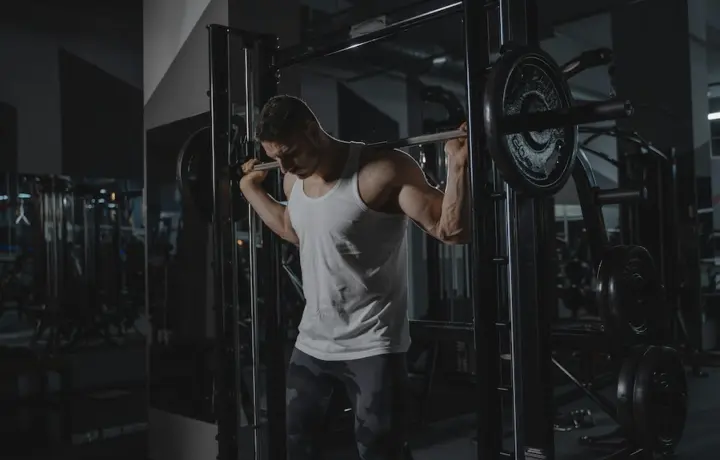
- Squatting: A foundational pattern for building a powerful lower body. A squat is simply bending at your knees and hips to lower your center of gravity. Whether it’s with your bodyweight or a heavy barbell, it’s essential.
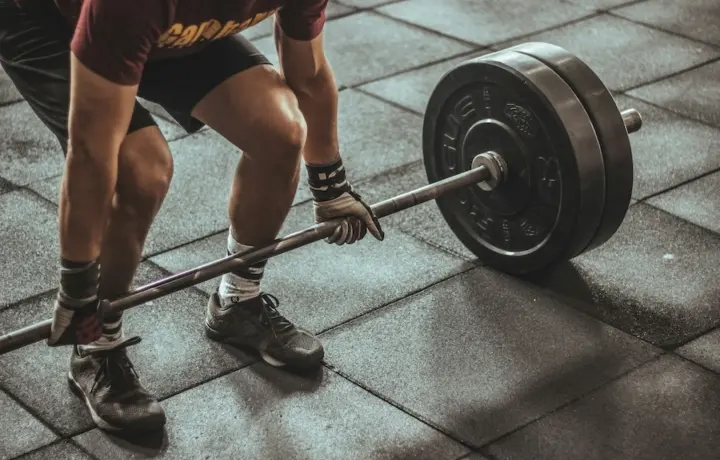
- Hinging: This is all about bending at your hips while keeping your spine relatively straight. Think of a deadlift or a kettlebell swing. Hinging is the key to safely lifting things off the ground and is incredible for developing your glutes and hamstrings.
- Lunging: Any single-leg movement that challenges your balance, stability, and unilateral strength. Walking lunges, reverse lunges, or Bulgarian split squats all fit here. They're fantastic for ironing out strength imbalances between your legs.
- Carrying: It's as simple as it sounds: pick up something heavy and walk with it. Farmer's walks with kettlebells or sandbag carries build incredible grip strength, a rock-solid core, and total-body toughness. You can check out a variety of powerful leg exercises to see how these patterns come to life.
This diagram shows exactly how these full-body movements translate into practical, real-world strength.
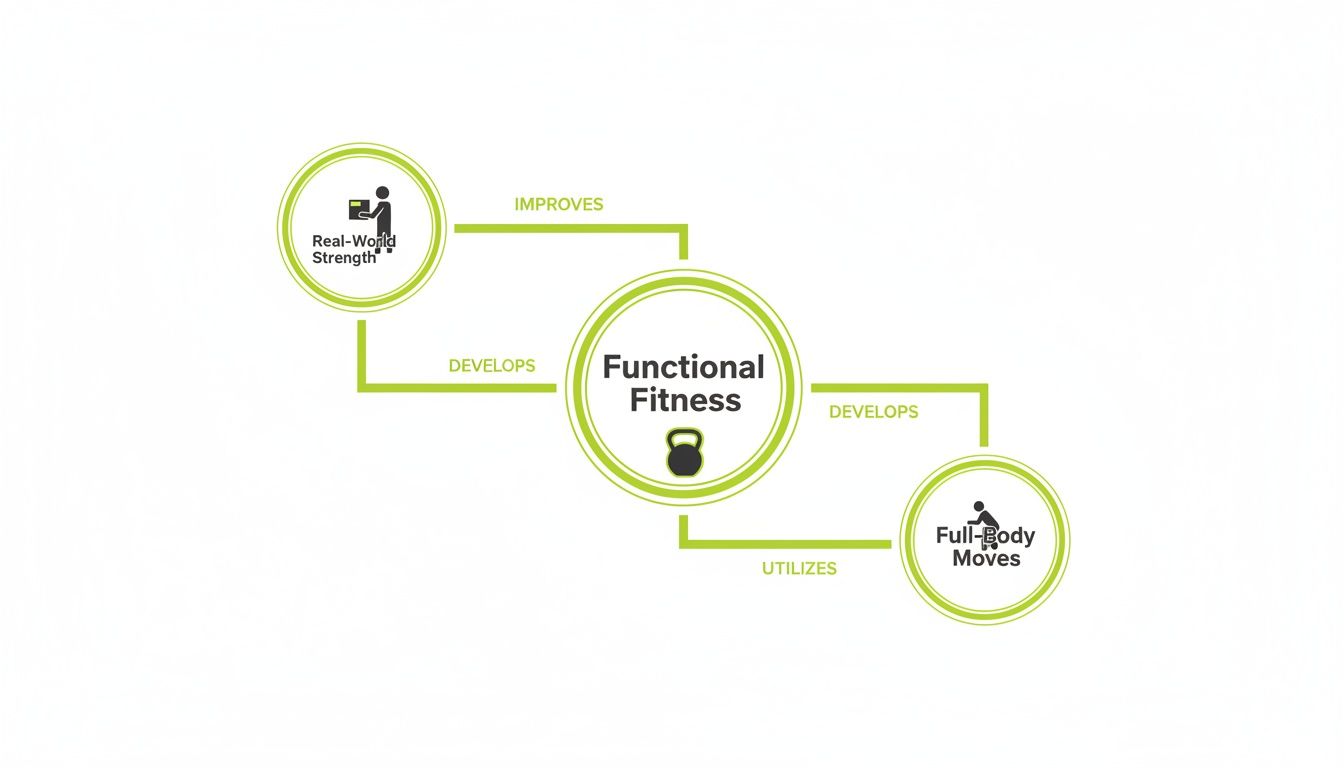
As you can see, the goal is to bridge the gap between what you can do in the gym and how you perform in your everyday life.
The engine of progress: progressive overload
Once you've got your movement patterns down, the next piece of the puzzle is progressive overload. This is the not-so-secret secret to getting stronger, faster, and fitter over time. In simple terms, you have to consistently ask your body to do a little more than it's used to.
Progressive overload is the gradual increase of stress placed upon the body during training. Without it, your body has no reason to adapt and grow stronger, leading to frustrating plateaus.
Applying this doesn't always mean piling more weight on the bar. There are several ways to keep the challenge going:
- Increase Resistance: The most obvious one. Add a small amount of weight to your lifts.
- Increase Reps/Sets: Do more reps with the same weight or add an extra set to your workout.
- Increase Frequency: Train a specific movement or muscle group more often each week.
- Decrease Rest Time: Shorten the rest periods between sets to make the workout more dense and challenging.
- Improve Form: Simply perfecting your technique is a form of progression. Better form allows you to lift more efficiently and safely, which ultimately leads to bigger lifts.
A well-designed plan will strategically sprinkle in these methods to keep you moving forward.
Structuring your training week for success
Finally, how you organize these pieces into a weekly schedule makes all the difference. One of the most effective ways to do this is to dedicate different days to different movement patterns. Another great option is to use full-body workouts that hit several patterns in one go.
A simple three-day-a-week plan could look like this:
- Day 1: Squat Focus (Lower Body Push) + Upper Body Pull (Rows) + a Carry
- Day 2: Hinge Focus (Lower Body Pull) + Upper Body Push (Presses) + Core Work
- Day 3: Lunge Focus (Unilateral) + a Mix of Upper Push/Pull + Conditioning
This kind of structure ensures you hit all the major movement patterns without burning yourself out. Most importantly, it builds in rest days, giving your body the time it needs to recover, adapt, and come back stronger for the next session.
Functional workout templates for your specific goals
Alright, let's put the principles we've covered into action. A solid plan is what separates random workouts from real results. It removes the guesswork and ensures that every time you walk into the gym, you have a clear purpose.
We've laid out three functional fitness templates below, each built for a different goal. See them as a starting point. Find the one that lines up with what you want to achieve, and you’re good to go.
The HYROX and endurance athlete plan
This one is for the grinders. If you're training for a HYROX, a Spartan race, or just want to build a relentless engine, this template is your blueprint. It’s all about merging heavy strength work with demanding cardio to improve your work capacity and teach your body to perform under fatigue.
This is the key to mastering compromised running—the ability to keep moving efficiently when your body is screaming at you.
- Workout A: Lower Body Strength & Sled Work
- Warm-Up: Get moving for 10 minutes with light cardio (jog, bike), then hit some dynamic stretches like leg swings and hip circles.
- Strength: Back Squats – 4 sets of 6-8 reps. Go heavy, but keep your form locked in.
- Conditioning (15-Min AMRAP):
- 8 Kettlebell Goblet Squats
- 10 Burpees
- 50-meter Sled Push (heavy)
- Cool-Down: 5-10 minutes of static stretching for your quads, hamstrings, and glutes.
- Workout B: Upper Body Push/Pull & Rowing
- Warm-Up: 10 minutes on the rower, building intensity. Mix in some band pull-aparts to wake up your back.
- Strength Superset:
- A1: Barbell Bench Press – 4 sets of 6-8 reps
- A2: Bent-Over Rows – 4 sets of 8-10 reps
- Conditioning Finisher (5 Rounds for Time):
- 500-meter Row
- 15 Wall Balls
- Cool-Down: Stretch out your chest and lats. If you need more ideas for upper body days, check out our guide to powerful chest exercises.
The strength and muscle growth plan
If your main goal is building raw strength and adding lean muscle, this is your plan. The focus is squarely on progressive overload with big, compound lifts, but framed in a way that still builds athleticism. You’ll be lifting heavy, sure, but you'll also be moving well.
This approach builds a body that's as capable as it is strong, blending old-school strength principles with functional movement.
This plan is built around lower reps and higher intensity for the main lifts. The accessory work is there to shore up weak points, add muscle volume, and keep your joints healthy and stable.
Here’s how a week could look:
| Day | Focus | Primary Lifts (3-5 sets of 4-6 reps) | Accessory Work (3 sets of 8-12 reps) |
|---|---|---|---|
| 1 | Lower Body Strength | Barbell Deadlifts | Bulgarian Split Squats, Leg Press, Calf Raises |
| 2 | Upper Body Push | Overhead Press | Incline Dumbbell Press, Dips, Tricep Pushdowns |
| 3 | Rest/Active Recovery | Light walk, stretching, foam rolling | - |
| 4 | Lower Body Hypertrophy | Barbell Squats | Romanian Deadlifts, Walking Lunges, Leg Curls |
| 5 | Upper Body Pull | Weighted Pull-Ups | T-Bar Rows, Seated Cable Rows, Face Pulls |
This split gives you plenty of time to recover between heavy sessions, which is exactly when the real growth happens.
The busy professional's 3-day plan
When you're juggling a career and family, time is everything. This plan is designed for maximum impact in minimal time, giving you a potent full-body workout just three times a week. Each session hits every major movement pattern, so you're not missing anything.
This isn't just about convenience; it's about smart, effective training. The functional fitness market is projected to hit USD 28 billion by 2033, largely because people need efficient workouts that fit into hectic lives. We also see its power in sports, where athletes using functional training can slash injury rates by 30-50%.
Think of this three-day plan as your solution for staying strong and fit when you're short on time.
- Day 1: Full Body A
- Goblet Squats: 3 sets of 10-12 reps
- Push-Ups: 3 sets to failure
- Dumbbell Rows: 3 sets of 10-12 reps per side
- Farmer's Walks: 3 sets of 40 meters
- Plank: 3 sets, hold for 45-60 seconds
- Day 2: Rest or Active Recovery
- A brisk walk, a light jog, or some mobility work is perfect here.
- Day 3: Full Body B
- Kettlebell Swings: 4 sets of 15 reps
- Dumbbell Bench Press: 3 sets of 10-12 reps
- Lat Pulldowns: 3 sets of 10-12 reps
- Reverse Lunges: 3 sets of 10 reps per side
- Russian Twists: 3 sets of 15 reps per side
- Day 4: Rest or Active Recovery
- Day 5: Full Body C
- Deadlifts (Hex Bar or Dumbbell): 3 sets of 8 reps
- Seated Dumbbell Shoulder Press: 3 sets of 10-12 reps
- Inverted Rows: 3 sets to failure
- Sled Push/Pull: 3 sets of 25 meters
- Hanging Knee Raises: 3 sets of 12-15 reps
This setup ensures you hit every major muscle group without spending your life in the gym. It's balanced, efficient, and built for the real world.
How to evolve your plan and break through plateaus
Even the best-laid workout plan has an expiration date. Your body is an adaptation machine, and the workout that felt like a challenge six weeks ago might feel like a warm-up today. That’s a good sign—it means you're getting stronger. But it’s also the exact moment when most people hit a frustrating plateau.
Think of your workout plan not as a static document but as a living guide that needs to evolve with you. To keep the gains coming, you have to know when and how to crank up the intensity. Just as important, you need the wisdom to pull back on days when you’re not feeling 100%. This kind of smart adjustment is the real secret to long-term, injury-free progress.
Smart progression is more than just adding weight
The go-to method for progression is slapping another plate on the bar. It works, but it's only one tool in a much larger toolbox. Real, sustainable progress comes from manipulating different variables to keep your body guessing.
Here are a few powerful ways to progress your training:
- Increase Training Density: This is all about doing more work in the same amount of time. The easiest way to do this is by cutting your rest periods. If you normally rest 90 seconds between sets, try trimming it to 75, then 60. It forces your body to become more efficient at recovery and torches your conditioning.
- Advance the Exercise Variation: Mastered standard push-ups? Great. Now it’s time for decline push-ups to hit your upper chest. Are goblet squats starting to feel a bit too easy? Progress to a front squat, which demands way more core stability and upper back strength.
- Improve Your Range of Motion: Sometimes, the best way to get stronger is to perform the same exercise better. Sinking deeper into your squats or holding a dead-stop pause at the bottom of a pull-up are both legitimate forms of progression that build strength in a safer, more controlled way.
Progression isn't just about lifting heavier; it's about training smarter. By changing the stimulus—whether through density, complexity, or volume—you give your body a new reason to adapt and grow stronger.
Knowing when to scale down
Progression gets all the glory, but knowing how to scale back is just as crucial. Life is unpredictable. Some days you walk into the gym feeling tired, stressed, or just plain sore. Pushing through with pure ego on those days is a fast track to injury. Smart scaling is about tweaking the workout to match what you can actually do that day, without skipping it entirely.
This is how you stay consistent while respecting your body’s need to recover.
- Example 1: The Tired Professional: You’ve had a brutal day at work and feel drained. Instead of hitting heavy barbell back squats, you could switch to lighter goblet squats. You’re still training the squat pattern, but with far less load on your central nervous system.
- Example 2: The New Lifter: If you're still learning the deadlift, starting with kettlebell deadlifts is a fantastic way to groove the hip hinge pattern. It builds the foundational strength and technique you'll need before grabbing a loaded barbell. Check out our library of back-strengthening exercises for more ideas.
- Example 3: Managing a Tweak: Maybe your shoulder feels a little tweaky. Instead of forcing an overhead press, you could swap in a landmine press, which is often much friendlier on the shoulder joint.
The modern solution to adaptive training
Manually adjusting your workouts takes a good bit of knowledge and self-awareness. Thankfully, technology is making this process a whole lot easier. This is happening right as at-home fitness is exploding—the online fitness market is projected to hit USD 59.23 billion by 2027, growing at a massive 33.1% annually. People clearly want effective plans they can follow anywhere, and research shows that personalization can boost workout adherence by up to 40%.
This is exactly where an adaptive tool like GrabGains comes in. It removes the guesswork from progression and scaling. By analyzing your performance—what you lifted, how many reps you hit, and even how you felt—the app automatically adjusts your next workout. It's like having a personal coach who knows precisely when to push you harder and when to suggest a lighter day, ensuring your plan is always perfectly dialed in for you.
Tracking progress and fueling performance
You can have the best functional fitness plan on paper, but if you're not tracking what you do, you're just guessing. Real improvement comes from data. Measuring your performance is what turns all that sweat and effort into tangible results, showing you exactly what’s working and where you need to make a change.
Effective tracking isn't about getting lost in spreadsheets. It’s simply about logging the key numbers that reflect your hard work. This could be as simple as a note in your phone or a dedicated fitness app. The goal is to build a record of your journey that keeps you motivated and lights the path forward.
For instance, a platform like GrabGains makes this dead simple by logging everything for you and showing your progress with clear charts. There's nothing more motivating than seeing your squat numbers climb or your circuit times drop week after week.
What you should actually be tracking
To get the full picture, you need to look beyond just the weight on the bar. A smart approach to tracking includes both your strength numbers and your conditioning times. This combo ensures you’re building a truly well-rounded, functional body.
Here’s what to focus on:
- Primary Strength Lifts: Log the weight and reps for your big compound lifts like squats, deadlifts, and overhead presses. Also, make a quick note on how it felt. Was it a grind? Did it feel smooth? That context is gold.
- Conditioning Times: For any workout done "for time," like a circuit or a 500m row, write down how long it took. The mission is simple: make that number smaller over time.
- AMRAP Scores: In "As Many Rounds/Reps As Possible" workouts, your score is your total volume. Pushing to squeeze in one more rep or one extra round is a clear sign your work capacity is improving.
- Subjective Measures: Don't forget the simple stuff. Rate your energy, sleep quality, and soreness on a scale of 1-10. This helps you connect the dots between what you do outside the gym and how you perform inside it.
Fueling your body for peak performance
Your workout is only half the battle. What you eat, drink, and how well you sleep is what truly unlocks your potential. Nutrition and recovery aren't optional add-ons; they are the foundation of any serious fitness plan.
Think of your body like a high-performance engine. You wouldn't put cheap gas in a race car and expect it to win, right? Your body is no different. Good food provides the raw materials you need to repair muscle, restore energy, and show up stronger for the next session.
Nutrition and recovery aren't passive. They are active parts of your training that directly dictate your results. Skipping them is like trying to build a house without a foundation—it’s just not going to work.
Simple rules for nutrition and recovery
Getting this stuff right doesn't require a Ph.D. in biology. It really just comes down to mastering a few simple, non-negotiable habits.
Here’s a no-nonsense guide to get you started:
- Prioritize Protein: Make sure you have a solid source of protein with every meal. Protein is what rebuilds the muscle you break down during training. Think lean meats, fish, eggs, and Greek yogurt.
- Don't Fear Carbs: Carbohydrates are your body's main fuel source. Eating carbs from sources like oats, rice, and potatoes around your workouts will give you the energy you need to perform.
- Hydrate Relentlessly: Even being slightly dehydrated can crush your performance. Carry a water bottle with you all day and sip on it constantly. Don't wait until you feel thirsty.
- Protect Your Sleep: Aim for 7-9 hours of quality sleep a night. This is primetime for muscle repair and growth hormone release. Make your bedroom cool, dark, and quiet to give your body the best environment to recover.
Common functional training mistakes to avoid
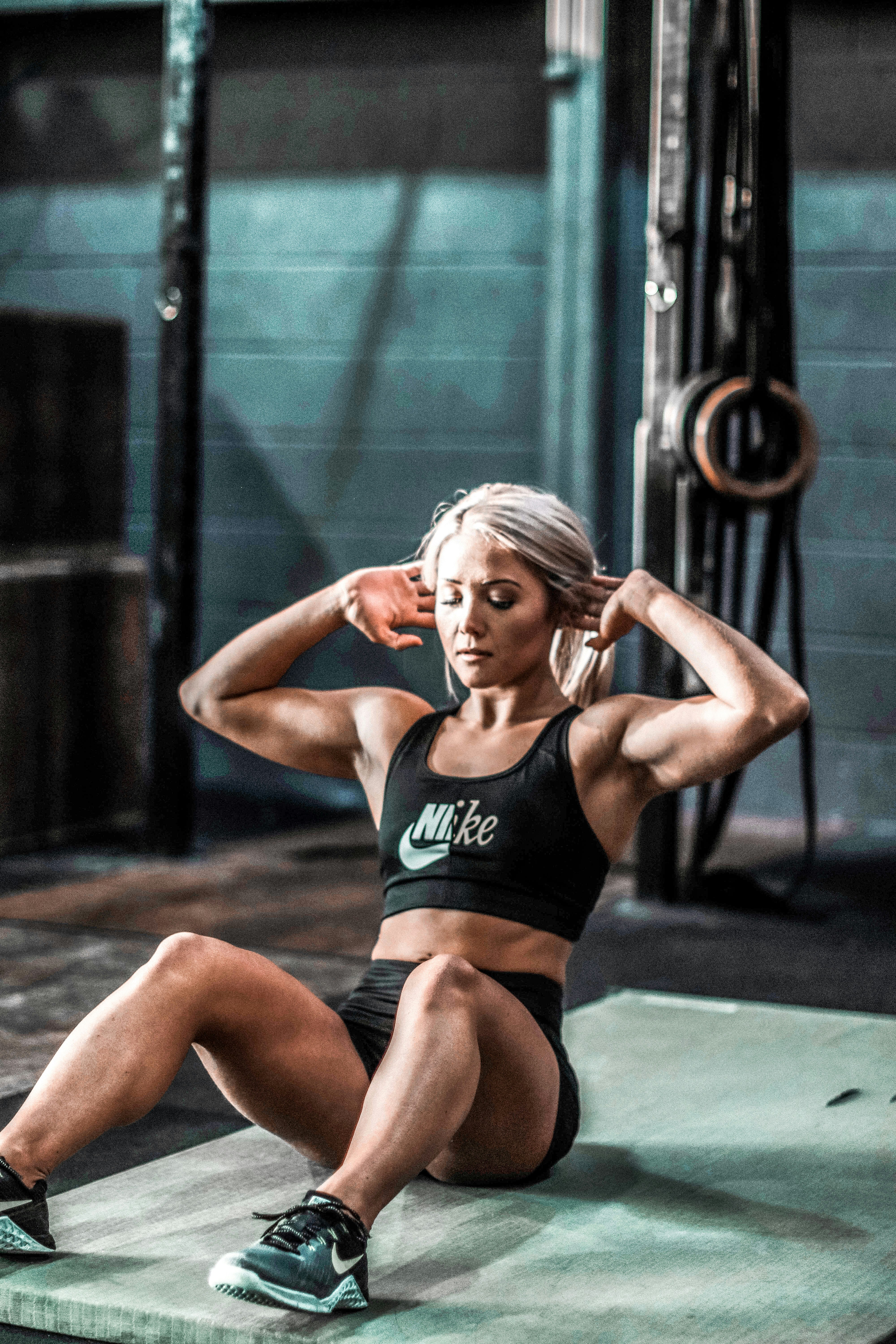
A well-designed functional fitness plan is your roadmap to results, but even the best map is useless if you take a wrong turn. A few common mistakes can completely derail your progress, leaving you frustrated, injured, or stuck in a plateau.
Let's walk through the big three I see all the time. Avoiding these pitfalls is the key to staying safe, getting strong, and making sure your hard work actually pays off.
Sacrificing form for heavier weight
The biggest offender? Letting your ego write checks your body can't cash. It often shows up as piling on more weight than you can handle, causing your form to break down completely.
Lifting with bad technique is a fast track to injury. But it also means you're not even working the muscles you think you are. You start compensating with other muscle groups, creating imbalances and teaching your body to move incorrectly.
The fix is simple: prioritize perfect technique over the number on the dumbbell. Film yourself. Ask a trainer or an experienced lifter for a quick form check. If you have to lower the weight to make every rep look clean, do it. That's how you build real, sustainable strength.
Program hopping too frequently
Next up is the dreaded "program hop." This is when you jump from one workout plan to another every week or two, always chasing the "next big thing" without giving anything a real chance to work.
Progress doesn't happen overnight. Your body needs a consistent signal to adapt and grow stronger.
Consistency is the engine of progress in fitness. Giving a well-structured plan at least 4-8 weeks allows your body to make the neurological and muscular adaptations necessary for real strength gains.
Pick a solid functional fitness plan that lines up with your goals and stick with it. Trust the process. You'll get much further than you would by bouncing between random workouts you find online.
Creating an imbalanced program
It’s human nature to gravitate toward what we’re good at or what we enjoy. In the gym, this often means too much pressing and not enough of everything else. This leads to an imbalanced program that hammers muscles like the chest and front delts while neglecting the upper back, glutes, and hamstrings. For a look at how to build out a specific area, check out these shoulder exercises for ideas on balanced programming.
This isn't just about aesthetics; it's about function and health. Overdeveloping certain muscles can pull your joints out of alignment and create nagging postural issues. To prevent this, make sure your plan is balanced across the key movement patterns:
- Pushing vs. Pulling: For every set of pushing work (like a bench press), you should have a set of pulling work (like a bent-over row).
- Squatting vs. Hinging: Don’t just squat. Make sure you’re including hinge movements like deadlifts to train the entire backside of your body.
This simple check ensures you’re building a resilient, capable body that’s strong from front to back and top to bottom.
Your functional fitness questions, answered
Let's clear up some of the common questions people have before they jump into a functional fitness plan. Getting these details sorted will give you the confidence to start training the right way.
Is functional fitness okay for beginners?
Yes, absolutely. In fact, it's one of the best places to start.
A good functional fitness plan is built around your current ability. Beginners can kick things off with foundational bodyweight movements—think air squats, push-ups from the knees, and basic lunges. The goal isn't to crush you with intensity from day one; it's to master the fundamental movement patterns correctly. Once you build that base, you can start adding weight.
How is this different from HIIT?
This is a great question because the two often get mixed up. Functional fitness and High-Intensity Interval Training (HIIT) can work together, but they aren't the same thing.
HIIT is a training format—it's all about short, all-out bursts of work followed by brief rest periods to spike your heart rate. Functional fitness is a training philosophy centered on exercises that directly translate to real-life activities, like lifting, carrying, and pushing.
- You can easily use functional exercises in a HIIT workout (e.g., kettlebell swings and burpees done in intervals).
- The key difference is the primary goal. Functional training is about building practical, usable strength. HIIT is about maximizing cardiovascular conditioning in the shortest time possible.
Think of it this way: Functional fitness builds the strong, stable foundation. It teaches your body how to move correctly. HIIT is one way you can apply that foundation for a killer cardio session. Functional fitness is the ‘what’ you do; HIIT is often the ‘how.’
How many times a week should I train?
For most people, aiming for three to five functional workouts a week is the sweet spot.
This gives your body enough of a challenge to adapt, get stronger, and build muscle. Just as important, it also leaves you with enough downtime for recovery. Remember, the real magic—muscle repair and growth—happens on your rest days, not in the gym. Consistency over the long haul will always beat trying to cram too many sessions into one week.
Ready to stop guessing and start building real-world strength with a plan that adapts to you? The GrabGains app takes the principles of functional fitness and creates a personalized workout plan that evolves with your progress. Download GrabGains on iOS or Android and discover your personalized path to peak performance.
Get inspired and motivated