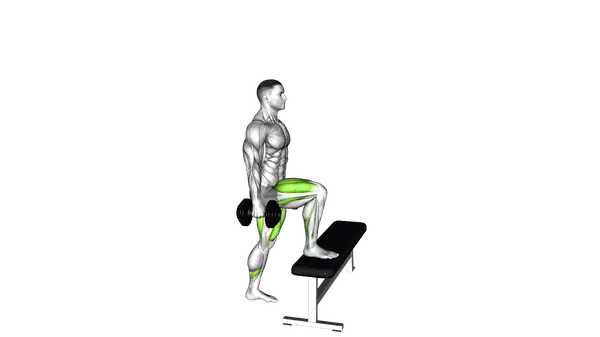
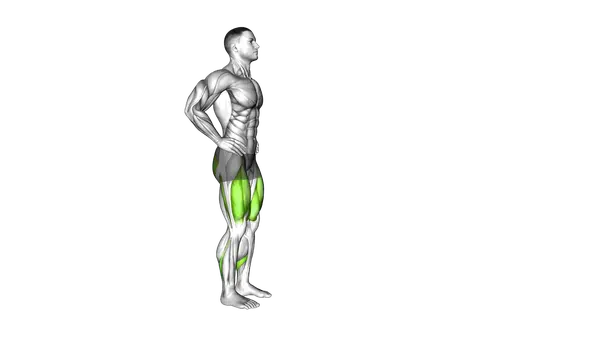
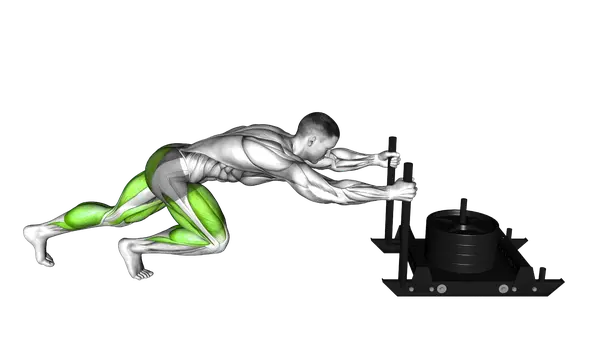
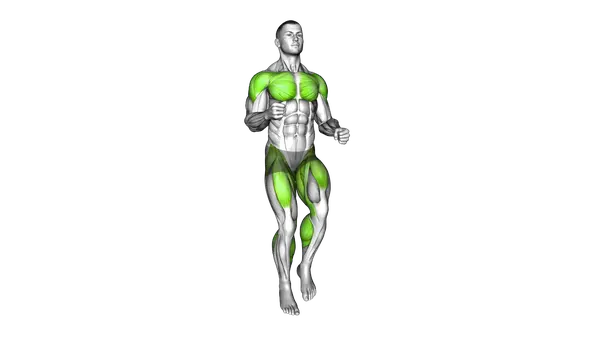
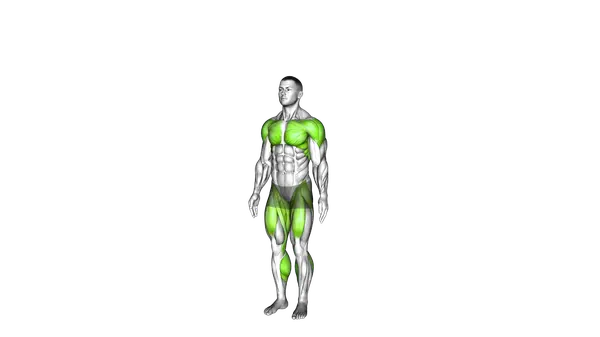
All Leg exercises

Exercises to build powerful, defined and functional quads

Quad exercises

The quads are one of the largest and most active muscle groups in the body. Located on the front of the thighs, they’re responsible for extending the knee and supporting movements like squatting, jumping, and climbing. Whether your goal is size, strength, or functional movement, training your quads consistently is essential. This overview breaks down the best ways to train them: in the gym or at home.

Read more

Pick your equipment

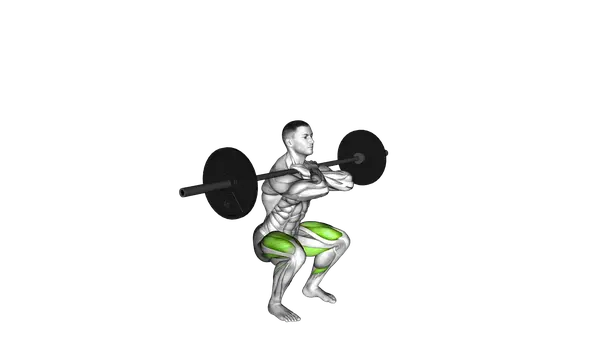
Barbell Front Squat

Barbell Front Squat

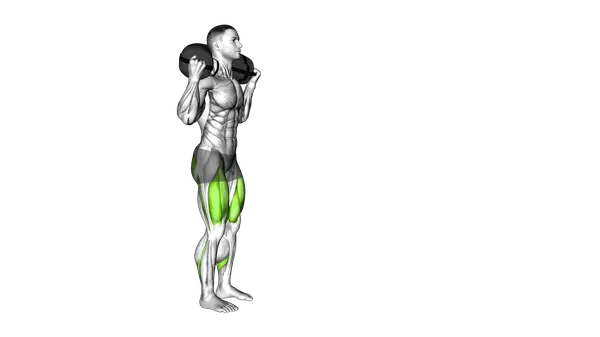
The barbell front squat stands as a cornerstone compound movement in strength training that delivers exceptional results for intermediate lifters seeking to develop their lower body and core strength. Unlike its more common counterpart, the back squat, the front squat positions the barbell across the front of the shoulders, creating a more upright torso position that dramatically increases the activation of the quadriceps while still engaging the glutes significantly. This exercise has earned its respected place in both powerlifting and bodybuilding circles for good reason. Powerlifters appreciate the front squat's ability to strengthen the quad dominance needed for competition squats and its carryover to improved positioning in deadlifts. Bodybuilders value its targeted quad development and the aesthetic benefits it brings to the anterior chain. The front rack position engages the core musculature more intensely than many other squat variations, as your abdominals must work overtime to maintain an upright torso position throughout the movement. This core stabilization aspect makes the front squat particularly valuable for athletes looking to develop functional strength that transfers to sport-specific movements. What sets the front squat apart is its joint-friendly nature compared to other squat variations. The more vertical torso position reduces shear forces on the lumbar spine, making it an excellent option for those with back concerns who still want to train heavy. The movement also demands and builds impressive mobility in the wrists, elbows, shoulders, and ankles – creating better overall movement patterns. For intermediate lifters looking to break through plateaus, the front squat serves as both a humbling reality check and an effective strength builder. The exercise forces proper form – you simply cannot cheat a front squat without dropping the bar. This built-in feedback mechanism makes it an honest assessment of your true strength capabilities while simultaneously building the foundation for even greater gains in your overall training program.

Strength
Powerlifting
Bodybuilding
Barbell
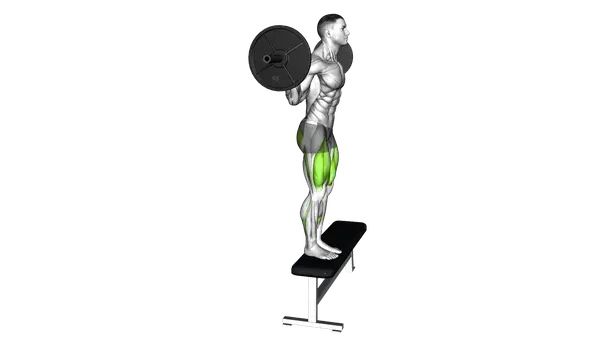
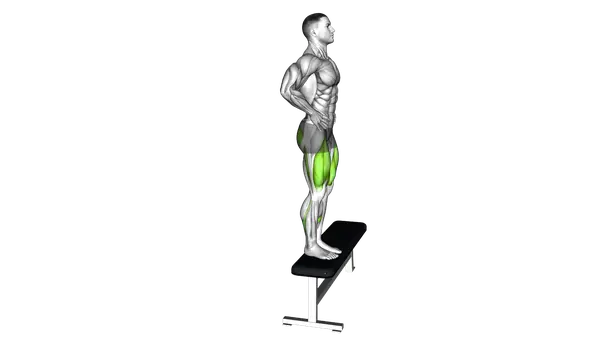
Barbell Step Up

Barbell Step Up

The Barbell Step Up stands as a versatile compound movement that delivers exceptional lower body development while challenging your balance and coordination. This intermediate-level exercise primarily targets the glutes, quads, and hamstrings, creating a comprehensive stimulus for lower body growth and functional strength. When incorporated into bodybuilding routines, the Barbell Step Up excels at sculpting defined quadriceps, building rounder glutes, and developing hamstring definition with remarkable efficiency. The unilateral nature of this movement addresses muscular imbalances between your left and right sides, ensuring symmetrical development that both looks impressive and contributes to injury prevention. For HIIT enthusiasts, this exercise serves as a powerful metabolic driver. The combination of weight-bearing resistance and the elevation change creates significant oxygen demand, elevating your heart rate and caloric expenditure. Many athletes report continued elevated metabolism for hours following Barbell Step Up sessions, making it valuable for body composition improvements. From a strength perspective, the Barbell Step Up develops real-world power that translates directly to athletic performance. By training each leg independently while supporting additional load, you develop the kind of functional strength needed for jumping, climbing, and explosive sports movements. The stability requirements also engage your core and smaller stabilizing muscles that often get neglected in bilateral exercises. What makes the Barbell Step Up particularly valuable is its scalability across fitness levels. While categorized as intermediate, the exercise can be adjusted through step height, barbell weight, and tempo to accommodate progression. Many strength coaches praise this movement for its joint-friendly nature compared to other loaded leg exercises, making it sustainable for long-term training programs. For those seeking both aesthetic improvements and performance enhancements, few exercises deliver the comprehensive benefits of the properly executed Barbell Step Up in such an efficient package.

Strength
Bodybuilding
HIIT
Barbell
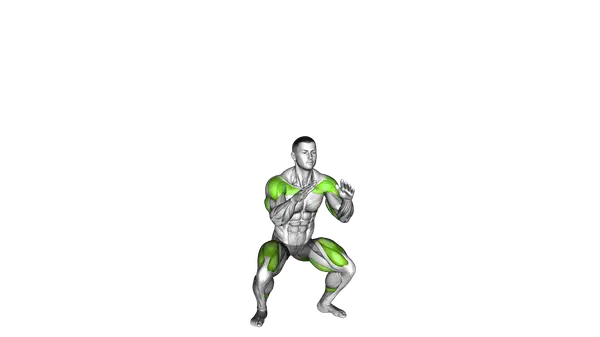
Bodyweight Full Squat With Overhead Press

Bodyweight Full Squat With Overhead Press

The Bodyweight Full Squat With Overhead Press combines lower body power with upper body pushing strength in one fluid movement, creating an efficient full-body exercise that elevates your heart rate while building functional strength. This intermediate-level compound movement simultaneously targets your quadriceps, glutes, and front deltoids, making it perfect for those looking to maximize their workout efficiency. This versatile exercise fits seamlessly into various training methodologies including HIIT circuits, bodybuilding routines, and CrossFit workouts. The dynamic nature of combining a squat with an overhead press creates a cardiovascular demand that burns calories while developing both strength and muscular endurance throughout your entire body. What makes this movement particularly valuable is how it mimics everyday functional patterns: the kind of integrated movement you might use when lifting objects from the ground and placing them on a high shelf. By training these movement patterns together, you're enhancing your body's natural coordination systems while developing practical strength that translates to daily activities. The full squat component engages your entire lower body kinetic chain, activating the quadriceps as primary movers while recruiting the glutes, hamstrings, and core stabilizers. Meanwhile, the overhead press portion develops shoulder strength and stability, particularly in the anterior deltoids, while engaging your triceps and upper back muscles as synergists. For those focused on metabolic conditioning, this exercise delivers impressive results by recruiting large muscle groups simultaneously, significantly elevating oxygen consumption and caloric expenditure. The compound nature makes it particularly effective for those with limited workout time who need maximum benefits from minimal exercises. Regular incorporation of the Bodyweight Full Squat With Overhead Press can lead to improved posture, enhanced core strength, better overhead mobility, and increased lower body power—all critical components for athletic performance and daily function. Whether you're focused on building strength, enhancing endurance, or improving overall fitness, this exercise delivers comprehensive benefits in a single, efficient movement.

Strength
Endurance
HIIT
Bodybuilding
+1
Bodyweight exercises
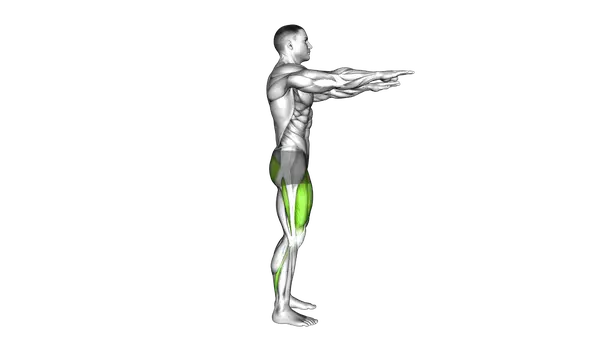
Bodyweight Squat

Bodyweight Squat

Bodyweight squats are a foundational lower body exercise that serve as the perfect starting point for beginners while remaining valuable for advanced athletes. This accessible movement primarily targets the glutes and quadriceps, though it also engages your hamstrings, calves, and core as stabilizing muscles throughout the movement. The beauty of bodyweight squats lies in their versatility. They can be seamlessly incorporated into high-intensity interval training (HIIT) circuits to elevate your heart rate and burn calories, or utilized in bodybuilding routines to establish proper movement patterns before adding external resistance. Many experienced lifters include bodyweight squats in their warm-up sequences to increase blood flow to the lower body and prime the muscles for more challenging work ahead. Consistent practice of bodyweight squats builds both strength and endurance in your lower body. The movement pattern trains your muscles to generate force efficiently through a full range of motion, enhancing overall athletic performance. When performed with higher repetitions, bodyweight squats challenge muscular endurance and improve your stamina for daily activities and sports. What makes this exercise particularly valuable is its functional carryover to everyday life. The squat pattern mimics movements we perform regularly—sitting down, standing up, and lifting objects from the ground. By strengthening this pattern, you improve your capacity for daily tasks while reducing injury risk during these common movements. For those looking to progress, bodyweight squats establish the neuromuscular foundation necessary for more advanced squat variations like goblet squats, front squats, and back squats. The movement also improves lower body mobility, particularly in the ankles, knees, and hips, which often becomes restricted through sedentary lifestyles. Whether your fitness goals involve building strength, improving endurance, or simply moving better in daily life, the humble bodyweight squat deserves a place in your exercise routine as a cornerstone movement that delivers impressive benefits without equipment.

Strength
Endurance
HIIT
Bodybuilding
+1
Bodyweight exercises
Bodyweight Step Up

Bodyweight Step Up

The Bodyweight Step Up is a versatile lower-body exercise that delivers impressive results without requiring fancy equipment. This accessible movement targets multiple muscle groups simultaneously, with primary emphasis on the glutes, quads, and hamstrings—the powerhouse muscles that drive everyday movements and athletic performance. Perfect for beginners just starting their fitness journey, this exercise offers a gentle introduction to lower body training while still providing enough challenge to stimulate muscle growth and strength development. The beauty of step-ups lies in their scalability; you can adjust the height of your platform based on your current fitness level, making it possible to progress gradually as your strength improves. Step-ups shine across various training modalities. In HIIT workouts, they elevate your heart rate quickly, burning calories and improving cardiovascular fitness. For bodybuilding purposes, they help sculpt defined legs and a shapely posterior when performed with proper form and appropriate volume. During recovery phases, lower, controlled step-ups with body weight can enhance blood flow to healing muscles without excessive strain. The exercise develops both strength and endurance simultaneously. The lifting phase builds power in your legs and glutes, while performing multiple repetitions challenges your muscular endurance and stamina. This dual benefit makes step-ups particularly valuable for athletes and fitness enthusiasts looking to improve functional fitness that transfers to real-world activities. What makes the Bodyweight Step Up truly stand out is its practicality. You'll strengthen the same movement patterns used when climbing stairs, hiking uphill, or stepping onto a bus—movements we encounter daily. This functional carryover is why many trainers consider step-ups a cornerstone exercise for building a resilient, capable body that performs well both in and out of the gym.

Strength
Endurance
HIIT
Bodybuilding
+1
Bodyweight exercises

Built for Progress

Take the Guesswork
Out of Training

Create personalized AI-powered workout plans that evolve with you. Train smarter, track every rep and keep moving forward.
Bulgarian Split Squat

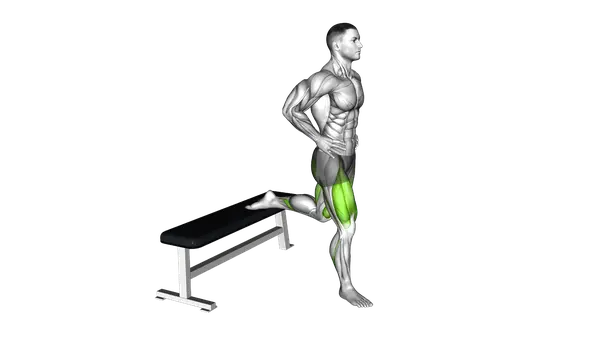
Bulgarian Split Squat

The Bulgarian Split Squat stands as a powerful unilateral leg exercise that has earned its reputation in both strength and physique development circles. This intermediate movement primarily targets the glutes, quads, and hamstrings while engaging numerous stabilizing muscles throughout the lower body and core. Originally popularized by Olympic weightlifters from Bulgaria, this exercise has transcended its origins to become a staple in bodybuilding and HIIT protocols alike. The beauty of the Bulgarian Split Squat lies in its ability to expose and correct muscular imbalances between your dominant and non-dominant legs—something that traditional bilateral exercises often mask. When incorporated into a bodybuilding regimen, this movement excels at creating symmetrical development and detail across the lower body musculature. The isolation of each leg creates tremendous tension through a full range of motion, stimulating muscle growth while improving functional strength. For HIIT enthusiasts, the Bulgarian Split Squat delivers an intense cardiovascular challenge when performed with minimal rest, elevating heart rate and caloric expenditure. From a strength perspective, this exercise offers significant carryover to athletic movements. By training each leg independently, you develop the stabilizing muscles critical for change of direction, acceleration, and power production. The balance component simultaneously enhances proprioception and neuromuscular coordination, which translates to improved performance in compound lifts like squats and deadlifts. What makes the Bulgarian Split Squat particularly valuable is its accessibility—requiring minimal equipment while delivering maximum results. Whether your goal is hypertrophy, conditioning, or functional strength, this exercise delivers remarkable benefits with proper implementation. As you progress, you'll find this movement not only reshapes your lower body aesthetics but also contributes to improved movement patterns and athletic capacity in daily life and sports performance.

Strength
Bodybuilding
HIIT
Dumbbell (+2)
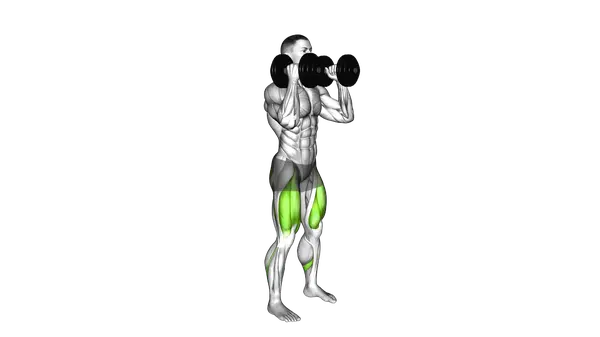
Dumbbell Front Squat

Dumbbell Front Squat

The dumbbell front squat stands as a versatile and effective compound movement that has earned its place in both bodybuilding and CrossFit training regimens. This intermediate-level exercise primarily targets the quadriceps and glutes while engaging various supporting muscle groups throughout the lower body and core. Unlike its barbell counterpart, the dumbbell variation offers unique advantages for strength development, particularly in addressing muscle imbalances since each side of the body must work independently with its own weight. This bilateral accountability can reveal and help correct strength discrepancies between your left and right sides—something that's especially valuable for athletes seeking balanced muscular development. The beauty of this movement lies in its carryover to both aesthetic and functional fitness goals. Bodybuilders appreciate how the front-loaded position creates tremendous tension through the quadriceps, stimulating muscle growth in ways that complement traditional back squats. Meanwhile, CrossFit enthusiasts value the exercise for its transferability to various athletic movements and its effectiveness in building practical lower body strength. From a physiological perspective, the front-loaded position demands greater core engagement and upper back stability than many other squat variations, making it particularly effective for developing total-body strength coordination. The anterior weight placement also tends to promote more upright posture during the movement, potentially reducing shear forces on the spine compared to back-loaded squat variations. Incorporating dumbbell front squats into your training routine can yield impressive strength gains when programmed appropriately. For strength-focused objectives, working in the 3-6 rep range with challenging weights produces optimal results, while higher rep schemes can effectively build muscular endurance and hypertrophy. The exercise responds well to progressive overload principles, making it an excellent choice for long-term strength development strategies. Whether you're looking to add mass to your quads and glutes or develop functional strength that transfers to athletic performance, the dumbbell front squat delivers impressive results while accommodating various fitness levels and equipment availability.

Strength
Bodybuilding
Crossfit
Dumbbell
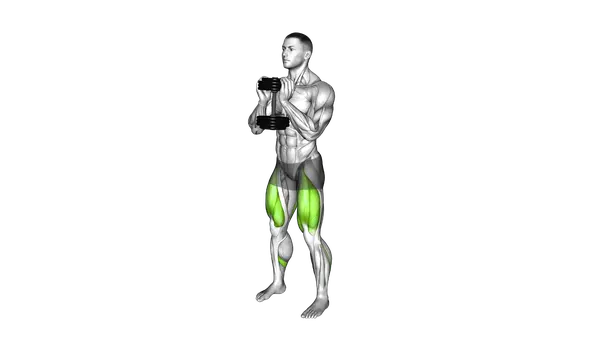
Dumbbell Goblet Squat

Dumbbell Goblet Squat

The dumbbell goblet squat stands as a cornerstone movement for anyone stepping into the world of fitness, offering beginners an accessible yet effective entry point to proper squatting mechanics. This foundational exercise primarily targets the quadriceps and glutes, creating a powerful lower body development opportunity without overwhelming those new to resistance training. When incorporated into bodybuilding routines, the goblet squat allows for precise muscle engagement and development, particularly in the anterior chain. The beauty of this movement lies in its versatility, as it transitions seamlessly into high-intensity interval training (HIIT) circuits where it elevates heart rate while maintaining proper form parameters that protect the knees and lower back. Strength benefits emerge quickly with consistent practice, as the goblet position—holding the weight close to the chest—naturally encourages proper spinal alignment and depth through the squat pattern. This makes it not merely a muscle-building exercise but a movement skill that transfers to daily activities, enhancing functional fitness alongside aesthetic improvements. The exercise's popularity in both strength and conditioning programs speaks to its efficiency—delivering significant training stimulus to multiple muscle groups simultaneously while remaining accessible to those with varying mobility challenges. For beginners especially, mastering the goblet squat often serves as a gateway to more complex barbell variations later in their fitness journey. What distinguishes the goblet squat in the fitness landscape is its remarkable balance of simplicity and effectiveness. By focusing on these fundamental movement patterns early in one's training career, proper motor patterns become ingrained, reducing injury risk while establishing the neuromuscular foundation needed for progressive overload in subsequent training phases. This investment in proper movement quality pays dividends throughout one's fitness journey, making the humble goblet squat far more valuable than its beginner-friendly reputation might suggest.

Strength
Bodybuilding
HIIT
Dumbbell
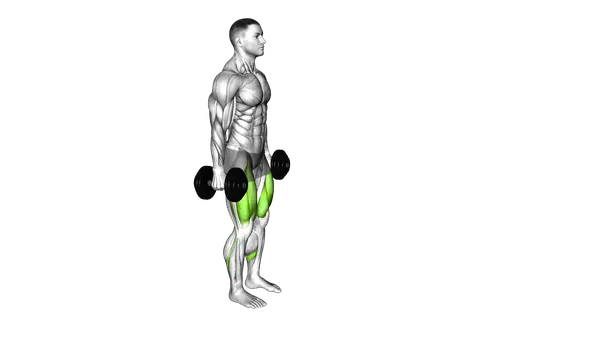
Dumbbell Lunge

Dumbbell Lunge

The dumbbell lunge stands as a cornerstone exercise in any well-rounded fitness regimen, offering tremendous benefits for those who've moved beyond beginner status. This intermediate movement primarily targets the lower body powerhouse muscles - the glutes, quads, and hamstrings - creating a comprehensive lower body strengthening experience with just one exercise. When incorporated into bodybuilding routines, the dumbbell lunge excels at sculpting defined quad sweeps, building hamstring density, and developing rounder, stronger glutes. The unilateral nature of this movement addresses muscular imbalances between your left and right sides, promoting symmetrical development that's crucial for aesthetic physique goals. For those embracing high-intensity interval training (HIIT), dumbbell lunges inject serious metabolic stress when performed with appropriate intensity. The large muscle recruitment creates a significant oxygen demand, elevating your heart rate and maximizing caloric burn both during and after your workout through the EPOC (excess post-exercise oxygen consumption) effect. Strength enthusiasts particularly appreciate how dumbbell lunges build functional power through a natural human movement pattern. The exercise develops stabilizer muscles throughout the kinetic chain while improving coordination between your upper and lower body. This translates to enhanced performance in everyday activities and other athletic pursuits. The beauty of the dumbbell lunge lies in its versatility. By adjusting weight, tempo, stance width, or step length, you can manipulate the training stimulus to align with specific goals. This adaptability makes it suitable for various training phases - from volume-focused hypertrophy blocks to heavier strength-building periods. While challenging, the dumbbell lunge rewards consistent effort with improved lower body aesthetics, enhanced functional strength, and better movement quality. The exercise demands respect for proper form, but offers impressive returns when executed with appropriate technique and integrated strategically into your training program.

Strength
Bodybuilding
HIIT
Dumbbell
Dumbbell Step Up

Dumbbell Step Up

The Dumbbell Step Up stands as an incredibly versatile compound movement that delivers remarkable lower body development while challenging your cardiovascular system. This intermediate-level exercise primarily targets the glutes, quads, and hamstrings, making it a powerhouse movement for anyone looking to build lower body strength and definition. When incorporated into various training styles like HIIT, bodybuilding, or CrossFit, the Dumbbell Step Up adapts seamlessly to different programming goals. In HIIT workouts, it elevates heart rate quickly while maintaining resistance benefits. For bodybuilders, it offers targeted muscle activation and hypertrophy potential, especially when performed with heavier weights and controlled tempo. CrossFit enthusiasts appreciate its functional carryover to everyday movements and athletic performance. What sets the Dumbbell Step Up apart is its dual focus on developing both strength and endurance simultaneously. The unilateral nature of the exercise creates greater stability challenges than bilateral movements, enhancing proprioception and addressing muscle imbalances between sides. This translates to more balanced physical development and reduced injury risk over time. Another advantage is the exercise's scalability – it can be modified by adjusting step height, dumbbell weight, or rep schemes to match your current fitness level and goals. This adaptability makes it valuable for progressive overload principles, allowing continuous advancement without plateauing. The Dumbbell Step Up also delivers significant metabolic benefits, burning substantial calories during and after your workout through the EPOC effect (Excess Post-exercise Oxygen Consumption). This makes it particularly effective for body composition goals when combined with proper nutrition. For optimal integration into your routine, consider placing Dumbbell Step Ups early in your workout when targeting strength development or later when pursuing endurance adaptations. Either way, this exercise delivers exceptional results for lower body development while supporting functional movement patterns that transfer to daily activities and athletic performance.

Strength
Endurance
HIIT
Bodybuilding
+1
Dumbbell (+1)
Forward Lunge

Forward Lunge

The Forward Lunge stands as a cornerstone movement in any well-rounded fitness regimen, challenging multiple muscle groups while improving functional strength. This intermediate-level exercise primarily targets the glutes, quads, and hamstrings, creating a comprehensive lower body workout that translates to everyday movements and athletic performance. Whether you're incorporating Forward Lunges into a high-intensity interval training (HIIT) session, using them as part of your bodybuilding routine, or simply warming up before a more intense workout, this versatile exercise delivers results. The dynamic nature of lunges makes them particularly effective at elevating heart rate while simultaneously building muscle, making them a time-efficient addition to any training program. What sets the Forward Lunge apart is its ability to simultaneously develop both strength and endurance. As you progress through repetitions, you'll notice the dual challenge of maintaining proper form while pushing through the muscular fatigue that builds in your quadriceps, hamstrings, and glutes. This exercise effectively bridges the gap between pure strength training and cardiovascular conditioning. The unilateral (single-leg) aspect of Forward Lunges helps identify and correct muscle imbalances between your left and right sides, preventing potential injuries and enhancing overall athletic performance. Regular practice improves stability, coordination, and proprioception—your body's ability to sense its position in space—which pays dividends in both sports and daily activities. For those looking to maximize their training efficiency, Forward Lunges offer exceptional metabolic demand due to the large muscle groups involved. This translates to greater calorie burn during and after your workout, supporting body composition goals alongside strength development. The exercise also improves hip mobility and ankle flexibility, contributing to better movement patterns in everything from running to climbing stairs. Ultimately, the Forward Lunge earns its place in fitness programs across experience levels by delivering comprehensive lower body development while improving functional movement patterns that transfer directly to real-world activities.

Strength
Endurance
HIIT
Bodybuilding
+1
Bodyweight exercises (+2)
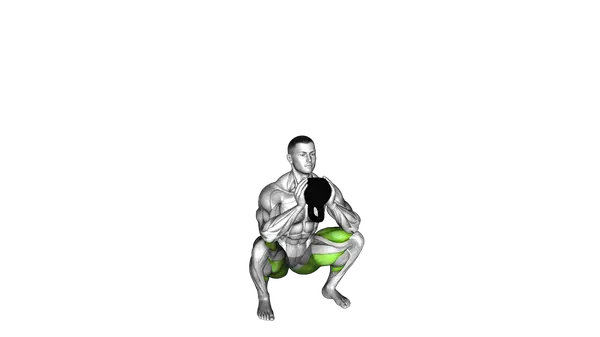
Kettlebell Goblet Squat

Kettlebell Goblet Squat

The kettlebell goblet squat stands as a cornerstone exercise for intermediate fitness enthusiasts looking to develop lower body strength with proper form. This movement bridges the gap between beginner bodyweight squats and more advanced loaded variations, making it perfect for those who have established basic movement patterns and are ready to add resistance. When performed correctly, the goblet squat primarily engages the quadriceps and gluteal muscles. The front-loaded position of the kettlebell creates a natural counterbalance that allows for deeper squat positions, maximizing muscle recruitment throughout the entire lower body chain. While quads and glutes take the majority of the workload, this movement also engages the hamstrings, adductors, and core stabilizers as supporting muscle groups. In bodybuilding contexts, the kettlebell goblet squat serves as an excellent hypertrophy tool when performed with moderate weight for sets of 8-12 repetitions. The movement allows for precise muscular tension throughout the eccentric and concentric phases. For High-Intensity Interval Training (HIIT), the goblet squat becomes a metabolic powerhouse. When incorporated into circuits with minimal rest, it elevates heart rate while simultaneously building strength, creating the perfect storm for fat loss and conditioning. The strength adaptations from consistent goblet squat training extend beyond mere aesthetic improvements. The exercise develops functional lower body power that transfers to athletic movements while simultaneously strengthening the core and improving postural alignment. The front-loaded position also enhances thoracic mobility and reinforces proper squat mechanics that carry over to barbell variations. Many strength coaches consider the kettlebell goblet squat an essential movement for developing the stability and mobility necessary for more advanced strength training protocols. Regular implementation leads to improved movement quality and increased force production capabilities through the lower extremities.

Strength
Bodybuilding
HIIT
Kettlebell
Kettlebell Step Up

Kettlebell Step Up

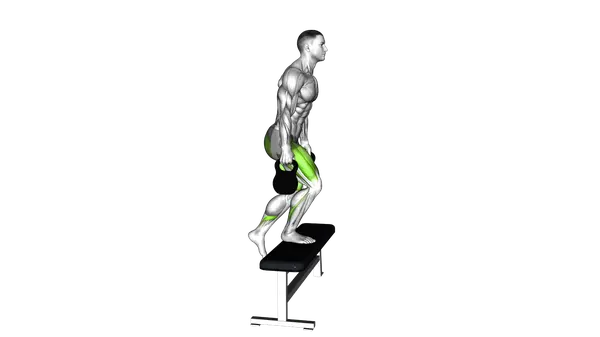
The Kettlebell Step Up stands as a powerful compound movement that elevates your lower body training to new heights. This intermediate exercise specifically targets multiple muscle groups simultaneously, with primary focus on your glutes, quads, and hamstrings – essentially engaging your entire posterior chain in one functional movement. When incorporated into HIIT circuits, the Kettlebell Step Up drives your heart rate up rapidly, creating that perfect storm of strength and cardiovascular demand. Crossfit enthusiasts appreciate this exercise for its functional carryover to everyday movements and athletic performance, while bodybuilders value its ability to sculpt defined, balanced legs when performed with proper tempo and controlled form. What makes this exercise particularly effective is its dual development of both strength and endurance. The weighted component challenges your muscles to generate force against resistance, building foundational lower body power. Meanwhile, the stepping motion, especially when performed for higher repetitions, builds muscular endurance that translates to improved stamina in various athletic pursuits and daily activities. The beauty of the Kettlebell Step Up lies in its versatility. By adjusting step height, kettlebell weight, or tempo, you can shift the emphasis to align with specific training goals. This adaptability makes it suitable for nearly any fitness program, from rehabilitation to elite athletic training. Beyond the physical benefits, this exercise develops proprioception, balance, and unilateral strength – addressing the common imbalances that plague many fitness enthusiasts. The functional nature of the movement pattern means you're training your body in ways that directly enhance your capability outside the gym, whether that's climbing stairs, hiking trails, or performing in your chosen sport. When programmed correctly within your training regimen, the Kettlebell Step Up serves as a cornerstone movement that delivers impressive results in lower body aesthetics, functional strength, and overall athletic performance.

Strength
Endurance
HIIT
Crossfit
+1
Kettlebell
Power Sled Push

Power Sled Push

The Power Sled Push stands as a formidable conditioning tool that has earned its place in serious training programs across multiple disciplines. This intermediate-level exercise delivers an intense full-body workout while primarily targeting the quads, glutes, and hamstrings—the powerhouse muscles that drive athletic performance. What makes the Power Sled Push particularly valuable is its versatility, finding a home in HIIT circuits, CrossFit WODs, and powerlifting accessory work. The exercise creates a perfect storm of resistance that challenges both strength and endurance simultaneously, making it incredibly time-efficient for those seeking comprehensive lower body development. The beauty of sled work lies in its simplicity—a primal pushing movement that requires no complex technique yet delivers remarkable results. Your muscles work under constant tension throughout the movement, stimulating growth while the cardiovascular system kicks into high gear. This combination creates a metabolic effect that continues burning calories long after your session ends. Unlike many traditional exercises, the Power Sled Push places minimal stress on the joints while maximizing muscle recruitment. This makes it an excellent option for athletes recovering from injuries or those looking to supplement their training without additional recovery demands. The concentric-only nature of the movement means reduced muscle soreness compared to exercises with eccentric components. For those plateauing in their fitness journey, incorporating sled pushes can break through stagnation by challenging the body in a novel way. The variable resistance allows for easy progression—simply add more weight as your strength and conditioning improve. Whether you're looking to develop explosive power for sports performance or improve your work capacity for everyday life, this exercise delivers tangible results. The Power Sled Push exemplifies functional training at its finest—building real-world strength that translates directly to improved athletic performance and daily activities, cementing its status as a cornerstone exercise for serious fitness enthusiasts.

Strength
Endurance
Hyrox
HIIT
+2
Other
Resistance Band Lying Leg Press

Resistance Band Lying Leg Press

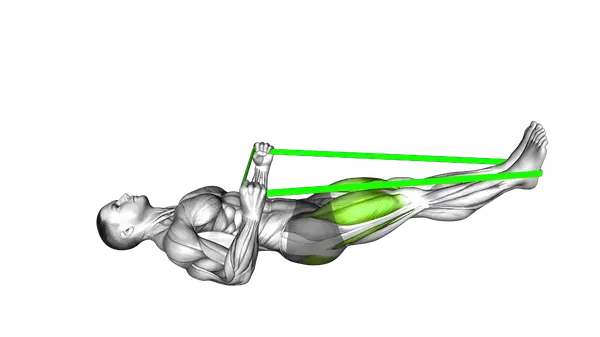
The Resistance Band Lying Leg Press delivers a highly effective lower body workout without the need for bulky gym equipment, making it an excellent addition to both home workouts and studio sessions. This intermediate-level movement primarily targets the quadriceps and glutes while also engaging supporting muscles throughout the posterior chain. When incorporated into bodybuilding routines, this exercise allows for controlled tension throughout the movement pattern, promoting muscle hypertrophy in the targeted muscle groups. The beauty of using resistance bands lies in the variable resistance they provide – the tension increases as the band stretches, creating greater challenge at the end range of the motion where muscles are most contracted. For those embracing HIIT workouts, the Resistance Band Lying Leg Press can be seamlessly integrated as a lower-body power move that elevates heart rate while building strength. The exercise's versatility makes it suitable for various training protocols, whether you're focusing on endurance with higher repetitions or maximal strength with heavier bands and fewer reps. From a strength development perspective, this movement offers unique benefits compared to traditional machine leg presses. The inherent instability when working with bands recruits more stabilizer muscles and core engagement, translating to more functional strength gains. Additionally, the horizontal body position reduces spinal compression, making it potentially more accessible for those with certain back issues. The adaptability of resistance bands allows for progressive overload – a fundamental principle in strength training – by simply adjusting band tension or stacking multiple bands together. This scalability makes the exercise suitable for various fitness levels despite its intermediate classification. For athletes looking to improve lower body power while minimizing joint stress, the Resistance Band Lying Leg Press provides an excellent alternative to high-impact plyometrics while still developing the explosive strength needed for athletic performance in the quads and glutes.

Strength
Bodybuilding
HIIT
Resistance Band
Sandbag Lunges

Sandbag Lunges

Sandbag lunges represent a challenging progression in lower body training, combining the instability of a sandbag with the functional movement pattern of a lunge. This advanced exercise significantly engages multiple muscle groups simultaneously, with primary emphasis on the glutes, quads, and hamstrings. The shifting weight of the sandbag creates an additional stabilization challenge that traditional weighted lunges can't replicate, forcing your core to work overtime throughout the movement.What makes sandbag lunges particularly effective is their ability to build both strength and endurance concurrently. The constantly shifting center of gravity of the sandbag mimics real-world lifting scenarios, making this exercise exceptionally functional for athletes and fitness enthusiasts alike. Your body must continuously adjust to the sand's movement within the bag, recruiting more muscle fibers and burning additional calories compared to static resistance exercises.The beauty of sandbag training lies in its versatility and practicality. Unlike rigid weights, sandbags conform to your body during movement, reducing joint strain while still providing substantial resistance. This makes them particularly valuable for those looking to build resilience and functional strength that translates to everyday activities and athletic performance. The uneven distribution of weight challenges your proprioception: your body's awareness of its position in space: further enhancing your overall athletic development.For those seeking to break through training plateaus, sandbag lunges offer a novel stimulus that can shock muscles into new growth and adaptation. The exercise builds mental toughness alongside physical strength, as maintaining proper form with an unstable load requires significant focus and determination. Regular incorporation of this movement can lead to impressive gains in lower body power, enhanced core stability, and improved overall athletic performance, making it a valuable addition to any advanced training regimen.

Strength
Hyrox
Crossfit
+2
Other
Single Leg Squat (Pistol)

Single Leg Squat (Pistol)

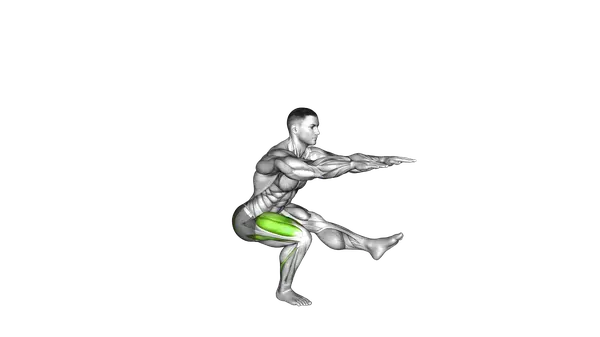
The pistol squat stands as one of the most challenging bodyweight exercises in the fitness world. This single-leg movement requires exceptional balance, mobility, and strength—pushing your lower body capabilities to their limits. As you descend on one leg with the other extended forward, you'll quickly discover why this exercise has earned respect among athletes and fitness enthusiasts alike. Make no mistake—the pistol squat belongs firmly in the advanced category. This exercise demands a foundation of conventional squat strength, ankle mobility, hip flexibility, and core stability. Most fitness professionals recommend mastering basic squat variations before attempting this movement. Even experienced lifters often find pistols humbling, as they expose asymmetries and weaknesses that might go unnoticed in bilateral movements. While pistol squats create a full-body tension demand, they primarily target the quadriceps and gluteal muscles. The quads handle the majority of the load during the descent and initial push of the ascent, while your glutes provide the powerful hip extension needed to stand tall. What makes pistols particularly effective is the intense isolation of each leg, preventing your dominant side from compensating for weaknesses. In HIIT contexts, pistol squats serve as an intense metabolic stimulus that can quickly elevate heart rate while building strength. For bodybuilding purposes, they offer a unique stimulus for muscle development without external loads. The time under tension and range of motion create significant mechanical tension in the target muscles, stimulating growth even without weights. Beyond aesthetic benefits, pistol squats build remarkable functional strength that transfers to athletic performance. The unilateral nature improves balance, corrects strength imbalances between legs, and develops proprioception. This translates to better performance in sports requiring single-leg power like running, jumping, and cutting movements. The stability demands also strengthen the smaller stabilizing muscles often neglected in traditional strength training.

Strength
HIIT
Bodybuilding
Bodyweight exercises
Sled 45 Degrees Leg Press

Sled 45 Degrees Leg Press

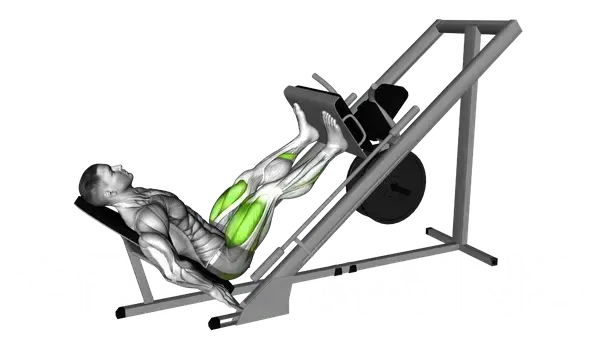
The 45-Degree Sled Leg Press stands as a cornerstone compound movement in strength training arsenals across bodybuilding and powerlifting disciplines. This intermediate-level exercise primarily targets the quadriceps while significantly engaging the hamstrings and glutes, creating a comprehensive lower body strength developer with minimal spinal loading compared to traditional squats. What makes the 45-degree angle variation particularly effective is how it positions the body to optimize force production through the lower extremities while maintaining proper biomechanical alignment. The angled sled design creates a balanced resistance pattern that allows lifters to handle substantial loads (often much heavier than they could manage with free-weight alternatives) making it ideal for progressive overload protocols essential to both strength development and muscle hypertrophy. For bodybuilders, the 45-Degree Sled Leg Press offers precise muscle targeting capabilities through foot placement variations. Higher foot positions emphasize hamstring and glute recruitment, while lower placements shift focus toward quadriceps development—versatility that explains its popularity among physique athletes seeking balanced lower body development. The controlled environment also allows for intensity techniques like drop sets and partials that can push muscle fibers to new growth thresholds. Powerlifters value this movement for its carryover to competitive lifts, particularly the squat. The substantial loading potential creates tremendous overload stimulus for the prime movers without the systemic fatigue generated by heavy barbell work. This makes it an excellent accessory movement for strength athletes looking to build specific leg power while managing recovery demands during intense training cycles. While offering significant benefits, the 45-Degree Leg Press complements rather than replaces free-weight training. Its fixed movement path provides stability advantages but reduces stabilizer muscle involvement. Most strength coaches position it as a secondary movement after primary barbell exercises to maximize development while minimizing injury risk, creating the balanced approach needed for long-term strength progression and lower body development.

Strength
Bodybuilding
Powerlifting
Machine

Build lower body strength and boost athletic performance

Training goals for quad development

Strong quads are critical for lower body performance. They protect your knees, stabilize the hips, and contribute to explosive power in sports and daily life. Balanced quad development also supports better movement patterns and reduces injury risk, especially for runners, cyclists, and lifters. Training the quads through full range of motion builds not just strength, but also control and mobility.

Train with depth, control and a focus on knee extension

Best quad exercises for strength and size

Top quad exercises include barbell back squats, front squats, split squats, and leg presses. These compound lifts allow for progressive overload while emphasizing the quads through deep knee flexion. For isolation, movements like leg extensions or sissy squats help directly target the quads. Controlling tempo and pushing close to failure ensures effective muscle stimulation and growth.

Train your quads with barbells, machines, or just your bodyweight

Equipment options for quad training

You don’t need a gym to target your quads effectively. Bodyweight exercises like step-ups, wall sits, or tempo squats can be progressed using reps or resistance bands. At the gym, machines like the leg press or leg extension allow for isolation and heavier loading. Barbells and dumbbells are excellent tools for front-loaded squats, goblet squats, or weighted lunges.

Structure your program for growth, performance, or injury prevention

Training plans featuring quad exercises

Quads can be trained once or twice per week depending on your split. Volume and intensity should match your goals: whether you’re building muscle or enhancing performance. A well-structured routine like a Upper-Lower split combines compound lifts with isolation work and accounts for recovery and mobility. The app helps you build a custom training plan that matches your goals: whether it’s growing stronger thighs, improving athleticism, or supporting knee health with the right quad exercises based on your fitness level and available equipment.

Discover the app

Frequently asked questions about quad exercises

Should I isolate my quads or just do compound lifts?

Both approaches have their place. Compound movements build full-leg strength and coordination, while isolation exercises like leg extensions let you focus directly on the quads. Combining both ensures well-rounded development and helps address muscle imbalances or aesthetic goals.

Why do my knees hurt during quad exercises?

Knee discomfort during quad training may stem from poor form, limited mobility, or muscle imbalances. Make sure your knees track in line with your toes and avoid letting them cave in. Strengthening the glutes and hamstrings alongside quads can help reduce stress on the joints. Adjusting your range of motion or exercise selection can also reduce strain.

How often should I train my quads?

Most people benefit from training quads 1–2 times per week. If your training includes compound lower-body lifts, your quads are likely already being worked. However, adding focused quad exercises can help bring up weak points. Ensure enough rest between sessions and avoid overtraining, especially if you're also doing running or cycling.

Can I train my quads at home without equipment?

Yes — quads can be effectively trained at home using bodyweight exercises like wall sits, step-ups, split squats, and slow-tempo squats. Resistance bands can add tension and increase difficulty. As long as you're using control and pushing close to fatigue, bodyweight workouts can produce noticeable strength and size gains.

What are the best quad exercises?

The best quad exercises include barbell squats, Bulgarian split squats, front squats, and leg presses. These movements emphasize knee flexion, which is key for targeting the quadriceps. Leg extensions are also useful for isolating the quads and building definition when added to your routine.

Integrate quad exercises into full-body and split routines
Quad related workouts