
Back
Superman
Add to Workout

Superman

Build

How to Perform

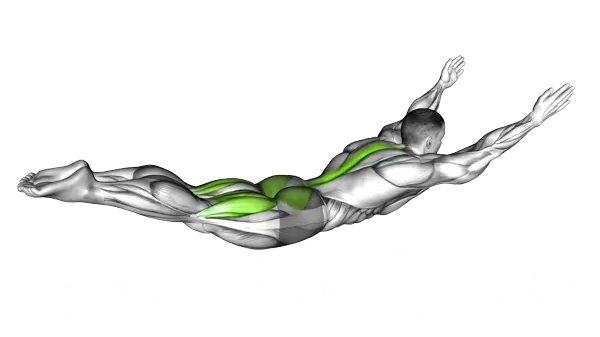
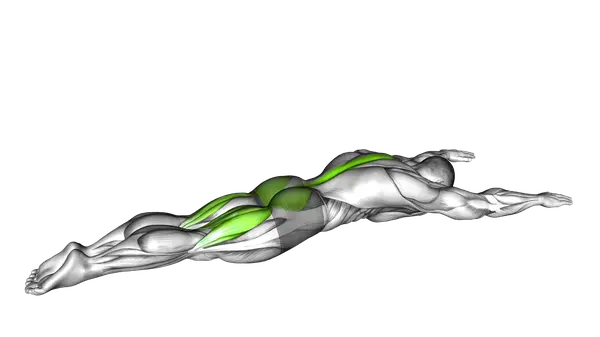
  1. Lie face down on a mat with your arms extended overhead and your legs straight.
  2. Position your neck in a neutral alignment, keeping your eyes focused down toward the mat to avoid neck strain.
  3. Engage your core muscles by drawing your navel slightly inward toward your spine to stabilize your lower back.
  4. Exhale as you simultaneously lift your arms, chest, and legs off the floor, keeping your arms and legs straight.
  5. Raise your limbs to a comfortable height where you feel your lower back muscles working but not straining, typically 3-5 inches off the ground.
  6. Hold the elevated position for 2-3 seconds while breathing normally, focusing on squeezing your glutes and upper back muscles.
  7. Inhale as you slowly lower your arms, chest, and legs back to the starting position in a controlled manner.
  8. Rest briefly between repetitions while maintaining your position on the mat, then repeat the movement with proper form.

Important information

  • Keep your movements slow and controlled rather than using momentum to lift your limbs.
  • If you feel pain (not just muscle work) in your lower back, reduce the height of your lift or place a folded towel under your hips for support.
  • Focus on length rather than height—imagine reaching your fingertips and toes away from your center rather than just lifting up.
  • Maintain a neutral neck position throughout the exercise—avoid looking up or craning your neck forward.

Exercise Details

Primary Muscles

Erector Spinae Glutes

Muscle Groups

Back exercises Glute exercises

Mechanic

Isolation

Risk Areas

Erector Spinae

Built for progress

Take the guesswork out of training

Create personalized AI-powered workout plans that evolve with you. Train smarter, track every rep and keep moving forward, one workout at a time.

Be among the first to join!
GrabGains workout plans

The Superman exercise offers a fantastic way to strengthen and activate crucial posterior chain muscles with minimal equipment needed. This foundational movement targets your erector spinae (the long muscles running along your spine) and glutes simultaneously, making it an excellent addition to various parts of your fitness routine.

For beginners, the Superman provides an accessible entry point into posterior chain training. Unlike more complex movements, it doesn't require mastering technical form details, making it approachable for those new to fitness while still delivering meaningful benefits. As you progress, you can increase the challenge by extending your hold time or adding subtle variations.

This exercise shines particularly bright during warm-up sessions, activating those back muscles before more demanding lifts or activities. The gentle extension helps increase blood flow to your posterior chain, preparing these muscles for the work ahead. Similarly, incorporating Supermans into your cool-down can help maintain proper posture and counterbalance any anterior-focused exercises you've completed.

As a recovery tool, the Superman provides a gentle way to maintain back strength and mobility between more intense training days. The controlled movement pattern encourages proper spinal position while delivering just enough stimulus to promote healing blood flow without overtaxing recovering muscles.

At its core, the Superman builds foundational strength in those stabilizing muscles that support virtually every other movement you perform. By strengthening your erector spinae, you're essentially reinforcing your body's natural support system. The engagement of your glutes during this exercise further enhances this benefit, contributing to better posture, reduced lower back pain potential, and improved athletic performance across various activities.

Whether used as a standalone core strengthener or integrated into comprehensive training programs, the Superman delivers impressive benefits for such a seemingly simple exercise. Its versatility makes it valuable for fitness enthusiasts at any level looking to build a more resilient, balanced physique.

FAQ - Superman

What muscles does the Superman exercise target?

The Superman primarily targets your posterior chain, specifically the erector spinae (lower back muscles) and glutes. It also engages your shoulders, upper back, hamstrings, and core stabilizers as secondary muscle groups.

How can I make the Superman exercise easier or harder?

For an easier version, lift only your arms or only your legs instead of both simultaneously. To increase difficulty, extend your hold time up to 10 seconds, add small pulsing movements at the top position, or try the alternating Superman by lifting opposite arm and leg.

Is the Superman exercise safe for people with back problems?

The Superman is generally safe and can actually help strengthen the back, but those with existing back injuries should consult a healthcare provider first. Start with modified versions (lifting only arms or legs) and focus on controlled movements rather than maximum height to ensure safety.

What are the most common mistakes when performing Superman exercises?

Common mistakes include hyperextending the neck (looking too far up), lifting too high and compressing the lower back, holding your breath, and rushing through repetitions. Keep your gaze neutral toward the floor, lift only to a comfortable height, breathe steadily, and focus on controlled movements.

How often should I include Superman exercises in my routine?

Include Supermans 2-3 times weekly either as part of your warm-up routine, during core training, or on recovery days. 2-3 sets of 10-15 repetitions with 1-5 second holds is sufficient for most fitness goals, allowing adequate recovery between sessions.

Workouts with Superman
Alternative Exercises

Bird Dog

Bird Dog

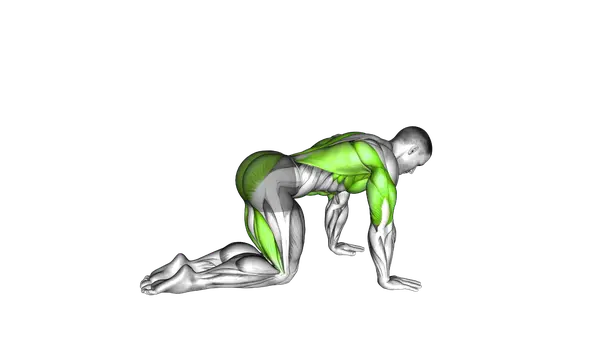
The Bird Dog stands out as a foundational core stability exercise accessible to fitness enthusiasts at the beginner level, making it perfect for those just starting their fitness journey. This gentle yet effective movement simultaneously engages multiple muscle groups including the glutes, abdominals, and erector spinae muscles along the spine, creating a comprehensive strengthening experience without requiring advanced fitness abilities. What makes the Bird Dog particularly valuable is its versatility across different workout phases. As a recovery exercise, it promotes blood flow and gentle movement without taxing the nervous system, allowing muscles to actively repair while maintaining mobility. During warm-up routines, it awakens the core stabilizers and primes the posterior chain for more demanding movements to follow, reducing injury risk in subsequent exercises. The exercise brilliantly addresses two critical aspects of fitness that are often overlooked: core stability and mobility. While many mistakenly equate core training with endless crunches, the Bird Dog trains the deeper core muscles that maintain spinal alignment during movement. This translates directly to improved posture in daily activities and enhanced performance in other exercises. Simultaneously, it develops mobility through the shoulders and hips, addressing common restriction areas for many people who spend hours sitting. The beauty of the Bird Dog lies in its simplicity and profound effect on total-body coordination. By creating opposing forces through the extended limbs, it challenges the body's proprioception and balance systems, essentially teaching your brain and muscles to work together more efficiently. This neurological training aspect makes it particularly valuable for athletic development and injury prevention. Regular practice of the Bird Dog can lead to noticeable improvements in posture, reduced lower back discomfort, and greater body awareness during other physical activities. For these reasons, it remains a staple recommendation among physical therapists, strength coaches, and rehabilitation specialists across the fitness spectrum.

Core
Mobility
Recovery
Warm-up
Bodyweight exercises
Back Extension On Stability Ball

Back Extension On Stability Ball

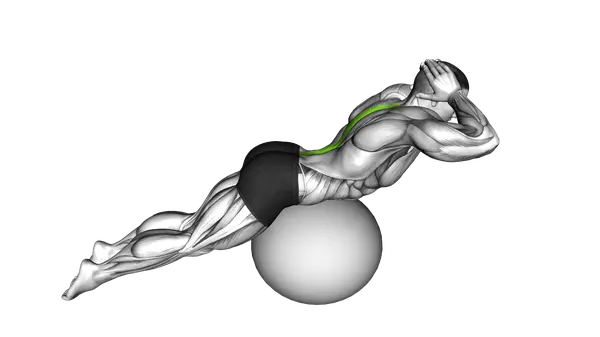
The Back Extension on Stability Ball stands as a versatile intermediate-level exercise that effectively targets the erector spinae: those powerful muscles running along both sides of your spine. This movement has earned its place in both bodybuilding regimens and recovery protocols due to its ability to challenge the posterior chain while minimizing pressure on the spine compared to machine-based alternatives. When incorporated into a consistent training routine, this exercise contributes significantly to developing core strength and overall back stability. The dynamic nature of performing extensions on an unstable surface like an Stability ball engages additional stabilizing muscles throughout your entire midsection, creating a comprehensive strengthening effect that transcends what you'd achieve with more static variations. Fitness enthusiasts particularly appreciate this movement for its dual benefits in strength development and injury prevention. The erector spinae muscles, when properly conditioned, support better posture and provide the foundation for heavier lifts in other compound movements like deadlifts and squats. Many physical therapists also recommend this exercise during recovery phases following lower back issues, as it strengthens the supporting musculature without excessive loading. The beauty of this exercise lies in its adaptability across fitness levels within the intermediate range. The stability ball itself provides a natural limitation to the range of motion, helping prevent hyperextension of the lower back: a common issue with fixed back extension machines. This makes it particularly valuable for those looking to rebuild strength following periods of inactivity or minor injury. For bodybuilders, the back extension on stability ball serves as an excellent finishing movement after heavier training, promoting blood flow to the lumbar region while reinforcing the mind-muscle connection with the posterior chain. The strength and stability gains transfer effectively to both athletic performance and everyday functional movements, making this more than just an aesthetic exercise but a foundational component of a well-rounded fitness program.

Strength
Core
Bodybuilding
Recovery
Stability ball
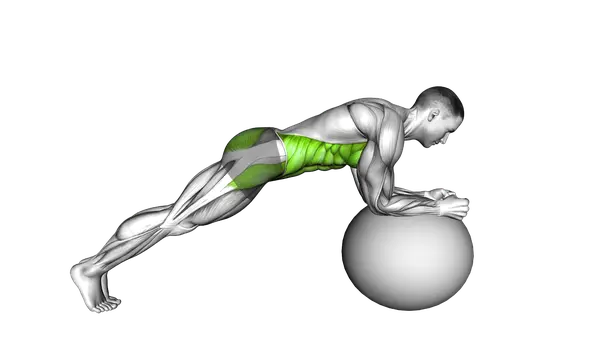
Stability Ball Front Plank

Stability Ball Front Plank

The Stability Ball Front Plank transforms the traditional plank into a dynamic core challenge that demands increased muscle activation and proprioceptive awareness. This intermediate-level exercise targets primarily the abdominals and erector spinae muscles while engaging the entire core musculature as a functional unit. When you introduce the unstable surface of the stability ball to your plank, you're essentially creating a more complex environment for your core to navigate. Research has shown that exercises performed on unstable surfaces can increase muscle activation by up to 25% compared to stable surface exercises, making this variation particularly effective for those looking to progress their core training. The beauty of the Stability Ball Front Plank lies in its versatility across training modalities. In HIIT sessions, it serves as an excellent timed station that rapidly builds core endurance and elevates heart rate. For bodybuilders, it functions as a specialized isolation movement that develops the aesthetic six-pack appearance while simultaneously strengthening the deeper core muscles that support heavy compound lifts. During recovery phases, the exercise can be modified to serve as an active restoration technique that promotes blood flow to recovering tissues without excessive strain. What sets this exercise apart is how it challenges your body's stabilization systems. The constant micro-adjustments required to maintain balance on the ball engage not just the visible "six-pack" muscles, but also the transverse abdominis, internal obliques, and multifidus – essential stabilizers that support optimal posture and functional movement patterns in daily life. While many focus solely on the abdominal benefits, the Stability Ball Front Plank provides substantial work for the erector spinae, the muscles running along your spine. This balanced development helps prevent the postural imbalances that often result from overdeveloping the anterior chain while neglecting posterior support structures – a common pitfall in many fitness routines.

Core
HIIT
Bodybuilding
+1
Stability ball
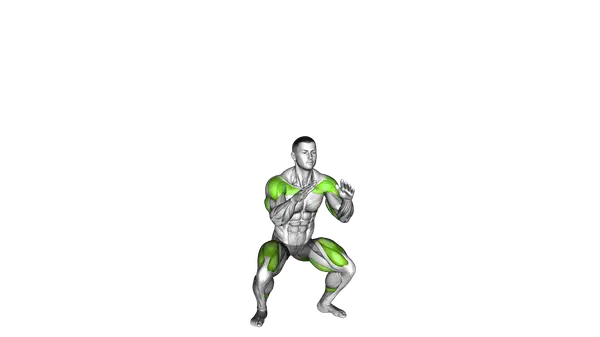
Bodyweight Full Squat With Overhead Press

Bodyweight Full Squat With Overhead Press

The Bodyweight Full Squat With Overhead Press combines lower body power with upper body pushing strength in one fluid movement, creating an efficient full-body exercise that elevates your heart rate while building functional strength. This intermediate-level compound movement simultaneously targets your quadriceps, glutes, and front deltoids, making it perfect for those looking to maximize their workout efficiency. This versatile exercise fits seamlessly into various training methodologies including HIIT circuits, bodybuilding routines, and CrossFit workouts. The dynamic nature of combining a squat with an overhead press creates a cardiovascular demand that burns calories while developing both strength and muscular endurance throughout your entire body. What makes this movement particularly valuable is how it mimics everyday functional patterns: the kind of integrated movement you might use when lifting objects from the ground and placing them on a high shelf. By training these movement patterns together, you're enhancing your body's natural coordination systems while developing practical strength that translates to daily activities. The full squat component engages your entire lower body kinetic chain, activating the quadriceps as primary movers while recruiting the glutes, hamstrings, and core stabilizers. Meanwhile, the overhead press portion develops shoulder strength and stability, particularly in the anterior deltoids, while engaging your triceps and upper back muscles as synergists. For those focused on metabolic conditioning, this exercise delivers impressive results by recruiting large muscle groups simultaneously, significantly elevating oxygen consumption and caloric expenditure. The compound nature makes it particularly effective for those with limited workout time who need maximum benefits from minimal exercises. Regular incorporation of the Bodyweight Full Squat With Overhead Press can lead to improved posture, enhanced core strength, better overhead mobility, and increased lower body power—all critical components for athletic performance and daily function. Whether you're focused on building strength, enhancing endurance, or improving overall fitness, this exercise delivers comprehensive benefits in a single, efficient movement.

Strength
Endurance
HIIT
Bodybuilding
+1
Bodyweight exercises