Why rest days improve performance & how to do them right
Learn why rest days improve performance, from muscle repair to energy renewal. Get practical tips and schedules for athletes, beginners, and busy professionals. Many athletes still train as if effort creates progress and rest interrupts it. That mindset is backwards. Training creates the problem your body has to solve. Recovery is where the solution happens.
That's why athletes who chase a hard session every day often end up with flat performance, nagging soreness, poor sleep, and workouts that feel harder than they should. They aren't under-motivated. They're under-recovered.


Generic advice doesn't help much either. A lot of fitness content tells people to rest more, but leaves out the part that matters most: rest timing has to match training load, sleep, and day-to-day recovery status. That gap is exactly why many people don't know what to do when they slept badly, missed a workout, or feel drained without being especially sore, as discussed in this review of individualized recovery timing.
Your Hardest Workout Is Your Rest Day
The phrase “no days off” sounds disciplined. In practice, it often produces the opposite of what people want.
If performance is the goal, rest days aren't a reward for working hard. They're part of the work. A hard session only matters if your body has enough time and energy to adapt to it. If that adaptation never catches up, you just collect fatigue.
Built for progress
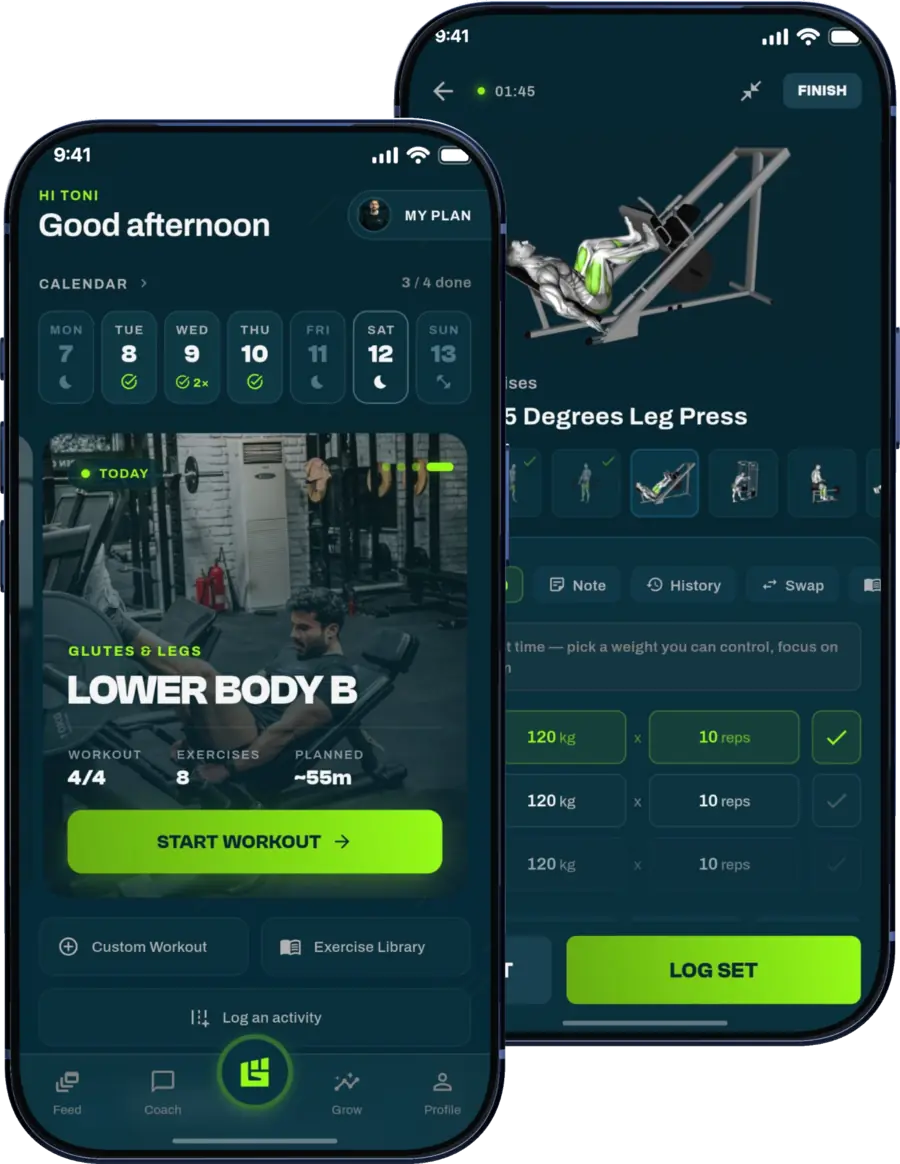
Take the guesswork out of training
Get a personalized workout plan built around your goal, equipment and schedule. Train smarter, track every rep and keep moving forward, one workout at a time.






That trade-off shows up in almost every training style. Busy professionals try to cram intensity into limited windows and end up layering work stress on top of training stress. Strength athletes feel compelled to train through soreness because they don't want to lose momentum. HYROX competitors often stack running, strength, and intervals too tightly. Beginners mistake exhaustion for proof that a plan is working.
Rest is not the absence of discipline. It's discipline applied with patience.
The core issue is that many athletes still follow a universal recovery rule. That approach fails to account for real-world variables. An effective recovery plan depends on the specific muscle groups targeted, the intensity of the session, the quality of your sleep, and your upcoming performance requirements.
Why generic rest advice breaks down
A fixed “take a day off when you feel sore” rule misses too much. You can be under-recovered without dramatic soreness. You can also feel okay and still be carrying enough fatigue to reduce session quality.
That's why smart programming treats rest like a training variable, not an afterthought. A rest day can mean a full day off, a low-intensity movement day, or a focused reduction in volume before fatigue spills into the rest of the week.
What actually works
The athletes who keep progressing usually do a few things well:
- They protect session quality. They'd rather arrive fresh for the next key workout than force one more mediocre effort.
- They respond to context. Poor sleep, high work stress, and heavy training weeks all change recovery needs.
- They stop treating guilt as guidance. Feeling lazy is not the same as being undertrained.
If you want to understand why rest days improve performance, start there. The goal isn't to train as often as possible. The goal is to train hard enough, then recover well enough, to come back stronger.
The Science Behind Why Rest Days Improve Performance
A rest day looks uneventful from the outside. Inside the body, it's a high-value repair window.
Hard training creates disruption. Muscle fibers take on small amounts of damage. Fuel stores drop. Coordination and sharpness can fade when fatigue builds. Rest is the period where your body starts correcting all of that.

Muscle repair is where strength gains are made
Exercise doesn't build stronger tissue in the middle of the set. It creates the stimulus. Recovery completes the adaptation.
UCHealth explains that exercise creates microscopic muscle fiber damage, and rest allows fibroblast-driven repair and protein synthesis to rebuild that tissue stronger. The same source notes that repeated hard sessions without enough recovery can blunt strength gains, increase soreness, and reduce force output, as detailed in their overview of athletic rest and recovery.
Cracking a wall during a renovation is a helpful comparison. The damage itself isn't the upgrade. The upgrade happens when the structure gets repaired and reinforced. Training gives your body the reason to adapt. Recovery gives it the time.
If you want a deeper look at the repair side of training, GrabGains has a useful breakdown of strategies to speed up muscle repair.
Energy stores have to be rebuilt
Many athletes blame poor motivation when the actual issue is simple. They never refilled what the last session used up.
Your muscles rely heavily on glycogen during training. On a proper rest day, your body gets a chance to restore those stores. That matters because lower glycogen can reduce ATP availability, which is one reason later sessions feel flat, heavy, or slow.
A bad workout after a hard week isn't always a sign to push harder. Often it's a sign that your fuel and repair systems never caught up.
This is one reason back-to-back hard days often disappoint. The second session isn't judged against your best self. It's judged against a body that's still paying for the first one.
Your nervous system needs recovery too
Recovery isn't just about muscles. High-intensity work also taxes the systems that drive coordination, timing, reaction, and output.
When that fatigue builds, technique gets sloppier. Bar speed drops. Pace control gets worse. Footwork loses precision. You might still complete the workout, but the quality falls off.
That's why rest days improve performance in such a direct way. They don't just make you feel better. They help restore the physical and neurological readiness that lets the next training session do its job.
Rest is active biology, not passive waiting
A lot of people treat rest as dead time because nothing visible is happening. That's the wrong lens.
During recovery, your body is repairing tissue, restoring usable energy, and resetting your ability to produce force with quality. That's what turns training stress into progress. Without that conversion phase, hard work stays hard work. It doesn't become improvement.
Smart Recovery Strategies for Your Rest Days
A good rest day isn't automatically a couch day. It's a day with a purpose. Sometimes that purpose is full shutdown. Sometimes it's light movement, better food choices, and an earlier bedtime.
The mistake is doing recovery work that becomes more training. If your “easy” day leaves you more tired, it wasn't recovery.

Start with sleep before you add anything else
Sleep is the first recovery lever I'd fix for almost any athlete. It gives the body a reliable window to restore what training used up.
Healthline notes that on rest days, improved sleep quality supports glycogen regeneration, lower stress hormones like cortisol, and improved muscle protein synthesis. The same source explains that incomplete recovery lowers ATP availability, which contributes to fatigue and poorer output in later sessions, as outlined in their guide to exercise rest days.
That means the best rest-day tactic for many people isn't a recovery gadget. It's getting to bed on time.
A simple checklist works well here:
- Cut late stimulation: Hard evening training, too much screen time, and late caffeine can all make a rest day less effective.
- Protect consistency: Similar sleep and wake times help more than random catch-up sleep.
- Use the rest day to get ahead: If you know the next session is demanding, treat the night before as part of the training plan.
Eat for recovery, not just for hunger
Rest days still need structure in the kitchen. You're not trying to “earn” food only on training days. You're trying to support recovery so the next session has something to work with.
Protein supports rebuilding. Carbohydrates help restore what hard training drained. Hydration helps everything move better, from training output to how you feel the next day.
For athletes who want more practical reading on optimizing recovery for peak performance, that resource gives a useful general overview of post-workout recovery habits.
Practical rule: Don't use a rest day as an excuse to under-eat after a heavy training block. That usually delays recovery instead of “leaning you out.”
Choose active recovery carefully
Active recovery works when it stays easy. Walking, easy cycling, relaxed mobility, and light stretching can all help you come back feeling better. They shouldn't feel like a disguised conditioning session.
A simple filter helps. If the activity improves how your body feels and leaves you fresher later, keep it. If it adds fatigue, cut it back.
Good options include:
- Easy walking: Helpful after heavy leg work or long conditioning sessions because it adds movement without much cost.
- Mobility circuits: Short sessions can reduce stiffness and help you improve your mobility without turning the day into another workout.
- Gentle stretching: Best used to restore range and reduce the feeling of tightness, not as a test of pain tolerance.
Know when complete rest is the better choice
Not every rest day should include activity. If sleep has been poor, stress is high, or your body feels beat up, a full day off can be the smarter move.
That's the part many motivated trainees resist. They'll accept hard work, but not stillness. Yet complete rest is often what preserves the next important session. Recovery should match need, not ego.
How to Schedule Rest Days for Your Goals and Lifestyle
Many athletes don't need more information about recovery. They need a schedule that fits how they live and train.
Planned recovery works because alternating stress and rest gives the body time to repair tissue and restore energy. UCLA Health recommends at least 1 day off each week in a workout routine, as explained in their guidance on how often to take a rest day. That's the floor, not a perfect formula for everyone.
A key question is where rest belongs in your week.
Busy professionals need rest placed around life stress
If your job is mentally demanding, recovery isn't only about gym volume. Work stress changes how much training stress you can absorb.
For this group, I like a simple rule. Put your hardest sessions on the days you can realistically recover from them, not on the days you merely have time to squeeze them in. If Tuesday is packed with meetings and short sleep, that's not the right place for your most demanding interval session.
A better pattern often looks like this:
- Front-load quality when bandwidth is higher
- Use one true day off
- Keep one flexible recovery day that can become active recovery or full rest depending on the week
Strength athletes should protect quality between hard exposures
Strength and hypertrophy athletes usually get into trouble by confusing frequency with productivity. More gym visits don't always mean more progress.
If you run a push-pull-legs split, your rest timing should protect performance on the major lifts and keep soreness from bleeding into technique. Many lifters also benefit from periodically reducing training stress across a week. If that concept is new, this guide on deload week explained is useful context.
HYROX and functional athletes need separation between costly sessions
HYROX training combines running fatigue, muscular fatigue, and repeated high-output work. That mix makes recovery debt pile up fast.
The biggest scheduling mistake here is stacking multiple costly sessions because they train different qualities on paper. A hard run, heavy lower-body work, and race-style intervals may target different systems, but they still compete for the same recovery capacity.
For this audience, the week works better when only a few sessions are hard, and the rest support them.
Beginners need rhythm more than complexity
Beginners don't need advanced recovery protocols. They need a repeatable pattern they can sustain.
The best early plan usually alternates effort and recovery often enough that form stays sharp and motivation stays high. New trainees adapt well when they stop every session short of feeling wrecked and treat rest as part of learning, not as lost momentum.
Here's a practical example.
Sample weekly rest schedules
| Day | Busy Professional | Strength Athlete (PPL Split) | HYROX/Functional Athlete | Beginner (Full Body) |
|---|---|---|---|---|
| Monday | Strength or full-body session | Push | Hybrid intervals | Full-body workout |
| Tuesday | Light walk or mobility | Pull | Easy aerobic work | Rest or easy walk |
| Wednesday | Conditioning or intervals | Legs | Strength session | Full-body workout |
| Thursday | Rest day | Rest day or light mobility | Rest day | Rest day |
| Friday | Strength or mixed session | Push or upper emphasis | Tempo or race-specific work | Full-body workout |
| Saturday | Active recovery | Pull or accessory work | Long aerobic session | Easy walk or mobility |
| Sunday | Full rest | Rest | Rest or gentle mobility | Full rest |
A few principles matter more than the exact template:
- Protect your key sessions: Rest goes where it improves the next high-value workout.
- Match rest to stress: A brutal week may need more recovery than your usual pattern.
- Adjust without guilt: If sleep falls apart or soreness lingers, move the plan. The plan serves the athlete, not the other way around.
Five Warning Signs You Are Not Resting Enough
Under-recovery rarely starts with a dramatic collapse. It usually shows up as small signals that people ignore because they can still get through the workout.
That's the trap. Finishing a session doesn't mean you were ready for it.

Runner's World notes that the body needs a minimum of 36 to 48 hours to recover after hard sessions because exercise creates tiny tears in muscle fibers. The same report explains that stacking hard efforts too closely together can blunt performance gains and increase injury risk, with depleted glycogen contributing to muscle fatigue, as described in their article on how often to take rest days.
Your performance stalls or drops
This is usually the first meaningful sign. Weights that should move cleanly feel slow. Paces drift. Power output feels missing.
That doesn't always mean your program is wrong. It often means fatigue is masking the fitness you've built.
Soreness never fully clears
Some soreness is normal. Soreness that constantly overlaps from session to session is different.
If a muscle group is still heavily beat up when it's time to train hard again, you're probably compressing stress too tightly.
Your sleep gets worse instead of better
People often assume training harder will make them sleep better. Sometimes it does. Sometimes under-recovery does the opposite.
When sleep becomes lighter, more restless, or less refreshing during a hard block, I treat that as a warning sign, not background noise.
If your body is tired but your sleep keeps getting worse, recovery is probably falling behind.
Your motivation drops sharply
Low motivation is not always a discipline problem. Sometimes it's your body asking for reduced load before your brain can put words to it.
This kind of fatigue often shows up as dread toward sessions you usually enjoy, or a feeling that every workout sounds heavier than it should.
Small aches start multiplying
It is common for athletes to get in trouble. They don't get one major red flag. They get several minor ones. A cranky knee, tight hip, irritated shoulder, sore foot.
One ache may be random. A cluster of them often means your body is losing the margin it needs to tolerate training well.
A good response is simple:
- Pull back the next hard session
- Take a true rest day
- Resume only when movement quality improves
Make Rest a Core Part of Your Training Plan
Rest works best when you stop treating it like backup planning.
The strongest athletes, the most consistent lifters, and the people who keep improving year after year usually understand one thing early. You don't get better from training alone. You get better from training that your body can absorb.
That shift changes everything. Instead of asking, “How much can I cram into this week?” ask, “What amount of stress can I recover from well enough to perform again?” That question produces better decisions around session placement, sleep, nutrition, and weekly structure.
It also highlights why personalized planning matters. A beginner with a demanding job, a powerlifter in a heavy block, and a HYROX athlete building race capacity should not all use the same recovery schedule. One practical option is GrabGains, which uses performance tracking and adaptive planning to adjust training around goals like strength, cardio, mobility, and recovery.
Train hard. Protect the days that let hard training pay off. That's how rest days improve performance in practice, not just in theory.
If you want a training plan that adapts to your performance instead of forcing a generic schedule, GrabGains is worth exploring. It's built to help you organize workouts, recovery, and progression around your actual goals, whether you're lifting for muscle, training for HYROX, or just trying to stay consistent with a busy schedule.
Get inspired and motivated