Leg Day Warm-Up for Squats, Deadlifts and Lunges
This warm-up prepares the quads, hamstrings, glutes, hips and ankles for lower-body training. It uses a simple raise-mobilize-activate-ramp sequence and fits into 8-12 minutes before squats, deadlifts and lunges.
Warum dieses Aufwärmen funktioniert
A structured warm-up raises tissue temperature first, then restores useful joint motion, then activates the muscles that need to produce force. This sequence supports movement quality and can improve readiness for strength and power work when compared with starting cold. [1]
Dynamic mobility and low-fatigue activation are prioritized over long static holds because dynamic warm-up methods are more consistent with maintaining or improving subsequent performance. [3] [4]
Die Routine
Light cardio
Use a bike, treadmill walk, rower or brisk marching. Keep the effort low to moderate and raise heart rate and body temperature without creating fatigue.
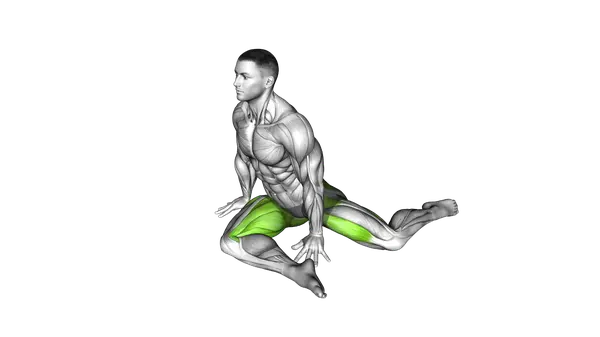
Hip rotation mobility
Move through controlled hip internal and external rotation. Stay upright and use a range you can control without shifting aggressively through the low back.
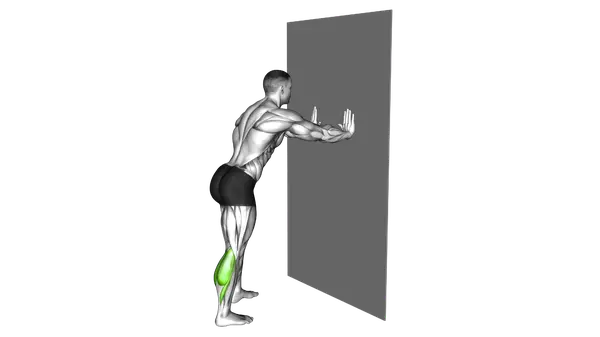
Ankle mobility
Keep the heel down and drive the knee forward under control. This improves calf flexibility and ankle dorsiflexion, which helps depth and balance in squat and lunge patterns.
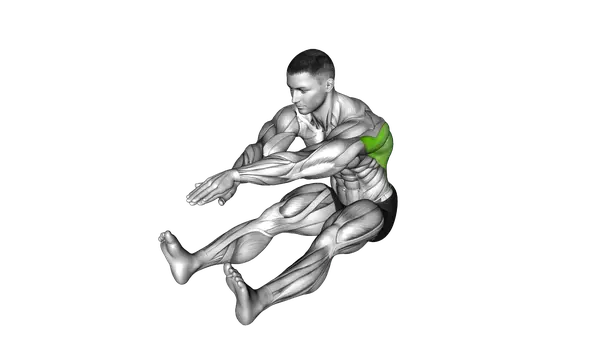
Posterior chain mobility
Use a gentle forward reach to reduce stiffness through the hamstrings and lower back. Do not force end range; the goal is to improve comfort and motion before hinging.
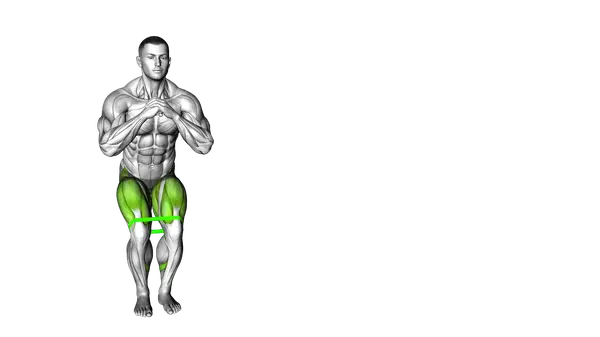
Lateral hip activation
Keep the pelvis level and maintain band tension throughout each step. This activates the glute medius and other abductors that help control knee and hip position.
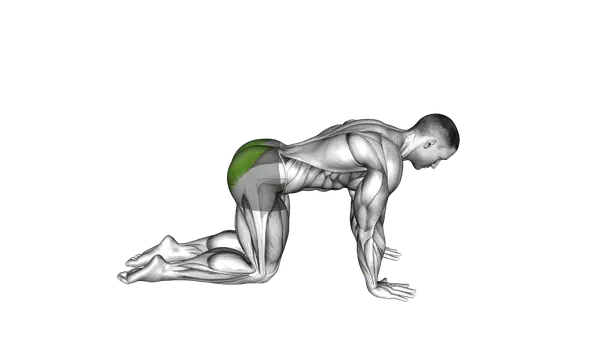
Glute extension activation
Move from the hip without rotating the pelvis. The bent-knee position reduces hamstring involvement and biases hip extension toward the glutes.
Hip hinge rehearsal
Use light band tension and emphasize a controlled hip hinge. This primes the hamstrings and glutes while rehearsing the pattern used in deadlifts and many squat variations.

Ramp-up sets of the first main lift
Perform progressive warm-up sets with the first exercise of the session, usually the squat or deadlift. Increase load gradually while keeping reps low so technique improves without accumulating fatigue. [2]
If time is limited, keep the raise step, one hip mobility drill, one ankle mobility drill and one glute activation drill, then move to ramp-up sets. If a position irritates the knees, hips, ankles or low back, shorten the range or replace that step with a pain-free option from the same phase.
Gemacht für Fortschritt
Jede Einheit beginnt mit dem richtigen Aufwärmen
Die GrabGains-App plant deine komplette Einheit — inklusive Aufwärmen — abgestimmt auf die Muskeln, die du an dem Tag trainierst.
Häufige Fragen
Should this warm-up change for squat-focused versus deadlift-focused sessions?
The structure stays the same, but the emphasis can shift slightly. For squat-focused sessions, keep the ankle and hip mobility work. For deadlift-focused sessions, keep the hip mobility and hinge activation work, and spend slightly more attention on the posterior chain.
Should static stretching be added before heavy leg training?
Brief static stretching is not automatically harmful, but long static holds immediately before maximal or explosive work are generally less useful than dynamic mobility and activation. [3] [4] If a muscle group is notably stiff, use short holds, then follow with active movement and ramp-up sets.
How hard should the activation drills feel?
They should create clear muscular engagement without local fatigue or breathlessness. Use light to moderate resistance and stop well before form changes, since the goal is preparation rather than training volume.
Wissenschaftliche Quellen
Kłobuchowski W, Skorulski M, Ornowski K et al. · Sports (Basel, Switzerland) (2026)
[2] The Competition-Day Preparation Strategies of Strongman Athletes.
Winwood PW, Pritchard HJ, Wilson D et al. · Journal of strength and conditioning research (2019)
[3] A review of the acute effects of static and dynamic stretching on performance.
Behm DG, Chaouachi A · European journal of applied physiology (2011)
Opplert J, Babault N · Sports medicine (Auckland, N.Z.) (2018)
Die Quellen sind begutachtete wissenschaftliche Publikationen von PubMed.