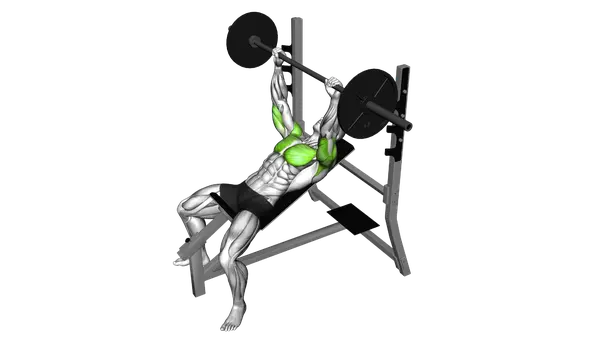
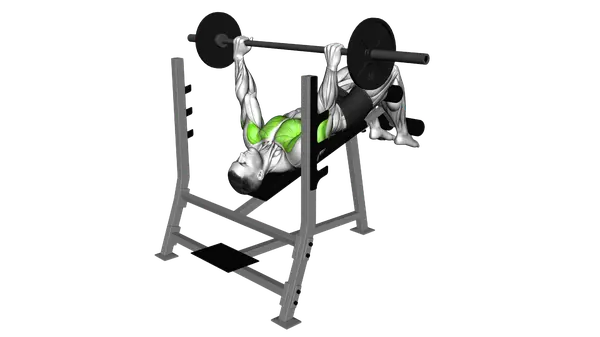
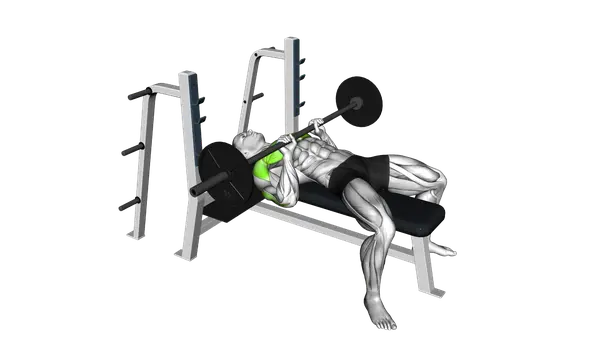
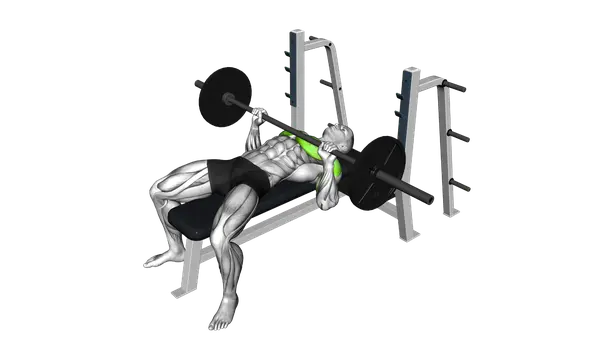
Flat bench press uses a standard supine setup with the eyes under the bar, shoulder blades retracted and depressed, and feet planted. The bar usually travels from over the shoulder joint at lockout to the lower chest or sternum on the descent. This is the most common variation for heavy loading and broad transfer to general pressing strength.
Incline bench press uses the same basic upper-back setup, but the bench angle changes the pressing line toward the upper chest. The bar typically touches higher on the torso than in flat benching. Most lifters use less load than on flat bench because the shoulder flexion demand is higher and the pec contribution shifts.
Decline bench press places the torso on a downward slope with the legs secured. The bar path usually targets the lower chest, and the range of motion is often slightly shorter than flat bench. Many lifters find it stable and chest-focused, though the setup is less convenient and less available in some gyms.
Close-grip bench press keeps the flat bench setup but narrows the hand spacing. The exact width varies, but the forearms should remain close to vertical at the bottom rather than collapsing inward. Load is usually lower than a standard flat bench because the triceps become the main limiting factor.