Back
Diamond Push Up
Add to Workout

Diamond Push Up

Build

How to Perform

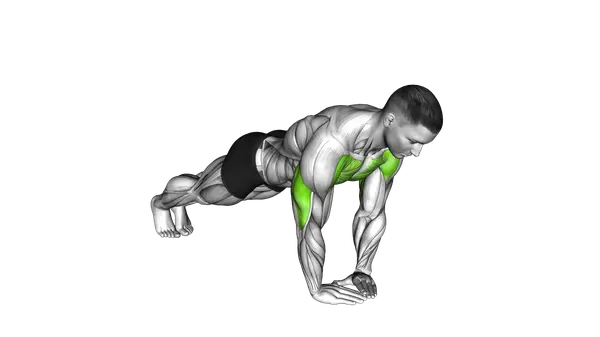
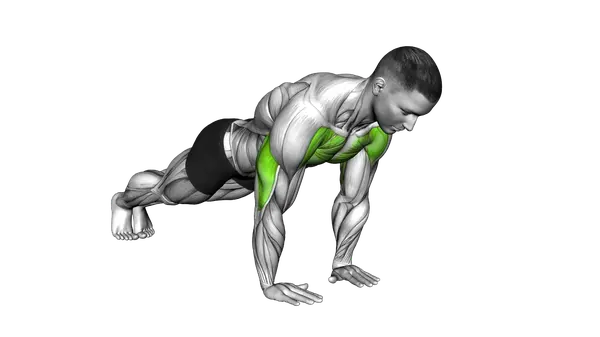
  1. Begin in a plank position with your hands directly under your shoulders, fingers pointing forward and arms fully extended.
  2. Bring your hands close together under your chest so your thumbs and index fingers touch to form a diamond or triangle shape.
  3. Keep your body in a straight line from head to heels by engaging your core and glutes, avoiding any sagging or pike in your hips.
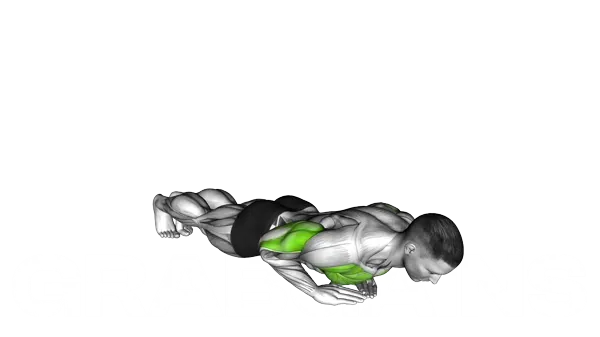
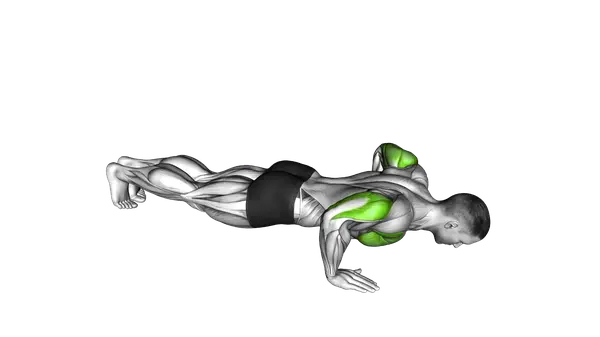
  4. Inhale as you slowly lower your chest toward your hands by bending your elbows, keeping them tucked close to your sides rather than flaring outward.
  5. Continue lowering until your chest nearly touches the diamond formed by your hands, while maintaining tension throughout your entire body.
  6. Exhale forcefully as you push through your palms to straighten your arms and return to the starting position.
  7. Keep your neck neutral throughout the movement by focusing your gaze slightly ahead of your hands rather than looking up or down.
  8. Complete the desired number of repetitions while maintaining proper form, slowing down the movement if needed to ensure quality over quantity.

Important information

  • Make sure your elbows track backward at approximately a 45-degree angle to your torso to reduce shoulder strain, avoiding excessive flaring.
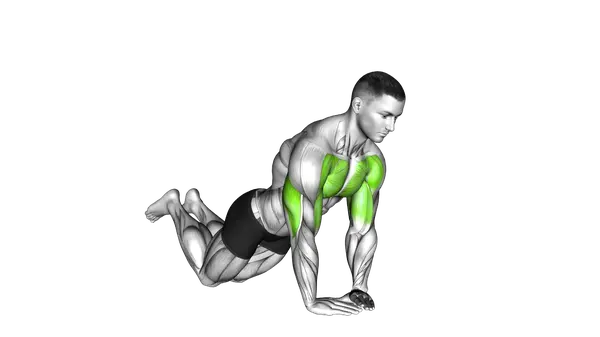
  • If the exercise is too challenging, modify by performing it from your knees while maintaining the same rigid body alignment from knees to shoulders.
  • Keep your wrists stacked directly under the heel of your palm to prevent unnecessary strain on the joint.
  • Avoid excessive forward head posture by imagining a broomstick along your spine from your head to your tailbone.

Exercise Details

Primary Muscles

Pecs Triceps Front Delts

Muscle Groups

Chest exercises Arm exercises Shoulder exercises

Mechanic

Compound

Risk Areas

Triceps Pecs

Built for progress

Take the guesswork out of training

Create personalized AI-powered workout plans that evolve with you. Train smarter, track every rep and keep moving forward, one workout at a time.

Be among the first to join!
GrabGains workout plans

The diamond push-up stands as a challenging variation of the traditional push-up that takes your upper body strength training to the next level. This intermediate exercise primarily targets the pecs, triceps, and front deltoids, making it an excellent addition to both bodybuilding routines and high-intensity interval training (HIIT) circuits. What distinguishes the diamond push-up is the distinctive hand position, where the thumbs and index fingers touch to form a diamond or triangle shape beneath the center of your chest.

This exercise has earned its reputation as a triceps builder, generating significantly more activation in the triceps brachii compared to standard push-ups. Research has shown that the narrow hand placement shifts the workload away from the chest and more toward the triceps, making it particularly effective for developing those horseshoe-shaped muscles at the back of your arms. For bodybuilders seeking definition in their arms, this exercise delivers impressive results without requiring any equipment.

While building strength is the primary benefit, diamond push-ups also enhance stabilization throughout your entire core and shoulders. The narrow base of support challenges your balance and engages more of the supporting musculature around your shoulder joints. This translates to improved functional strength that carries over to other pressing movements in your fitness routine.

For those incorporating this exercise into HIIT workouts, diamond push-ups create a significant metabolic demand due to the multiple muscle groups working simultaneously. This makes them perfect for elevating your heart rate quickly and efficiently while still developing upper body strength. The intensity can be modified by adjusting tempo or incorporating pause repetitions at the bottom position.

Remember that proper form is crucial with this more demanding variation, as the increased triceps emphasis and narrower base of support can place additional stress on the wrist and elbow joints. As your strength improves, this exercise will serve as an excellent stepping stone toward more advanced calisthenics movements that require significant triceps power.

FAQ - Diamond Push Up

What muscles do diamond push-ups target?

Diamond push-ups primarily target the triceps brachii (back of arms), with significant activation of the chest (pectoralis major) and front shoulder muscles (anterior deltoids). Research shows they create up to 2.5 times more triceps activation than standard push-ups.

How can I modify diamond push-ups if they're too difficult?

Beginners can perform diamond push-ups from the knees rather than toes, which reduces the resistance by approximately 40%. Alternatively, you can elevate your hands on a stable surface like a bench or step to decrease the difficulty while maintaining proper form.

Are diamond push-ups safe for my wrists and elbows?

The narrow hand position can increase stress on wrists and elbows compared to standard push-ups. Ensure your wrists align directly under your shoulders, avoid flaring elbows past 45 degrees, and consider wrist stretches before starting. If you have existing joint issues, consult with a physical therapist before attempting.

How many diamond push-ups should I aim for in a workout?

For strength development, aim for 3-4 sets of 8-12 repetitions with proper form. If incorporating them into HIIT circuits, 30-45 second work periods are effective. Progress gradually by adding 1-2 repetitions each week rather than sacrificing technique for higher numbers.

What are the most common form mistakes with diamond push-ups?

The three most common mistakes are: allowing the hips to sag (which strains the lower back), positioning hands too far forward (creating excessive wrist strain), and not lowering to proper depth. Keep your core engaged throughout the movement and aim to touch your chest to your hands at the bottom position.

Alternative Exercises

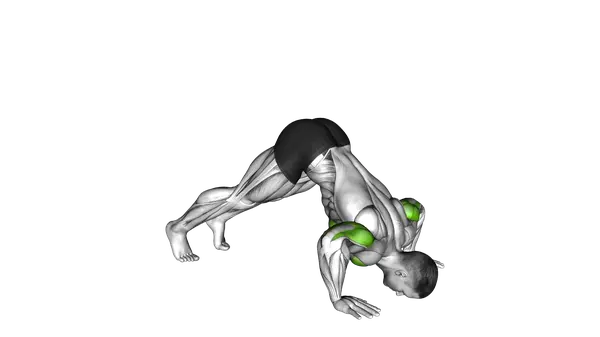
Pike Push Up

Pike Push Up

The Pike Push Up stands as a formidable intermediate exercise that targets the front deltoids and triceps while engaging your core and upper body stability. This bodyweight movement bridges the gap between standard push ups and more advanced overhead pressing movements, making it an excellent progression for those looking to build shoulder strength without equipment. When incorporated into HIIT routines, Pike Push Ups elevate your heart rate while simultaneously building upper body power. The unique angle of this exercise places greater emphasis on the shoulders compared to traditional push ups, creating an effective stimulus for muscle development that translates well to both functional fitness and bodybuilding protocols. For strength enthusiasts, the Pike Push Up offers a challenging variation that can help break through plateaus in overhead pressing movements. The exercise develops the stabilizing muscles around the shoulder joint while improving proprioception and body awareness – essential components for injury prevention and overall shoulder health. Many fitness professionals appreciate the Pike Push Up for its versatility and scalability across different fitness levels. While classified as intermediate, modifications can make it accessible to beginners or more challenging for advanced athletes. This adaptability makes it a staple in programs focused on progressive overload and continued strength development. The beauty of this movement lies in its minimal space and equipment requirements coupled with its maximum effectiveness. As you become more proficient, the Pike Push Up can serve as a stepping stone toward handstand push ups and other advanced calisthenics movements. The exercise effectively mimics the biomechanics of overhead pressing while adding an element of core stability that traditional weight training sometimes lacks. For anyone looking to enhance shoulder definition, build functional upper body strength, or add variety to their push training, the Pike Push Up delivers impressive results with proper execution and programming.

Strength
HIIT
Bodybuilding
Bodyweight exercises
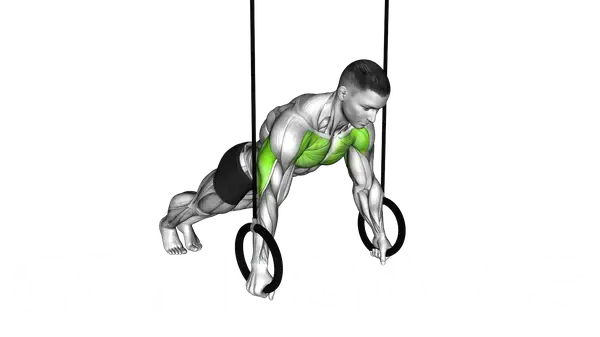
Close Grip Push Up

Close Grip Push Up

The close grip push-up stands as a powerful variation of the traditional push-up that delivers targeted stimulation to both the pectoral muscles and triceps. This intermediate-level movement shifts emphasis toward the inner chest and the triceps brachii, making it an excellent choice for those looking to add definition and strength to these specific areas. Unlike its standard counterpart, the narrow hand placement creates a more challenging mechanical advantage, requiring greater tricep engagement to push your body away from the floor. This subtle adjustment transforms a familiar exercise into a specialized tool for both bodybuilding enthusiasts seeking muscle hypertrophy and HIIT devotees looking for compound movements that deliver maximum results in minimal time. Research consistently demonstrates that close grip variations increase triceps activation by approximately 30% compared to standard push-ups, making this a time-efficient option for developing the pushing muscles of the upper body. The beauty of this exercise lies in its versatility—it can be programmed as part of a strength-focused routine with lower reps and longer rest periods, or incorporated into high-intensity intervals to simultaneously build muscle and improve cardiovascular conditioning. For bodybuilders, the close grip push-up offers the perfect complement to bench press variations, filling the gap between heavy lifting sessions with a movement that can be performed anywhere without sacrificing quality muscle stimulation. Meanwhile, those pursuing functional strength benefit from the core stability requirements and the practical pushing pattern that translates directly to everyday activities. As you progress with this movement, you'll notice improvements not only in chest definition and triceps development but also in overall pressing strength that carries over to other exercises. The close grip push-up represents one of those rare movements that bridges the gap between aesthetic goals and performance enhancement, making it a staple in well-designed fitness programs focused on upper body development.

Strength
Bodybuilding
HIIT
Bodyweight exercises
Decline Push Up

Decline Push Up

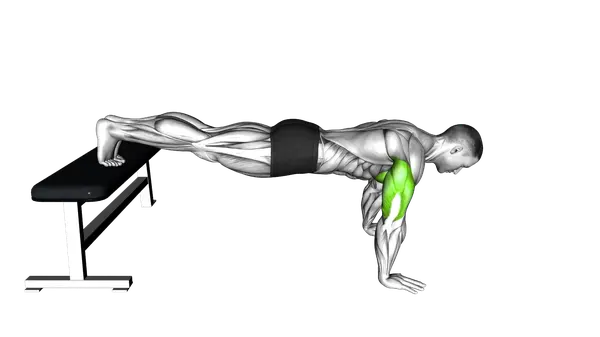
The Decline Push Up stands as a powerful progression from the traditional push up, specifically designed to shift more emphasis onto the upper chest muscles while still engaging the triceps and anterior deltoids. This bodyweight movement represents an intermediate-level challenge that belongs in any serious strength-building or bodybuilding regimen, and can be seamlessly incorporated into high-intensity interval training sessions for enhanced cardiovascular benefits alongside muscular development. Unlike the standard push up that distributes tension relatively evenly across the pectoral region, the decline variation places your feet above your head, creating an angle that increases the load on your upper chest fibers. This mechanical advantage makes it particularly effective for developing that coveted chest shelf that many fitness enthusiasts pursue. The exercise's beauty lies in its simplicity – requiring no specialized equipment beyond an elevated surface – while delivering results comparable to decline bench pressing. The biomechanics of this movement activate approximately 70% of your upper body pushing muscles, with primary tension directed through the pectoralis major, especially the clavicular head. Meanwhile, your triceps brachii work as crucial secondary movers, and your anterior deltoids assist throughout the motion, creating a comprehensive upper body pushing stimulus. The instability factor inherent in the position also recruits more core stabilization than machine-based alternatives. For those focused on strength development, the decline push up serves as an excellent progressive overload tool once standard push ups become too easy. The increased resistance created by the angle can help push through plateaus and stimulate new growth. Bodybuilders particularly value this movement for its ability to target the upper chest with precision, while HIIT enthusiasts appreciate how quickly it can elevate heart rate when performed with minimal rest periods. What truly sets the decline push up apart is its versatility across training modalities – whether you're pursuing pure strength, muscular hypertrophy, or conditioning, this exercise delivers measurable results while requiring minimal setup time and zero equipment costs.

Strength
Bodybuilding
HIIT
Bodyweight exercises
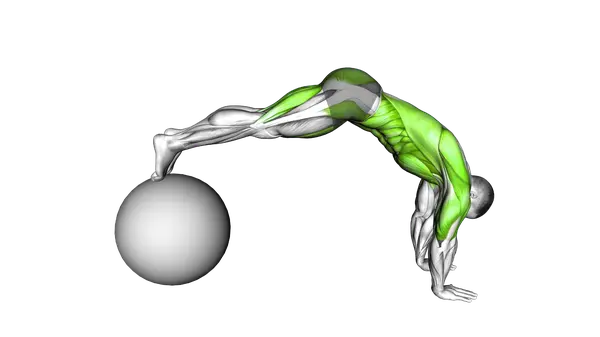
Stability Ball Pike Push-Up

Stability Ball Pike Push-Up

The Stability Ball Pike Push-Up stands as a formidable challenge in the realm of advanced bodyweight training, elevating the traditional push-up to an entirely new dimension of difficulty. This movement seamlessly blends shoulder strength development with core stabilization, making it a powerful addition to any serious fitness enthusiast's repertoire. This exercise primarily targets the front deltoids, the anterior portion of your shoulders responsible for that coveted capped look, while simultaneously engaging the triceps as crucial secondary movers. What truly sets this exercise apart, however, is the extraordinary core engagement required to maintain proper positioning throughout the movement. Perfect for integration into high-intensity interval training sessions or CrossFit WODs, the Stability Ball Pike Push-Up delivers maximum stimulus with minimal equipment. The instability factor introduces an element that traditional gym machines simply cannot replicate, forcing your body to recruit stabilizing muscles throughout your entire kinetic chain. Bodybuilders also appreciate this movement for its ability to isolate and sculpt the shoulders while maintaining functional strength patterns. The compound nature of this exercise makes it particularly effective for developing practical, real-world strength. As you progress with this movement, you'll notice improvements in overhead pressing power, core stability, and overall body control. The intense demand placed on your core musculature creates a synergistic effect, enhancing total-body strength beyond what isolated movements can achieve. For those seeking to break through plateaus in their fitness journey, the Stability Ball Pike Push-Up represents an excellent progression tool. The instability of the ball coupled with the inverted body position creates a unique challenge that forces muscular adaptation. This exercise embodies the principle that true strength isn't just about moving weight: it's about controlling your body through space with precision and power.

Strength
Core
HIIT
Crossfit
+1
Stability ball