Lying Leg Raise with Hip Lift
Reviewed by Tim Renting, Physiotherapist
The Lying Leg Raise with Hip Lift combines a leg raise with a hip lift at the top to hit the lower abs harder than a standard leg raise.

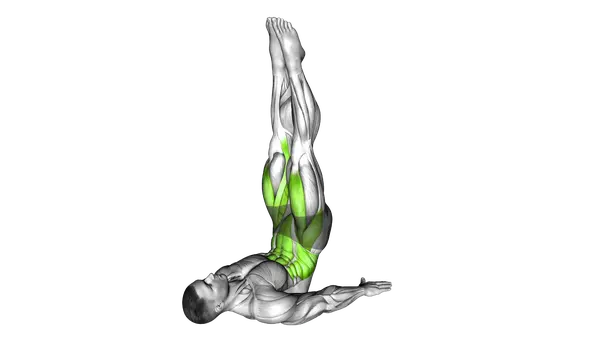
Lying Leg Raise with Hip Lift
Muscles Worked: Lying Leg Raise with Hip Lift
The Lying Leg Raise with Hip Lift works your abs through two phases: the leg raise fires your hip flexors and lower abs to lift your legs, and the hip lift at the top forces your abs to curl your pelvis off the floor against gravity. That second phase is what separates this from a standard leg raise — your rectus abdominis has to shorten hard to drive the hips upward. Your obliques help control any side-to-side drift during the lift, and your hip flexors stay active throughout to keep the legs in position.
Built for progress
Take the guesswork out of training
Get a personalized workout plan built around your goal, equipment and schedule. Train smarter, track every rep and keep moving forward, one workout at a time.






Technique and form
How to perform the Lying Leg Raise with Hip Lift
- Lie flat on your back with your legs extended straight and your arms at your sides, palms pressing into the floor for stability.
- Press your lower back firmly into the floor by engaging your core and slightly tilting your pelvis.
- Keeping your legs straight or with a slight bend, exhale as you raise both legs together toward the ceiling until they are roughly vertical.
- At the top, contract your lower abs to curl your hips off the floor, driving your feet straight up toward the ceiling. This is the hip-lift portion — your pelvis should lift a few inches off the ground.
- Lower your hips back to the floor with control, then slowly lower your legs back toward the starting position without letting them touch the floor.
- Repeat for the prescribed number of reps.
Important information
The hip lift should come from your abs curling your pelvis upward, not from swinging your legs or using momentum. Keep your lower back pressed into the floor during the leg-raise phase — if it arches, the hip flexors take over and your abs lose tension. If you feel strain in your lower back, try bending your knees slightly during the raise. For increased difficulty, slow the lowering phase to 3 seconds or hold the hip lift at the top for 1-2 seconds before lowering.
Is the Lying Leg Raise with Hip Lift good for muscle growth?
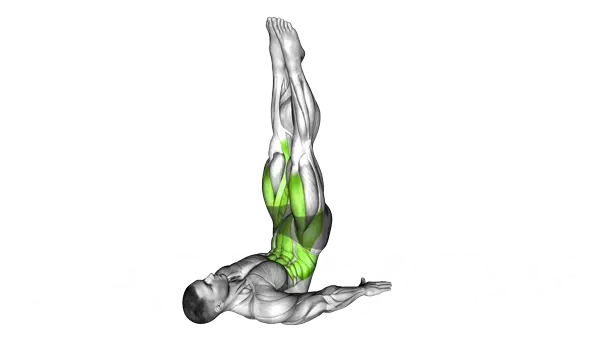
Yes. The Lying Leg Raise with Hip Lift can build your abs because the hip-lift portion at the top adds a strong shortening contraction that a basic leg raise misses. That makes each rep more demanding for the rectus abdominis and increases the effective work your abs do per set.
- Two-phase ab work — The leg raise loads the lower abs and hip flexors on the way up, then the hip lift forces the abs to contract hard and curl the pelvis off the floor. You get more total ab work per rep than a standard lying leg raise.
- Lower abs get extra attention — The hip-lift finish targets the lower portion of the rectus abdominis more than exercises that only involve spinal flexion from the top down, like crunches. If your lower abs are a weak point, this movement addresses them directly.
- Lower-back position is the key — The exercise only works your abs well if you keep your lower back pressed into the floor during the leg raise phase. Once your back arches, the hip flexors take over and the abs lose tension. The hip lift should come from your abs curling your pelvis, not from momentum.
- Easy to progress without equipment — Slow the lowering phase, hold the top of the hip lift for a count, or add a dumbbell between your feet before moving to harder options like flutter kicks.
Programming for muscle growth
Do 3-4 sets of 10-15 reps, resting 45-75 seconds between sets. Focus on a controlled leg raise followed by a deliberate hip lift at the top — do not use momentum to swing your hips up. Train it 2-3 times per week near the end of your workout. When you can hit the top of the rep range cleanly, add a 1-2 second hold at the top of the hip lift to increase difficulty.
Lying Leg Raise with Hip Lift Variations
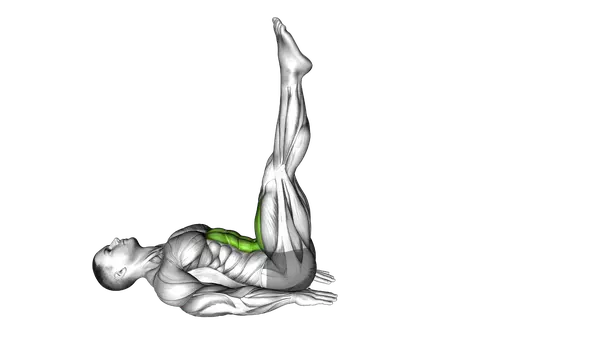
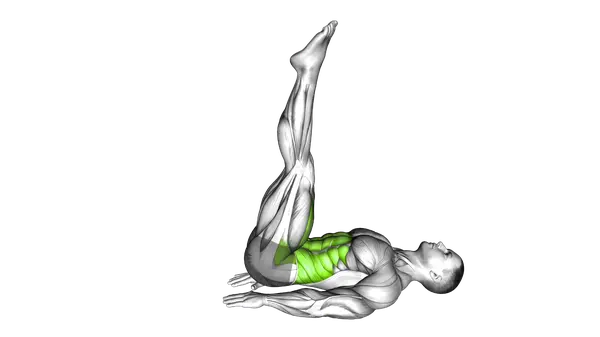
Alternative Exercises
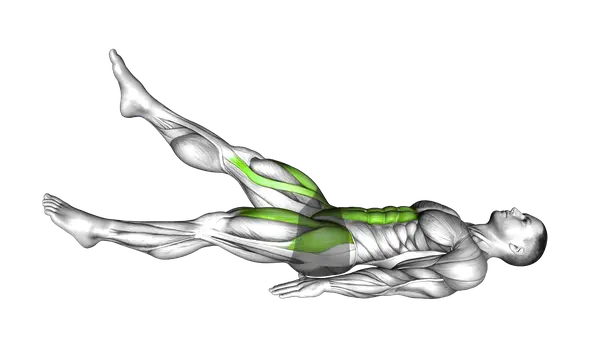
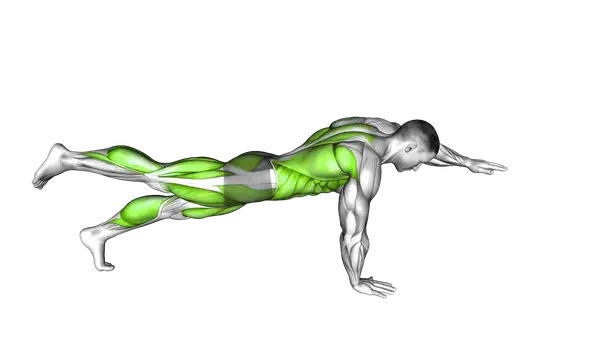
FAQ - Lying Leg Raise with Hip Lift
The exercise primarily targets the lower abs, with additional engagement of the upper abs and hip flexors. The hip lift at the top increases activation of the rectus abdominis, especially in the shortened position.
A standard lying leg raise focuses on lifting the legs using the hip flexors and stabilizing with the core. Adding the hip lift shifts more tension to the abs by actively curling the pelvis off the floor, increasing abdominal contraction and reducing reliance on momentum.
At the top of the movement, slightly posteriorly tilt your pelvis and lift your hips a few centimeters off the ground using your abs—not momentum. The movement should be controlled and subtle, not a swing.
Common mistakes include using momentum to swing the legs, arching the lower back excessively, and failing to control the eccentric (lowering phase). Not engaging the core during the hip lift also reduces effectiveness.
To make it easier, bend your knees or reduce the range of motion. To increase difficulty, keep your legs straight, slow down the tempo, or add ankle weights. You can also extend the pause at the top during the hip lift.
Reviewed by

Physiotherapist
Highlights Physiotherapist at GrabGains: Brings specialized clinical expertise to verify exercise content and ensure safe, effective movement guidance across the platform. Licensed Physiotherapist: Registered in the Dutch BIG Register (BIG: 59930315504) as a…
Lying Leg Raise with Hip Lift
Thank you for your feedback!
Thank you for your feedback!