Back
Seated Dumbbell Shoulder Press
Add to Workout

Seated Dumbbell Shoulder Press

Build
1RM
1RM Calculator

Calculate your one rep max

How to Perform

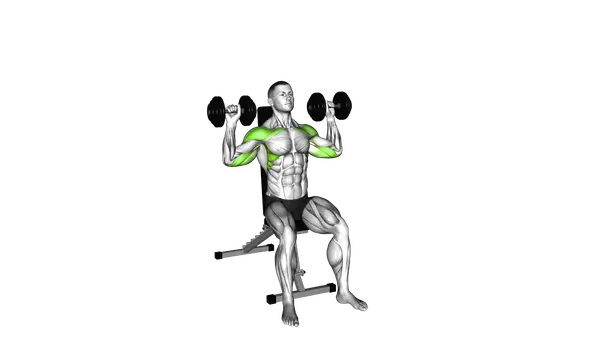
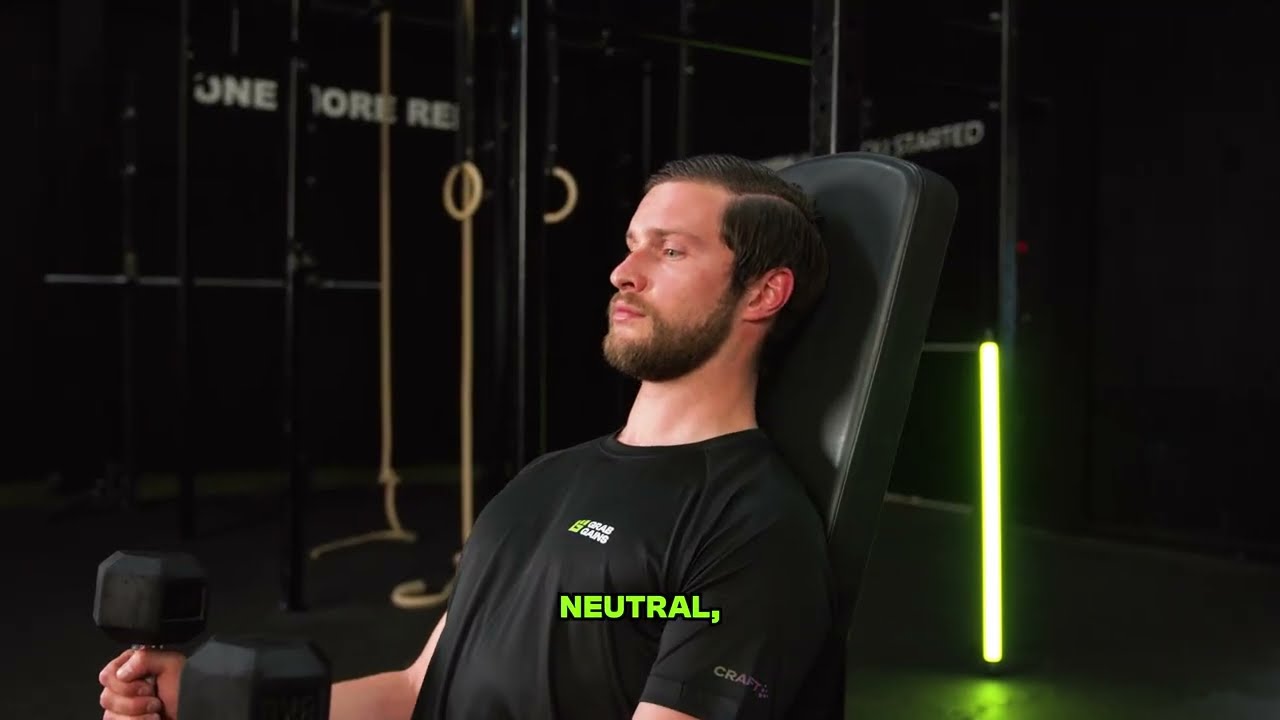
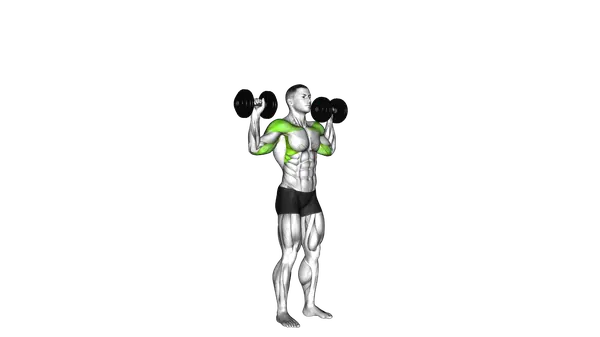
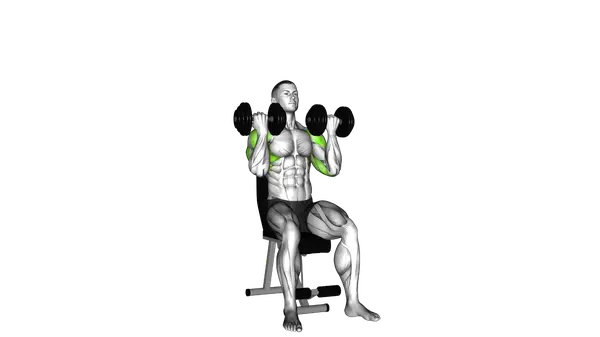
  1. Sit on a bench with back support, feet flat on the floor, and hold a dumbbell in each hand at shoulder height with palms facing forward.
  2. Brace your core and maintain a neutral spine with shoulders pulled back and down away from your ears.
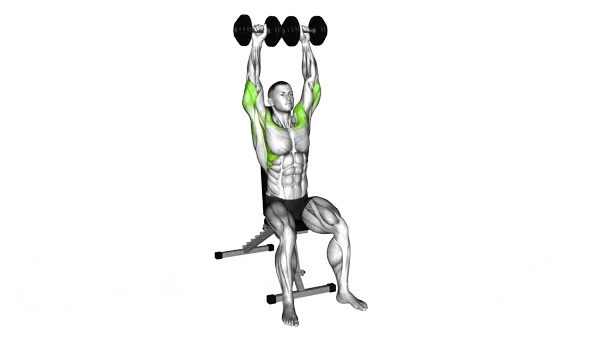
  3. Press the dumbbells upward in a controlled motion until your arms are fully extended overhead, exhaling during the effort.
  4. Keep your wrists straight and aligned with your forearms throughout the movement.
  5. Pause briefly at the top of the movement while maintaining shoulder stability and core engagement.
  6. Lower the weights slowly to the starting position at shoulder level while inhaling, controlling the descent.
  7. Maintain elbow positioning slightly in front of your body rather than flared out to the sides to protect your shoulder joints.
  8. Reset your posture and breathing before beginning the next repetition, ensuring your back remains in contact with the bench support.

Important information

  • Avoid arching your lower back or pushing your head forward during the pressing motion - this compromises spine alignment and reduces shoulder stability.
  • Select a weight that allows you to maintain proper form throughout all repetitions - if you're compensating with body momentum, the weight is too heavy.
  • Keep your elbows at approximately 90 degrees at the bottom position to minimize strain on your shoulder joints.
  • If you experience any shoulder pain, try rotating your palms to face each other (neutral grip) which can be more comfortable for some individuals.

Exercise Details

Primary Muscles

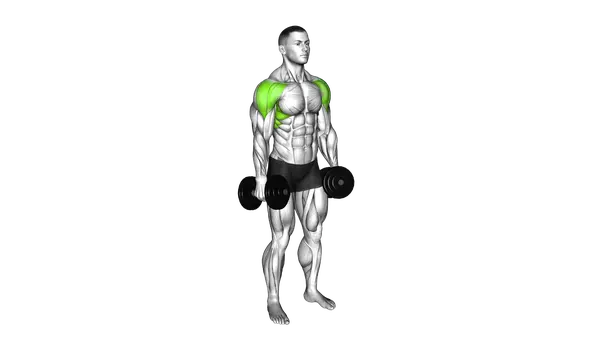
Front Delts Side Delts Triceps

Muscle Groups

Shoulder exercises Arm exercises

Mechanic

Compound

Risk Areas

Triceps

1 Rep Max Calculator

Estimate your one-rep max for Seated Dumbbell Shoulder Press

reps
Calculate

Estimates only. Always use a spotter for heavy lifts.

Estimated 1RM
Training Weights

Built for progress

Take the guesswork out of training

Create personalized AI-powered workout plans that evolve with you. Train smarter, track every rep and keep moving forward, one workout at a time.

Be among the first to join!
GrabGains workout plans

The Seated Dumbbell Shoulder Press stands as a cornerstone movement in upper body strength development, particularly for those who've moved beyond beginner status in their fitness journey. This intermediate-level exercise primarily targets the anterior (front) and lateral (side) deltoid muscles while engaging the triceps as crucial secondary movers, creating balanced shoulder development that contributes to that coveted V-shaped upper body. When incorporated into a well-designed training program, this press variation offers versatility that serves multiple training philosophies. Bodybuilders prize this movement for its ability to isolate and develop defined shoulder caps with remarkable symmetry. 

The seated position allows for stricter form and greater time under tension, facilitating the muscle hypertrophy that stage-ready physiques demand. Meanwhile, powerlifters utilize this assistance exercise to strengthen pressing mechanics and overcome sticking points in their competition lifts. What distinguishes the seated version from its standing counterpart is the enhanced stability. By eliminating lower body involvement, you can focus intensely on progressive overload specific to the shoulder muscles. This makes it particularly effective for developing pure upper body pressing strength without the balance challenges of standing variations. 

The seated position also allows for heavier loading with reduced risk of compensatory movement patterns. For those focused primarily on strength development, the seated dumbbell press offers unique advantages. The independent nature of dumbbells requires greater stabilization through the shoulder complex, identifies and addresses strength imbalances between sides, and allows for a more natural range of motion than barbell variations. These benefits translate to improved pressing power, enhanced shoulder joint integrity, and resilience against common upper body injuries. Whether your goals lean toward aesthetic muscular development or raw pressing strength, this exercise delivers impressive results when performed consistently with proper loading strategies appropriate to your experience level and recovery capacity.

FAQ - Seated Dumbbell Shoulder Press

What muscles does the Seated Dumbbell Shoulder Press work?

The Seated Dumbbell Shoulder Press primarily targets the anterior (front) and lateral (side) deltoids while engaging the triceps as secondary movers. Your upper trapezius, serratus anterior, and core muscles also activate as stabilizers during the movement.

How should I position my back during this exercise?

Maintain a neutral spine with your lower back slightly arched and upper back pressed firmly against the bench backrest. Avoid excessive arching or rounding of the spine, as this can place undue stress on your lower back and compromise shoulder mechanics.

How can I make the Seated Dumbbell Shoulder Press easier or more challenging?

To make it easier, use lighter weights or perform partial range of motion reps. For a greater challenge, increase the weight, slow down the eccentric (lowering) phase to 3-4 seconds, or progress to a more difficult variation like the Arnold press that incorporates rotation.

What are the most common form mistakes to avoid?

The most common mistakes include rounding your lower back, rotating your hips instead of keeping them square, rushing through the movement, and not hinging properly at the hips. Focus on maintaining a neutral spine, moving with control, and keeping your standing knee slightly soft rather than locked.

How often should I include the Seated Dumbbell Shoulder Press in my workout routine?

For optimal results, incorporate this exercise 1-2 times weekly with at least 48 hours between sessions to allow proper shoulder recovery. If you're specifically training for shoulder hypertrophy, you might perform 3-4 sets of 8-12 reps, while strength goals typically call for 3-5 sets of 4-8 reps with heavier weights.

Workouts with Seated Dumbbell Shoulder Press
Alternative Exercises

Dumbbell Lateral Raise

Dumbbell Lateral Raise

The dumbbell lateral raise stands as a fundamental isolation exercise for anyone looking to sculpt defined shoulders and enhance their upper body aesthetics. Perfect for beginners entering the fitness world, this movement specifically targets the side deltoids—those muscles responsible for giving shoulders that coveted rounded, capped appearance when developed properly. As a cornerstone of bodybuilding routines for decades, lateral raises help create the visual illusion of a smaller waist by widening the shoulder silhouette. Their versatility extends beyond hypertrophy work, as they serve excellently as a warm-up movement to prepare the shoulder complex before tackling heavier pressing exercises. The controlled, deliberate nature of this exercise increases blood flow to the deltoid region while activating stabilizer muscles throughout the shoulder girdle. While primarily known for muscle-building benefits, consistent performance of dumbbell lateral raises contributes significantly to functional strength development. The side deltoids play a crucial role in everyday activities requiring lateral arm movement and shoulder stability. Strengthening these muscles improves your capacity to lift objects away from your body and enhances overall shoulder health, potentially reducing injury risk during more demanding exercises. For those pursuing strength goals, lateral raises complement compound shoulder movements by addressing potential muscle imbalances. The medial deltoids often lag behind the anterior (front) deltoids, which receive substantial stimulation during pressing exercises. By isolating the side delts, you ensure balanced shoulder development—critical for both aesthetic symmetry and optimal function. The beauty of this exercise lies in its accessibility—requiring minimal equipment and space while delivering impressive results when performed consistently. Whether your fitness aspirations lean toward competitive bodybuilding or simply achieving a stronger, more capable physique for daily life, the dumbbell lateral raise deserves a permanent place in your training arsenal as a shoulder-sculpting essential.

Strength
Bodybuilding
Warm-up
Dumbbell
Dumbbell Military Press Russian Twist

Dumbbell Military Press Russian Twist

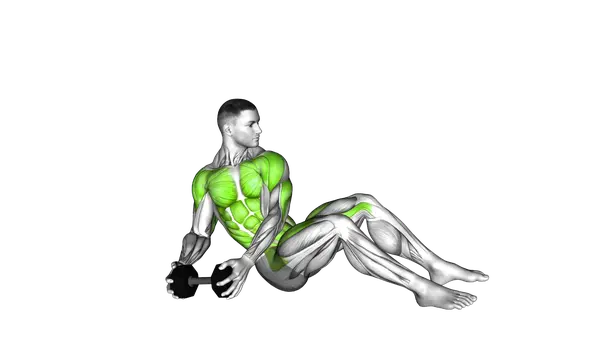
The Dumbbell Military Press Russian Twist combines two dynamic movements into one challenging compound exercise that targets multiple muscle groups simultaneously. This intermediate-level movement merges the powerful shoulder development of the military press with the rotational core engagement of the Russian twist, creating an efficient exercise for those looking to maximize their training time. The primary muscle groups engaged during this exercise are the front deltoids and abdominals. Your front delts work intensively during the pressing portion, developing that coveted shoulder definition, while your abs—particularly the obliques—fire up during the twisting motion. This dual-action makes it particularly valuable for athletes who need both upper body pushing strength and rotational core power. Whether you're into HIIT workouts or focused bodybuilding, this exercise fits seamlessly into various training protocols. For HIIT enthusiasts, it elevates heart rate quickly while challenging multiple muscle groups, making it perfect for time-efficient training. Bodybuilders appreciate how it simultaneously develops shoulder aesthetics and core definition, allowing for efficient training sessions that address multiple physique goals. The beauty of this movement lies in its dual benefits for strength development and core stability. The pressing motion builds functional shoulder strength that transfers to numerous daily activities and athletic movements, while the twisting component enhances rotational core strength that's essential for sports performance and injury prevention. This combination also improves coordination between your upper and lower body, enhancing overall movement patterns. As you progress with this exercise, you'll notice improvements in shoulder stability, core engagement, and overall upper body strength. The unilateral nature of the movement also helps identify and correct strength imbalances between your left and right sides. For optimal results, focus on maintaining proper form throughout both portions of the movement rather than simply increasing weight—quality of movement trumps quantity when it comes to this challenging exercise.

Strength
Core
HIIT
Bodybuilding
Dumbbell
Barbell Standing Military Press

Barbell Standing Military Press

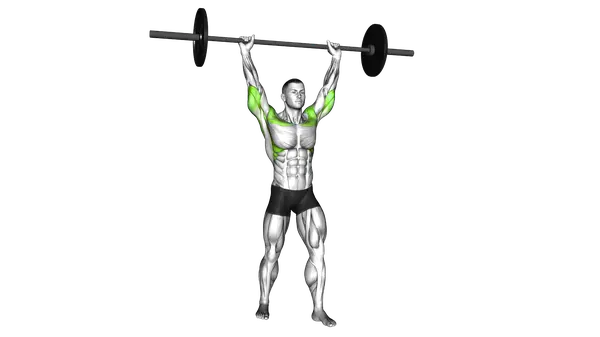
The Barbell Standing Military Press stands as a cornerstone strength movement in both powerlifting and bodybuilding regimens, demanding respect for its ability to build impressive shoulder strength and upper body development. This intermediate compound exercise primarily targets the front deltoids while significantly engaging the triceps as crucial secondary movers, creating that coveted boulder shoulder appearance when performed consistently over time. Unlike many isolation movements, the military press challenges your entire body as a unit, requiring core stability, proper spinal alignment, and full-body tension to execute effectively. The exercise's origins trace back to military physical training programs—hence the name—where soldiers would demonstrate strength by pressing a weighted bar overhead with strict form and discipline. For strength enthusiasts, the standing military press serves as one of the fundamental overhead pressing movements, developing raw power through the shoulders, upper chest, and triceps while simultaneously building stability through the core and lower body. Many powerlifters incorporate this lift as an accessory movement to improve bench press performance, as stronger shoulders often translate to a more powerful bench. Bodybuilders particularly value the military press for its ability to add significant mass to the anterior deltoids, creating that shelf-like appearance at the front of the shoulders that contributes to an impressive V-taper physique. The triceps engagement also promotes arm thickness, enhancing overall upper body proportions. What makes the barbell standing variation particularly challenging is the strict requirement for core stability and balance throughout the movement. Unlike seated variations, the standing position demands full-body coordination and prevents any cheating through back arch or momentum, making each rep a true test of shoulder strength and overall stability. For optimal progress, most strength coaches recommend incorporating this movement early in your shoulder training session when energy levels are highest, allowing for maximal loading and proper technique to fully capitalize on this powerful upper body developer.

Strength
Powerlifting
Bodybuilding
Barbell
Stability Ball Pike Push-Up

Stability Ball Pike Push-Up

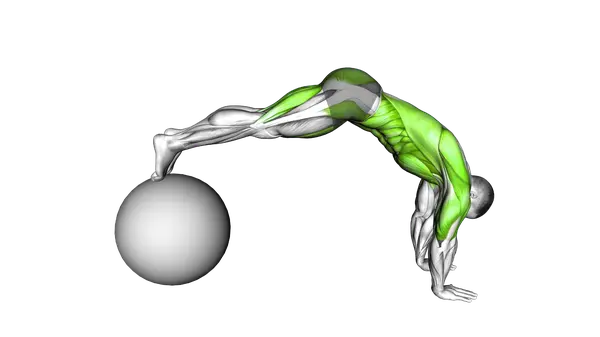
The Stability Ball Pike Push-Up stands as a formidable challenge in the realm of advanced bodyweight training, elevating the traditional push-up to an entirely new dimension of difficulty. This movement seamlessly blends shoulder strength development with core stabilization, making it a powerful addition to any serious fitness enthusiast's repertoire. This exercise primarily targets the front deltoids, the anterior portion of your shoulders responsible for that coveted capped look, while simultaneously engaging the triceps as crucial secondary movers. What truly sets this exercise apart, however, is the extraordinary core engagement required to maintain proper positioning throughout the movement. Perfect for integration into high-intensity interval training sessions or CrossFit WODs, the Stability Ball Pike Push-Up delivers maximum stimulus with minimal equipment. The instability factor introduces an element that traditional gym machines simply cannot replicate, forcing your body to recruit stabilizing muscles throughout your entire kinetic chain. Bodybuilders also appreciate this movement for its ability to isolate and sculpt the shoulders while maintaining functional strength patterns. The compound nature of this exercise makes it particularly effective for developing practical, real-world strength. As you progress with this movement, you'll notice improvements in overhead pressing power, core stability, and overall body control. The intense demand placed on your core musculature creates a synergistic effect, enhancing total-body strength beyond what isolated movements can achieve. For those seeking to break through plateaus in their fitness journey, the Stability Ball Pike Push-Up represents an excellent progression tool. The instability of the ball coupled with the inverted body position creates a unique challenge that forces muscular adaptation. This exercise embodies the principle that true strength isn't just about moving weight: it's about controlling your body through space with precision and power.

Strength
Core
HIIT
Crossfit
+1
Stability ball