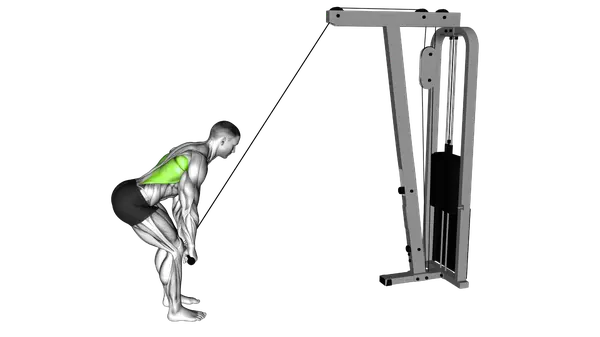
Übungsalternativen

Lat Pulldown Alternatives: 6 Exercises That Train the Lats

The best lat pulldown alternatives keep a vertical pull, with the elbows driving down toward the torso, and load the lats with the biceps assisting. Substitutes are ranked by how closely they match the cable lat pulldown in movement pattern, muscle demand, and ease of progressive loading. The list covers machine, bodyweight, cable, and dumbbell options for a full gym, a busy gym, or home training.

Veröffentlicht:

Was einen guten Ersatz ausmacht

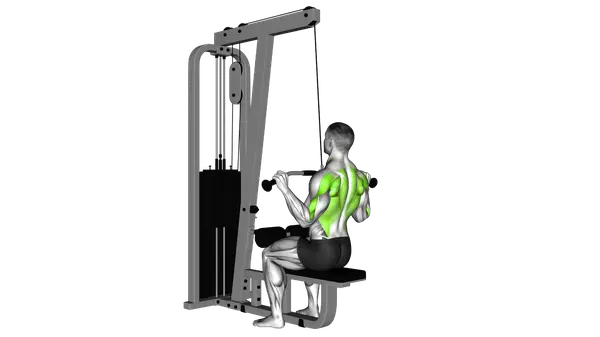
The lat pulldown is a vertical pull: the upper arms travel from overhead down to the sides of the torso while the elbows bend. The latissimus dorsi produces most of the shoulder movement, and the biceps and brachialis flex the elbows. A good substitute reproduces that path of the upper arm rather than training the back in a general way.

Grip details matter less than the overall pattern. Pronated grip widths between one and two times shoulder width produce similar lat activation in the pulldown [1], although a pronated grip has produced greater lat activity than a supinated grip [2]. Bar path is the more consistent factor: pulling the bar to the front of the head is the configuration most often associated with higher lat activity [5].

Loading is the third criterion. The cable pulldown adjusts in small increments and does not depend on bodyweight, so the closest substitutes either allow the same fine load adjustment or offer a clear progression path through added repetitions, added load, or reduced assistance.

Lat Pulldown

Beste Lat Pulldown Alternativen

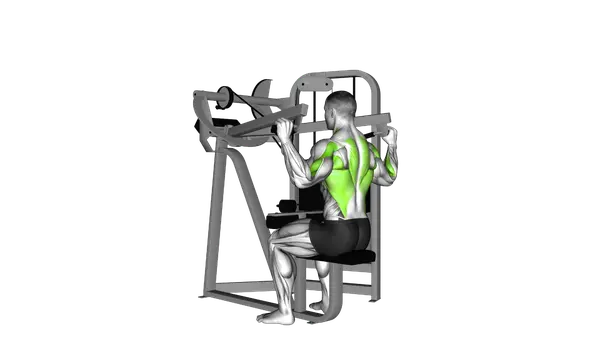
01 Lever Lateral Wide Pulldown

Lever Lateral Wide Pulldown

Breiter Rücken, Seitliche schultern · Machine · Fortgeschritten

Wichtigster Unterschied

This is the same seated vertical pull, but the handles follow a fixed arc set by the machine instead of a free cable path. The guided path removes the need to balance the bar and keeps the range of motion identical from set to set, at the cost of less freedom in hand position and bar path.

Wann du sie wählst

Choose this when the cable station is unavailable or when a stable, repeatable path is preferred for hard sets close to failure. On models with independent handles, it also allows one side to be trained at a time.


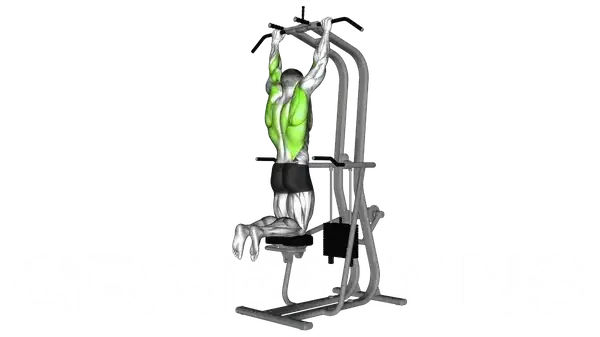
02 Assisted Pull-Up

Assisted Pull-Up

Breiter Rücken, Bizeps · Machine, Widerstandsband · Anfänger

Wichtigster Unterschied

The pattern is the same vertical pull, but the body rises toward a fixed bar instead of the bar moving toward the body. A counterweight or knee platform subtracts load from bodyweight, so resistance is adjustable much like a weight stack, while the shoulder blades and trunk must be controlled without a thigh pad.

Wann du sie wählst

Choose this when the goal is to build toward unassisted pull-ups, since it trains the exact movement while the load is scaled. Reducing the assistance over time gives a clear progression toward full bodyweight.

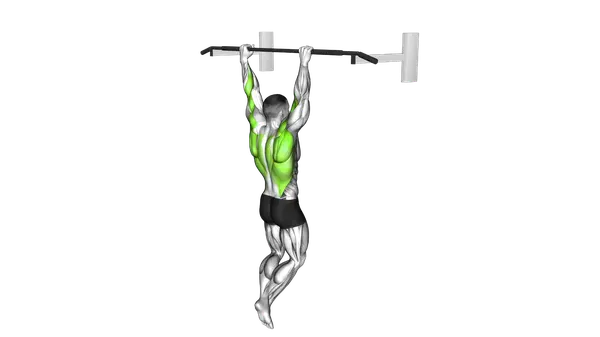
03 Pull Up

Pull Up

Breiter Rücken, Bizeps · Körpergewicht · Fortgeschritten

Wichtigster Unterschied

The pull-up uses the same pronated grip and vertical pull with bodyweight as the resistance. The lats are the most active of the measured muscles during pull-up variations, with substantial biceps involvement as well [4]. Because the load is fixed at bodyweight, progression depends on more repetitions, slower tempo, or added external weight.

Wann du sie wählst

Choose this when a bar is available and you can complete several controlled repetitions. It is the strongest home option in this list for overall lat loading and transfers directly to bodyweight pulling strength.

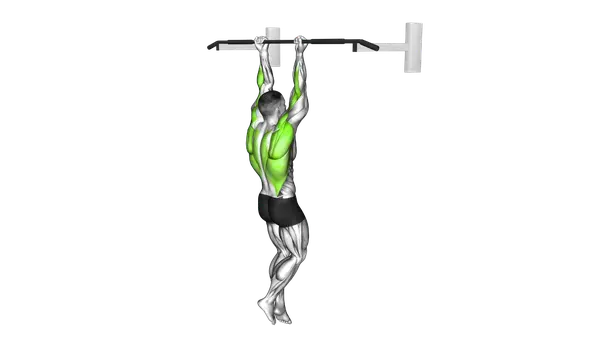
04 Chin-Up

Chin-Up

Breiter Rücken, Bizeps, Unterarme · Körpergewicht · Fortgeschritten

Wichtigster Unterschied

The chin-up switches to a supinated grip, palms facing you, usually at shoulder width. Compared with the lat pulldown, chin-ups produced greater biceps and erector spinae activation during the lifting phase [3], and compared with the pull-up they produced higher biceps and pectoralis major activity [4].

Wann du sie wählst

Choose this when a bar is available and more elbow-flexor involvement is acceptable or wanted, or when an underhand grip is more comfortable for the wrists and shoulders. A pronated grip has produced greater lat activity than a supinated grip in pulldown testing, so the pull-up remains the more lat-specific option [2].

05 Cable Straight Arm Pulldown (Lat Prayer)

Cable Straight Arm Pulldown (Lat Prayer)

Breiter Rücken, Trizeps · Kabel · Fortgeschritten

Wichtigster Unterschied

The elbows stay nearly straight, so the movement is shoulder extension without elbow flexion and the biceps are largely removed. The long head of the triceps assists instead. Loads are considerably lighter because the cable acts at the end of a long, straight lever.

Wann du sie wählst

Choose this when grip or biceps fatigue limits pulldown sets, or as a lighter lat exercise before or after heavier vertical pulls. It only needs a high pulley, so it works when the pulldown seat is taken.

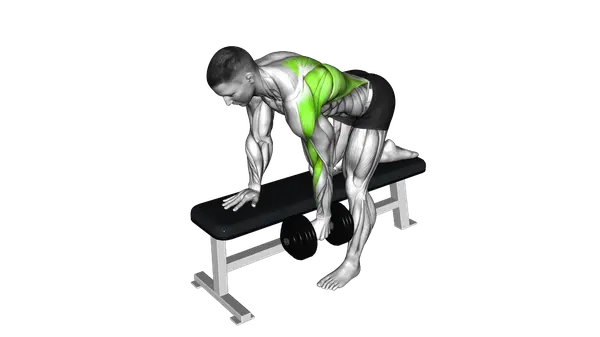
06 Dumbbell Single Arm Bent Over Row

Dumbbell Single Arm Bent Over Row

Breiter Rücken, Trapezmuskel · Kurzhantel · Fortgeschritten

Wichtigster Unterschied

This changes the direction of pull from vertical to horizontal: the upper arm moves from in front of the body to beside the torso instead of from overhead. The lats remain a primary mover, and in seated rowing a lower shoulder-abduction angle, with the elbow closer to the torso, has been associated with greater lat activity [5]. The traps and rear delts contribute more than in a pulldown.

Wann du sie wählst

Choose this when only dumbbells and a bench are available and there is no bar for vertical pulling. Supporting one hand and knee on the bench reduces lower-back demand compared with a free-standing row, and training one side at a time exposes left-right strength differences.

Zuhause trainieren

The pull-up and chin-up are the most effective home options, since a doorway or wall-mounted bar is enough to load the lats through the same vertical pull. Without a bar, the dumbbell single arm bent over row is the most practical choice and needs only a dumbbell and a bench or sturdy support. The machine and cable options require gym equipment.

Das Fazit

The lever lateral wide pulldown is the closest substitute, because it keeps the seated vertical pull and the adjustable load of the cable version. The assisted pull-up and pull-up are the best choices when bodyweight pulling strength is the goal, with the assisted version as the scaled entry point. The chin-up adds biceps work, the cable straight arm pulldown isolates the lats without elbow flexion, and the dumbbell single arm bent over row covers lat training when no bar or cable is available.

Was ist dein Fitnessziel?

Wähle eines aus und die App baut dein Programm darum herum, um deine Ausrüstung und um die Tage, an denen du trainieren kannst.

Gratis Download · 14 Tage Pro

Gut zu wissen

Häufige Fragen

Are pull-ups better than lat pulldowns?

Neither is better in every case. Both train the lats through the same vertical pull, but pull-ups require lifting your full bodyweight and more trunk control, while pulldowns allow small, precise load changes. Lifters who cannot complete several clean pull-ups usually progress more easily with pulldowns or assisted pull-ups.

What can I do instead of lat pulldowns at home?

Pull-ups and chin-ups on a doorway or wall-mounted bar are the closest home replacements because they keep the vertical pulling pattern. Without a bar, a single-arm dumbbell row trains the lats through a horizontal pull and needs only a dumbbell and a bench.

Does grip width matter for lat pulldown alternatives?

Less than is often assumed. In pulldown research, pronated grips between one and two times shoulder width produced similar lat activation, with narrow and medium grips allowing slightly heavier loads than a wide grip. A grip that allows a full range of motion without shoulder discomfort is a sound default on any vertical pull.

Wissenschaftliche Quellen

  1. [1]
    Effects of grip width on muscle strength and activation in the lat pull-down.

    Andersen V, Fimland MS, Wiik E et al. · Journal of strength and conditioning research (2014)

  2. [2]
    Grip width and forearm orientation effects on muscle activity during the lat pull-down.

    Lusk SJ, Hale BD, Russell DM · Journal of strength and conditioning research (2010)

  3. [3]
  4. [4]
    Surface electromyographic activation patterns and elbow joint motion during a pull-up, chin-up, or perfect-pullup™ rotational exercise.

    Youdas JW, Amundson CL, Cicero KS et al. · Journal of strength and conditioning research (2010)

  5. [5]
    Electromyographic Analysis of Latissimus Dorsi Activation During Common Resistance Training Exercises: A Narrative Review.

    Di Fonza D, Di Claudio G, Colantuono G et al. · Journal of functional morphology and kinesiology (2026)

Die Quellen sind begutachtete wissenschaftliche Publikationen von PubMed.