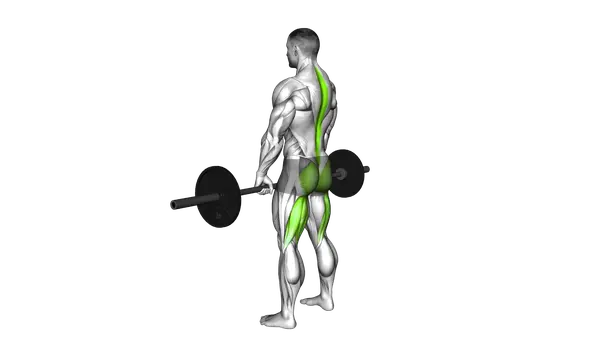
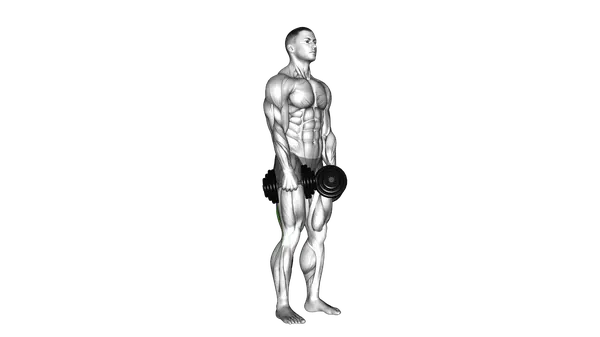
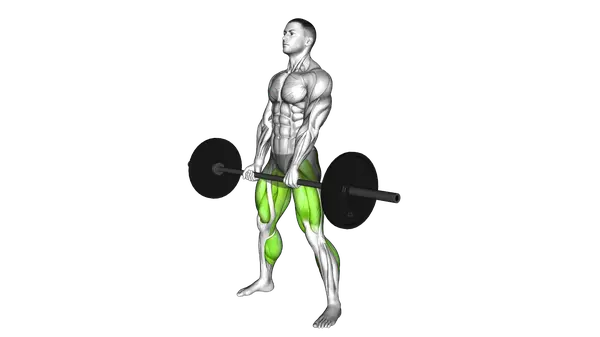
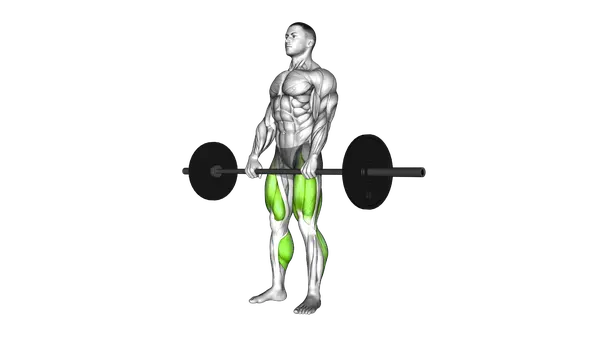
The conventional deadlift is usually the main choice for maximal full-body strength. It combines heavy loading with a strong demand on glutes, hamstrings, erector spinae, quads, trunk stiffness, and upper-back position.
The sumo deadlift is also a maximal-strength lift, not just a variation for variety. For some lifters, especially those whose proportions suit a wider stance and more upright start, sumo can be as strong or stronger than conventional because the lift can reduce range of motion and improve leverage [2].
The Romanian deadlift is usually loaded less than a full deadlift because it removes the floor start and keeps constant tension through the hinge. That makes it effective for accumulating posterior-chain volume with less emphasis on overcoming inertia from the floor.
The stiff-leg deadlift is usually loaded lighter than both conventional and Romanian deadlifts. The straighter knee position increases the hamstring length demand and often increases tolerance limits at the low back and posterior chain, so it is better used as a controlled accessory than as a primary maximal-strength lift.