Übungsvergleich
Goblet Squat vs Back Squat: Load Limits and When to Switch
The goblet squat holds one dumbbell at the chest, while the back squat loads a barbell across the upper back; both train the quads, glutes and adductors. The front-loaded goblet position is easier to learn and to take deep, but its load is capped by what the arms can hold. The back squat allows far heavier loading and is the stronger tool for maximal strength.
Dumbbell Goblet Squat vs Barbell Squat
Auf einen Blick
| Merkmal | Dumbbell Goblet Squat | Barbell Squat |
|---|---|---|
| Primäre Muskeln | Quadrizeps, Gesäßmuskeln | Quadrizeps, Gesäßmuskeln, Beinbeuger |
| Sekundäre Muskeln | Beinbeuger, Hüftadduktoren, Unterer Rücken, Trapezmuskel | Beinbeuger, Unterer Rücken, Bauchmuskeln, Trapezmuskel |
| Ausrüstung | Kurzhantel | Langhantel |
| Schwierigkeit | Anfänger | Fortgeschritten |
| Typ | Merhgelenkig | Merhgelenkig |
| Kraftrichtung | Beine | Beine |
01
Load placement and torso angle
In the goblet squat, a dumbbell is held vertically against the chest with both hands cupping the top end. The weight sits in front of the body and acts as a counterbalance, which lets the hips sink between the heels with a relatively upright torso.
In the back squat, the barbell rests on the upper trapezius in the high-bar position or slightly lower across the rear deltoids in the low-bar position. To keep the bar over the middle of the foot, the torso leans further forward than in the goblet squat, most noticeably with a low bar. This increases the demand on the hip extensors and the spinal erectors.
02
Knee and spine loading
Moving the load from the back to the front of the body changes joint loading. In a comparison of barbell front and back squats in trained individuals, the back squat produced higher knee compressive forces and knee extensor moments, while overall muscle recruitment was similar [1]. The goblet squat uses the same front-loaded position at much lighter absolute loads.
In the back squat, the full load rests on the spine and grows as the lifter gets stronger. The goblet squat keeps spinal load low by design, since the weight is limited to what the arms can hold, which makes it a common choice for lifters who tolerate heavy barbell loading poorly.
03
Muscle growth versus maximal strength
For muscle growth, the absolute load matters less than how close each set comes to failure. A meta-analysis found similar hypertrophy with low loads (60% of 1RM or less) and high loads when all sets were performed to muscular failure, while 1RM strength gains were greater with heavy loads [2]. A goblet squat taken close to failure can therefore build the quadriceps and glutes effectively, even when that requires higher repetitions.
The limitation is maximal strength. Heavy, low-repetition training raises 1RM most effectively, and for trained lifters the goblet squat cannot be loaded heavily enough to provide it. The back squat can be progressed in small increments far beyond the heaviest dumbbell a lifter can hold.
04
Depth and quadriceps emphasis
The goblet squat makes full depth easier to reach, because the counterweight keeps the torso upright as the hips descend. In a comparison with the landmine squat, in which a barbell is anchored to the floor at one end, the goblet squat produced higher quadriceps activity and greater vertical force [3].
Depth matters for both exercises. In a 10-week training study, full squats increased gluteus maximus and adductor volume more than half squats, while quadriceps growth was similar between the two depths [4]. Taking either exercise to full depth, where mobility allows, increases the training effect on the glutes and adductors.
05
Learning curve and when to switch
The goblet squat requires one dumbbell or kettlebell and little instruction, which makes it a standard first squat pattern and a useful warm-up before heavier squatting. Excessive forward lean is self-limiting, because leaning forward pulls the weight away from the chest.
The back squat needs a rack, a barbell and plates, and bracing and bar placement take longer to learn. It becomes the better option once the heaviest available dumbbell no longer brings sets close to failure within a moderate rep range, or when the arms and upper back tire before the legs do.
Das Fazit
Use the goblet squat to learn the squat pattern, to train at home or with limited equipment, and for higher-rep quad and glute work with low spinal load. Use the back squat when maximal lower-body strength is a goal or when the heaviest available dumbbell no longer challenges the legs. Many programs combine the two, with the goblet squat as a warm-up or accessory and the back squat as the main lift. For muscle growth alone, either exercise is effective when sets are taken close to failure through a full range of motion.
Was ist dein Fitnessziel?
Wähle eines aus und die App baut dein Programm darum herum, um deine Ausrüstung und um die Tage, an denen du trainieren kannst.
Gut zu wissen
Häufige Fragen
For muscle growth, goblet squats can replace back squats as long as sets are taken close to failure, which usually means higher repetitions. For maximal strength, the back squat is more effective because it can be loaded far more heavily.
The goblet squat places much less load on the spine, because the weight is far lighter and held in front of the body with an upright torso. This makes it a common option for lifters who experience back discomfort under a barbell, although bracing still matters with heavier dumbbells.
A switch makes sense once the heaviest available dumbbell can be squatted for many repetitions to full depth, or when the arms and upper back tire before the legs. Starting the back squat with light loads at that point builds on the pattern the goblet squat has already established.
Wissenschaftliche Quellen
-
[1]
A biomechanical comparison of back and front squats in healthy trained individuals.
Gullett JC, Tillman MD, Gutierrez GM et al. · Journal of strength and conditioning research (2009)
-
[2]
Strength and Hypertrophy Adaptations Between Low- vs. High-Load Resistance Training: A Systematic Review and Meta-analysis.
Schoenfeld BJ, Grgic J, Ogborn D et al. · Journal of strength and conditioning research (2017)
-
[3]
Differences in Muscle Activity and Kinetics Between the Goblet Squat and Landmine Squat in Men and Women.
Collins KS, Klawitter LA, Waldera RW et al. · Journal of strength and conditioning research (2021)
-
[4]
Effects of squat training with different depths on lower limb muscle volumes.
Kubo K, Ikebukuro T, Yata H · European journal of applied physiology (2019)
Die Quellen sind begutachtete wissenschaftliche Publikationen von PubMed.
Übungen


































Weitere Übungsvergleiche
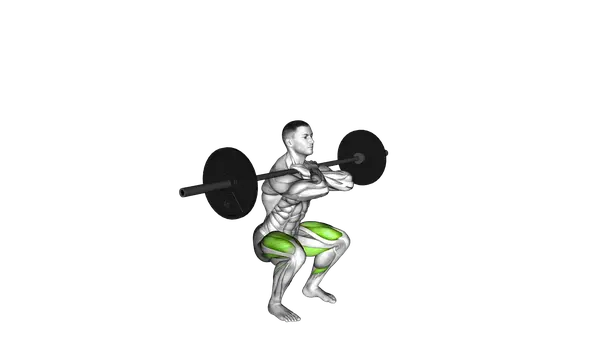
Front Squat vs Back Squat: Where Should the Bar Go?
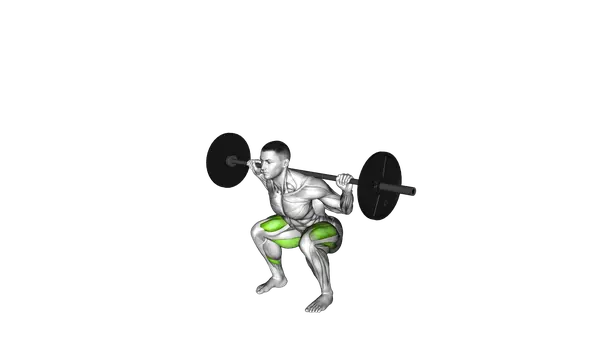
Squat vs Bulgarian Split Squat: Which One Should You Prioritize?
Squat vs Leg Press: Do You Really Need Both?
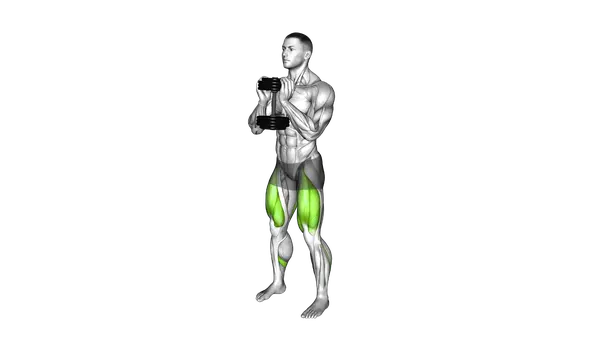
Goblet Squat vs Bulgarian Split Squat: Two Legs or One
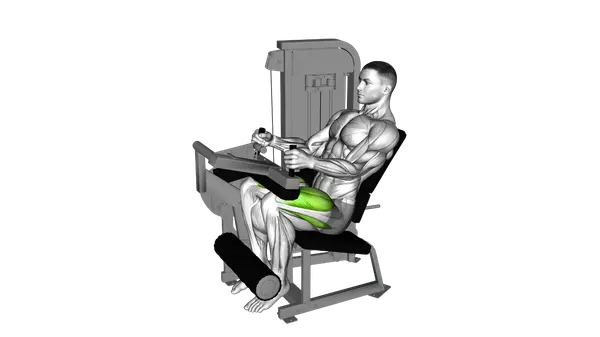
Leg Extensions vs Squats: Can a Machine Replace the King?
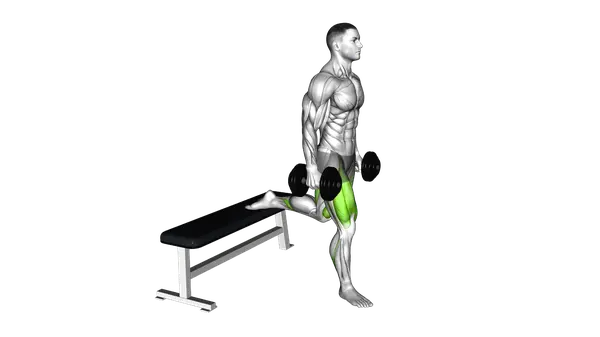
Split Squat vs Bulgarian Split Squat: What the Bench Changes